
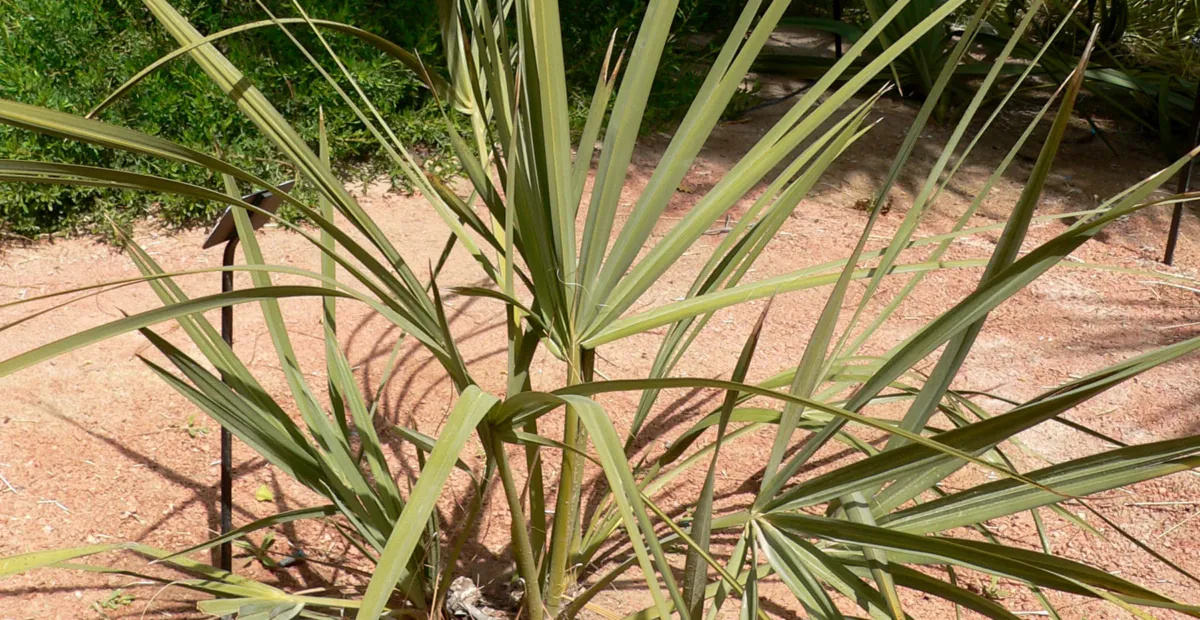
 Source:
Nannorrhops ritchiana short overview
Nannorrhops ritchiana is a rare, slow-growing fan palm from arid regions of Iran, Afghanistan, Pakistan and the Arabian Peninsula. It forms a clumping crown of blue-green to gray-green leaves and can tolerate intense heat, drought and significant winter cold once established. In cultivation, excellent drainage, full sun and protection from prolonged winter wet are more important than rich soil or frequent feeding.
Taxonomic classification
Nannorrhops ritchiana care guide
Light and placement
Provide full sun, ideally with open exposure and strong reflected light from a south- or west-facing position. In hot climates, established plants tolerate intense sun. Pale scorch, bleached leaf tissue or browned margins can indicate extreme heat combined with drought, while elongated growth and greener, weaker leaves suggest insufficient light. Avoid dense shade and damp, poorly ventilated sites.
Watering and humidity
Water deeply but infrequently, allowing the upper soil to dry between irrigations once established. Give young plants more regular water during their first growing seasons, then reduce frequency as roots spread. In winter, keep the crown and root zone as dry as practical in cold regions; prolonged wetness is more damaging than short dry periods.
Soil and growing medium
Use sandy or rocky soil amended only enough to improve structure. Drainage must be rapid, especially in cold climates, because wet roots greatly reduce winter survival. A neutral to slightly alkaline mineral soil is suitable; avoid heavy, waterlogged clay and organic-rich mixes that stay saturated.
Feeding
Feed in spring with a slow-release fertilizer formulated for palms, using the label rate; a second light feeding in early summer is optional during active growth. Do not fertilize drought-stressed, freshly transplanted or dormant plants, and avoid repeated high-nitrogen feeding that encourages weak growth.
Growth and habit
This palm is typically clumping or suckering, with several stems arising from the base. Growth is slow, particularly in young plants, and establishment can take years after planting or root disturbance. Remove only dead or hazardous material; avoid unnecessary digging around the root zone.
Planting and repotting
Plant in late spring after the danger of hard frost has passed, when soil is warming. Set the palm at the same depth as in its container, never burying the stem base. Allow generous spacing for suckering and establish with deep, regular irrigation during the first growing seasons.
Repot container plants only when roots have filled the pot, preferably in spring. Use a deep, sharply draining palm or mineral container mix and disturb the root ball as little as possible because young plants can be slow to re-establish after root damage.
Propagation and pruning
Propagation
Propagate mainly from fresh seed; germination may take several months and seedlings develop a long root early, so use deep containers. Established clumps may sometimes be divided, but division and transplanting are more stressful than seed propagation.
Pruning
Remove completely dead, broken or diseased leaves at the base with clean tools. Leave green leaves in place because excessive pruning weakens the plant. Do not cut healthy stems after flowering unless they are clearly dead; a terminally flowering stem may decline naturally while the clump continues.
Overwintering
Protect young plants from severe freezes, cold winds and winter rain. In marginal USDA zones, use a sheltered site, maintain excellent drainage and consider frost cloth during hard freezes. Container plants can be moved under bright, cool cover, but prolonged indoor culture is not ideal.
Uses
Use as a specimen, architectural accent, xeriscape plant, gravel-garden subject or container palm in climates where winter protection is possible. Its foliage and clumping habit provide strong structure. Traditional leaf-fiber uses are documented, but medicinal or culinary use should not be assumed from ethnobotanical reports.
Appearance
The plant has stiff, palmate to mildly costapalmate leaves in blue-green, gray-green or occasionally greener forms. Leaf bases persist as fibrous coverings on the stems, giving mature clumps a rough, shaggy texture. Several stems commonly arise from the base, creating a broad architectural silhouette rather than a single-trunked palm.
Flowering
Mature stems produce an upright, branched inflorescence near the crown. Flowering is terminal on the individual stem or branch, which may die afterward while other stems of the clump continue growing. Species-specific flowering timing in the United States is not consistently documented.
Pollination and visitors
The species produces small flowers in terminal branched inflorescences, but reliable species-specific documentation of its principal animal pollinators was not located. Do not assign a specific bee, butterfly or other visitor without stronger evidence.
Nannorrhops ritchiana photos
Click any photo for a larger view. Source, author and license are shown separately.
Diseases and pests
Diseases
Avoid prolonged wet soil and improve air circulation around dense clumps. Root and crown rots are the main practical concern when drainage is poor. Remove badly damaged tissue with clean tools and correct irrigation or soil problems before considering treatment.
Pests
Inspect for scale insects, mealybugs and palm-feeding mites, especially on stressed container plants. Improve light and airflow, remove heavily infested material, and use horticultural oil or another labeled treatment only according to the product directions.
Toxicity and pollen
No authoritative species-specific human or companion-animal toxicity assessment was located. Avoid treating the plant as edible or medicinal, and prevent children or pets from chewing leaves, flowers, fruit or seeds until a poison-control or veterinary source confirms safety.
- Pollination / pollen
- Pollen from terminal inflorescences; dispersal relevance uncertain
Species-specific airborne-pollen and allergy evidence is limited. Palm pollen can be released from flowering inflorescences, but the degree of wind dispersal and clinical allergy relevance for this species is not established. People with known pollen sensitivity should avoid handling flowering material and monitor symptoms.
Native habitat
Native populations occur from the southern Arabian Peninsula through Iran to Afghanistan and Pakistan, generally in subtropical arid or semi-arid landscapes. It is associated with open, sparsely vegetated terrain, sandy or stony soils and habitats where roots may access deeper or seasonal moisture.
Interesting fact
The genus is monotypic in current major taxonomic treatments. Mature stems may flower terminally and die while the wider clump survives. The species is unusual among palms for combining desert drought tolerance with substantial cold tolerance when kept dry. Leaves have been used locally for fiber, cordage and woven goods.
Frequently asked questions (FAQ)
The most relevant questions about this plant, with short and direct answers.
🌱Quick care
What is Nannorrhops ritchiana?⌄
Nannorrhops ritchiana is a slow-growing, clumping fan palm from arid parts of Iran, Afghanistan, Pakistan, and the Arabian Peninsula. It is valued for blue-green foliage, drought tolerance, and unusual cold hardiness when mature and kept dry.
How much sun does Nannorrhops ritchiana need?⌄
Nannorrhops ritchiana grows best in full sun, with at least 6 hours of direct light daily. Strong light helps maintain compact growth and healthier blue-green foliage.
How often should I water Nannorrhops ritchiana?⌄
Water Nannorrhops ritchiana deeply but infrequently, allowing the soil to dry substantially between waterings. Once established, it needs little supplemental water, but young plants require more regular irrigation while developing roots.
Is Nannorrhops ritchiana drought tolerant?⌄
Yes, Nannorrhops ritchiana is highly drought tolerant after establishment. Drought tolerance is greatest in hot, sunny sites with sharply drained soil rather than in cool or persistently wet conditions.
🌤️Environment and placement
What USDA zone is Nannorrhops ritchiana hardy in?⌄
Nannorrhops ritchiana is often grown in USDA Zones 7b through 10, but hardiness varies with plant age, moisture, exposure, and local winter conditions. Young plants are substantially less cold tolerant than established specimens.
How cold hardy is Nannorrhops ritchiana?⌄
Mature Nannorrhops ritchiana can tolerate severe cold, especially when dormant and dry, with some horticultural sources reporting temperatures near 15°F or lower. Actual survival depends heavily on drainage, humidity, wind, and the plant’s maturity.
Can Nannorrhops ritchiana grow in cold climates?⌄
Nannorrhops ritchiana can grow in some cold-winter climates if it receives hot summers, full sun, and rapid drainage. In marginal areas, protect young plants and avoid winter irrigation or wet soil around the roots.
Can Nannorrhops ritchiana grow in a humid climate?⌄
Nannorrhops ritchiana can survive in some humid regions, but consistently wet soil and humid cold are more dangerous than dry freezes. Use a raised or sloped site, gritty soil, and excellent air circulation.
What soil is best for Nannorrhops ritchiana?⌄
The best soil is sandy, gravelly, or rocky mineral soil that drains sharply and dries between waterings. Heavy clay should be amended or avoided because prolonged root wetness can cause serious decline.
Can Nannorrhops ritchiana grow in a container?⌄
Yes, Nannorrhops ritchiana can be grown in a container, particularly while young or in climates with marginal winters. Use a deep pot with drainage holes and a coarse mineral mix, and protect the container from severe freezes.
💧Care and problems
How fast does Nannorrhops ritchiana grow?⌄
Nannorrhops ritchiana is generally slow growing, especially during its juvenile stage. Growth improves with intense sun, heat, adequate summer water, and a warm root zone, but it is not a fast landscape palm.
Why is my Nannorrhops ritchiana turning brown?⌄
Brown foliage on Nannorrhops ritchiana may result from cold injury, drought stress, transplant shock, salt buildup, or poor drainage. Check the roots and soil moisture first, because wet roots combined with cold are particularly damaging.
Does Nannorrhops ritchiana need fertilizer?⌄
Nannorrhops ritchiana can grow with modest feeding, but fertilizer is not essential in naturally fertile soil. If growth is weak, apply a controlled-release palm fertilizer during active spring and summer growth, following the product label.
Should I remove damaged leaves from Nannorrhops ritchiana?⌄
Remove only completely dead or badly broken leaves from Nannorrhops ritchiana, preferably after the risk of additional cold has passed. Avoid stripping partially green leaves because they still contribute energy to recovery.
Does Nannorrhops ritchiana have serious pests or diseases?⌄
Nannorrhops ritchiana is generally resilient, but stressed plants can develop problems associated with poor drainage, root damage, or common palm pests. Correcting moisture, light, and airflow problems is usually the most important preventive measure.
🪴Planting and repotting
When is the best time to plant Nannorrhops ritchiana?⌄
Plant Nannorrhops ritchiana in late spring or early summer after severe frost risk has passed. Warm soil gives the palm time to establish roots before its first winter.
How should I plant Nannorrhops ritchiana in the ground?⌄
Plant Nannorrhops ritchiana at the same depth at which it was growing in its container, in a sunny location with sharply drained soil. Water thoroughly after planting, then gradually reduce irrigation as the root system establishes.
Does Nannorrhops ritchiana have deep roots?⌄
Nannorrhops ritchiana develops substantial roots and may form a deep root system before producing rapid top growth. A deep planting hole and adequate rooting volume are more useful than frequent shallow watering.
✂️Propagation and pruning
How do you propagate Nannorrhops ritchiana from seed?⌄
Propagate Nannorrhops ritchiana from fresh seed by cleaning and soaking the seed, then sowing it in a warm, well-drained medium. Germination can take several months, and seedlings should be grown in deep containers because early root development may precede visible shoots.
Can Nannorrhops ritchiana be propagated by division?⌄
Clumping Nannorrhops ritchiana may sometimes be divided, but division is difficult because root disturbance can set the plant back severely. Seed propagation is generally the more dependable method when viable seed is available.
⚠️Toxicity and safety
Is Nannorrhops ritchiana toxic to people or pets?⌄
No species-specific toxicity classification is established for Nannorrhops ritchiana. Because formal safety data are limited, do not allow children or pets to chew the plant, fruit, or seeds.
Is Nannorrhops ritchiana safe to plant near walkways?⌄
Nannorrhops ritchiana is generally suitable near walkways if there is enough room for its clumping habit and spreading foliage. Place it away from narrow paths because mature leaves and multiple stems can occupy several feet of horizontal space.
🌸Flowering and special interest
Does Nannorrhops ritchiana flower?⌄
Yes, mature Nannorrhops ritchiana produces tall, branched flower clusters from established stems. Flowering is more likely when the plant is old, healthy, warm, and growing in strong light.
What happens to a Nannorrhops ritchiana stem after flowering?⌄
The flowering stem of Nannorrhops ritchiana may die after fruiting because individual stems are effectively monocarpic. The overall clump can continue growing through other stems or basal offsets.
Does Nannorrhops ritchiana produce fruit and seed?⌄
Yes, Nannorrhops ritchiana can produce fleshy fruits containing seeds after flowering. Seed production usually requires a mature, healthy plant and suitable pollination conditions.
Similar plants
 Ribbon Fan Palm (Livistona decora) care guideLivistona decora
 Normanbya normanbyi care guideNormanbya normanbyi
 Nipa Palm (Nypa fruticans) care guideNypa fruticans
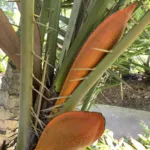 Reclining Date Palm (Phoenix reclinata) care guidePhoenix reclinata
 Date Palm (Phoenix dactylifera) care guidePhoenix dactylifera
 Mauritia flexuosa care guideMauritia flexuosa