
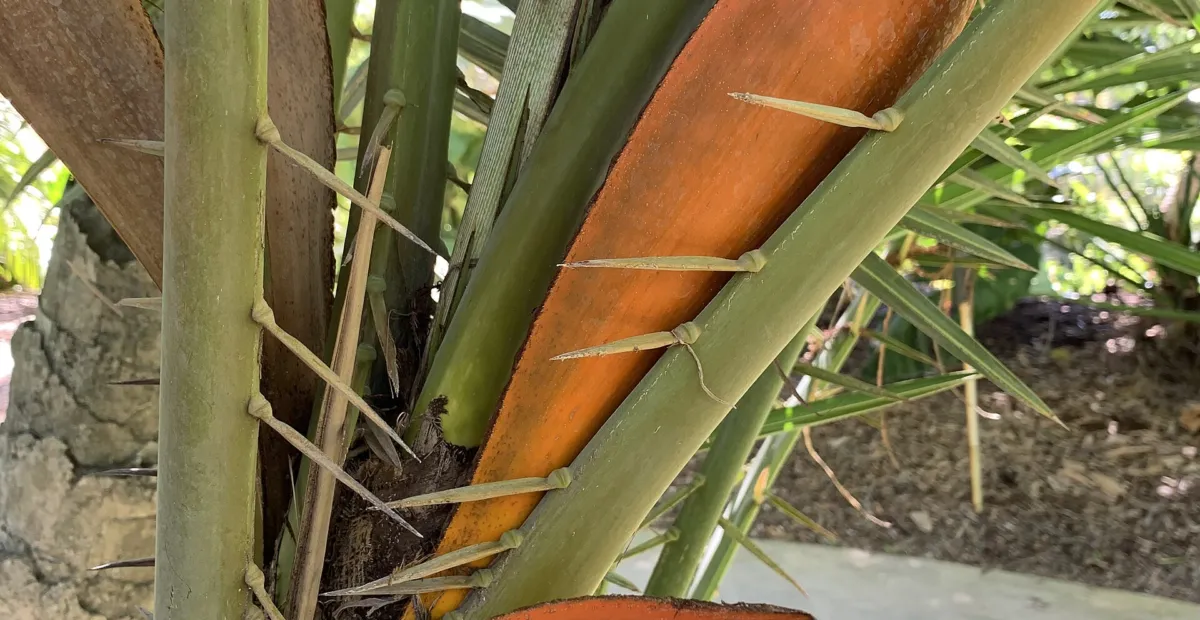
 Source:
Reclining Date Palm (Phoenix reclinata) short overview
Phoenix reclinata, the Reclining Date Palm, is a clumping evergreen palm from tropical and southern Africa, Madagascar, the Comoros and the southwestern Arabian Peninsula. It forms arching fronds, spiny petioles and multiple leaning trunks, and grows best in warm, sunny, well-drained sites with regular moisture. In the United States, it is mainly suited to USDA Zones 9B–11 and protected landscapes or containers in cooler regions.
Taxonomic classification
Reclining Date Palm (Phoenix reclinata) care guide
Light and placement
Give full sun for strongest growth, dense foliage and better form; partial shade is tolerated, especially in hot climates. An east-, south- or west-facing position with open sky is suitable. Too little light produces weaker, more open growth, while intense reflected heat combined with drought can scorch leaflets. Provide protection from cold winds and cramped pedestrian areas.
Watering and humidity
Water deeply when the upper few inches of soil begin to dry, then allow excess water to drain. Keep newly planted palms evenly moist through the first growing season; mature plants become more drought tolerant but look better with periodic irrigation during hot, dry weather. Reduce watering in cool weather and never leave the trunk base constantly wet.
Soil and growing medium
Use a well-drained sandy or loamy soil with good aeration. The species tolerates rocky and somewhat alkaline conditions, but prolonged saturation around the trunk can encourage disease. In containers, use a coarse palm mix amended for drainage rather than dense garden soil.
Feeding
Feed in spring and summer with a controlled-release palm fertilizer that supplies nitrogen, potassium and magnesium, following the product label. Compost can improve poor soil, but do not pile it against the trunk. Stop or reduce feeding during cool, inactive periods and after severe root stress.
Growth and habit
This palm typically develops several trunks from the base, producing an irregular, spreading clump rather than a single uniform stem. Older fronds may hang beneath the crown, and basal shoots can enlarge the planting over time. Give it room for suckering and remove only damaged or obstructive growth.
Planting and repotting
Plant after the danger of damaging cold has passed, selecting a sunny, spacious site. Set the root ball at the same depth it grew in its nursery container; do not bury the trunk base. Allow room for the clumping habit and establish with consistent irrigation while new roots develop.
Repot container plants only when roots have substantially filled the pot, preferably in spring or early summer. Move up one pot size, preserve the root ball, and use a fast-draining palm medium. Large specimens are difficult to transplant because of their size and spiny foliage.
Propagation and pruning
Propagation
Propagate from fresh seed after removing the fruit pulp and sowing in a warm, well-drained medium. Germination is improved by warmth and steady moisture. Established clumps may produce basal offsets, but separating large suckers can be difficult and damaging; use clean tools and warm conditions.
Pruning
Remove dead, broken or hazardous fronds with clean, sharp tools, leaving green fronds intact. Cut unwanted basal shoots at ground level if a narrower clump is desired, taking care around the spines. Do not climb or prune large specimens without suitable equipment and training.
Overwintering
In Zones 9B–11, protect young palms from unusual freezes with frost cloth and keep the root zone evenly, not excessively, moist. Container plants should move into a bright, frost-free space before temperatures approach the mid-20s°F. Avoid hard pruning before winter because intact foliage offers some protection.
Uses
Used as a specimen, accent or clustered landscape palm in warm climates, and as a large container plant where winters are too cold for outdoor culture. Its fruits are reported as edible, while leaves and stems have traditional material uses in parts of its native range. In central and south Florida, assess local invasive-plant guidance before planting because it can naturalize.
Appearance
The palm has numerous long, arching, pinnate fronds with bright- to deep-green leaflets. Leaf bases and lower leaflets are modified into spines, while older fronds may form a hanging skirt beneath the crown. Multiple slender trunks often lean outward from the base, creating a distinctive irregular clump.
Flowering
Phoenix reclinata is dioecious, with separate male and female plants. Small male and female flowers are produced on branched inflorescences enclosed by protective bracts. Male flowers are creamy white and may become brown as they age; female inflorescences lengthen and become pendulous as fruit develops.
Pollination and visitors
The species is generally described as dioecious and wind-pollinated, with male plants releasing abundant pollen. No specific animal pollinator or visitor group was reliably documented as characteristic in the sources reviewed.
Phoenix reclinata photos
Click any photo for a larger view. Source, author and license are shown separately.
Diseases and pests
Diseases
Avoid persistently wet soil and poor trunk drainage, which can favor rot and other palm diseases. Maintain adequate spacing for airflow, remove badly damaged fronds with clean tools, and monitor stressed plants for decline symptoms. In Florida, avoid planting where naturalization is a concern.
Pests
Inspect leaf bases and fronds for scale insects, mealybugs and mites, especially on stressed container plants. Improve light and airflow, remove heavily infested material, and use horticultural oil or another labeled treatment when needed. Avoid overwatering and repeated nitrogen excess, which can worsen weak growth and pest pressure.
Toxicity and pollen
Authoritative sources reviewed for this profile do not establish a clear human or companion-animal toxicity classification for Phoenix reclinata. The ripe fruit is described as edible in botanical and horticultural references, but ornamental plants should not be treated as food unless correctly identified and prepared. Handle spiny foliage carefully and seek medical or veterinary advice after an unusual ingestion or reaction.
- Pollination / pollen
- Abundant, wind-dispersed pollen from male plants
Male palms can release pollen in visible clouds, so airborne exposure may be relevant during flowering, particularly near large plantings. The available evidence supports a moderate pollen concern rather than a precise clinical allergy rating. Sensitive gardeners should avoid handling flowering male inflorescences and consider distance, ventilation and local seasonal conditions.
Native habitat
In its native range, Phoenix reclinata occurs from sea level to about 3,000 meters in seasonally dry tropical regions. It is especially associated with watercourses, swamps, moist forest margins and rocky hillsides, but can also grow in open sites with available root moisture.
Interesting fact
The species name reclinata refers to its arching or leaning habit.
Plants are usually dioecious, with male and female flowers on separate palms.
Female inflorescences become pendulous as the fruit clusters develop.
Its natural range extends from tropical Africa to Madagascar and Arabia.
The palm can form dense multi-stemmed clumps from basal shoots.
Frequently asked questions (FAQ)
The most relevant questions about this plant, with short and direct answers.
🌱Quick care
What is the common name of Phoenix reclinata?⌄
Phoenix reclinata is commonly called the Reclining Date Palm. It is also known in some US horticultural references as the Senegal date palm.
How much sunlight does a Reclining Date Palm need?⌄
A Reclining Date Palm grows best in full sun but tolerates partial shade. More sunlight generally supports denser growth and stronger flowering and fruiting.
How often should I water Phoenix reclinata?⌄
Water Phoenix reclinata moderately, allowing the soil surface to dry slightly between waterings. Provide more consistent moisture during establishment, hot weather, and drought.
What soil is best for a Reclining Date Palm?⌄
Use well-drained sandy or loamy soil for a Reclining Date Palm. It can tolerate some moisture, but persistently stagnant or poorly drained soil increases root problems.
What USDA hardiness zones are suitable for Phoenix reclinata?⌄
Phoenix reclinata is generally suited to USDA Hardiness Zones 9B through 11. In colder areas, grow it in a protected microclimate or container and protect it from freezing temperatures.
🌤️Environment and placement
Can Phoenix reclinata grow in partial shade?⌄
Yes, Phoenix reclinata can grow in partial shade, although full sun is preferable for the best form and flowering. Shade is most useful where it provides protection from intense heat or cold.
How cold hardy is the Reclining Date Palm?⌄
The Reclining Date Palm tolerates only brief, light frost and needs protection from prolonged freezes. Young palms are especially vulnerable, and severe damage can occur when temperatures fall into the mid-20s Fahrenheit.
Can Phoenix reclinata grow in a container?⌄
Yes, a young Phoenix reclinata can be grown in a large container with excellent drainage. Container culture becomes difficult as the palm develops multiple trunks and a broad, heavy root system.
How large does Phoenix reclinata get?⌄
Phoenix reclinata can reach roughly 25 to 35 feet tall with a spread of about 12 to 20 feet. Its clumping habit may make it substantially wider over time, so allow generous space.
Is Phoenix reclinata suitable for a small yard?⌄
Phoenix reclinata is usually unsuitable for a small yard because it forms a wide clump and has sharp spines on the leaf bases. Keep it well away from walkways, patios, play areas, and entryways.
Is Phoenix reclinata invasive in the United States?⌄
Phoenix reclinata is considered invasive or potentially invasive in parts of Florida, especially South Florida. Check local and state planting guidance before installing it, and remove fruit or seedlings where spread is a concern.
Can Phoenix reclinata tolerate salt or coastal conditions?⌄
Phoenix reclinata can tolerate some coastal exposure and salt spray, but performance depends on drainage, wind protection, and the severity of the site. Avoid assuming it will tolerate direct, persistent salt damage.
💧Care and problems
How fast does Phoenix reclinata grow?⌄
Phoenix reclinata has a moderate growth rate under warm, adequately watered conditions. Growth slows in cool weather, heavy shade, drought, poor soil, or after frost damage.
Why are the leaves of my Phoenix reclinata turning brown?⌄
Brown leaves may result from drought, frost, excessive salt, transplant stress, nutrient deficiencies, or normal aging. Check irrigation and drainage first, then remove only completely dead fronds.
Does Phoenix reclinata need fertilizer?⌄
Phoenix reclinata benefits from a palm fertilizer containing appropriate micronutrients when grown in nutrient-poor soil. Apply it according to the product label and avoid overfertilizing a drought-stressed or newly transplanted palm.
What pests and diseases affect Phoenix reclinata?⌄
Phoenix reclinata can experience common palm pests and nutrient deficiencies and is reported to have some susceptibility to lethal yellowing disease. Monitor for declining new growth, trunk problems, and persistent discoloration, and seek local extension advice for diagnosis.
🪴Planting and repotting
When is the best time to plant Phoenix reclinata?⌄
Plant Phoenix reclinata during the warm growing season, after the danger of hard freezes has passed. Warm soil and regular irrigation help the palm establish before its first cool season.
How should I plant a Reclining Date Palm?⌄
Plant a Reclining Date Palm at the same depth as it was growing in its container, using well-drained soil and a wide planting area. Water deeply after planting and maintain consistent moisture while roots establish.
How much space does Phoenix reclinata need?⌄
Give Phoenix reclinata enough room for a mature clump roughly 12 to 20 feet wide, with additional clearance for fronds and spines. Increase the setback from buildings and paths where people may contact the leaves.
✂️Propagation and pruning
How do you propagate Phoenix reclinata from seed?⌄
Propagate Phoenix reclinata from fresh, cleaned seeds planted in a warm, well-drained medium kept evenly moist. Germination may begin in about 10 days but can take several weeks or longer.
Can Phoenix reclinata be propagated from suckers?⌄
Yes, Phoenix reclinata can be propagated from basal suckers. Separate a well-rooted sucker carefully during warm weather and keep it evenly moist while it re-establishes.
How should I prune Phoenix reclinata?⌄
Remove only dead or badly damaged fronds and spent flower or fruit stalks from Phoenix reclinata. Wear heavy gloves and eye protection because the leaf bases contain sharp spines, and do not strip the entire crown.
Can I remove the trunks from a clumping Phoenix reclinata?⌄
Yes, selected trunks or basal suckers can be removed to manage the clump, but cutting is difficult because of the palm's size and spines. Use trained help for mature specimens and avoid injuring the remaining growing points.
⚠️Toxicity and safety
Does Phoenix reclinata have thorns?⌄
Yes, Phoenix reclinata has sharp spines near the bases of its leaves. Keep children and pets away during maintenance, and wear gloves, eye protection, long sleeves, and sturdy clothing when pruning.
Is Phoenix reclinata toxic to people or pets?⌄
No confirmed toxicity classification is available for Phoenix reclinata, so its safety for people and pets should be treated as uncertain. The fruit is described botanically as edible, but do not allow children or animals to consume unidentified plant material.
Are Phoenix reclinata fruits edible?⌄
The ripe fruits of Phoenix reclinata are reported as edible and date-like, but they should not be assumed safe for every person or animal. Remove fallen fruit where local spread, pests, or accidental consumption is a concern.
Should I plant Phoenix reclinata in South Florida?⌄
Use caution before planting Phoenix reclinata in South Florida because it is listed as invasive in that region. Choose a recommended noninvasive palm where local regulations, conservation guidance, or site conditions make spread a concern.
🌸Flowering and special interest
Does Phoenix reclinata produce flowers?⌄
Yes, Phoenix reclinata produces branched clusters of small flowers, with male and female flowers typically occurring on separate plants. Female palms can produce fruit when pollinated by a male palm.
When does Phoenix reclinata produce fruit?⌄
Female Phoenix reclinata palms produce fruit after flowering when pollination occurs. The fruits mature from yellowish or greenish tones to reddish-orange or dark colors, depending on conditions and development.
Do I need two Phoenix reclinata palms to get fruit?⌄
Usually, a female Phoenix reclinata needs pollen from a male palm to produce a substantial fruit crop because the species is dioecious. A female may flower without fruiting if no compatible male is nearby.
Similar plants
 East Indian wine palm (Phoenix rupicola) care guidePhoenix rupicola
 Loulu (Pritchardia glabrata) care guidePritchardia glabrata
 Nibong palm is an Asian species of palm tree in the family Arecaceae (Oncosperma tigillarium) care guideOncosperma tigillarium
 Ribbon Fan Palm (Livistona decora) care guideLivistona decora
 Cabbage Tree Palm (Livistona australis) care guideLivistona australis
 Round-leaved licuala palm (Licuala grandis) care guideLicuala grandis