
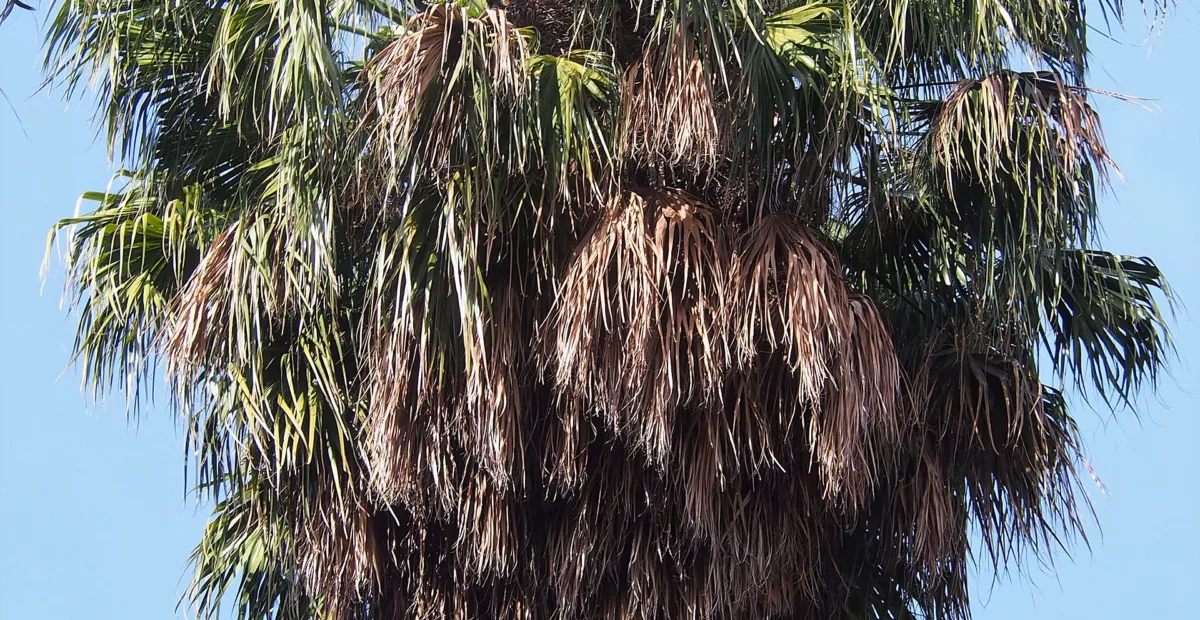
 Source:
Cabbage Tree Palm (Livistona australis) short overview
Cabbage Tree Palm, Livistona australis, is a striking Australian fan palm that forms a solitary trunk and a rounded crown of glossy, deeply divided leaves. Cream-white flowers appear among the foliage and may develop into red, then dark fruits. In the United States it is best suited to warm coastal climates, large containers or conservatories, with excellent drainage, regular moisture and protection from severe freezes and its spiny leaf stalks.
Taxonomic classification
Cabbage Tree Palm (Livistona australis) care guide
Light and placement
Give full sun for the strongest growth, especially in humid coastal climates, or light partial shade in hot inland locations. An east-, southeast- or south-facing position is generally suitable where winters are mild. Excess shade produces stretched growth and a thin crown; intense reflected heat combined with drought can scorch leaf segments. Acclimate container plants gradually when moving into stronger sun.
Watering and humidity
Water deeply when the upper few inches of soil begin to dry, then allow excess water to drain fully. Keep newly planted palms evenly moist through their first growing season, reducing frequency during cool weather. Established plants tolerate brief dry spells but look best with regular moisture. Avoid standing water and wet crowns in persistently cool conditions.
Soil and growing medium
Use a fertile, sharply draining soil that still holds moderate moisture. Sandy loam enriched with compost is suitable, while compacted clay should be amended or avoided. A slightly acidic to neutral reaction is generally appropriate. Do not allow the root zone to remain waterlogged, especially in containers.
Feeding
Feed during active growth with a controlled-release palm fertilizer containing nitrogen, potassium and magnesium, following the product label. A spring application and, in a long warm season, a second light application are usually sufficient. Do not fertilize drought-stressed, newly transplanted or cold-damaged plants until they resume growth.
Growth and habit
A solitary, evergreen palm with a single trunk and a terminal crown. It is generally slow to moderate in cultivation and becomes increasingly architectural with age. Remove only dead or hazardous leaves; cutting healthy green fronds reduces vigor and can expose the trunk to unnecessary damage.
Planting and repotting
Plant after the danger of hard frost has passed, choosing a warm site with room for the mature crown. Set the root ball level with the surrounding soil and water deeply during establishment. Allow generous clearance from paths because the petioles can be spiny. Mulch lightly without touching the trunk.
Repot container plants in spring only when roots have filled the pot or drainage has declined. Move into a heavy, stable container one size larger, preserving the root ball and keeping the trunk at its original depth. Handle the foliage and petioles carefully because margins may bear sharp recurved spines.
Propagation and pruning
Propagation
Propagate from fresh seed. Clean the fruit, sow the seed in a warm, sterile, well-drained medium and maintain even moisture without saturation. Germination may be irregular and slow. Seedlings should be protected from cold and transplanted carefully because palms generally dislike severe root disturbance.
Pruning
Remove completely dead, broken or dangerous fronds with clean tools. Do not cut green fronds merely to shape the crown, and never remove the growing point. Wear gloves, eye protection and long sleeves because petiole margins may carry sharp recurved spines.
Overwintering
In Zone 9a or colder, protect young palms from hard freezes with frost cloth and a sheltered microclimate. Container plants should be moved to a bright, cool, frost-free space before temperatures approach the upper 20s °F. Reduce watering indoors, maintain airflow and return plants outdoors gradually in spring.
Uses
Used as an architectural specimen palm in warm landscapes, coastal gardens, parks and spacious courtyards. It can be grown in a large container while young and is suitable for conservatory culture where outdoor winters are too cold. Historical sources document fiber use and use of the growing point, but harvesting the bud kills the plant and is not recommended for ornamental specimens.
Appearance
The palm forms one upright, ringed trunk with narrow leaf scars, longitudinal fissures and persistent fibers near old petiole bases. Its large, glossy, fan-shaped leaves are costapalmate and divided into many regular segments, whose tips may droop. Petioles are long and can bear short, curved black spines, making the crown attractive but not suitable beside narrow walkways.
Flowering
This species produces branched, interfoliar flower clusters among the leaves. The numerous small flowers are cream-white to pale yellow and have a funnel-shaped structure with fleshy floral parts. Flowering is reported from winter into summer in parts of its Australian range, with timing varying by climate.
Pollination and visitors
The small flowers are visited by insects, but reliable species-specific pollinator records for Livistona australis are limited. Avoid presenting a particular bee, butterfly or other insect as the primary pollinator without stronger documentation.
Livistona australis photos
Click any photo for a larger view. Source, author and license are shown separately.
Diseases and pests
Diseases
Prevent problems by avoiding chronically wet soil, planting in clean media and providing airflow. Watch for leaf-spot symptoms, trunk or root decline and basal rot after prolonged saturation. Remove badly affected material, improve drainage and avoid overhead irrigation when foliage remains wet for long periods.
Pests
Inspect for scale insects, mealybugs, mites and palm-feeding caterpillars, especially on stressed container plants. Quarantine new specimens, wash foliage when practical and use horticultural oils or labeled controls only when pests are confirmed. Avoid unnecessary broad-spectrum insecticides that may harm beneficial insects.
Toxicity and pollen
Reliable species-specific evidence for poisoning in people or pets is limited. The plant should not be treated as edible, and the sharp petiole spines present a more established physical hazard than toxicity. Keep fallen fruit and plant material away from children and animals until species-specific safety information is available.
- Typical season
- Primarily late winter through summer in the United States when cultivated outdoors
- Pollination / pollen
- Insect-dispersed palm pollen
This is an insect-pollinated palm, so pollen is not typically dispersed like wind-pollinated grass or tree pollen. However, species-specific clinical allergy evidence is limited, and sensitive individuals should avoid assuming zero risk during flowering. Outdoor exposure is likely to be lower than for strongly wind-pollinated plants.
Native habitat
Native to eastern and southeastern Australia, especially coastal and near-coastal districts. It occurs in moist sclerophyll forest, swampy sites, rainforest margins and along streams, often on soils that remain seasonally moist but are not permanently stagnant. It can occur from near sea level to around 3,300 feet in parts of its range.
Interesting fact
Its common name refers to the edible-looking central leaf bud historically used by Aboriginal people and early settlers, although removing the growing point kills the palm. The species can develop a trunk more than 80 feet tall in favorable conditions. Persistent petiole fibers and old leaf bases can remain on the trunk before gradually falling away. Its fruits change from red to reddish brown or nearly black as they mature.
Frequently asked questions (FAQ)
The most relevant questions about this plant, with short and direct answers.
🌱Quick care
What is Livistona australis commonly called?⌄
Livistona australis is commonly called the Cabbage Tree Palm. It is an Australian fan palm in the Arecaceae family.
How big does a Cabbage Tree Palm get?⌄
A Cabbage Tree Palm can eventually reach about 65–100 feet tall outdoors, although it grows slowly. Give it substantial vertical and horizontal space before planting.
Is Livistona australis fast-growing?⌄
No, Livistona australis is generally slow-growing, especially when young or grown in a container. Warmth, adequate moisture, full light, and fertile soil support its best growth.
🌤️Environment and placement
What light does Livistona australis need?⌄
Livistona australis grows best in full sun to partial shade. Young plants may establish more easily with some afternoon protection before gradually moving into stronger light.
Where can I grow a Cabbage Tree Palm in the United States?⌄
It is best suited to warm coastal and subtropical areas, generally around USDA Zones 9–11, with local protection from hard freezes. In colder regions, grow it in a container or overwinter it under cover.
Can Livistona australis tolerate cold?⌄
Livistona australis tolerates brief light frosts better than many tropical palms but is not reliably hardy through hard freezes. Protect the crown and roots when temperatures approach freezing, especially on young plants.
Can a Cabbage Tree Palm grow indoors?⌄
A young Cabbage Tree Palm can be grown indoors temporarily in a very bright room, but it eventually becomes too large for typical house conditions. Provide strong light, good air circulation, and avoid constantly wet soil.
Is Livistona australis suitable for coastal gardens?⌄
Livistona australis can suit sheltered coastal gardens because it naturally occurs in eastern Australian coastal and moist forest habitats. Salt exposure, strong wind, and poor drainage can still cause damage.
💧Care and problems
How often should I water Livistona australis?⌄
Water Livistona australis when the soil surface begins to dry, keeping the root zone moderately and consistently moist. Reduce watering during cool weather, but do not allow container plants to dry out for long periods.
What soil is best for a Cabbage Tree Palm?⌄
Use fertile, well-drained sandy loam that retains moderate moisture without becoming waterlogged. Improve heavy clay or compacted soil before planting by increasing drainage rather than creating a permanently wet planting pocket.
Does Livistona australis need fertilizer?⌄
Yes, regular feeding during active growth can improve color and vigor. Use a palm fertilizer according to the label, and avoid heavy applications when the plant is dormant or drought-stressed.
Why are the leaves of my Cabbage Tree Palm turning brown?⌄
Brown leaves can result from drought, cold damage, low humidity, salt buildup, nutrient deficiency, or normal aging. Check soil moisture, recent temperatures, drainage, and fertilizer practices before removing affected fronds.
Why is my Livistona australis not growing?⌄
Slow growth is normal, but prolonged stagnation may indicate insufficient light, cold conditions, root restriction, poor drainage, drought, or nutrient deficiency. Correct the growing conditions and allow several warm growing seasons for improvement.
Does Livistona australis have thorns or sharp parts?⌄
Yes, the leaf stalks may have sharp hooked prickles, particularly toward their bases, and older trunks can have rough projecting fibers. Wear gloves and eye protection when pruning or handling the plant.
🪴Planting and repotting
When is the best time to plant a Cabbage Tree Palm?⌄
Plant it in spring or early summer after the risk of hard freezes has passed. Warm soil helps the palm establish roots before the next cold season.
How should I plant Livistona australis in the ground?⌄
Choose a sunny or lightly shaded site with fertile, well-drained soil and plant the palm no deeper than it was growing in its container. Water thoroughly after planting and keep the root zone consistently moist while it establishes.
Can Livistona australis grow in a container?⌄
Yes, young Livistona australis plants grow well in containers with drainage holes and a coarse, well-drained potting mix. Repot only when roots fill the container, because an oversized pot can remain excessively wet.
Does Livistona australis transplant well?⌄
It can be transplanted, but large palms are more vulnerable to root drying and establishment stress. Move them carefully, keep the root ball intact, stake the palm securely, and provide thorough aftercare.
✂️Propagation and pruning
How do you propagate Livistona australis?⌄
Livistona australis is propagated primarily from seed. Sow fresh, cleaned seed in a warm, deep container with a well-drained medium and keep it evenly moist until germination.
How long does Cabbage Tree Palm seed take to germinate?⌄
Germination can be slow and uneven, often taking several weeks or longer depending on seed freshness and warmth. Keep the seed warm and moist but never waterlogged, and do not discard ungerminated seed too quickly.
Can you grow Livistona australis from cuttings?⌄
No, ordinary stem or leaf cuttings are not a practical propagation method for this single-trunked palm. Seed propagation is the dependable approach.
Should I prune a Cabbage Tree Palm?⌄
Prune only dead, damaged, or hazardous fronds and remove spent flower or fruit stalks when necessary. Avoid cutting green fronds or stripping the crown, because excessive pruning weakens the palm.
⚠️Toxicity and safety
Is Livistona australis toxic to dogs or cats?⌄
There is no reliable species-specific toxicity classification for Livistona australis. Because any plant material can cause digestive upset and the fronds may be prickly, prevent pets from chewing it and contact a veterinarian after ingestion or symptoms.
Is the Cabbage Tree Palm safe for children?⌄
The plant is not supported by reliable species-specific toxicity information, but its sharp leaf-stalk prickles and rough trunk can cause physical injury. Place it away from play areas and supervise children around mature plants.
🌸Flowering and special interest
Does Livistona australis flower?⌄
Yes, mature Livistona australis can produce branched clusters of small cream to pale yellow flowers. Flowering is most likely when the palm has adequate warmth, light, moisture, and sufficient maturity.
When does a Cabbage Tree Palm bloom?⌄
Blooming commonly occurs from late spring through summer, although timing varies with climate and plant maturity. Container-grown or cold-stressed palms may flower irregularly or not at all.
What fruit does Livistona australis produce?⌄
Female plants can produce fleshy fruits that mature from reddish tones to purple-black. The fruit contains seed and may attract wildlife, while the species can have functionally separate male and female plants.
Why is my Livistona australis not flowering?⌄
A young palm may simply be immature, since flowering generally requires substantial age and size. Insufficient warmth, light, moisture, nutrition, or winter protection can also delay flowering.
Similar plants
 Nannorrhops ritchiana care guideNannorrhops ritchiana
 Nibong palm is an Asian species of palm tree in the family Arecaceae (Oncosperma tigillarium) care guideOncosperma tigillarium
 Mauritia flexuosa care guideMauritia flexuosa
 White Elephant Palm (Kerriodoxa elegans) care guideKerriodoxa elegans
 Pelagodoxa henryana care guidePelagodoxa henryana
 He Queensland fan palm or Australian fan palm (Licuala ramsayi) care guideLicuala ramsayi