
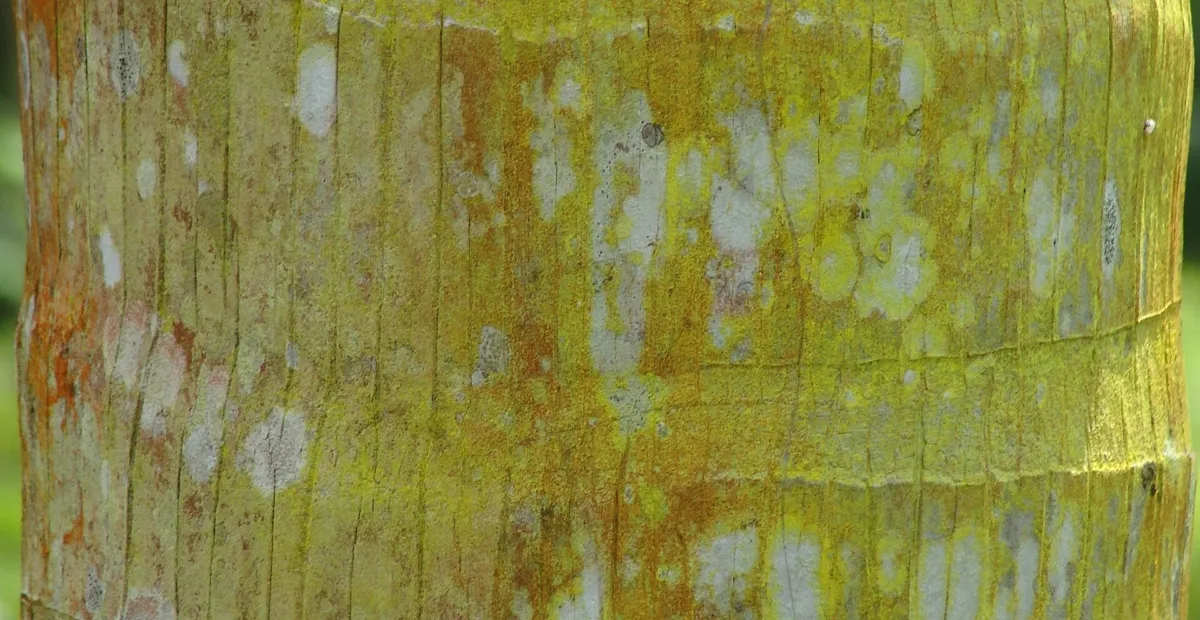
 Source:
Veitchia arecina short overview
Veitchia arecina is a slender, solitary palm native to Vanuatu in the South Pacific. It develops a smooth, prominently ringed trunk, a green crownshaft, long pinnate fronds, pale branched inflorescences, and red fruits when mature. In the United States, it is suited to frost-free landscapes such as southern Florida and Hawaii, while elsewhere it is usually grown as a high-light container or conservatory palm.
Taxonomic classification
Veitchia arecina care guide
Light and placement
Give full sun to bright filtered light. Outdoors, morning sun with protection from harsh reflected heat is useful while young; established palms tolerate stronger sun in humid climates. Indoors, place near a south- or west-facing window or use strong supplemental lighting. Too little light causes stretched fronds and weak growth; excessive dry heat or abrupt sun can scorch leaflets.
Watering and humidity
Water deeply when the upper 1–2 inches of mix begins to dry, then allow excess water to drain fully. Keep the root zone evenly moist during warm active growth and reduce frequency in cool, dim winter conditions without allowing the root ball to become bone-dry. Never leave the container standing in water; high humidity helps limit brown tips.
Soil and growing medium
Use a fertile, moisture-retentive but sharply draining mix. A sandy loam amended with organic matter suits containers and landscapes. Slightly acidic to near-neutral conditions are preferable; avoid persistently waterlogged soil and heavy salt accumulation.
Feeding
Feed during active growth with a complete palm fertilizer containing magnesium and micronutrients, following the product label and using a restrained rate in containers. Apply after watering to reduce root stress. Do not fertilize weak, freshly transplanted, cold, or severely drought-stressed plants.
Growth and habit
A solitary, evergreen palm with a generally upright trunk and an arching crown of pinnate fronds. Growth is slow to moderate depending on heat, light, nutrition, root space, and water quality. Mature plants benefit from room around the crown and from stable support in exposed sites.
Planting and repotting
Plant outdoors after the soil has warmed in a frost-free location. Set the palm at the same depth at which it was growing, keeping the crownshaft and trunk base above settled soil. Mulch broadly without touching the trunk, and water consistently during establishment.
Repot only when roots have substantially filled the container, preferably during warm active growth. Move up one pot size at a time and disturb the root ball as little as possible. Use a deep, stable container with large drainage holes.
Propagation and pruning
Propagation
Propagate from fresh seed. Sow cleaned seed in a warm, sterile, freely draining medium and keep it evenly moist. Germination timing can be variable; bottom heat and temperatures around 75°F or warmer improve reliability. Seed viability declines as it dries.
Pruning
Remove only fully dead or badly damaged fronds, cutting the petiole cleanly without injuring the trunk or crownshaft. Do not strip green fronds for appearance; excessive pruning reduces photosynthetic reserves and can stress the palm. Remove fallen fruiting debris where sanitation or walkway safety matters.
Overwintering
Move container plants indoors or into a heated greenhouse before temperatures approach 40°F. Keep them in the brightest available light, water less often in cool conditions, and check regularly for spider mites and scale. Outdoor plants in marginal climates require substantial overhead and root-zone protection, but prolonged freezing is unsafe.
Uses
Primarily an ornamental specimen palm for tropical and subtropical landscapes, courtyards, patios, conservatories, and heated greenhouses. Its slender trunk, pinnate crown, and colorful ripe fruits provide strong architectural and tropical interest. It is not presented here as a food, medicinal, or wildlife crop because reliable species-specific support is limited.
Appearance
The palm forms a single smooth trunk marked by conspicuous pale rings, often with a slight swollen base. A narrow green crownshaft supports long pinnate leaves whose leaflets may angle downward toward the tips. Branched pale inflorescences emerge below the crown, followed by oblong fruits that turn red as they ripen.
Flowering
This monoecious palm bears branched inflorescences beneath the crownshaft, with male and female flowers occurring on the same plant. Flowers are described as greenish-white or white. Reliable United States flowering months are not established for this species and vary with tropical climate and cultivation conditions.
Pollination and visitors
Species-specific animal visitors or pollinators were not reliably documented in the sources reviewed. The flowers are produced on a monoecious palm, but no defensible visitor group is assigned here.
Veitchia arecina photos
Click any photo for a larger view. Source, author and license are shown separately.
Diseases and pests
Diseases
Avoid chronically wet soil, planting too deeply, and poor air circulation. Monitor stressed plants for general palm disorders such as leaf-spotting or trunk decline, but species-specific disease susceptibility is not well documented. Remove badly affected tissue with sterilized tools and correct the underlying cultural problem.
Pests
Watch for spider mites, scale, mealybugs, and thrips, particularly on indoor or drought-stressed plants. Inspect leaf bases and the crown regularly. Improve light, airflow, and watering consistency first; use a labeled horticultural oil or insecticidal soap only when the pest is confirmed and the product is appropriate for palms.
Toxicity and pollen
No authoritative species-specific toxicity assessment was located for Veitchia arecina. Do not treat the absence of evidence as proof of safety; prevent children and pets from chewing leaves, inflorescences, fruits, or seeds, and seek professional advice after ingestion or a concerning exposure.
- Pollination / pollen
- Palm pollen; species-specific dispersal data unavailable
Veitchia arecina produces pollen as a flowering palm, but reliable species-specific airborne pollen and clinical allergy data were not located. Its tropical, insect-associated floral presentation does not by itself establish a zero allergy risk; sensitive people should observe their own response during flowering.
Native habitat
The species is native to Vanuatu in the South Pacific. It is associated with warm, humid island conditions and is cultivated in tropical gardens. Replicate a frost-free climate, fertile soil, regular moisture, and good drainage rather than cool or seasonally frozen conditions.
Interesting fact
Veitchia arecina is associated with Vanuatu in the South Pacific and is regarded by specialist palm growers as one of the hardier Veitchia species. Its smooth trunk is prominently ringed, and the species can produce conspicuous red ripe fruits. It is monoecious, so both flower sexes occur on one plant.
Frequently asked questions (FAQ)
The most relevant questions about this plant, with short and direct answers.
🌱Quick care
What is Veitchia arecina?⌄
Veitchia arecina is a tall, solitary, tropical palm in the Arecaceae family, native to Vanuatu. It is grown as an ornamental palm for its smooth trunk, crownshaft, pinnate fronds, and red ripe fruit.
How much light does Veitchia arecina need?⌄
Veitchia arecina grows best in full sun to bright filtered light. Provide stronger light gradually when moving a container plant outdoors to reduce leaf scorch.
How often should I water Veitchia arecina?⌄
Water Veitchia arecina regularly to keep the soil evenly, moderately moist but never waterlogged. Allow only the surface to dry slightly between thorough waterings, especially in containers.
Is Veitchia arecina cold hardy?⌄
Veitchia arecina is frost-tender and should be protected when temperatures approach about 29°F. In the United States, it is generally best suited to warm subtropical and tropical areas or container culture with winter protection.
What USDA hardiness zones suit Veitchia arecina?⌄
Veitchia arecina is generally suited to USDA Zones 9b through 11, although local exposure and winter duration matter. Even brief frost or temperatures near 29°F can damage the palm.
What is the common name of Veitchia arecina?⌄
No verified local common name is supplied for this United States plant profile, so the plant should be identified by its scientific name, Veitchia arecina. Some horticultural sources use other names, but those are not used here as the documented local name.
🌤️Environment and placement
Can Veitchia arecina grow indoors?⌄
Veitchia arecina can tolerate high-light indoor conditions while young, but it eventually becomes too large for most homes. Place it beside a very bright window and avoid persistently wet potting soil.
Can Veitchia arecina grow in full sun?⌄
Yes, established Veitchia arecina can grow in full sun when acclimated gradually. Young or recently relocated plants may need bright filtered light first to prevent frond scorch.
Does Veitchia arecina tolerate wind?⌄
Veitchia arecina has moderate wind tolerance, but strong or drying winds can tear fronds and increase moisture stress. A sheltered position is preferable, particularly in exposed inland sites.
Does Veitchia arecina tolerate salt spray?⌄
Veitchia arecina has some salt tolerance, but it is not a reliable choice for severe coastal exposure. Rinse foliage periodically with fresh water and protect the palm from persistent salty wind.
What soil is best for Veitchia arecina?⌄
Use fertile, well-drained sandy loam for Veitchia arecina. The soil should retain moderate moisture while allowing excess water to drain quickly from the root zone.
💧Care and problems
Why are the leaves of my Veitchia arecina turning brown?⌄
Brown frond tips usually indicate drought stress, low humidity, salt buildup, wind damage, or excessive fertilizer. Check root-zone moisture and drainage first, then flush container soil if soluble salts may have accumulated.
Why is my Veitchia arecina not growing?⌄
Slow growth can result from cool temperatures, inadequate light, poor nutrition, root restriction, or waterlogged soil. Keep the palm warm, bright, evenly watered, and planted in a freely draining medium.
How do I fertilize Veitchia arecina?⌄
Feed Veitchia arecina during active warm-season growth with a palm fertilizer that supplies magnesium and micronutrients. Follow the product label and avoid heavy applications to dry soil or during cool weather.
What pests affect Veitchia arecina?⌄
Veitchia arecina can be affected by common palm pests such as scale insects, mites, and mealybugs, especially when stressed. Inspect the crownshaft and undersides of fronds regularly and treat infestations according to the product label.
How do I prune Veitchia arecina?⌄
Remove only completely dead or severely damaged fronds, using clean tools. Do not cut the green crownshaft, emerging spear, or healthy green fronds because unnecessary pruning can weaken the palm.
🪴Planting and repotting
How do I plant Veitchia arecina outdoors?⌄
Plant Veitchia arecina in a sunny or brightly filtered location with fertile, well-drained soil. Set it at the same depth as its nursery container, water thoroughly, and maintain even moisture while roots establish.
Can Veitchia arecina grow in a container?⌄
Yes, Veitchia arecina can be grown in a container while young. Use a heavy pot with drainage holes, a fast-draining fertile mix, and repot only when roots have substantially filled the existing container.
When should I repot Veitchia arecina?⌄
Repot Veitchia arecina during warm, active growth when roots are circling densely or water runs through the pot unusually quickly. Move it into only the next container size to reduce the risk of wet soil.
✂️Propagation and pruning
How is Veitchia arecina propagated?⌄
Veitchia arecina is propagated primarily from fresh seed. Clean ripe seed, sow it in a warm, moist, well-drained medium, and expect germination to vary with seed freshness and growing conditions.
Can Veitchia arecina be propagated from cuttings?⌄
No reliable cutting method is commonly used for Veitchia arecina. As a solitary palm, it is normally propagated by seed rather than by dividing offsets.
⚠️Toxicity and safety
Is Veitchia arecina toxic to dogs or cats?⌄
There is no established species-specific toxicity classification for Veitchia arecina. Because palm fruits and plant material can still cause choking or stomach upset, prevent pets from chewing the plant and seek veterinary advice if ingestion causes symptoms.
Is Veitchia arecina safe to plant near people?⌄
Veitchia arecina is generally regarded as having no known human hazard classification, but its large fronds and falling fruit can create maintenance or impact risks. Plant it away from walkways, roofs, play areas, and overhead utility lines.
🌸Flowering and special interest
Does Veitchia arecina produce flowers?⌄
Yes, mature Veitchia arecina produces branched inflorescences with small pale flowers. The species is monoecious, meaning male and female flowers occur on the same palm.
What color fruit does Veitchia arecina produce?⌄
Veitchia arecina produces oval fruits that mature from green or olive tones to bright red. Fruit production is most likely on mature, healthy palms growing in warm conditions.
How tall does Veitchia arecina get?⌄
Veitchia arecina can become a large palm, with sources describing mature specimens roughly 20 to 90 feet tall depending on conditions. Allow substantial vertical and overhead space before planting it permanently.
Similar plants
 Pritchardia thurstonii care guidePritchardia thurstonii
 He royal palm (Roystonea regia) care guideRoystonea regia
 Dwarf Palmetto (Sabal minor) care guideSabal minor
 Nikau (Rhopalostylis sapida) care guideRhopalostylis sapida
 Rio Grande palmetto (Sabal mexicana) care guideSabal mexicana
 Trachycarpus latisectus care guideTrachycarpus latisectus