
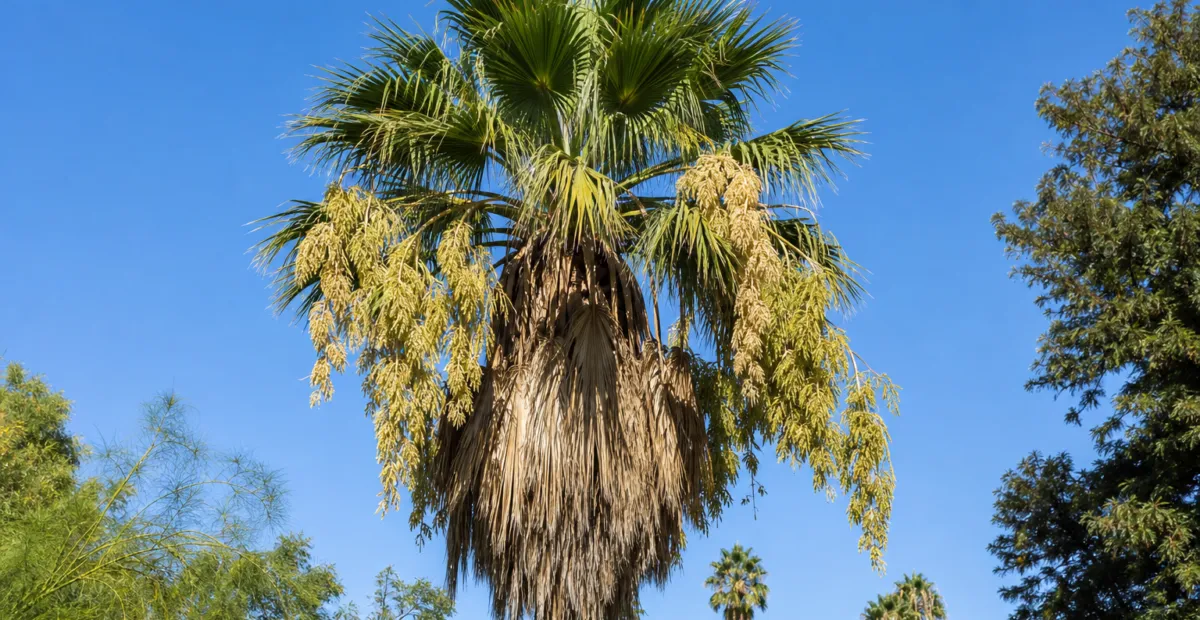
 AI-generated illustration
He Mexican fan palm (Washingtonia robusta) short overview
Mexican fan palm is a tall, fast-growing evergreen palm from northwestern Mexico. Its slender gray trunk supports a rounded crown of large, fan-shaped fronds, while old leaves may remain as a shaggy skirt. It performs best in full sun, sharply drained soil, and warm climates equivalent to USDA Zones 9–11. Established plants tolerate drought, wind, salt, and urban conditions, but they need ample space and protection from hard freezes.
Taxonomic classification
He Mexican fan palm (Washingtonia robusta) care guide
Light and placement
Provide full sun, ideally with unobstructed southern or western exposure and at least six hours of direct light. Young container plants tolerate bright partial shade, but insufficient light produces weaker, more open growth and slower acclimation. Intense reflected heat is usually tolerated when water is available.
Watering and humidity
Water deeply and regularly during the first growing season, allowing the surface to dry slightly between irrigations. Once established, the palm is drought tolerant, but occasional deep watering improves growth during prolonged heat. Reduce irrigation in cool weather and never leave roots in persistently saturated soil.
Soil and growing medium
Use sandy or loamy soil with rapid drainage. The palm tolerates acidic through neutral soil and can also grow in mildly alkaline conditions, but constantly saturated or anaerobic soil can cause decline and trunk or root problems.
Feeding
Apply a complete palm fertilizer during spring and summer active growth, following the product label. Potassium and magnesium deficiencies can cause leaflet-tip necrosis, discoloration, and premature aging. Do not fertilize drought-stressed, newly disturbed, or dormant plants.
Growth and habit
This is a rapid-growing, single-trunked palm that becomes very tall with age. Mature specimens need substantial vertical clearance. Older palms may shed dead fronds naturally, but retained skirts often require professional removal because the petioles can be sharp and the dry material may increase fire risk.
Planting and repotting
Plant in spring or early summer after the danger of hard frost has passed. Set the root ball at the same depth it grew in its container, water deeply during establishment, and allow ample clearance for the mature trunk and crown.
Repot container plants only when roots have filled the pot. Move up one container size in spring, use a very free-draining palm mix, and avoid burying the trunk base.
Propagation and pruning
Propagation
Propagate from fresh seed. Clean the fruit, sow in a warm, well-drained medium, and keep evenly moist but not waterlogged. Germination is generally practical under warm conditions.
Pruning
Remove only dead or hazardous fronds, flower stalks, or fruit clusters when necessary. Wear protective clothing because leaf stems may be sharply armed. Do not top the palm or remove healthy green fronds unnecessarily; large specimens are best handled by trained professionals.
Overwintering
Protect young palms from freezes with frost cloth and root-zone mulch, while keeping mulch away from the trunk. Container plants should be moved to a bright, frost-free location before temperatures approach the low 20s °F. Severe cold can damage fronds and growing tissue.
Uses
Used as a specimen, street, lawn, parking-lot, coastal, arid-garden, and container palm in warm regions. Its fruits provide food for wildlife, while retained leaf skirts can shelter animals but may create a fire hazard and require management.
Appearance
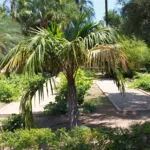
The palm forms a straight, narrow gray trunk topped by a rounded crown of large, pleated, fan-shaped fronds. Dead leaves may hang against the trunk in a dense brown skirt. Leaf stalks can carry sharp teeth, and long flower clusters project beyond the foliage.
Flowering
Mature palms produce long, branched, drooping inflorescences extending beyond the crown. The small bisexual flowers are cream to white, slightly fragrant, and typically appear from late spring into summer in the United States.
Pollination and visitors
Its fragrant flowers attract bees and other arthropods. Fruit production can be limited, and birds may disperse the dark fruits after ripening.
Washingtonia robusta photos
Click any photo for a larger view. Source, author and license are shown separately.
Diseases and pests
Diseases
Avoid chronically wet soil and improve drainage to reduce root and trunk-rot risk. In humid regions, fungal diseases may become serious during persistently rainy periods. Remove severely affected material and sanitize pruning tools.
Pests
Inspect for scale and spider mites, especially on stressed or container-grown plants. Improve irrigation, airflow, and plant vigor before using targeted horticultural treatments.
Toxicity and pollen
No species-specific toxic effect is well documented in the authoritative sources reviewed. The fruit has thin edible flesh, but ornamental palm material should not be consumed routinely, and any plant material may cause mild gastrointestinal upset if eaten in quantity.
- Typical season
- Typically late spring through summer in the United States
- Pollination / pollen
- Light-colored pollen released from exposed anthers in flowers
The palm produces pollen during flowering, but the reviewed U.S. sources provide limited species-specific evidence for clinically important airborne allergy. Sensitive people should still avoid handling flowering material if symptoms occur.
Native habitat
Native to dry landscapes of northwestern Mexico, especially Baja California Sur and western Sonora. It tolerates heat, drought, wind, salt, and urban conditions, but grows faster with regular moisture when drainage remains excellent.
Interesting fact
The species is native to northwestern Mexico and has naturalized in parts of the southern United States. Old dead leaves can remain attached for years, forming a characteristic skirt. Birds consume and disperse the small dark fruits. The genus honors George Washington.
Frequently asked questions (FAQ)
The most relevant questions about this plant, with short and direct answers.
🌱Quick care
How do you care for he Mexican fan palm, Washingtonia robusta?⌄
Give Washingtonia robusta full sun, sharply drained sandy or loamy soil, and regular water while establishing. Once mature, it is drought tolerant, but it still performs best with occasional deep watering during prolonged heat or drought.
Is Washingtonia robusta easy to grow?⌄
Yes, Washingtonia robusta is generally easy to grow in warm, sunny climates with good drainage. Its main challenges are excessive height, sharp leaf-stalk teeth, dead-frond maintenance, and damage from hard freezes.
🌤️Environment and placement
How much sun does Washingtonia robusta need?⌄
Washingtonia robusta grows best in full sun, ideally with at least 6 hours of direct light daily. Young container plants can be acclimated gradually if they were previously grown in shade.
What USDA zones can Washingtonia robusta grow in?⌄
Washingtonia robusta is best suited to warm USDA zones roughly 9 through 11, although local performance varies with exposure and winter temperatures. Protect it from hard frost and prolonged freezes.
Can Washingtonia robusta grow in containers?⌄
Yes, young Washingtonia robusta can grow in a large container with drainage holes and a sharply draining palm mix. Container plants eventually become difficult to manage because this species develops a tall trunk and substantial root system.
How tall does Washingtonia robusta get?⌄
Washingtonia robusta can eventually reach about 60 to 100 feet in favorable landscapes, although growth rate and final size depend on climate and conditions. Choose a planting site well away from buildings, overhead wires, and narrow sidewalks.
How wide does a Washingtonia robusta palm become?⌄
The mature crown commonly spreads about 10 to 12 feet, while the trunk remains notably slender compared with many other palms. Falling fronds and fruit should also be considered when placing it near paths or structures.
Can Washingtonia robusta survive drought?⌄
Yes, established Washingtonia robusta tolerates drought and needs relatively little supplemental water in suitable climates. Water it deeply during extended dry periods, especially if it grows in sandy soil or a hot urban setting.
💧Care and problems
How often should you water Washingtonia robusta?⌄
Water a newly planted Washingtonia robusta deeply and regularly until its roots establish, then allow the soil to dry somewhat between waterings. Mature palms usually need only occasional deep irrigation except during prolonged heat or drought.
Why are Washingtonia robusta leaves turning brown?⌄
Brown leaves can result from normal aging, drought, transplant stress, cold injury, salt buildup, or pest damage. Check soil moisture, drainage, recent freezes, and the growing point before removing affected fronds.
Why is my Washingtonia robusta turning yellow?⌄
Yellowing may indicate water stress, poor drainage, nutrient deficiency, root damage, or natural aging of older fronds. Persistent yellowing across newer leaves deserves closer inspection of irrigation, soil conditions, and pests.
What pests affect Washingtonia robusta?⌄
Washingtonia robusta usually has few serious pest problems, but spider mites and scale insects can occur. Inspect undersides of leaves and the crown, and manage infestations promptly according to the product label.
Does Washingtonia robusta need fertilizer?⌄
Washingtonia robusta can grow without frequent feeding, but a palm fertilizer may help where soil is poor or deficiencies appear. Apply only according to the label and avoid overfertilizing a drought-stressed or newly transplanted palm.
How do you protect Washingtonia robusta from frost?⌄
Protect Washingtonia robusta from hard frost by covering young plants, insulating the growing point, and keeping the root zone evenly watered before a freeze. Severe or prolonged cold can damage the crown and may kill smaller palms.
🪴Planting and repotting
What soil is best for Washingtonia robusta?⌄
Use sandy or loamy soil that drains sharply and does not remain waterlogged. Heavy clay should be improved through site selection or drainage measures rather than relying on a shallow planting hole filled with loose soil.
When is the best time to plant Washingtonia robusta?⌄
Plant Washingtonia robusta during the warm growing season after the danger of hard frost has passed. Warm soil helps new roots establish before winter, particularly in regions near the species’ cold tolerance limit.
How do you plant Washingtonia robusta in the ground?⌄
Set the palm at the same depth it was growing in its container, backfill with the native soil, and water deeply. Leave the root flare and trunk base exposed, and keep mulch several inches away from the trunk.
How far from a house should Washingtonia robusta be planted?⌄
Plant Washingtonia robusta well away from houses, utility lines, pools, and busy walkways because it becomes very tall and produces heavy fronds and fruit. The exact distance depends on site constraints, but a spacious long-term location is essential.
✂️Propagation and pruning
How do you propagate Washingtonia robusta?⌄
Washingtonia robusta is normally propagated from seed. Sow fresh, cleaned seed in a warm, well-drained medium and keep it evenly moist until germination.
Can you grow Washingtonia robusta from a palm cutting?⌄
No, Washingtonia robusta is not normally propagated from stem or leaf cuttings. Seed propagation is the practical method because the palm has a single growing point rather than branching stems that root readily.
How fast does Washingtonia robusta grow?⌄
Washingtonia robusta can grow quickly in warm climates with full sun, adequate moisture, and good drainage. Its apparent growth rate slows in containers, cool regions, drought, poor soil, or after transplanting.
How do you prune Washingtonia robusta?⌄
Remove only dead, damaged, or hazardous fronds, using proper sanitation and protective equipment. Do not cut the crown or remove green fronds unnecessarily, and hire a qualified palm professional for tall trees.
⚠️Toxicity and safety
Are Washingtonia robusta fronds dangerous?⌄
Yes, the leaf stalks and fronds can have sharp teeth, and falling dead fronds can injure people or damage property. Wear protective gear and use professional help for pruning mature palms.
Is Washingtonia robusta toxic to dogs or cats?⌄
No specific toxicity is well documented for Washingtonia robusta, but pets should not be allowed to chew or ingest ornamental plant material in quantity. The sharp leaf stalks and fibrous material can also cause physical injury.
Can you eat Washingtonia robusta fruit?⌄
The fruit has been described as thin-fleshed and technically edible, but Washingtonia robusta is an ornamental landscape palm rather than a recommended food crop. Do not eat fruit from treated, contaminated, or unidentified palms.
🌸Flowering and special interest
When does Washingtonia robusta flower?⌄
Washingtonia robusta commonly flowers in spring or early summer once mature. It produces long, branched clusters of small pale flowers followed by dark fruits.
Does Washingtonia robusta produce fruit?⌄
Yes, mature Washingtonia robusta produces small dark blue-black fruits after flowering. The fruit may be spread by birds or other animals, allowing seedlings to appear around established palms.
How can you tell Washingtonia robusta from Washingtonia filifera?⌄
Washingtonia robusta typically has a slimmer, taller trunk, greener leaves, and a more compact crown than Washingtonia filifera. The two species can hybridize, so identification from appearance alone is not always certain.
Similar plants
 Rio Grande palmetto (Sabal mexicana) care guideSabal mexicana
 He Florida thatch palm (Thrinax radiata) care guideThrinax radiata
 Broadleaf lady palm or bamboo palm (Rhapis excelsa) care guideRhapis excelsa
 Saw palmetto (Serenoa repens) care guideSerenoa repens
 He scrub palmetto is a species of palm (Sabal etonia) care guideSabal etonia
 Arikury Palm (Syagrus schizophylla) care guideSyagrus schizophylla