
 Source:
Date Palm (Phoenix dactylifera) short overview
Phoenix dactylifera, commonly called Date Palm, is a long-lived evergreen palm from the Arabian Peninsula to southern Pakistan. It forms a tall, usually solitary trunk topped by stiff blue-green, featherlike fronds and can produce sweet edible dates in hot climates. Grow it in full sun, sharply drained soil, and a warm site protected from hard freezes; male and female plants are separate, and commercial fruiting requires pollination.
Taxonomic classification
Date Palm (Phoenix dactylifera) care guide
Light and placement
Give full, unobstructed sun, ideally with a southern or southwestern exposure in the United States. Strong light supports a dense crown and fruit production. Too little light produces weak, elongated growth and sparse foliage; severe heat is usually tolerated if roots have adequate deep moisture. Avoid shaded courtyards and sites where buildings block most afternoon sun.
Watering and humidity
Water deeply and slowly during establishment, then allow the upper soil to dry before irrigating again. Mature palms are drought tolerant but fruit quality and growth improve with occasional deep water during hot, dry periods. Reduce irrigation in cool weather and never keep the root zone persistently saturated. Humidity is not a substitute for root-zone moisture.
Soil and growing medium
Use sharply drained sandy or loamy soil; established palms tolerate calcareous and mildly saline conditions better than waterlogged roots. A slightly acidic to slightly alkaline range is generally workable, but drainage is more important than fine pH adjustment. In containers, use a coarse palm mix with ample mineral material and a drainage hole.
Feeding
Feed actively growing landscape palms with a slow-release palm fertilizer containing nitrogen, potassium, magnesium, and micronutrients, following the product label. Apply in spring and again during the warm growing season where the label permits. Do not fertilize drought-stressed, newly transplanted, or cold-damaged plants until they resume active growth.
Growth and habit
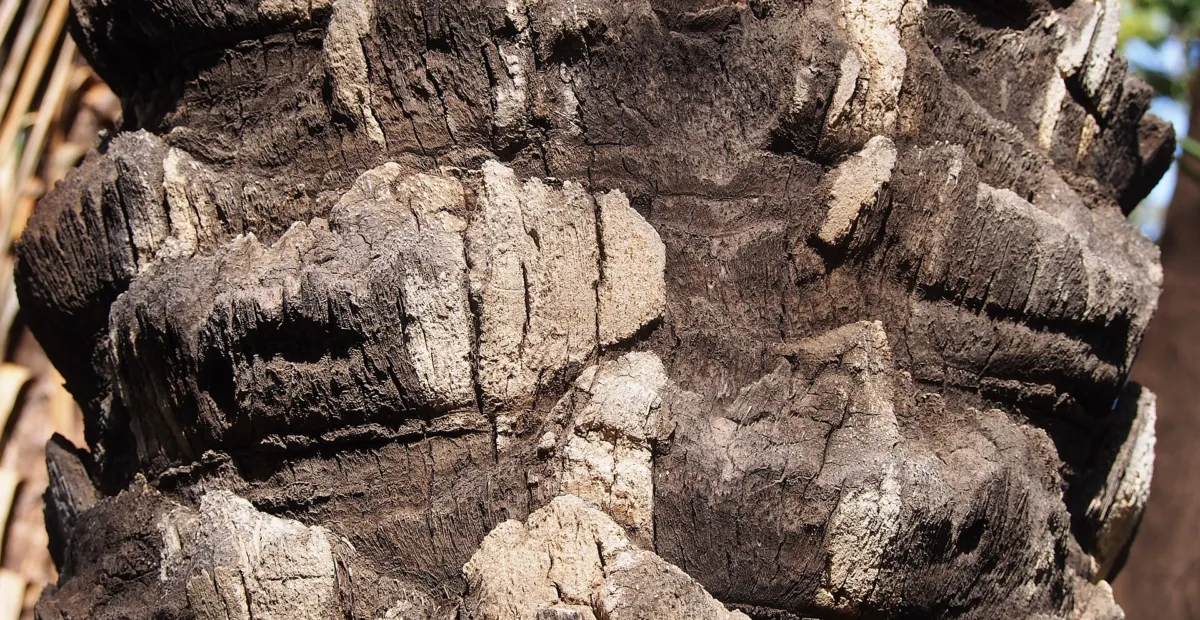
A long-lived, slow-growing palm usually develops one unbranched trunk, although basal offshoots may form. Older leaf bases create a rough, patterned trunk, while the crown remains concentrated at the top. Remove only dead or hazardous fronds; excessive pruning weakens appearance and can expose the crown to damage.
Planting and repotting
Plant outdoors in spring after severe freeze risk has passed, setting the root ball at the same depth it grew in the nursery container. Allow generous clearance for the crown and sharp petioles. Water deeply during establishment, then let the surface dry between irrigations as roots spread. Choose the warmest sunny location available.
Repot container plants only when roots substantially fill the pot, preferably in spring. Move up one pot size rather than making a large jump, use a coarse fast-draining palm mix, and avoid burying the trunk or disturbing the root ball more than necessary. Large specimens are best top-dressed rather than repeatedly repotted.
Propagation and pruning
Propagation
Seed germination is practical but does not preserve a named cultivar and seedlings may be male or female. Commercial and cultivar-true production uses offshoots removed from the mother palm, generally during warm active growth. Offshoot establishment requires careful handling, a well-drained medium, and consistent but not excessive moisture.
Pruning
Remove only fully dead, broken, or hazardous fronds using clean tools. Retain green fronds because excessive removal reduces vigor and can expose the trunk and crown. Cut flower or fruit stalks after production when necessary, and wear substantial protective clothing because petioles and leaf bases are spiny.
Overwintering
Protect young palms from freezes with frost cloth and insulation around the growing point, keeping coverings dry and ventilated when temperatures rise. Container plants should move to a bright, cool, frost-free location before freezing weather. Avoid heavy feeding or aggressive pruning after cold damage; wait until spring growth shows which tissue survived.
Uses
Grown as an architectural specimen, avenue or courtyard tree, desert-landscape palm, and container plant in colder regions. Female trees can produce edible dates where summers are long and hot and pollination is adequate. Fruits, leaves, and trunk materials also have longstanding food, cultural, and practical uses. Spines and large mature size require careful placement.
Appearance
The palm has stiff, featherlike fronds with blue-green to gray-green leaflets arranged along a central rachis. Leaf bases and petioles form a distinctive rough trunk pattern, and the petioles carry sharp modified leaflets. Mature crowns are rounded to somewhat open, with fruit clusters hanging beneath the leaves.
Flowering
Male and female trees bear separate inflorescences among the leaves. Cream to whitish, small flowers are packed on highly branched panicles enclosed by a spathe. Female flowers develop into date fruits after pollination; cultivated orchards commonly manage pollination deliberately because trees are male or female.
Pollination and visitors
This species is primarily wind-pollinated rather than dependent on animal visitors. Male trees produce airborne pollen, while female flowers receive pollen and develop fruit. Commercial production commonly supplements natural pollen transfer by hand.
Phoenix dactylifera photos
Click any photo for a larger view. Source, author and license are shown separately.
Diseases and pests
Diseases
Avoid chronic wetness and trunk injury, which increase disease risk. Watch for Fusarium wilt, Texas Phoenix palm decline, and other palm decline symptoms such as one-sided frond collapse, discoloration, or progressive crown decline. Use clean tools, avoid moving infected soil or plant material, and remove severely affected palms according to local extension guidance.
Pests
Inspect leaf bases and trunk crevices for scale insects, mites, borers, and palm pests. Red date scale is associated with Phoenix palms. Improve plant vigor with correct irrigation, avoid trunk wounds, prune only necessary leaves, and use locally approved treatments when monitoring confirms a damaging infestation.
Toxicity and pollen
The ripe fruit is an important edible food, but the hard pits can present a choking or intestinal-obstruction hazard if swallowed. The plant’s most immediate physical hazard is its sharp petiole spines. Male trees release abundant airborne pollen and may cause seasonal allergy symptoms in sensitive people; female trees produce little or no pollen.
- Typical season
- Late winter through spring in warm US growing regions
- Pollination / pollen
- Abundant, airborne pollen from male trees
Male date palms release abundant, easily airborne pollen and are documented allergy concerns in regions where the species is widely cultivated. Female palms produce minimal to no pollen compared with males. Sensitive people should avoid planting male specimens near frequently used outdoor living areas and limit exposure during flowering.
Native habitat
The species is native from the Arabian Peninsula to southern Pakistan and is associated with hot subtropical regions, oases, river margins, village edges, and sites where roots can access groundwater. It tolerates drought after establishment but performs best when deep roots can reach moisture without remaining saturated.
Interesting fact
Date palms are dioecious: individual trees are male or female.
The species name dactylifera means “finger-bearing.”
A single fruit contains one deeply grooved seed.
Date palms can produce offshoots around the trunk base.
Commercial orchards often pollinate female flowers by hand.
Frequently asked questions (FAQ)
The most relevant questions about this plant, with short and direct answers.
🌱Quick care
What is the Date Palm’s scientific name?⌄
The Date Palm’s scientific name is Phoenix dactylifera. It belongs to the palm family, Arecaceae.
How much sunlight does a Date Palm need?⌄
A Date Palm grows best in full sun, with at least 6 hours of direct sunlight daily. More sun generally supports stronger growth and better fruit development.
Is Phoenix dactylifera drought tolerant?⌄
Yes, an established Date Palm is drought tolerant and uses relatively little water in the landscape. Young palms and palms grown for fruit need regular irrigation while establishing.
How fast does a Date Palm grow?⌄
A Date Palm usually grows slowly to moderately, often around 1 to 1.5 feet per year under favorable conditions. Growth varies with cultivar, heat, water, soil, and palm age.
🌤️Environment and placement
What USDA hardiness zones can grow Date Palm?⌄
Date Palm is generally suited to USDA Zones 9 through 11, although mature palms may tolerate brief colder temperatures. Hard freezes can damage or kill the crown, especially on young palms.
Can Date Palm grow in containers?⌄
A young Date Palm can grow in a large container for several years, but it eventually becomes too large for most pots. Use a heavy container with excellent drainage and move it before the root system becomes crowded.
What soil is best for Phoenix dactylifera?⌄
Use sandy or loamy soil that drains sharply and does not remain waterlogged. Date Palm tolerates a range of soil conditions but performs poorly in persistently wet soil.
Can Date Palm tolerate salt?⌄
Date Palm has relatively good salt tolerance compared with many landscape trees. Even so, excessive salt buildup in soil or irrigation water can cause leaf-tip burn and reduced growth.
Is Date Palm suitable for a small yard?⌄
Usually not, because Phoenix dactylifera can become a very tall palm with a broad crown and sharp leaf bases. Allow generous clearance from buildings, power lines, sidewalks, and high-traffic areas.
💧Care and problems
How often should I water a Date Palm?⌄
Water deeply when the soil has begun to dry, then allow excess water to drain away. Established landscape palms need less frequent irrigation, while young palms and fruiting palms need more consistent moisture.
Why are my Date Palm’s leaves turning brown?⌄
Brown leaves can result from drought, salt buildup, cold damage, nutrient problems, or natural aging of lower fronds. Check irrigation, drainage, recent freezes, and the overall pattern before treating the palm.
Why are my Date Palm’s leaves turning yellow?⌄
Yellowing may indicate nutrient deficiency, poor drainage, excessive watering, root stress, or disease. If the newest leaves are affected or the crown is declining, consult a local extension service or certified arborist.
Does a Date Palm need fertilizer?⌄
Date Palm may benefit from a palm fertilizer containing potassium and magnesium when soil nutrients are low. Apply according to the product label and avoid routine overfertilization, which can damage roots and increase salt buildup.
Should I remove dead fronds from a Date Palm?⌄
Remove only completely dead, loose, or hazardous fronds, using clean tools and protective clothing. Avoid cutting green fronds because premature pruning can stress the palm and reduce its ability to produce energy.
What diseases affect Phoenix dactylifera?⌄
Date Palm can be affected by fungal leaf diseases, scale insects, and serious palm diseases such as lethal bronzing in susceptible regions. Remove infected debris, avoid unnecessary trunk injuries, and seek a professional diagnosis when the crown declines.
🪴Planting and repotting
When is the best time to plant a Date Palm?⌄
Plant a Date Palm during the warm growing season, after the risk of hard freezes has passed. Warm soil helps the palm establish roots before winter.
How deep should I plant a Date Palm?⌄
Plant the palm at the same depth it grew in its nursery container or field, with the root initiation zone kept at or slightly above surrounding soil. Planting too deeply can cause trunk and root problems.
How much space does a Date Palm need?⌄
Provide enough room for a mature crown that may spread roughly 25 feet or more, depending on the cultivar and growing conditions. Keep the trunk and crown away from structures, pavement, utilities, and overhead wires.
✂️Propagation and pruning
Can I grow a Date Palm from a date seed?⌄
Yes, a Date Palm can be grown from a cleaned seed, but seed-grown palms vary genetically and have about a 50 percent chance of being male. A seedling may not produce fruit identical to the parent and can take many years to mature.
How do you propagate Phoenix dactylifera?⌄
Commercial Date Palms are commonly propagated from rooted offshoots, which produce plants genetically identical to the parent. Seed propagation is easier but slower and less predictable for fruit quality and sex.
Can I remove and replant a Date Palm offshoot?⌄
Yes, a well-developed offshoot can be separated from a healthy parent palm and replanted in sharply drained soil. Keep it evenly watered while roots establish, but do not leave the new planting waterlogged.
⚠️Toxicity and safety
Are Date Palms poisonous to people or pets?⌄
Date Palm fruit is edible, but the pits should not be swallowed and the sharp leaf spines can cause painful puncture injuries. Keep fallen fruit and pruning debris away from children and pets.
Are Date Palm fronds dangerous?⌄
Yes, Date Palm fronds and leaf bases can have sharp spines that injure skin and eyes. Wear thick gloves, long sleeves, eye protection, and use appropriate tools when pruning.
Is Date Palm fruit messy in a yard?⌄
Yes, ripe or fallen dates can be messy and may attract insects, birds, and other wildlife. Avoid planting a fruiting female palm directly over sidewalks, patios, driveways, or vehicles.
Can a Date Palm damage sidewalks or foundations?⌄
The roots are generally not considered aggressively destructive like some large woody trees, but the palm’s mature size, trunk, falling debris, and crown should still be planned for carefully. Plant it with adequate clearance from hardscape and structures.
🌸Flowering and special interest
Does a Date Palm need a male and female tree to produce dates?⌄
Yes, Date Palm is dioecious, meaning individual palms are male or female, and fruit production normally requires pollen from a male palm. Commercial growers may hand-pollinate female flowers with collected pollen.
When does a Date Palm produce fruit?⌄
A Date Palm produces fruit only after it reaches reproductive maturity, commonly several years after planting and longer from seed. Hot, dry conditions during flowering and ripening are important for reliable, high-quality dates.
Can Date Palm produce edible dates in the United States?⌄
Yes, it can produce edible dates in hot, dry regions of the United States, especially parts of the Southwest and California. Humid or cool regions may support the palm as an ornamental but often do not provide ideal fruit-ripening conditions.
Why is my Date Palm flowering but not producing dates?⌄
A female Date Palm may fail to produce dates if no compatible male pollen is available, pollination timing is poor, or temperatures are unsuitable for fruit development. A palm grown from seed may also be male and therefore produce pollen but no fruit.
Similar plants
 Baleares Island date palm (Phoenix canariensis) care guidePhoenix canariensis
 Nannorrhops ritchiana care guideNannorrhops ritchiana
 Livistona chinensis care guideLivistona chinensis
 Palm (Oenocarpus bataua) care guideOenocarpus bataua
 Coco-de-mer (Lodoicea maldivica) care guideLodoicea maldivica
 Reclining Date Palm (Phoenix reclinata) care guidePhoenix reclinata