
 Source:
Livistona chinensis short overview
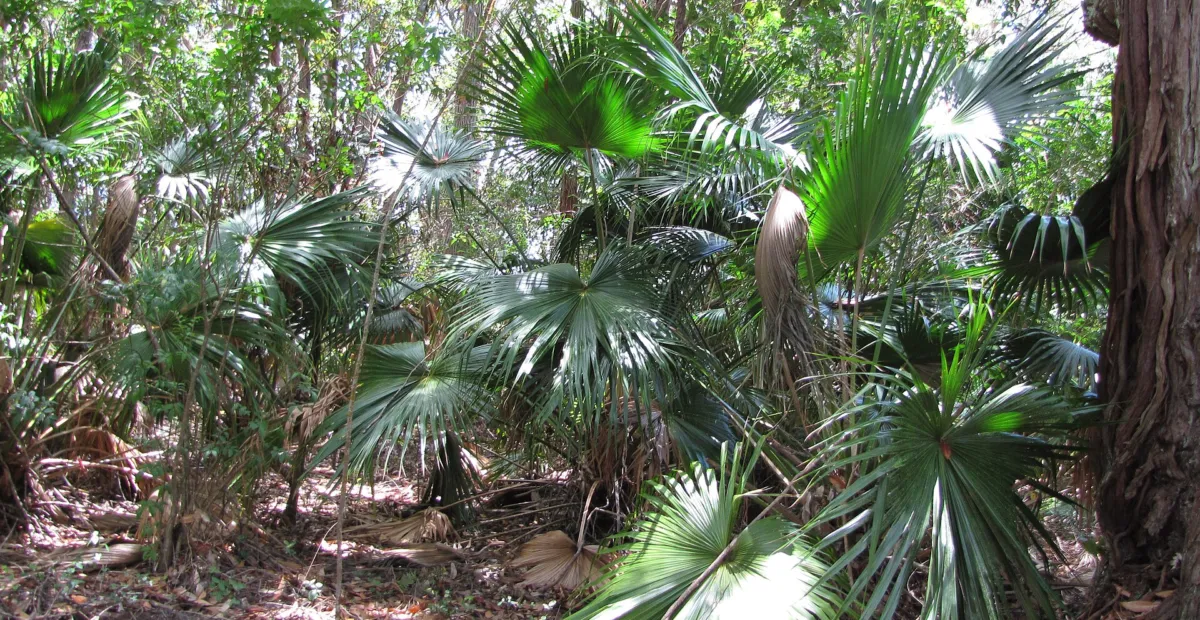
Livistona chinensis is an evergreen fan palm with broad, costapalmate leaves whose finely divided segments often droop at the tips, creating a distinctive fountain-like crown. It grows slowly while young, then develops a solitary ringed trunk and a broad canopy. In the United States, it performs best in warm climates with full sun to partial shade, well-drained soil, and protection from temperatures below about 20°F.
Taxonomic classification
Livistona chinensis care guide
Light and placement
Provide full sun for established outdoor palms, with partial shade acceptable, especially for young plants in hot climates. An east-, south-, or west-facing position is suitable when heat and drainage are adequate. Too little light produces stretched growth and a sparse crown; excessive abrupt sun can scorch recently acclimated indoor or nursery plants.
Watering and humidity
Water deeply when the upper several inches of soil begin to dry, then allow excess water to drain. Maintain more consistent moisture during establishment and hot summer weather, but reduce frequency in cool seasons and avoid saturated soil. Container plants dry faster and need closer monitoring; humidity is secondary to proper drainage.
Soil and growing medium
Use a well-drained sandy, loamy, or amended clay soil. The species tolerates acidic through alkaline conditions, but waterlogged roots should be avoided. In containers, use a coarse palm or tropical-plant mix with ample drainage rather than dense garden soil.
Feeding
Feed during active growth with a controlled-release palm fertilizer that supplies potassium and magnesium, following the product label. Two or three applications per year may be appropriate outdoors in warm climates. Do not fertilize drought-stressed, recently transplanted, or dormant plants, and avoid excessive nitrogen that promotes weak growth.
Growth and habit
This is a solitary, upright palm that remains trunkless or short-trunked for a considerable juvenile period before developing a visible stem. Mature plants form a broad, rounded crown, so early groundcover-style spacing can become overcrowded. Remove only genuinely dead foliage and allow the palm to retain healthy fronds.
Planting and repotting
Plant in spring or early summer after the danger of cold injury has passed. Set the root flare at soil level, water deeply during establishment, and mulch without touching the trunk. Allow substantial room for the mature crown; crowded juvenile plantings can become unsuitable as the palm develops.
Repot container plants in spring when roots have filled the pot or drainage has slowed. Move up only one pot size, preserve the root ball, and avoid burying the stem or trunk deeper than before. Large specimens are better top-dressed than repeatedly disturbed.
Propagation and pruning
Propagation
Propagate from fresh seed. Remove fruit pulp, sow in a warm, well-drained medium, and keep evenly moist. Germination is generally more dependable with fresh seed and warm conditions; seedlings may take time to establish a trunk.
Pruning
Remove only completely dead or broken fronds and spent flower or fruit stalks when necessary. Do not remove partially green leaves solely for appearance, especially when potassium deficiency may be involved. Use clean tools and avoid damaging the trunk.
Overwintering
In Zones 9A–11, protect young palms from hard freezes with frost cloth and a sheltered site. Container plants outside their hardiness range should be moved indoors before temperatures approach 20°F. Give overwintered plants the brightest available light, reduce watering, and keep them away from cold drafts and heating vents.
Uses
Used primarily as an ornamental specimen, street tree, patio accent, or container palm. Its large fan leaves provide strong architectural form in warm landscapes. In Florida, use caution and prevent escape because birds and small mammals can disperse its readily germinating seeds.
Appearance
The palm has a single upright trunk marked by closely spaced leaf scars. Its large, fan-shaped costapalmate leaves are divided into many narrow segments, with tips that often droop in a fountain-like fashion. Juvenile petioles may bear stout teeth near the base; mature trunks become gray and attractively ringed.
Flowering
Small greenish-white flowers are produced in branched stalks that emerge from within the crown. The inflorescences are inconspicuous compared with the foliage and are followed by blue-green, oval fruits that may weigh down lower leaves.
Pollination and visitors
The small flowers may be visited by bees and other insects, but species-specific pollination studies and visitor records were not located in the reviewed sources. Treat animal attraction as possible but not strongly documented.
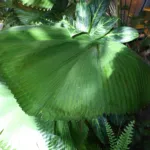
Livistona chinensis photos
Click any photo for a larger view. Source, author and license are shown separately.
Diseases and pests
Diseases
Avoid trunk wounds during transplanting and leaf removal because injuries can allow disease entry. Monitor for lethal yellowing symptoms in regions where the disease occurs; there is no dependable curative treatment. Good drainage, sanitation, and proper nutrition reduce general stress.
Pests
Inspect for scale insects and other sap-feeding pests, especially on stressed container plants. Look for scale bumps, honeydew, sooty mold, yellowing, or weakened new growth. Improve light and airflow first; use horticultural oil or another labeled treatment only according to the product directions and when temperatures are suitable.
Toxicity and pollen
No reliable species-specific evidence establishing significant toxicity to humans, dogs, cats, or children was identified in the reviewed authoritative horticultural sources. Avoid ingesting ornamental plant material, and contact a poison-control or veterinary service after suspected ingestion because evidence is incomplete.
- Typical season
- Spring to summer flowering period; airborne exposure significance is undocumented
- Pollination / pollen
- Insect-associated pollen; airborne allergy characteristics undocumented
This is a flowering palm and therefore produces pollen, but reliable evidence quantifying airborne pollen levels or allergy importance for Livistona chinensis was not found. Flowers are relatively inconspicuous and insect-associated; do not assume that insect pollination means zero allergy risk.
Native habitat
Native from southern Japan through Taiwan and southern China, where it occurs in subtropical environments. It tolerates a broad range of soil textures but performs best where roots receive warmth, drainage, and regular moisture during establishment. It has naturalized or escaped in several warm regions outside its native range.
Interesting fact
The leaf is costapalmate, combining a fan-shaped blade with a midrib extension into the blade. Juvenile petioles can be spiny, while adult petioles are usually less armed. Heavy fruit stalks can create a split or two-tiered crown.
Frequently asked questions (FAQ)
The most relevant questions about this plant, with short and direct answers.
🌱Quick care
How do you care for Livistona chinensis?⌄
Grow Livistona chinensis in full sun to partial shade, use well-drained soil, and water moderately while allowing excess water to drain. Reduce watering during cool weather, and protect the palm from freezing temperatures.
Is Livistona chinensis an indoor or outdoor plant?⌄
Livistona chinensis can be grown outdoors in warm climates or indoors while young. Container plants need bright light, good drainage, and protection from cold weather.
How fast does Livistona chinensis grow?⌄
Livistona chinensis is generally a slow-growing palm, especially before it develops a visible trunk. Growth improves with warmth, adequate light, regular moisture, and suitable nutrition.
🌤️Environment and placement
How much light does Livistona chinensis need?⌄
Provide full sun to partial shade. Young or indoor palms may need gradual acclimation to strong direct sun to reduce the risk of leaf scorch.
Can Livistona chinensis grow in low light?⌄
Livistona chinensis may tolerate bright indoor shade, but low light usually produces slower, weaker, or sparser growth. Place it near a bright window and avoid dark corners.
What USDA hardiness zones can grow Livistona chinensis outdoors?⌄
Livistona chinensis is generally suited to USDA Zones 9A through 11, with protection recommended near its lower temperature limit. Cold tolerance varies with plant size, exposure, duration, and acclimation.
How cold can Livistona chinensis tolerate?⌄
Established Livistona chinensis may tolerate brief temperatures near 20°F, but frost and prolonged freezes can cause serious damage. Protect container plants and young palms before freezing weather.
Can Livistona chinensis grow in full sun?⌄
Yes, Livistona chinensis grows well in full sun when properly acclimated. Young plants and indoor specimens should be introduced to intense sunlight gradually.
What soil is best for Livistona chinensis?⌄
Use well-drained sandy, loamy, or clay soil. The key requirement is drainage, because persistently saturated soil can damage roots even when the palm tolerates different soil textures.
Is Livistona chinensis drought tolerant?⌄
Livistona chinensis has moderate drought tolerance once established, but it grows best with supplemental water during extended dry periods. Do not let container soil remain bone-dry for prolonged periods.
💧Care and problems
How often should you water Livistona chinensis?⌄
Water when the upper soil begins to dry, then soak thoroughly and let excess water drain. Water less often during cool weather, when evaporation and growth are reduced.
Why are the leaves of my Livistona chinensis turning brown?⌄
Brown leaves or tips can result from drought, low humidity, salt buildup, cold injury, excessive fertilizer, or nutrient problems. Check watering, drainage, temperature, and light before trimming damaged tissue.
Why are Livistona chinensis leaves turning yellow?⌄
Yellowing may indicate overwatering, poor drainage, cold stress, aging foliage, or a nutrient deficiency. Inspect the roots and soil moisture first, then correct the growing conditions rather than immediately increasing fertilizer.
What fertilizer does Livistona chinensis need?⌄
Feed outdoor palms with a controlled-release palm fertilizer during active growth, following the product label. Avoid heavy feeding, and do not fertilize drought-stressed, severely cold-damaged, or waterlogged plants.
What pests attack Livistona chinensis?⌄
Scale insects and spider mites are the main reported pests, particularly on container-grown or greenhouse plants. Inspect leaf undersides and stems regularly, and treat only with products labeled for the identified pest and plant.
How do you treat scale on Livistona chinensis?⌄
Treat scale by removing heavily infested material when practical and using a labeled horticultural oil or other appropriate product according to its instructions. Repeat monitoring is important because immature crawlers may appear later.
Can overwatering kill Livistona chinensis?⌄
Yes, overwatering can kill Livistona chinensis by keeping roots in oxygen-poor soil and encouraging root problems. Use a drainage hole, a porous soil mix for containers, and allow the soil surface to begin drying between waterings.
🪴Planting and repotting
How large does Livistona chinensis get?⌄
In suitable outdoor conditions, Livistona chinensis commonly reaches about 30 feet tall with a spread near 10 to 12 feet, although larger specimens are possible. Allow substantial room for the mature crown.
When should you plant Livistona chinensis outdoors?⌄
Plant Livistona chinensis during the warm growing season after the risk of freezing weather has passed. Warm soil helps new roots establish before the next cool period.
How far apart should Livistona chinensis palms be planted?⌄
Space Livistona chinensis about 10 to 12 feet apart when planting for mature individual crowns. Do not cluster young palms closely just because they appear small, because their eventual spread is much wider.
Can Livistona chinensis grow in a container?⌄
Yes, Livistona chinensis grows well in containers while young or when grown as a patio plant. Choose a heavy pot with drainage and move it indoors or into shelter before freezing temperatures.
When should you repot Livistona chinensis?⌄
Repot Livistona chinensis when roots fill the container, circle densely, or emerge from drainage holes. Move it into a slightly larger pot with fresh, well-drained mix rather than making a large jump in pot size.
✂️Propagation and pruning
How do you propagate Livistona chinensis?⌄
Propagate Livistona chinensis from seed. Clean and sow fresh seed in a warm, well-drained medium, and keep it evenly moist because palm seed viability can decline during storage.
Can you grow Livistona chinensis from cuttings?⌄
No, ordinary stem or leaf cuttings are not a practical propagation method for Livistona chinensis. Seed propagation is the standard approach because this palm normally develops from a single growing point.
Should you prune Livistona chinensis?⌄
Pruning is usually limited to completely dead, broken, or hazardous fronds. Do not remove green or partly green leaves unnecessarily, and wear gloves because juvenile leaf stalks can be spiny.
Can you remove Livistona chinensis flower stalks?⌄
Yes, flower stalks can be removed before fruit develops if you want to reduce the weight of fruit clusters or limit volunteer seedlings. Removal is optional unless the canopy is becoming split or fruit is unwanted.
⚠️Toxicity and safety
Is Livistona chinensis toxic to cats or dogs?⌄
There is no established species-specific toxicity classification for Livistona chinensis in the provided core information. Because palm identification and animal reactions can vary, prevent pets from chewing the plant and contact a veterinarian if ingestion causes symptoms.
Does Livistona chinensis have spines?⌄
Young Livistona chinensis plants can have sharp spines along the leaf stalks, although mature plants may have fewer or no spines. Wear gloves and keep the palm away from narrow walkways and play areas.
Is Livistona chinensis invasive in the United States?⌄
Livistona chinensis is considered potentially invasive in parts of central and southern Florida, where its bird-dispersed fruits can produce volunteer seedlings. In those areas, prevent escape into natural areas and remove unwanted seedlings.
🌸Flowering and special interest
Does Livistona chinensis flower?⌄
Yes, mature Livistona chinensis produces small, inconspicuous cream to pale yellow flowers on branched stalks within the crown. Flowering is more likely when the palm is established outdoors in a warm climate.
What fruit does Livistona chinensis produce?⌄
After flowering, Livistona chinensis produces small blue-green to blue-black fruits. Heavy fruit stalks can weigh down lower leaves, and fallen fruits may germinate where conditions are favorable.
Similar plants
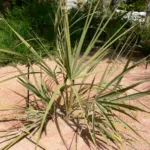 Nannorrhops ritchiana care guideNannorrhops ritchiana
 East Indian wine palm (Phoenix rupicola) care guidePhoenix rupicola
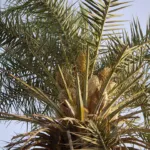 Sugar date palm (Phoenix sylvestris) care guidePhoenix sylvestris
 Carnarvon Fan Palm (Livistona nitida) care guideLivistona nitida
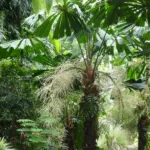 He Queensland fan palm or Australian fan palm (Licuala ramsayi) care guideLicuala ramsayi
 Round-leaved licuala palm (Licuala grandis) care guideLicuala grandis