
 Source:
Pinang yaki (Areca vestiaria) short overview
Pinang yaki, Areca vestiaria, is a striking tropical palm from Indonesia known for its glowing orange to reddish crownshaft and broad, glossy, feather-like fronds. It may grow as a solitary palm or form a small clump, producing cream flower clusters followed by orange or red, single-seeded fruit. In the United States, provide warm, frost-free conditions, filtered light, steady moisture, excellent drainage, and high humidity.
Taxonomic classification
Pinang yaki (Areca vestiaria) care guide
Light and placement
Provide bright filtered light or partial shade, with gentle morning sun acceptable after acclimation. An east window or a bright position behind a sheer curtain works well indoors; outdoor plants prefer high canopy or dappled shade. Pale, stretched growth suggests insufficient light, while bleached patches and crisp brown areas indicate excessive direct sun or heat.
Watering and humidity
Water thoroughly when the upper inch of mix begins to dry, then allow excess water to drain completely. Keep the root zone evenly moist but never saturated. Increase frequency during warm, bright growth and reduce it during cool or dim periods without allowing the plant to become bone-dry. High humidity helps prevent brown tips but does not replace good drainage.
Soil and growing medium
Use a loose, organic-rich palm mix that drains freely but does not dry rapidly. A blend of quality potting soil, coarse bark, and perlite or pumice works well in containers. Slightly acidic to neutral conditions are suitable; avoid dense, waterlogged soil and prolonged stagnation around the roots.
Feeding
Feed during active growth with a complete palm fertilizer containing micronutrients, using the label rate or a conservative half-strength application for container plants. Water first if the medium is dry. Reduce or stop feeding during cool, low-light periods, and avoid heavy fertilization after repotting until new growth resumes.
Growth and habit
This is a slender understory palm that can remain solitary or produce several stems. In cultivation it benefits from stable warmth, high humidity, and protection from intense sun. Stress commonly appears first as browning leaf tips, stalled growth, or leaf scorch, so consistent conditions are more useful than frequent corrective pruning.
Planting and repotting
Plant outdoors only in frost-free locations during warm weather, after nights remain reliably above 60°F. Set the palm at the same depth at which it was growing and space it well away from structures to accommodate the crown. Mulch lightly over the root zone without touching the trunk.
Repot in spring or early summer when roots have filled the container, moving up only one pot size. Handle the root ball gently and keep the crownshaft above the soil line. After transplanting, water thoroughly and provide warm, humid conditions while new roots establish.
Propagation and pruning
Propagation
Propagate mainly from fresh seed. Sow promptly in a warm, sterile, well-drained medium and keep evenly moist with high humidity. Germination can be slow and irregular. Clump division is possible only when a plant has clearly developed separable stems with their own roots, and success is less predictable than seed propagation.
Pruning
Remove only fully dead, yellowed, or badly damaged fronds with sterilized loppers. Do not cut green fronds merely to reduce size, and never damage the orange crownshaft. Trim old fruiting or flowering stalks after they finish if they obstruct access or create clutter.
Overwintering
Move containers indoors before temperatures approach 50°F. Place in bright filtered light, keep away from heaters and cold glass, reduce watering slightly in low light, and maintain humidity with a humidifier or grouped plants. Do not expose the palm to frost or repeated temperatures near freezing.
Uses
Primarily used as an ornamental specimen for tropical landscapes, conservatories, botanical collections, patios, and warm interiors. Its colorful crownshaft makes it especially valuable as a focal palm. Although some references report edible fruit, species-specific culinary guidance is limited, so ornamental use is better supported than food use.
Appearance
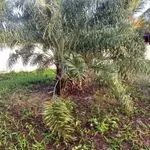
The palm has a smooth, slender, lightly ringed gray trunk that may develop stilt roots at the base. Its most distinctive feature is the smooth orange to red crownshaft, carrying broad glossy pinnate fronds with yellow-orange petioles. The species may appear solitary or clustered and has an elegant upright tropical silhouette.
Flowering
Cream inflorescences arise among the leaves on short stalks. Male and female flowers occur in the same inflorescence, with female flowers larger but fewer. After fertilization, the female flowers become light green and then dirty brown before fruit development.
Pollination and visitors
Reliable species-specific pollinator observations were not located. The inflorescences contain separate male and female flowers, indicating an animal- or insect-mediated pollination system may occur, but a particular visitor group should not be assigned without stronger documentation.
Areca vestiaria photos
Click any photo for a larger view. Source, author and license are shown separately.
Diseases and pests
Diseases
Reduce disease risk with airy placement, clean tools, careful watering, and fast-draining media. Watch for leaf-spot symptoms such as expanding brown or black lesions, especially under persistently wet foliage. Remove badly affected tissue and correct poor ventilation or overhead watering; seek local diagnosis if symptoms spread rapidly.
Pests
Inspect undersides of fronds and crownshaft for spider mites, scale, mealybugs, and thrips. Dry air encourages mites, while crowded or stressed plants are more vulnerable to scale and mealybugs. Isolate affected containers, wash foliage, improve humidity and airflow, and use horticultural oil or insecticidal soap according to the label.
Toxicity and pollen
Species-specific human toxicity evidence is limited. The fruit is described as edible in some horticultural and botanical references, but this should not be treated as proof that all plant parts are safe or suitable for casual consumption. Prevent children and pets from chewing plant material, and avoid eating fruit unless identity and preparation are professionally verified.
- Pollination / pollen
- Small pollen grains released from mature flowering inflorescences; species-specific dispersal data limited
No dependable species-specific airborne pollen or clinical allergy data were located. As a flowering palm, it can release pollen when mature and flowering, but indoor flowering is likely limited by cultivation conditions. People with known pollen sensitivity should avoid handling open inflorescences closely and monitor their own response.
Native habitat
Native to Indonesia, where it is associated with warm, humid tropical environments and shaded or filtered-light conditions. It favors organic, moisture-retentive but aerated soils and does not tolerate prolonged cold. In the United States, comparable conditions are found mainly in frost-free tropical and subtropical settings or protected interiors.
Interesting fact
The crownshaft ranges from orange to reddish and is the plant’s defining ornamental feature. The species may be solitary or clustered. Fruits are ovoid, single-seeded, and ripen orange to red. It is associated with Indonesian tropical forest habitats and is widely grown as a collector’s palm.
Frequently asked questions (FAQ)
The most relevant questions about this plant, with short and direct answers.
🌱Quick care
What is Areca vestiaria called?⌄
Areca vestiaria is commonly called pinang yaki. It is also known as the orange crownshaft palm, but pinang yaki is the documented common name used here.
How do you care for pinang yaki?⌄
Give pinang yaki bright filtered light or partial shade, consistently moist soil, high humidity, warmth, and excellent drainage. Do not allow the root ball to dry out completely.
Is Areca vestiaria an indoor plant?⌄
Areca vestiaria can be grown indoors if it receives strong filtered light, warm temperatures, high humidity, and regular watering. It generally performs better in a greenhouse, sunroom, or warm tropical setting than in a dry, low-light room.
🌤️Environment and placement
How much light does pinang yaki need?⌄
Pinang yaki prefers bright filtered light to partial shade. Protect it from intense midday sun, which can scorch its broad fronds, although gentle morning or late-afternoon sun may be tolerated.
Can Areca vestiaria grow in full shade?⌄
Areca vestiaria tolerates full shade but usually grows more slowly and may develop less vigorous foliage there. Bright indirect light or light partial shade is generally better for healthy growth.
What temperature is safe for Areca vestiaria?⌄
Keep Areca vestiaria warm and protect it when temperatures approach 50°F. It is frost tender and can suffer cold damage well before freezing conditions occur.
Can pinang yaki survive outdoors in the United States?⌄
Pinang yaki can grow outdoors year-round only in frost-free, humid parts of the United States, such as suitable locations in South Florida or Hawaii. In colder regions, grow it in a container and move it indoors or into protected shelter before temperatures fall below 50°F.
Does Areca vestiaria need high humidity?⌄
Yes, Areca vestiaria prefers high humidity, especially indoors. Use a humidifier, a naturally humid room, or a sheltered greenhouse environment rather than relying on frequent leaf misting alone.
💧Care and problems
How often should you water Areca vestiaria?⌄
Water Areca vestiaria whenever the surface begins to dry, keeping the mix evenly moist but not waterlogged. Its roots should not be allowed to dry out between regular waterings.
Why are the leaves of my pinang yaki turning brown?⌄
Brown leaf tips commonly indicate dry soil, low humidity, salt buildup, cold exposure, or excessive fertilizer. Check moisture and drainage first, then flush accumulated salts and keep the palm away from drafts and heating vents.
Why are Areca vestiaria leaves turning yellow?⌄
Yellowing leaves can result from overwatering, poor drainage, insufficient light, nutrient stress, or normal aging of older fronds. If the soil remains wet for long periods, improve drainage and reduce watering frequency without allowing the plant to become dry.
What pests attack pinang yaki?⌄
Scale insects and mealybugs are common pests to watch for on pinang yaki, particularly indoors or in dry conditions. Inspect leaf bases and stems regularly and treat small infestations promptly with a suitable horticultural product.
Does Areca vestiaria need fertilizer?⌄
Areca vestiaria benefits from light feeding during active growth with a balanced palm fertilizer. Avoid heavy applications because excess fertilizer salts can burn the leaf tips and damage the roots.
What soil is best for Areca vestiaria?⌄
Use an organic-rich, loose, well-drained, moisture-retentive palm mix. The ideal medium holds consistent moisture while allowing excess water to drain freely around the roots.
🪴Planting and repotting
Can Areca vestiaria grow in a container?⌄
Yes, Areca vestiaria grows well in a container when the pot has drainage holes and the mix retains moisture without becoming saturated. Choose a stable container because mature plants can become top-heavy.
When should you repot pinang yaki?⌄
Repot pinang yaki when roots fill the container, drainage slows, or the plant dries unusually quickly, preferably during active growth. Move it into only a slightly larger pot to avoid keeping excess soil wet.
Can you plant Areca vestiaria in the ground?⌄
You can plant Areca vestiaria in the ground in warm, frost-free climates with filtered light, high humidity, and moist, well-drained soil. Choose a sheltered site because the palm is cold-sensitive and does not tolerate frost.
✂️Propagation and pruning
How do you propagate Areca vestiaria?⌄
Areca vestiaria can be propagated from fresh seeds or, when present, by separating basal suckers. Seed propagation is slow but reliable under warm, humid conditions, while sucker division requires care to preserve roots.
How long do Areca vestiaria seeds take to germinate?⌄
Fresh Areca vestiaria seeds may germinate in about 6 to 8 weeks under warm, consistently moist conditions. Germination can be slower or less uniform if seeds are old or allowed to dry out.
Can you grow pinang yaki from cuttings?⌄
No, ordinary stem or leaf cuttings are not a practical way to propagate pinang yaki. Use fresh seeds or carefully separate naturally produced suckers instead.
How should you prune Areca vestiaria?⌄
Remove only dead, badly damaged, or diseased fronds and spent flower or fruit stalks. Do not cut healthy green fronds or remove large numbers of leaves at once, because over-pruning can weaken the palm.
⚠️Toxicity and safety
Is Areca vestiaria toxic to cats and dogs?⌄
The toxicity of Areca vestiaria to cats and dogs has not been adequately established, so it should be treated as unconfirmed rather than assumed safe. Keep pets from chewing the plant and contact a veterinarian or poison-control service if ingestion occurs.
Is pinang yaki poisonous to humans?⌄
Species-specific human toxicity evidence for pinang yaki is limited, so its safety should be considered unknown. Do not eat its leaves, seeds, or fruit, and seek medical advice after a significant ingestion.
Is Areca vestiaria the same as the common areca palm sold as a houseplant?⌄
No, Areca vestiaria is a different species from the commonly sold areca or butterfly palm, Dypsis lutescens. Similar common names can cause care and toxicity information for one species to be incorrectly applied to the other.
🌸Flowering and special interest
Does Areca vestiaria flower?⌄
Yes, Areca vestiaria produces branched clusters of small cream-colored flowers beneath the crownshaft. Female flowers develop into orange to red, single-seeded fruits after pollination.
What does the crownshaft of pinang yaki look like?⌄
The crownshaft is a distinctive smooth orange to reddish structure beneath the fronds. Its bright color is one of the main ornamental features that distinguishes pinang yaki from many other palms.
Does Areca vestiaria produce edible fruit?⌄
Areca vestiaria produces orange to red fruits that are described botanically as edible, but species-specific food-safety guidance is limited. Do not consume the fruit unless it has been positively identified and prepared according to reliable local guidance.
Similar plants
 Acoelorraphe (Acoelorraphe wrightii) care guideAcoelorraphe wrightii
 Sand palm (Allagoptera arenaria) care guideAllagoptera arenaria
 Angalow palm (Archontophoenix cunninghamiana) care guideArchontophoenix cunninghamiana
 Northern bangalow palm (Archontophoenix alexandrae) care guideArchontophoenix alexandrae
 Betel Nut Palm (Areca catechu) care guideAreca catechu
 El palm (Acanthophoenix rubra) care guideAcanthophoenix rubra