
 Source:
Acoelorraphe (Acoelorraphe wrightii) short overview
Acoelorraphe wrightii is a slow-growing, clustering fan palm from wet habitats of southern Florida, the Caribbean, Mexico and Colombia. Its slender, fiber-covered stems support rounded green fans on spiny leaf stalks, while creamy flowers appear in spring and mature into black fruits. In the United States, it performs best in warm USDA Zones 9–11 with consistent moisture, organic soil and protection from severe freezes.
Taxonomic classification
Acoelorraphe (Acoelorraphe wrightii) care guide
Light and placement
Grow in full sun for the strongest growth and densest crown, though partial shade or light shade is tolerated. An open eastern, southern or western exposure is suitable in warm climates; provide shelter from severe cold and drying winds. Too little light may slow growth and thin the crown, while intense reflected heat combined with dry soil can cause decline.
Watering and humidity
Keep the root zone evenly moist, watering deeply when the surface begins to dry rather than giving frequent shallow sips. Increase irrigation during hot, dry weather and reduce it during cool periods without allowing established plants to remain dry for long. Moisture is particularly important on fast-draining sites; occasional inundation is tolerated, but stagnant conditions should be avoided in containers.
Soil and growing medium
Use a moisture-retentive but aerated soil containing organic matter. Sandy, loamy and clay soils can work if drainage and moisture are balanced. Slightly acidic to neutral conditions are preferred; highly alkaline or calcareous soils can restrict manganese uptake and cause chlorotic, distorted new growth.
Feeding
Feed in spring and summer with a controlled-release fertilizer formulated for palms, including magnesium and micronutrients, following the product label. Regular feeding is especially useful on sandy soils. Do not fertilize drought-stressed, newly transplanted or cold-damaged plants until active growth resumes.
Growth and habit
This evergreen palm develops multiple slender stems from a clumping base and remains comparatively slow-growing. Basal suckers create a fuller screen over time; removing selected suckers can maintain a more open specimen form, while retaining them produces the characteristic dense clump.
Planting and repotting
Plant during the warm growing season after the threat of hard frost has passed. Set the root ball at the same depth at which it grew, water deeply, and mulch without touching the stems. Allow enough room for the clump to develop, and irrigate consistently during establishment.
Repot container plants only when roots have filled the pot, preferably in spring or early summer. Use a heavy, fast-draining palm mix amended with organic matter, and choose a container with substantial weight because mature clumps can become top-heavy. Handle the spiny petioles carefully.
Propagation and pruning
Propagation
Propagate chiefly from cleaned seed sown fresh or from division of established clumps. Seed may germinate slowly and benefits from warm, consistently moist conditions. Division is practical for nursery-sized clumps but should be done during active growth and followed by careful irrigation.
Pruning
Remove dead, damaged or badly discolored fronds with clean tools. Selected basal suckers can be removed to expose trunks or control the clump, but excessive cutting reduces the plant’s natural screening form. Wear gloves and eye protection because the petioles are spiny.
Overwintering
Outdoor plants are best limited to warm USDA Zone 9 and warmer locations, with extra protection in exposed Zone 9 sites. Protect young palms from freezes with frost cloth and insulation around the growing point. In colder regions, grow in a large container and overwinter in a bright, cool, frost-free space while watering sparingly.
Uses
Use as an evergreen specimen, clustered screen, rain-garden or wet-site accent, and in large containers where winters are too cold for outdoor planting. It can support habitat value in native-style landscapes and is useful for reclamation or buffer plantings. Avoid placing it beside busy paths because the petioles are armed.
Appearance
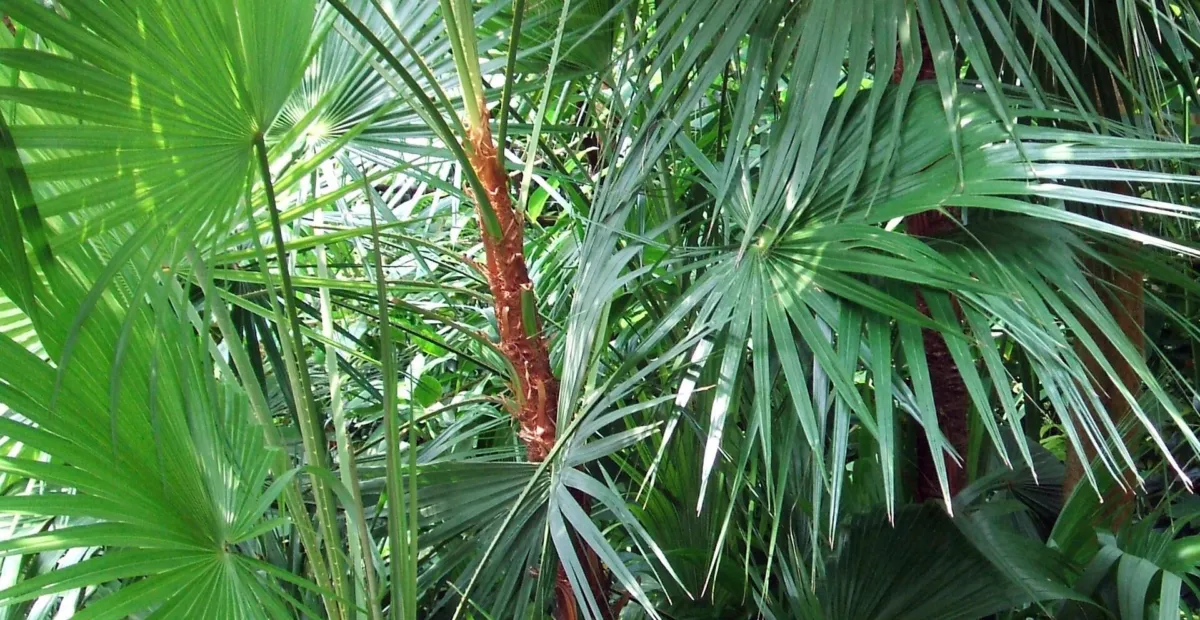
The plant is identified by its clustered, slender stems covered with persistent leaf bases and fibrous material. Large rounded fan leaves are carried on long petioles that may bear conspicuous spines; the undersides can appear silvery. Extended branched flower stalks and black mature fruits add seasonal interest.
Flowering
Large branched inflorescences extend beyond the foliage and carry numerous small creamy-white to pale yellow flowers. In Florida, flowering is generally reported from late winter into spring, followed by small fruits that mature from green through orange to black.
Pollination and visitors
The flowers are reported to attract bees, and the plant is recognized as a pollinator-supporting native palm in Florida. Its fruits are eaten or dispersed by birds. The species also serves as a larval food plant for the monk skipper in parts of its native range.
Acoelorraphe wrightii photos
Click any photo for a larger view. Source, author and license are shown separately.
Diseases and pests
Diseases
No major disease is consistently reported in ordinary landscapes. Prevent stress with suitable moisture, nutrition and drainage. Remove severely affected tissue with clean tools and avoid planting into chronically stagnant soil.
Pests
Serious pest problems are not usually reported. Inspect stressed plants for scale insects, mites or other common palm pests, especially when grown in containers. Correct drought, poor drainage and nutrient imbalance before using pesticides; remove heavily infested tissue where practical.
Toxicity and pollen
Reliable authoritative sources do not establish a specific toxic syndrome for this species in humans or pets. The main practical hazard is mechanical injury from spiny leaf stalks and sharp plant parts. Do not allow children or animals to chew unidentified plant material, and seek professional advice after ingestion or injury.
- Typical season
- Late winter through spring in the southern United States
- Pollination / pollen
- Flower pollen, primarily associated with exposed inflorescences
This is a flowering palm whose pollen is primarily released from exposed inflorescences rather than produced in large wind-dispersed cones. Species-specific airborne-allergy evidence is limited, so a low label is a cautious horticultural estimate rather than a clinical allergy determination.
Native habitat
Native populations occur in southern Florida, the Caribbean, southern Mexico and Colombia, especially in wet tropical settings such as swamps, seasonally flooded woodlands and other low-lying moist habitats. It handles occasional inundation but performs poorly when kept chronically dry.
Interesting fact
The genus Acoelorraphe is accepted as a single-species genus. The palm can form dense clumps from basal suckers, and its fruits change from green to orange before becoming black. New leaves may show manganese-deficiency symptoms in highly alkaline or calcareous soils.
Frequently asked questions (FAQ)
The most relevant questions about this plant, with short and direct answers.
🌱Quick care
What is Acoelorraphe wrightii?⌄
Acoelorraphe wrightii is a clustering, evergreen fan palm in the Arecaceae family. It is native to wet tropical regions from southern Florida and the Caribbean to parts of Mexico, Central America, and Colombia.
How much light does Acoelorraphe wrightii need?⌄
Acoelorraphe wrightii grows in full sun to shade, but bright sun generally supports the strongest growth and fullest crown. Provide some afternoon protection in exceptionally hot, dry inland locations.
How often should I water Acoelorraphe wrightii?⌄
Keep Acoelorraphe wrightii consistently moist, especially while it is establishing. It can tolerate some drought after establishment, but growth and appearance may decline if the soil stays dry for extended periods.
Is Acoelorraphe wrightii evergreen?⌄
Yes, Acoelorraphe wrightii is an evergreen palm that retains its fan-shaped foliage year-round in suitable climates. Cold or severe environmental stress can temporarily damage the leaves.
🌤️Environment and placement
What USDA zones can grow Acoelorraphe wrightii outdoors?⌄
Acoelorraphe wrightii is generally suited to USDA Zones 9 through 11, with the most dependable outdoor performance in Zones 10 and 11. In colder parts of Zone 9, protection from freezes may be necessary.
Where should I plant Acoelorraphe wrightii?⌄
Plant Acoelorraphe wrightii in a warm, protected location with moist, organic, well-drained soil. It works especially well near rain gardens, ponds, wet woodland edges, and other sites that do not dry out quickly.
Can Acoelorraphe wrightii grow in shade?⌄
Yes, Acoelorraphe wrightii can grow in partial shade and some shade, although it usually develops more vigorous, compact growth with brighter light. Avoid extremely dark locations if you want a dense crown.
Can Acoelorraphe wrightii tolerate wet soil or flooding?⌄
Acoelorraphe wrightii tolerates consistently wet soil and occasional flooding once established. The planting site should still avoid stagnant conditions that prevent adequate root aeration.
Can Acoelorraphe wrightii tolerate salt?⌄
Acoelorraphe wrightii has limited salt tolerance and should not be planted where it receives regular saltwater flooding. It may tolerate some coastal wind or light salt spray, but exposed beachfront conditions are risky.
How large does Acoelorraphe wrightii get?⌄
Acoelorraphe wrightii commonly reaches about 15 to 30 feet tall and can spread roughly 10 to 25 feet through clustering stems. Give it enough room for both the mature crown and expanding basal shoots.
💧Care and problems
What soil is best for Acoelorraphe wrightii?⌄
Use moist, organic, well-drained soil that retains water without remaining stagnant. Sandy, loamy, clay, and organic soils can work, but highly alkaline or strongly calcareous conditions may cause poor growth or nutrient problems.
Does Acoelorraphe wrightii need fertilizer?⌄
Acoelorraphe wrightii benefits from a complete palm fertilizer when grown in nutrient-poor soil. Regular feeding can help prevent potassium, manganese, and iron deficiencies, but follow the product label to avoid overfertilizing.
Why are the leaves of my Acoelorraphe wrightii turning yellow?⌄
Yellow leaves may result from nutrient deficiencies, poor root aeration, drought, cold stress, or naturally aging fronds. Check soil moisture and drainage first, then consider a palm-specific fertilizer if symptoms persist.
Is Acoelorraphe wrightii slow growing?⌄
Yes, Acoelorraphe wrightii is generally a slow-growing palm, especially when young or grown in cool, dry, shaded, or nutrient-poor conditions. Consistent moisture, warmth, adequate light, and balanced nutrition encourage better growth.
Does Acoelorraphe wrightii have thorns or spines?⌄
Yes, the leaf stalks of Acoelorraphe wrightii bear sharp spines. Position it away from narrow paths, play areas, and places where people or pets may brush against the foliage.
🪴Planting and repotting
When is the best time to plant Acoelorraphe wrightii?⌄
Plant Acoelorraphe wrightii during the warm growing season, after the danger of freezing weather has passed. Warm soil and regular moisture help the palm establish more quickly.
Can Acoelorraphe wrightii be grown in a container?⌄
Acoelorraphe wrightii can be grown in a large container while young, provided the pot has drainage and the mix stays evenly moist. It eventually becomes too large and clustering for most long-term containers.
How far apart should Acoelorraphe wrightii be planted?⌄
Space Acoelorraphe wrightii about 10 to 20 feet from buildings, paths, and other large plants, depending on the desired clump size. Allow extra room if you want the natural basal shoots to develop.
✂️Propagation and pruning
How do you propagate Acoelorraphe wrightii?⌄
Acoelorraphe wrightii can be propagated from cleaned seed or by dividing an established clump. Clump division is usually the more practical method for reproducing a mature plant, while seed requires patience.
Can Acoelorraphe wrightii be grown from seed?⌄
Yes, Acoelorraphe wrightii can be grown from fully ripe, cleaned seed. Fresh seed and warm, consistently moist conditions generally provide the best chance of germination, but germination may be slow or uneven.
Can you divide an Acoelorraphe wrightii clump?⌄
Yes, an established Acoelorraphe wrightii clump can be divided by separating rooted stems or sections of the root ball. Carry out division in warm weather and keep the divisions evenly moist while they reestablish.
Does Acoelorraphe wrightii produce suckers?⌄
Yes, Acoelorraphe wrightii commonly produces basal shoots that expand the clump. Leave them in place for a fuller multi-stemmed specimen, or remove selected shoots if a narrower clump is preferred.
How should Acoelorraphe wrightii be pruned?⌄
Prune Acoelorraphe wrightii lightly by removing dead, damaged, or clearly declining fronds and unwanted basal shoots. Wear thick gloves and protective clothing because the leaf stalks are spiny.
Can I remove the lower leaves from Acoelorraphe wrightii?⌄
Yes, lower leaves can be removed selectively to expose the stems and create a cleaner trunk display. Do not remove green fronds unnecessarily, because excessive pruning can reduce vigor.
⚠️Toxicity and safety
Is Acoelorraphe wrightii toxic to people or pets?⌄
There is no established species-specific toxicity for Acoelorraphe wrightii, but its spiny leaf stalks are a significant physical hazard. Place it where children, pets, and passersby will not contact the foliage.
Is Acoelorraphe wrightii safe to plant near a walkway?⌄
Acoelorraphe wrightii is usually a poor choice immediately beside a walkway because its petioles carry sharp spines and the clump can widen over time. Use a setback or choose a spineless plant for high-traffic areas.
Is Acoelorraphe wrightii invasive in the United States?⌄
Acoelorraphe wrightii is generally treated as a cultivated native palm in southern Florida rather than a broadly invasive landscape plant. Local regulations and regional behavior should still be checked before planting outside its native range.
🌸Flowering and special interest
When does Acoelorraphe wrightii bloom?⌄
Acoelorraphe wrightii typically blooms from late winter through spring, depending on climate. Its creamy white to yellowish flower clusters extend beyond the foliage and are followed by small fruits.
What do Acoelorraphe wrightii fruits look like?⌄
The fruits of Acoelorraphe wrightii develop from green through orange or reddish stages and turn black when fully ripe. Birds may help disperse the ripe fruit.
Does Acoelorraphe wrightii attract wildlife?⌄
Yes, Acoelorraphe wrightii can provide habitat and attract pollinators and birds. Its flowers support insects, while the ripe fruits may be eaten and dispersed by birds.
Similar plants
 El palm (Acanthophoenix rubra) care guideAcanthophoenix rubra
 Capsicum baccatum care guideCapsicum baccatum
 Yellow lantern chili (Capsicum chinense) care guideCapsicum chinense
 Trailing Peperomia (Peperomia prostrata) care guidePeperomia prostrata
 Pepper (Capsicum annuum) care guideCapsicum annuum
 Cherry Bomb (Capsicum annuum ‘Cherry Bomb’)Capsicum annuum 'Cherry Bomb'