
 Source:
Arenga Palm (Arenga engleri) short overview
Arenga engleri, listed here as Arenga Palm, is a clumping evergreen palm valued for its tropical form, fibrous stems, and long pinnate fronds with silvery undersides. Native to Taiwan and the Ryukyu Islands, it grows best in rich, well-drained soil with regular moisture and protection from harsh winter winds. Fragrant flower clusters and colorful fruit add seasonal interest, while mature stems die after flowering and fruiting as new basal shoots maintain the clump.
Taxonomic classification
Arenga Palm (Arenga engleri) care guide
Light and placement
Provide bright filtered light, partial shade, or gentle morning sun. In hot climates, protect from intense afternoon sun, which can scorch fronds and cause pale or bleached foliage. Too little light produces weak, stretched growth and fewer flowers; too much exposure may cause browning, especially when heat and dry wind occur together.
Watering and humidity
Water deeply when the upper few inches of soil begin to dry, then allow excess water to drain. Keep the root zone evenly moist during warm active growth, but never leave it saturated. Reduce watering in cool weather while preventing complete drying. Humidity is helpful indoors and in hot, dry climates.
Soil and growing medium
Use a rich, organic soil that drains freely but does not dry rapidly. Loam amended with compost is suitable; improve heavy clay with organic matter and drainage material. A slightly acidic to neutral reaction is suitable, with approximately pH 6.0–7.0 generally appropriate.
Feeding
Feed during active growth in spring and summer with a balanced palm fertilizer containing micronutrients, following the product label at moderate strength. Compost or a controlled-release formulation can supplement feeding. Do not fertilize drought-stressed, newly transplanted, or dormant plants, and reduce feeding in winter.
Growth and habit
This palm forms a basal clump of unbranched, fibrous stems. Each stem remains leafy for years, flowers and fruits once, then gradually dies; younger shoots replace it. Remove only dead or declining stems, and avoid damaging emerging suckers that maintain the plant’s long-term structure.
Planting and repotting
Plant in spring after the danger of hard frost has passed, setting the root ball level with the surrounding soil. Keep the crown and stem bases above soggy soil, mulch without touching the stems, and water consistently through the first growing season. Allow generous room for the clump to broaden.
Repot container plants in spring when roots fill the pot, moving up only one pot size. Handle the root ball carefully, provide a heavy container for stability, and avoid burying the stem base. Refresh part of the growing medium rather than repeatedly making large jumps in pot size.
Propagation and pruning
Propagation
Propagate from fresh seed after the fruit pulp is removed. Sow in a warm, clean, well-drained medium and keep evenly moist; germination may be slow and irregular. Seed-grown plants require patience before forming a substantial clump.
Pruning
Remove dead, yellowing, or badly damaged fronds at the base with clean tools. Cut spent flowering stems after they decline, especially where fruit could be reached by children or pets. Do not strip green fronds unnecessarily, and wear gloves and eye protection when handling fibrous material or fruit.
Overwintering
Protect outdoor plants from hard freezes, cold wind, and prolonged wet soil. Use frost cloth during brief cold events and mulch the root zone without covering the stems. Container plants can be moved to a bright, cool location before freezing weather; water less in winter and avoid feeding while growth is limited.
Uses
Primarily an ornamental palm for warm-climate beds, sheltered courtyards, patios, containers, and informal screening. Its clumping habit and durable foliage suit tropical and subtropical garden designs. Some sources describe traditional use of related plant materials, but the fruit should not be treated as edible because it is reported as toxic or irritating.
Appearance
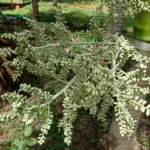
The plant is recognized by its multi-stemmed clump, dark fibrous stem coverings, and long feather-like fronds. Leaflets are green on the upper surface and often distinctly silvery beneath, giving the crown a luminous, layered appearance. Old leaf bases and fibers remain attached to stems unless removed.
Flowering
This is a true flowering palm with small flowers borne in branched clusters. Individual stems flower after several years of vegetative growth and then decline after fruiting, while other stems and basal shoots continue. Flowers are reported as fragrant and may appear from late spring into summer, with timing varying by climate.
Pollination and visitors
Reliable species-level pollinator records were not established in the reviewed sources. The fragrant, nectar-bearing flower clusters may receive insect visitors, but the strength and identity of attraction should be treated as uncertain.
Arenga engleri photos
Click any photo for a larger view. Source, author and license are shown separately.
Diseases and pests
Diseases
Prevent problems by avoiding waterlogged soil, maintaining air movement, and removing badly damaged foliage with clean tools. Watch for leaf spots, trunk or crown decline, and root problems where drainage is poor. Isolate stressed container plants and correct irrigation before resorting to treatments.
Pests
Inspect leaf bases and undersides for scale, mealybugs, mites, and chewing damage. Reduce stress with steady watering, suitable humidity, and good air circulation. Remove localized infestations manually or use a labeled horticultural treatment according to its instructions; avoid unnecessary broad-spectrum insecticides.
Toxicity and pollen
The fruit is reported as toxic or irritating, and horticultural sources advise avoiding contact with the fruit and keeping it away from children and pets. Do not ingest fruit or seeds; wear gloves when removing fruiting structures and avoid rubbing eyes after handling. Evidence for toxicity of other plant parts is limited.
- Typical season
- Late spring through summer where plants flower outdoors
- Pollination / pollen
- Insect-dispersed pollen
Arenga engleri is an insect-pollinated flowering palm, so pollen is not generally dispersed like the abundant wind-borne pollen of many grasses or trees. However, no dependable species-specific allergy assessment was found; flowering individuals may still expose sensitive people to some pollen. Avoid handling flowers unnecessarily during peak bloom if symptoms occur.
Native habitat
The species is native to Taiwan and the Ryukyu Islands, where it occurs in subtropical environments including humid, forested settings. It favors fertile, moisture-retentive yet drained soils and benefits from shelter from cold winds, drying exposure, and salt spray.
Interesting fact
Each mature stem flowers only once and then dies after fruiting.
New basal shoots keep the clump renewing itself over time.
Fronds can show strongly contrasting green and silvery surfaces.
The species is accepted botanically and is native to Taiwan and the Ryukyu Islands.
Frequently asked questions (FAQ)
The most relevant questions about this plant, with short and direct answers.
🌱Quick care
What is an Arenga Palm?⌄
Arenga Palm is the common name used here for Arenga engleri, a slow-growing, clumping palm from Taiwan and nearby East Asian regions. It develops multiple short trunks, feather-like leaves, fragrant flowers, and a broad, dense form suitable for warm outdoor landscapes or large containers.
How fast does Arenga engleri grow?⌄
Arenga engleri usually grows slowly to moderately, with faster growth during warm weather when moisture and nutrition are consistent. Growth is also influenced by container size, summer heat, light exposure, and whether the plant is protected from cold.
How large does an Arenga Palm get?⌄
An Arenga Palm commonly reaches about 6 to 15 feet tall and 6 to 15 feet wide in favorable landscapes. Its clumping habit means the spread can gradually increase as new stems emerge from the base.
🌤️Environment and placement
How much light does Arenga engleri need?⌄
Arenga engleri grows best in bright filtered light to partial shade, although it can tolerate gentle sun. In hot climates, protect it from intense afternoon exposure, while plants grown in cooler areas may accept more direct morning or filtered sunlight.
Can Arenga engleri grow in full sun?⌄
Arenga engleri can grow in full sun when gradually acclimated and supplied with adequate moisture, but partial shade is generally safer in hot U.S. climates. Strong afternoon sun may cause stress or leaf damage, especially after transplanting or during drought.
Can Arenga engleri grow indoors?⌄
Arenga engleri can be grown indoors temporarily or in a bright atrium, but it is primarily an outdoor palm. Provide strong indirect light, good air circulation, a well-drained container, and careful watering because low indoor light and wet soil can cause decline.
What USDA hardiness zone is Arenga engleri suitable for?⌄
Arenga engleri is best treated as a protected palm for warm USDA climates, commonly around Zones 9 and 10, with hardiness varying by plant maturity and local conditions. Protect it from prolonged freezes, severe wind, and sudden temperature drops.
Can Arenga engleri survive frost?⌄
Arenga engleri can tolerate brief, light frost when established and protected, but prolonged freezing temperatures may damage foliage or kill stems. Use frost cloth, shelter, and a warm microclimate during cold events, especially for young or container-grown plants.
Is Arenga engleri drought tolerant?⌄
Arenga engleri has some drought tolerance once established, but it performs better with moderate, regular moisture. Do not allow newly planted palms or container specimens to remain dry for extended periods, particularly during hot weather.
💧Care and problems
How often should I water an Arenga Palm?⌄
Water an Arenga Palm deeply when the surface layer of soil begins to dry, then allow excess water to drain completely. Established plants may need less frequent irrigation during cool or rainy weather, while containers and newly planted palms usually require closer monitoring.
What soil is best for Arenga engleri?⌄
The best soil for Arenga engleri is rich, organic, well-drained loam that retains moderate moisture without becoming saturated. Improve heavy clay with organic matter and drainage, and avoid planting where water regularly stands around the roots.
Why are the leaves of my Arenga engleri turning brown?⌄
Brown leaves may result from drought, low humidity, excessive sun, cold damage, salt buildup, or root problems caused by poor drainage. Check soil moisture and drainage first, then review recent temperature exposure and irrigation quality before removing damaged fronds.
Why is my Arenga Palm turning yellow?⌄
Yellowing can be caused by natural aging, overwatering, poor drainage, nutrient deficiencies, cold stress, or root damage. If several new leaves yellow at once, test the growing conditions and consider a palm fertilizer only after confirming that the soil drains properly.
Does Arenga engleri need fertilizer?⌄
Arenga engleri benefits from a complete palm fertilizer during active growth, especially when planted in nutrient-poor soil or containers. Apply according to the product label, keep fertilizer away from the trunk, and water beforehand if the soil is dry.
What pests affect Arenga engleri?⌄
Arenga engleri may be affected by common palm pests such as scale insects, mealybugs, mites, and occasionally chewing insects. Inspect leaf undersides and new growth regularly, and correct drought or poor air circulation because stressed palms are more vulnerable.
🪴Planting and repotting
When is the best time to plant Arenga engleri?⌄
The best time to plant Arenga engleri is during warm spring or early summer weather after the danger of frost has passed. Warm soil helps root establishment, while planting during extreme heat or cold increases transplant stress.
How do I plant an Arenga Palm in the ground?⌄
Plant an Arenga Palm at the same depth it was growing in its container, in rich soil that drains freely, and avoid disturbing the root ball unnecessarily. Water deeply after planting and maintain consistent moisture while the palm establishes.
Can Arenga engleri grow in a container?⌄
Arenga engleri grows well in a large, sturdy container with drainage holes and a porous, well-drained potting mix. Container plants dry out and become cold-stressed faster than in-ground palms, so monitor moisture closely and provide winter protection when needed.
How often should I repot Arenga engleri?⌄
Repot Arenga engleri when roots fill the container, drainage slows, or the plant becomes unstable, usually every few years rather than annually. Move it into a slightly larger pot and disturb the root ball as little as possible.
✂️Propagation and pruning
How do you propagate Arenga engleri?⌄
Arenga engleri is most reliably propagated from fresh seed, although mature clumps may sometimes be divided or separated into offsets. Seed propagation is generally slower but less disruptive than attempting to split the tightly clustered stems.
How long do Arenga engleri seeds take to germinate?⌄
Arenga engleri seeds may germinate in a few weeks under warm, consistently moist conditions, but germination can also take several months and may be uneven. Fresh seed, warm temperatures, an airy medium, and stable moisture improve the chances of success.
Can I propagate Arenga engleri from suckers or offsets?⌄
Arenga engleri can sometimes be propagated from basal suckers or offsets, but separation may be difficult because the stems form a compact clump. Attempt it during active growth, retain roots with the offset, and expect variable results compared with seed propagation.
How should I prune an Arenga Palm?⌄
Prune only dead, damaged, or clearly declining fronds, and remove spent flower or fruit stalks at their base using clean tools and gloves. Avoid cutting green fronds unnecessarily, because excessive pruning weakens the palm and reduces its appearance.
Does the flowering stem of Arenga engleri die after fruiting?⌄
Yes, an individual flowering stem of Arenga engleri dies after completing its flowering and fruiting cycle. The clump usually survives because newer stems continue developing from the base, so remove the declining stem once it has fully finished.
⚠️Toxicity and safety
Is Arenga engleri poisonous to people?⌄
The fruit of Arenga engleri is potentially toxic or strongly irritating, so do not eat it and avoid contact with the fleshy fruit. Wear gloves when removing fruiting clusters, wash exposed skin, and keep fallen fruit away from children and pets.
Is Arenga engleri safe for dogs and cats?⌄
Arenga engleri fruit should be treated as unsafe for dogs and cats because its irritating or potentially toxic properties are not suitable for ingestion. Prevent pets from chewing fruit or fallen plant material and contact a veterinarian if ingestion occurs.
Should I wear gloves when pruning Arenga engleri?⌄
Yes, wear gloves and eye protection when pruning Arenga engleri, especially when handling fruit clusters, flower stalks, or dusty plant material. Avoid rubbing your eyes or face during the work, and wash tools and hands afterward.
🌸Flowering and special interest
When does Arenga engleri flower?⌄
Arenga engleri flowers after a stem has matured, but the exact timing depends on age, climate, growing conditions, and plant size. Its flowers are fragrant, and flowering is followed by fruit development and the eventual decline of that individual stem.
Does Arenga engleri produce fruit?⌄
Yes, Arenga engleri produces clusters of fruit after flowering, and individual stems generally decline after fruiting. The fruit should not be eaten or handled casually because the fleshy material may contain irritating compounds that can affect skin, eyes, or the mouth.
Similar plants
 Pinang yaki (Areca vestiaria) care guideAreca vestiaria
 Angalow palm (Archontophoenix cunninghamiana) care guideArchontophoenix cunninghamiana
 He (Adonidia merrillii) care guideAdonidia merrillii
 Arenga palm (Arenga australasica) care guideArenga australasica
 Betel Nut Palm (Areca catechu) care guideAreca catechu
 Acoelorraphe (Acoelorraphe wrightii) care guideAcoelorraphe wrightii