
 Source:
Gray-goddess (Brahea armata) short overview
Gray-goddess (Brahea armata) is a slow-growing, evergreen palm from northwestern Mexico, valued for its architectural crown of silvery blue fan leaves, drought tolerance, and long arching flower clusters. In the United States it is best suited to warm, dry landscapes and protected Zone 9 conditions, though established plants may tolerate brief colder events. Brahea armata is a slow-growing, evergreen fan palm with a solitary gray trunk and stiff, wax-coated leaves in striking blue-gray tones. It tolerates heat, wind, drought, and rocky soils, making it a strong specimen for warm, dry landscapes.
Taxonomic classification
Gray-goddess (Brahea armata) care guide
Light and placement
Give full sun with unobstructed exposure for the bluest foliage and strongest growth; a south- or west-facing position is suitable where heat is not excessive for young plants. Too little light produces slower growth and weaker, greener foliage. Extreme reflected heat can scorch leaves if roots are dry, so establish plants with deep irrigation.
Watering and humidity
Water deeply, then allow the soil to dry substantially before watering again. Newly planted palms need a regular establishment schedule; mature plants are drought tolerant and should receive less frequent irrigation, especially in winter. Avoid shallow, frequent watering and saturated soil. Humidity is not normally a limiting factor when drainage and airflow are good.
Soil and growing medium
Use sharply drained soil with a sandy, rocky, loamy, or calcareous structure. Avoid persistently wet sites. Neutral to mildly alkaline conditions are generally tolerated, but strongly alkaline water or soil can contribute to nutrient problems such as manganese deficiency and leaf-tip burn.
Feeding
Feed in late spring and during warm active growth with a palm fertilizer that supplies nitrogen, potassium, magnesium, and micronutrients. Apply at label rates to moist soil and irrigate afterward. Do not fertilize drought-stressed, newly transplanted, or cold-damaged plants until active growth resumes.
Growth and habit
This palm forms a solitary, upright trunk and develops slowly, especially in cool or low-light conditions. It is durable once rooted but benefits from careful establishment watering. Older leaf bases and dead fronds should be handled cautiously because the petioles are sharply toothed.
Planting and repotting
Plant in spring or early summer after the soil has warmed, choosing an open site with full sun and room for the mature crown. Set the root ball level with the surrounding soil, water deeply to settle the roots, and maintain regular deep irrigation during the first growing seasons.
Repot container plants only when roots have filled the pot, preferably in spring or early summer. Move into a deep, heavy container with excellent drainage; avoid unnecessary root disturbance and do not bury the trunk deeper than it was growing.
Propagation and pruning
Propagation
Usually propagated from fresh seed. Clean and sow seed in a warm, well-drained medium; germination can be slow and irregular. Transplant seedlings carefully because palms develop a sensitive primary root.
Pruning
Remove only fully dead or damaged fronds, cutting the stalk cleanly without injuring the trunk. Use protective clothing and sturdy tools because the petioles carry sharp teeth. Avoid excessive green-frond removal, which can slow growth and increase stress.
Overwintering
In Zones 8 and marginal Zone 9 locations, protect young palms from prolonged freezes with frost cloth and a dry root zone. Avoid wrapping wet foliage for extended periods. Container specimens can be moved to a bright, cool, frost-free space; water sparingly while growth is inactive.
Uses
Used as a dramatic specimen, accent, courtyard, rock-garden, or desert-landscape palm. It also works as a young container plant. The foliage provides strong architectural contrast, while flowering plants can offer resources to honey bees and other flower visitors. Keep it away from narrow walkways because the petioles are armed with sharp teeth.
Appearance
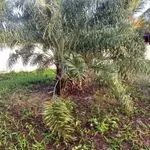
The palm has a solitary gray trunk topped by a broad crown of stiff, rounded fan leaves. A conspicuous waxy coating gives the foliage its blue-gray color. Leaf stalks are armed with stout, hooked teeth, and old leaf bases may remain visible on the trunk before shedding.
Flowering
Mature palms produce long, arching, branching inflorescences that extend beyond the crown. The flowers are creamy white to pale yellow and are followed by small dark fruits. Bloom is generally reported in spring or summer, with timing varying by climate and plant maturity.
Pollination and visitors
University arboretum guidance documents honey bees visiting the flowers. The open, branched inflorescences can provide floral resources during the warm-season bloom period, but visitor abundance depends on local climate and surrounding habitat.
Brahea armata photos
Click any photo for a larger view. Source, author and license are shown separately.
Diseases and pests
Diseases
No major disease problems are consistently reported in the cited Arizona landscape guidance. Reduce risk by avoiding saturated soil, improving drainage, disinfecting cutting tools, and removing severely damaged tissue. Investigate persistent decline for irrigation, root, or nutrient problems before applying pesticides.
Pests
Inspect for scale insects, mealybugs, mites, and palm-feeding caterpillars, especially on stressed container plants. Improve irrigation and airflow first, then remove localized infestations or use a labeled treatment according to the product directions. Avoid unnecessary broad-spectrum insecticides during bloom.
Toxicity and pollen
The available university and municipal plant references describe this palm as benign or report no toxicity concerns. The sharp petiole teeth are the principal practical hazard. Avoid eye and skin contact with spines, supervise children near mature plants, and do not treat unverified fruit edibility claims as a reason to consume ornamental plant material.
- Typical season
- Late spring through summer
- Pollination / pollen
- Insect-dispersed pollen
This is an insect-pollinated palm, so its pollen is not typically dispersed in the same abundant airborne clouds as wind-pollinated trees. However, no reliable species-specific clinical allergy assessment was found; sensitive individuals may still encounter pollen around flowering plants.
Native habitat
Native to dry desert and shrubland environments of northwestern Mexico, especially Baja California and Sonora. It occurs in hot, sunny settings and is adapted to drought, heat, wind, rocky ground, and periodic deep moisture rather than constant irrigation.
Interesting fact
The species is native to desert and dry shrubland regions of northwestern Mexico, including Baja California and Sonora. Its blue-gray appearance comes from a waxy coating on the fan leaves. The genus name Brahea honors Danish astronomer Tycho Brahe. Mature flowering stalks can extend dramatically beyond the crown.
Frequently asked questions (FAQ)
The most relevant questions about this plant, with short and direct answers.
🌱Quick care
What is gray-goddess (Brahea armata)?⌄
Gray-goddess is a slow-growing, evergreen fan palm in the Arecaceae family, native to arid regions of northwestern Mexico. It is valued for its silvery-blue foliage, drought tolerance, and striking landscape form.
How much sun does gray-goddess need?⌄
Gray-goddess grows best in full sun, ideally with at least 6 hours of direct sunlight daily. Young container plants can tolerate some light afternoon shade, but insufficient light may reduce the blue foliage color.
How often should I water Brahea armata?⌄
Water Brahea armata deeply and infrequently, allowing the soil to dry several inches down between waterings. Established palms may need irrigation about every two weeks during hot, dry weather and less often in winter, depending on rainfall and soil drainage.
🌤️Environment and placement
What USDA hardiness zone is gray-goddess palm?⌄
Gray-goddess is generally suitable for warm USDA zones 9 and 10, with some established plants tolerating brief temperatures around 15–20°F. Protect it from prolonged freezes, especially when young or grown in a container.
Can Brahea armata grow in Arizona?⌄
Yes, Brahea armata can grow well in many parts of Arizona when planted in full sun and fast-draining soil. Deep, widely spaced irrigation is usually better than frequent shallow watering.
Can gray-goddess palm grow in California?⌄
Yes, gray-goddess is well suited to many inland and coastal areas of Southern California and can also grow in milder parts of Northern California. Choose a sunny site with excellent drainage and provide protection in colder locations.
What soil is best for Brahea armata?⌄
The best soil is well-drained loam, sand, rock, or calcareous soil that does not remain waterlogged. Heavy clay should be amended or avoided unless drainage can be substantially improved.
Is gray-goddess palm drought tolerant?⌄
Yes, gray-goddess is highly drought tolerant once established. It still benefits from occasional deep watering during prolonged heat or drought, particularly while young or when a fuller canopy is desired.
Can Brahea armata tolerate wind?⌄
Established Brahea armata generally tolerates heat and wind well, especially in dry climates. Stake newly planted palms if necessary, and avoid exposing young container-grown plants to severe wind before they are well rooted.
💧Care and problems
How fast does gray-goddess palm grow?⌄
Gray-goddess is a slow-growing palm, especially during its early years. Growth improves with full sun, warm temperatures, adequate root space, and deep but restrained irrigation.
Why are my gray-goddess palm leaves turning brown?⌄
Brown leaves may result from drought stress, transplant shock, cold damage, salt buildup, or poor root drainage. Check soil moisture and drainage first, and avoid both prolonged dryness in a newly planted palm and constant wetness around the roots.
Why is my Brahea armata not blue?⌄
The blue color can be less pronounced in young plants, shaded conditions, humid climates, or plants receiving excess water and fertilizer. Full sun and naturally lean, well-drained conditions usually produce the strongest silvery-blue foliage.
Does gray-goddess palm need fertilizer?⌄
Gray-goddess usually needs little fertilizer when planted in suitable soil. If growth is weak or foliage shows a confirmed nutrient deficiency, use a palm fertilizer according to the label during the active growing season and avoid overfertilizing.
Should I remove dead leaves from Brahea armata?⌄
Remove completely dead or damaged fronds when they detach easily or can be cut safely without injuring the trunk. Do not remove green fronds unnecessarily, because excessive pruning can stress the palm and expose people to the sharp petiole teeth.
🪴Planting and repotting
When is the best time to plant gray-goddess palm?⌄
The best planting time is during warm weather in spring or early summer, after the risk of hard freezes has passed. Warm soil helps the palm establish roots before winter.
Can Brahea armata be grown in a container?⌄
Yes, Brahea armata can be grown in a container while young, using a sharply draining palm or cactus mix and a pot with drainage holes. Container plants need protection from hard freezes and may eventually outgrow ordinary patio containers.
How should I plant a gray-goddess palm?⌄
Plant it at the same depth it occupied in its nursery container, in a wide hole with well-drained soil and no standing water. Water deeply after planting, then gradually extend the interval between waterings as the root system establishes.
✂️Propagation and pruning
How do you propagate Brahea armata?⌄
Brahea armata is normally propagated from seed because it produces a solitary trunk and does not form useful basal offsets. Fresh seed, warm temperatures, and consistently moist but well-drained propagation media improve the chance of germination.
How long does Brahea armata seed take to germinate?⌄
Germination can be slow and irregular, often taking several weeks to a few months under suitable warm conditions. Soaking clean seed in warm water for about 24 hours before sowing may help, but germination time varies with seed freshness and temperature.
⚠️Toxicity and safety
Is gray-goddess palm toxic to dogs or cats?⌄
No documented toxicity is widely reported for gray-goddess palm, but ingestion of any plant material can still cause digestive upset. The main practical hazard is physical injury from the sharp teeth along the leaf stalks.
Does Brahea armata have thorns?⌄
Yes, the leaf stalks, or petioles, have sharp teeth that can puncture or cut skin. Plant it away from narrow walkways and wear heavy gloves, eye protection, and long sleeves when pruning or handling it.
Is gray-goddess palm safe to plant near a walkway?⌄
It can be planted near a walkway only when there is enough clearance for the armed leaf stalks and mature canopy. A more distant specimen location is safer for areas used by children, pets, or frequent foot traffic.
🌸Flowering and special interest
When does gray-goddess palm bloom?⌄
Gray-goddess commonly produces long, arching cream to yellow flower clusters in late spring or summer. Mature palms are more likely to flower well when grown in full sun and warm conditions.
Does Brahea armata produce fruit?⌄
Yes, successful flowering can be followed by small fruits that mature later in the season. Fruit production is variable and may depend on palm maturity, flowering conditions, and pollination.
How tall does gray-goddess palm get?⌄
Gray-goddess can eventually reach roughly 25–40 feet tall, although growth is slow and landscape specimens may remain much smaller for many years. Mature spread is commonly about 6–10 feet, depending on growing conditions.
Similar plants
 Sand palm (Allagoptera arenaria) care guideAllagoptera arenaria
 He coastal beccariophoeni (Beccariophoenix madagascariensis) care guideBeccariophoenix madagascariensis
 Peach palm in English (Bactris gasipaes) care guideBactris gasipaes
 He cohune palm (also rain tree (Attalea cohune) care guideAttalea cohune
 Palmyra palm (Borassus flabellifer) care guideBorassus flabellifer
 Acoelorraphe (Acoelorraphe wrightii) care guideAcoelorraphe wrightii