
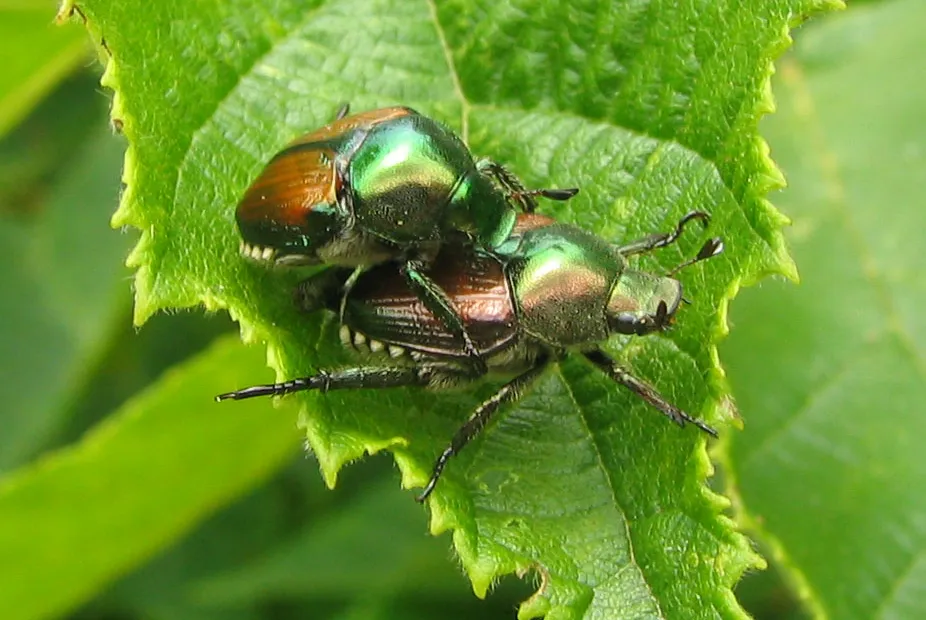
Japanese beetle
Popillia japonicaJapanese beetle overview
The Japanese beetle, Popillia japonica, is an invasive scarab beetle that damages ornamental plants, fruit crops, vegetables, and turf in many parts of the United States. Metallic green adults with copper-brown wing covers skeletonize leaves, chew flowers and fruit, and gather in conspicuous clusters. C-shaped grubs develop underground and feed mainly on grass roots, sometimes causing thinning or browning turf.
Typical conditions
Overview
Popillia japonica, commonly called the Japanese beetle, is an invasive insect pest established across much of the eastern and central United States, with localized populations in parts of the West. Adults are about 3/8 to 1/2 inch long, metallic green, and have coppery-brown wing covers plus conspicuous white hair tufts along the abdomen.
Adults are gregarious feeders and may aggregate on preferred plants. They chew the tissue between leaf veins, producing a characteristic lace-like or skeletonized appearance. Larvae are creamy-white, C-shaped grubs that live underground and feed mainly on turfgrass roots. Adult injury is often cosmetic, but heavy defoliation, flower injury, or fruit feeding can reduce plant vigor, yield, and marketability.
Symptoms and identification
Adult feeding produces irregular holes between the larger leaf veins; severely affected leaves may appear translucent, brown, or almost completely skeletonized. Beetles commonly cluster on sun-exposed leaves, flowers, and fruit, especially on roses, grapes, lindens, apples, raspberries, and some ornamentals.
Adults may chew flower petals, silk on sweet corn, and occasionally developing fruit. Turf affected by grubs may show thinning, irregular brown patches, poor rooting, or turf that lifts easily because roots have been pruned. Birds, skunks, raccoons, or other animals digging in lawns can be an indirect sign of white grubs, but grub identification should be confirmed because several scarab species look similar.
Causes and spread
Japanese beetles spread naturally by adult flight and are also moved inadvertently in infested nursery stock, sod, soil, cargo, and other plant-associated materials. Adults can travel from nearby lawns, pastures, unmanaged grassy areas, and preferred landscape plants.
Females favor moist turf or grassy soil for egg-laying. Irrigated lawns and other consistently moist grass areas can support larval development, while abundant preferred host plants encourage adult aggregation. Feeding beetles also release odors that can attract additional adults to an already infested plant.
Life cycle and persistence
Japanese beetles generally complete one generation per year in the United States. Adults commonly emerge from turf and other soil in early summer, with populations often highest from late June through early August, although timing varies with region and weather.
After mating, females periodically return to moist grass or turf and bury clusters of pearly-white eggs about 2 to 3 inches deep. Eggs hatch in roughly two weeks. The grubs pass through three larval stages while feeding on roots during summer, then move deeper into the soil as temperatures fall and overwinter mainly as mature grubs. Pupation occurs in spring, and adults emerge after approximately two weeks in the pupal stage.
Treatment and control
Begin with frequent monitoring and remove adults by hand, preferably in the cool morning when they are sluggish. Shake or knock beetles from foliage into a container of soapy water. Removing adults every day or two can substantially reduce feeding and the attraction of additional beetles.
For small fruiting plants or high-value ornamentals, insect-exclusion netting or row cover can protect foliage after pollination needs have ended. Harvest ripe fruit promptly and remove heavily infested or damaged plant material where practical.
Treat turf for grubs only when there is confirmed, economically significant grub injury or a documented high population. Killing grubs in one lawn usually has little effect on adult beetles feeding on landscape plants because adults are mobile and may arrive from elsewhere. Dig several small turf samples and identify the grubs before deciding on control.
Low-impact and biological control
- Hand-pick adults into soapy water and repeat regularly.
- Use insect netting over susceptible crops when compatible with pollination and harvest requirements.
- Apply commercially available entomopathogenic nematodes, particularly suitable Heterorhabditis species, to actively feeding grubs in turf according to the product directions. Nematodes require adequate soil moisture and should be watered into the root zone promptly.
- Bacillus thuringiensis galleriae products may provide control of some scarab beetle larvae or adults where the product is registered and labeled for the intended use, but performance depends on timing and local conditions.
- Milky spore, caused by Paenibacillus popilliae, is slow and variable. It should not be treated as a quick or universally effective solution for an established lawn infestation.
- Conserve natural enemies, including parasitoids and predators, by avoiding unnecessary broad-spectrum insecticide applications.
Prevention
- Select less-susceptible trees, shrubs, flowers, and fruit varieties where Japanese beetles are a recurring problem; susceptibility varies among species and cultivars.
- Inspect nursery plants and avoid moving untreated plants, sod, or soil from infested areas. Follow applicable state and federal Japanese beetle quarantine requirements.
- Maintain turf with a mowing height appropriate for the grass species and encourage deep roots through suitable irrigation and general lawn care. Healthy, well-rooted turf tolerates some root feeding better.
- Monitor preferred host plants at least twice weekly during the adult flight period. Early removal prevents beetles from building large aggregations.
- Do not rely on pheromone traps beside valuable plants. They can attract more beetles to the area and have not consistently reduced nearby feeding damage.
Interesting facts
- Adults feed on more than 300 plant species representing many plant families, but preference is uneven and varies with plant species, cultivar, surrounding vegetation, and beetle abundance.
- The beetle was first detected in the United States in New Jersey in 1916 after accidental introduction.
- Adult beetles are attracted to the odors of damaged plants and to aggregation sites containing other Japanese beetles.
- When disturbed, adults commonly drop from foliage and remain motionless, a behavior called thanatosis or death-feigning.
- The winsome fly, Istocheta aldrichi, is a parasitoid of adult Japanese beetles in parts of the United States, while other natural enemies attack eggs or grubs.
- Japanese beetle grubs are often confused with other white grubs; reliable identification may require examining the raster pattern on the tip of the abdomen with magnification.
Use only pesticide products legally authorized for Japanese beetle or white-grub control on the specific crop, turf, or ornamental plant in the United States and in your state. Follow the current product label exactly, including crop/site, rate, timing, preharvest interval, reentry, protective-equipment, and irrigation instructions. Never spray blooming plants when bees or other pollinators are foraging; systemic insecticides can move into flowers and pose serious pollinator risks. Confirm the target pest and consult your county Extension service before treatment.
Affected plants
The plants below are linked to this problem by structured host-plant data. The list updates automatically as new plant profiles are added.
 Field maple (Acer campestre) care guideAcer campestre
 Paperbark Maple (Acer griseum) care guideAcer griseum
 Downy Japanese Maple (Acer japonicum) care guideAcer japonicum
 Boxelder (Acer negundo) care guideAcer negundo
 Acer palmatum care guideAcer palmatum
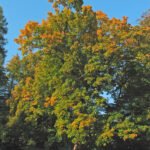 He Norway maple (Acer platanoides) care guideAcer platanoides
 Sycamore maple (Acer pseudoplatanus) care guideAcer pseudoplatanus
 Red maple (Acer rubrum) care guideAcer rubrum
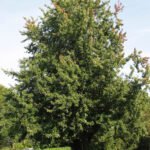 Silver maple (Acer saccharinum) care guideAcer saccharinum
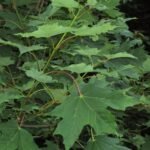 Sugar maple (Acer saccharum) care guideAcer saccharum
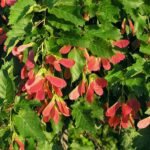 Tatar Maple (Acer tataricum) care guideAcer tataricum
 Amur Maple (Acer tataricum ginnala) care guideAcer tataricum ginnala