
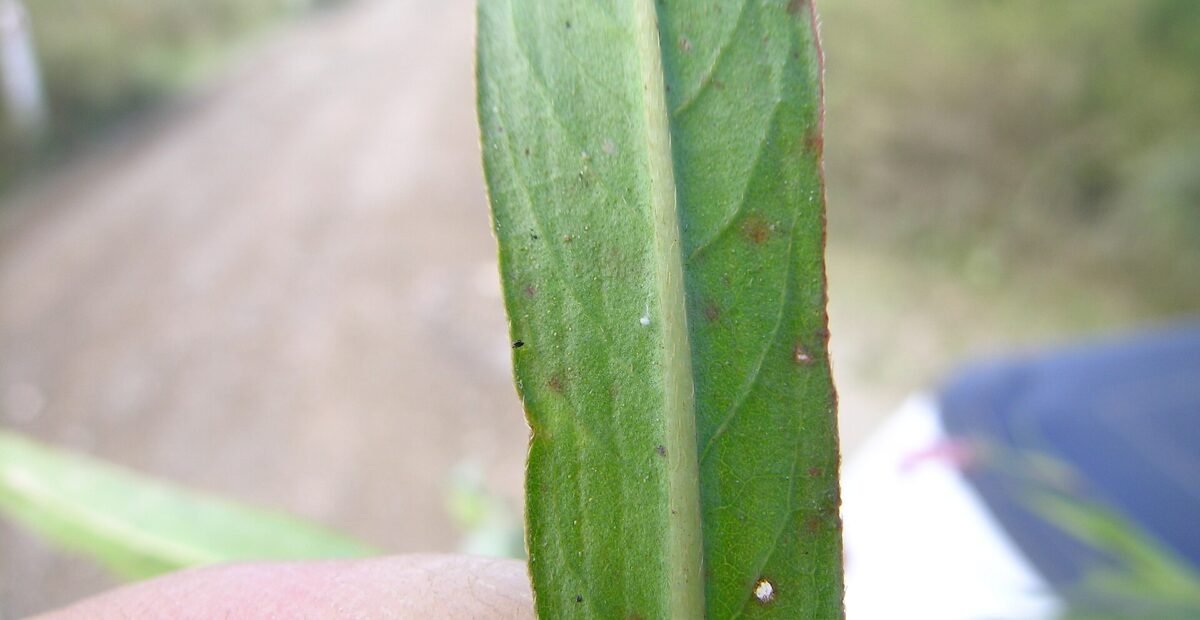
 Source:
 Purple Blotch
Alternaria porri (Ellis) CiferriPurple Blotch overview
Purple blotch is a fungal leaf disease of onions and related Allium crops caused by Alternaria porri. It begins as small, water-soaked or whitish sunken spots that enlarge into purple-brown lesions with concentric rings and yellow margins. Wet foliage, plant stress, wounds, infected residue, and poor air movement can accelerate spread, reducing leaf area and bulb development.
Typical conditions
Overview
Purple blotch is commonly associated with onion, but it can also affect garlic, leek, chive and other closely related Allium crops. The disease is favored by prolonged leaf wetness and may become severe when foliage is weakened by insects, hail, sunscald, nutrient imbalance or other diseases.
Early symptoms can resemble other onion leaf-spot diseases, especially Botrytis leaf blight and downy mildew. Confirmation is more reliable when the lesions show purple-brown concentric rings and dark, powdery sporulation under moist conditions.
Symptoms and identification
- Small whitish, pale brown or water-soaked sunken spots develop on leaves or flower stalks.
- Spots enlarge into elliptical or oblong purple-brown lesions, often with concentric target-like rings and a yellow or reddish margin.
- Lesions may merge, causing leaf tips to dry, yellow, wilt and die back.
- In humid weather, brown to black fungal growth or spores may be visible on lesion surfaces.
- Severe leaf loss can reduce bulb size, delay bulb formation and maturation, and contribute to weak or damaged bulbs.
Older or previously injured leaves are often affected first or most severely. Lesions alone are not always diagnostic, because several Allium diseases produce similar spots.
Causes and spread
The causal fungus survives between crops in infected leaves, stems, bulbs, cull piles, volunteer Allium plants and contaminated debris. In some situations, infected seed or transplants may introduce the pathogen.
Wind-driven rain, irrigation splash, handling and movement through wet foliage can spread spores. Infection is more likely when leaves remain wet for extended periods, especially in dense plantings or fields with poor air movement. Wounds and tissue already damaged by insects, hail, sunscald or other pathogens can increase susceptibility.
Life cycle and persistence
Alternaria porri produces dark, multicelled conidia on infected plant tissue. These spores are dispersed by wind, rain splash, irrigation and plant contact. After landing on a susceptible Allium leaf, spores germinate when moisture and temperature conditions are suitable, and the fungus penetrates directly or through natural openings and wounds.
New lesions may produce additional spores within the same growing season, creating repeated secondary infection cycles. The fungus persists in infected residue and other plant material, allowing disease to reappear in subsequent plantings if sanitation and rotation are poor. Exact disease-development speed varies with cultivar, isolate, temperature, humidity and duration of leaf wetness.
Treatment and control
Begin with sanitation and environmental management. Remove severely affected plants or leaves when practical, reduce leaf wetness, improve spacing and correct irrigation or drainage problems. Harvest and cure bulbs properly, separating damaged or diseased bulbs from sound storage material.
For commercial production or valuable plantings, use a locally appropriate disease-management program based on scouting, weather conditions, cultivar susceptibility and documented fungicide efficacy. Fungicides generally work best preventively or at the earliest stages of disease and should be rotated by mode of action to reduce resistance risk. Products may provide suppression rather than eradication once foliage is heavily blighted.
Low-impact and biological control
- Use clean planting material and resistant or more tolerant cultivars when suitable varieties are available.
- Remove infected leaves, volunteer Alliums and crop debris promptly.
- Use drip or furrow irrigation and irrigate early enough for foliage to dry before night.
- Maintain crop rotation, good spacing, weed control and balanced nutrition.
- Organic fungicides or biological products may be useful only when they are registered or allowed for the specific crop and disease in the United States; effectiveness varies, so follow the product label and local Extension guidance.
Home remedies and untested microbial or botanical sprays should not be assumed to control established purple blotch or to be safe for edible crops.
Prevention
- Plant certified, healthy seed, sets and transplants from reputable sources.
- Use adequate spacing and weed control to improve air movement and shorten drying time.
- Water at the soil surface when practical; avoid evening overhead irrigation and unnecessary leaf wetting.
- Grow onions and related Allium crops in well-drained soil and maintain balanced fertility without excessive nitrogen.
- Rotate out of onion, garlic, leek, chive and related Allium crops for several years where disease has been persistent; a three- to four-year interval is commonly recommended for home-garden rotation.
- Remove badly infected foliage and destroy or dispose of crop debris rather than incorporating heavily diseased material into a garden bed.
- Control volunteer onions, cull piles and nearby unmanaged Allium plants that can maintain inoculum.
- Inspect transplants before planting and avoid working in the crop while foliage is wet.
Interesting facts
- The disease is commonly called purple blotch on onion, while related Alternaria diseases may have different common names on other crops.
- Alternaria porri has been documented causing purple blotch on commercially grown leek transplants in California.
- Dark, beaked, multicelled conidia are characteristic microscopic features, but laboratory confirmation may be needed because several pathogens cause similar Allium leaf spots.
- Leaf damage can interfere with bulb initiation and maturation even when the bulb itself is not extensively rotted.
Use only fungicides legally registered and currently labeled in the United States for the specific crop and purple blotch or Alternaria porri. Follow the current label for rate, timing, personal protective equipment, preharvest interval, reentry interval, resistance-management restrictions and permitted application sites. Product registrations and labels can change; consult your state Extension service and the EPA label before use.
Affected plants
The plants below are linked to this problem by structured host-plant data. The list updates automatically as new plant profiles are added.
 Onion (Allium cepa) care guideAllium cepa
 Allium christophii care guideAllium christophii
 Bunching onion (Allium fistulosum) care guideAllium fistulosum
 Giant Allium (Allium giganteum) care guideAllium giganteum
 Ornamental onion (Allium) care guideAllium
 Garlic (Allium sativum) care guideAllium sativum
 Chives (Allium schoenoprasum) care guideAllium schoenoprasum
 Ransoms (Allium ursinum) care guideAllium ursinum