
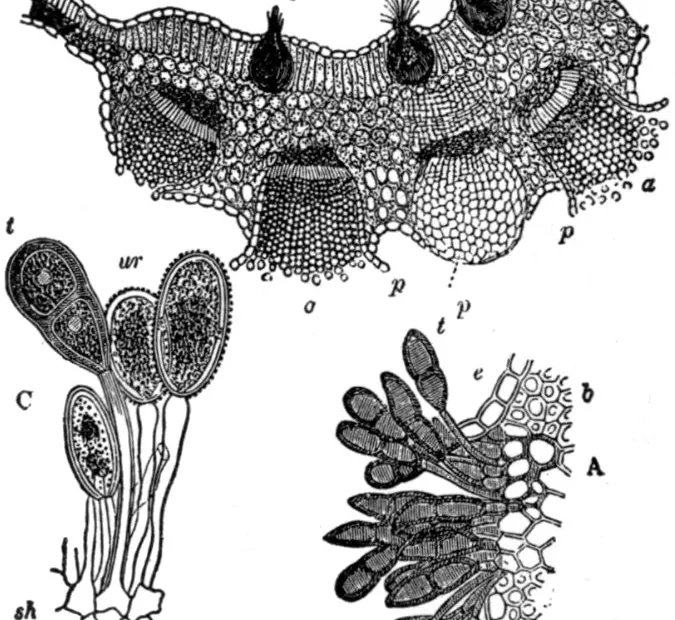
Stem Rust (Black Rust)
Puccinia graminisStem Rust (Black Rust) overview
Stem rust is a fungal disease caused by the Puccinia graminis species complex, affecting wheat, barley, oats, rye, triticale and several grasses. Brick-red, elongated pustules rupture stems, leaf sheaths and leaves, later turning dark brown or black. Severe infections weaken plants, reduce grain filling and may cause lodging. Some forms alternate between cereal hosts and barberry.
Typical conditions
Overview
Stem rust is an obligate fungal disease of cereal crops and grasses. On susceptible plants, the fungus produces conspicuous, elongated pustules that primarily rupture stems and leaf sheaths, but may also occur on leaves, glumes and awns. The uredinial stage is brick red to reddish brown; as plants mature, pustules develop dark teliospores, giving the disease its alternative name, black rust.
In the United States, current cultivar resistance and historical reduction of susceptible barberry have greatly reduced regular epidemics in many wheat-growing areas, but stem rust remains a serious threat when virulent races encounter susceptible cultivars or when conditions favor rapid spore production and spread.
Symptoms and identification
- Elongated, blister-like brick-red or reddish-brown pustules erupt through stems, leaf sheaths and sometimes leaves, glumes and awns.
- Pustule margins are often ragged or torn, and reddish spores rub off readily onto fingers or clothing.
- Older pustules become dark brown to black as teliospores form.
- Severe infection can weaken stems, reduce photosynthetic area and grain filling, accelerate plant senescence, and increase lodging or stem breakage.
- Symptoms can resemble other cereal rusts; stem position, elongated pustules and the transition from red to black are useful diagnostic clues, but laboratory confirmation may be needed for race or forma-specialis identification.
Causes and spread
The causal organism is Puccinia graminis, a complex of biologically specialized forms rather than one uniform strain. Infected living cereal plants and grasses produce urediniospores that are readily carried by wind. Volunteer wheat, infected crop regrowth, susceptible small grains and wild grasses can maintain or bridge inoculum between production areas.
Many forms have a second, alternate host in Berberis or closely related genera. Common barberry, especially Berberis vulgaris, can support sexual reproduction and produce aeciospores capable of infecting cereals. The importance of barberry varies by region, pathogen form and local epidemiology; it should not be assumed that every ornamental barberry is susceptible.
Life cycle and persistence
Puccinia graminis is a macrocyclic, heteroecious rust fungus. Its complete cycle has five spore stages. On cereal or grass hosts, windborne aeciospores or urediniospores initiate infection. Uredinia then produce repeated generations of reddish urediniospores during the growing season. Later, telia form dark, more firmly attached teliospores.
Teliospores germinate to produce basidiospores, which infect susceptible Berberis or related alternate hosts. Pycnia and aecia develop on barberry leaves; aeciospores are released and can travel back to cereal hosts. In many U.S. epidemics, the cycle may be maintained mainly by cereal-to-cereal urediniospores, and the alternate-host stage may be absent or of limited practical importance.
Treatment and control
Management is most effective before disease becomes widespread. Confirm the diagnosis and identify the crop and likely host-specialized form before making treatment decisions. In commercial small grains, combine resistant varieties, timely scouting, regional disease alerts and a carefully timed fungicide decision when disease risk and crop value justify it.
Once pustules are abundant throughout a mature crop, treatment may provide limited economic benefit. Remove severely infected volunteer plants and grass weeds when feasible, manage crop residue appropriately, and rotate with nonhost crops where agronomically suitable. For lawns and ornamental grasses, improve plant vigor, irrigate at the soil surface rather than wetting foliage overnight, mow regularly, and remove clippings from visibly infected areas.
Low-impact and biological control
- Prioritize resistant cereal cultivars and certified, disease-free planting material.
- Reduce volunteer cereal plants and susceptible grassy weeds that can carry urediniospores.
- Use crop rotation and spatial separation from heavily infected cereal plantings where practical.
- Maintain adequate, balanced nutrition and avoid prolonged nighttime leaf wetness.
- Remove heavily infected ornamental grass foliage or mow and dispose of clippings when this can be done without spreading spores.
- Biological products have variable results and are not a dependable stand-alone treatment for field stem rust; use only products registered for the specific crop and disease.
Prevention
- Grow cultivars with effective, locally recommended stem-rust resistance and monitor cultivar resistance advisories because pathogen races can change.
- Use certified seed and remove or manage volunteer wheat, cereal regrowth and heavily infected grass hosts where practical.
- Scout small grains from stem elongation through heading, especially after warm, humid weather or reports of rust in nearby regions.
- Maintain balanced fertility and avoid excessive nitrogen that produces dense, succulent canopies; do not use nitrogen deficiency as a substitute for disease control.
- Improve field sanitation and control grassy weeds around production areas.
- Where barberry regulation applies, follow USDA, state and local requirements. Do not remove or transport plants without checking local rules, and do not assume that every Berberis or Mahonia cultivar is a rust host.
Interesting facts
- The name black rust refers to the dark teliospores that develop as stem-rust pustules mature.
- Puccinia graminis produces five distinct spore stages when its complete life cycle occurs.
- Common barberry was historically removed from parts of the northern United States because it can serve as an alternate host and site of sexual reproduction for cereal stem rust.
- Puccinia graminis is a species complex with host-specialized forms; a rust strain adapted to one cereal is not automatically equivalent to one adapted to another.
- The disease can affect wheat, durum wheat, barley, oats, rye, triticale and numerous wild or turf grasses, but documented susceptibility depends on the pathogen form and host genotype.
Use only fungicide products legally authorized for stem rust on the specific crop in the United States, and follow the current product label for crop, rate, timing, application interval, reentry interval, harvest interval and resistance-management requirements. Product registrations and labels can change; consult current state extension guidance and the EPA label. Do not apply a fungicide solely from a photograph or without confirming that the crop and disease are covered by the label.
Affected plants
The plants below are linked to this problem by structured host-plant data. The list updates automatically as new plant profiles are added.
 Hollyleaved Barberry (Mahonia aquifolium) care guideMahonia aquifolium
 Thunberg’s Barberry (Berberis thunbergii) care guideBerberis thunbergii
 Darwin’s Barberry (Berberis darwinii) care guideBerberis darwinii
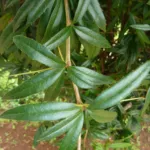 Wintergreen barberry (Berberis julianae) care guideBerberis julianae
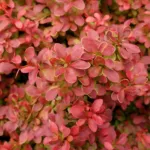 Admiration (Berberis thunbergii ‘Admiration’)Berberis thunbergii 'Admiration'
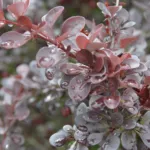 Atropurpurea (Berberis thunbergii ‘Atropurpurea’)Berberis thunbergii 'Atropurpurea'
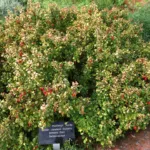 Golden Japanese barberry (Berberis thunbergii ‘Aurea’)Berberis thunbergii 'Aurea'
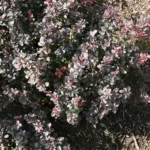 Japanese barberry (Berberis thunbergii ‘Concorde’)Berberis thunbergii 'Concorde'
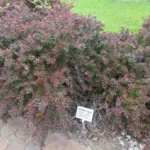 Crimson Pygmy (Berberis thunbergii ‘Crimson Pygmy’)Berberis thunbergii 'Crimson Pygmy'
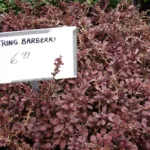 Golden Ring barberry (Berberis thunbergii ‘Golden Ring’)Berberis thunbergii 'Golden Ring'
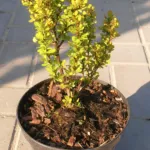 Golden Rocket (Berberis thunbergii ‘Golden Rocket’)Berberis thunbergii 'Golden Rocket'
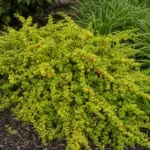 Green Carpet (Berberis thunbergii ‘Green Carpet’)Berberis thunbergii 'Green Carpet'