
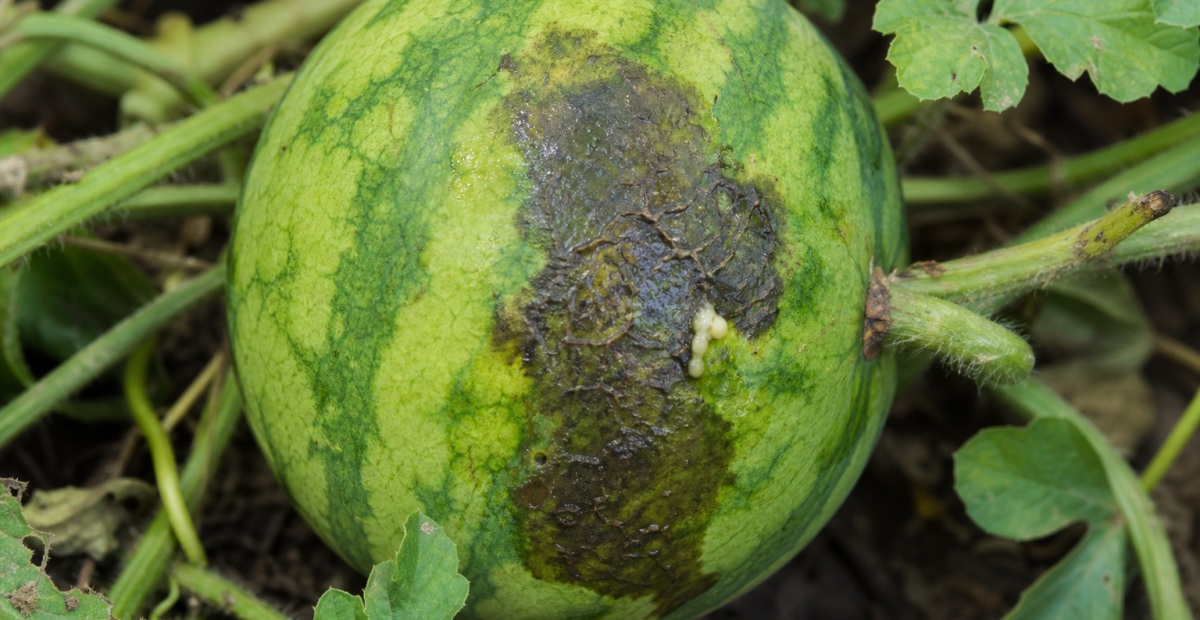
Bacterial Fruit Blotch
Acidovorax citrulliBacterial Fruit Blotch overview
Bacterial fruit blotch is a serious, seedborne disease of watermelon and other cucurbits caused by Acidovorax citrulli. It is favored by warm, humid conditions and prolonged leaf wetness. Small water-soaked lesions can rapidly enlarge on young fruit, crack, and develop into rind and flesh rot. Disease-free seed and transplants, sanitation, irrigation management, and early removal of suspect plants are central to control.
Typical conditions
Overview
Bacterial fruit blotch (BFB) is caused by the gram-negative bacterium Acidovorax citrulli. Older literature and some extension resources use the synonym Acidovorax avenae subsp. citrulli; current plant-disease references commonly list A. citrulli.
Symptoms are most conspicuous on watermelon fruit, particularly fruit about 2–3 weeks old. Under favorable conditions, a small infection can expand rapidly and make fruit unmarketable. Diagnosis based only on appearance is unreliable because other bacterial and physiological problems can produce water-soaked or rotting tissue; suspect cases should be confirmed by a plant diagnostic laboratory.
Symptoms and identification
On young watermelon fruit, symptoms begin as small, irregular, water-soaked spots, often on the upper surface. Lesions enlarge, darken to olive green or reddish brown, and may develop fine to conspicuous cracks. White or cream-colored bacterial ooze can appear during wet weather. Internal rind tissue beneath the lesion may become water-soaked, and secondary soft rot can follow.
Seedlings may show water-soaked lesions on cotyledons, hypocotyls or stems, followed by collapse or death. Older leaves can develop small water-soaked or necrotic spots, although foliage symptoms are often less distinctive than fruit symptoms. Symptomless, latently infected transplants can still introduce the bacterium into a field.
Causes and spread
The pathogen is commonly introduced on contaminated or infected seed and can move with infected transplants, greenhouse trays, tools, hands, plant debris, volunteer cucurbits and contaminated water. Infected seed may produce symptomless seedlings, allowing the disease to escape visual inspection.
Rain, overhead irrigation, splashing water, handling and equipment spread bacteria between plants. Entry occurs through stomata, natural openings and wounds. Dense plantings, wet foliage, high relative humidity and warm temperatures greatly increase risk. Workers and equipment should not move through cucurbit fields while foliage is wet.
Life cycle and persistence
Acidovorax citrulli can survive on or in seed and may be carried into the greenhouse with seed lots or contaminated production materials. During germination it colonizes seedlings, sometimes without obvious symptoms. Bacteria multiply on wet plant surfaces and enter through stomata or wounds.
In warm, humid conditions, infected seedlings and leaves provide inoculum for developing fruit. Rain or sprinkler droplets disperse cells across the canopy. Young fruit are especially susceptible; infections may remain inconspicuous until lesions enlarge and fruit begin to mature. Survival between crops can occur in volunteer cucurbits, crop residues, contaminated structures and seed.
Treatment and control
There is no reliable way to cure fruit already infected with bacterial fruit blotch. At the first suspicion, stop overhead irrigation and restrict movement through the planting. Mark affected areas, remove and destroy severely diseased plants and fruit where practical, and sanitize tools, hands, footwear, trays and equipment.
In commercial production, contact the state Extension service, crop consultant or diagnostic laboratory promptly because seedborne introduction and movement to neighboring cucurbit fields may have major consequences. Copper-based or other bactericidal products may provide preventive suppression in some production systems, but performance is inconsistent and they do not replace clean seed, sanitation and moisture management.
Low-impact and biological control
Organic and low-input management should emphasize exclusion and sanitation: use seed and transplants from a reliable disease-management program, maintain clean propagation areas, use drip irrigation, remove volunteer cucurbits, rotate crops, and promptly destroy symptomatic plants and fruit.
Some biological seed treatments and microbial antagonists have been investigated, but efficacy depends on the product, strain, seed lot and production conditions. Use only products allowed under the USDA National Organic Program and legally registered for the crop and disease in the United States; follow the current label and do not assume that an experimental treatment is commercially effective.
Prevention
- Purchase seed from reputable suppliers with appropriate disease-health testing or certification, and use disease-free transplants.
- Produce transplants in a clean greenhouse with disinfected trays, benches, tools and irrigation equipment. Avoid excessive plant density and humidity.
- Use drip or carefully managed low-volume irrigation rather than overhead sprinklers. Improve airflow and avoid field work when foliage is wet.
- Rotate out of cucurbits where practical, remove volunteer watermelon and other cucurbit plants, and destroy infected plants and fruit rather than composting them.
- Clean soil and plant debris from machinery before moving between fields. Keep suspect lots separate and obtain laboratory confirmation.
Interesting facts
- The disease was historically called bacterial fruit blotch of cucurbits and has also been associated with the name Acidovorax avenae subsp. citrulli.
- Watermelon and melon fruit are especially important hosts economically, even though susceptibility has been documented across multiple cucurbit crops.
- Fruit rind color and cultivar characteristics can influence visible disease severity, but no watermelon cultivar should be assumed immune.
- Some bacterial fruit blotch outbreaks have caused very high losses because infections can remain latent in seedlings and become obvious only after transplanting or fruit development.
No pesticide program should be assumed to eradicate this disease. Use only products legally registered and authorized for bacterial fruit blotch or the applicable crop in your state and country, and follow the current product label, worker-protection requirements, preharvest interval and resistance-management directions. Chemical products are generally preventive or suppressive, not curative; confirm local legality and crop-specific recommendations with state Extension guidance.
Affected plants
The plants below are linked to this problem by structured host-plant data. The list updates automatically as new plant profiles are added.
 Maroon cucumbe (Cucumis anguria) care guideCucumis anguria
 Horned Melon (Cucumis metuliferus) care guideCucumis metuliferus
 Cucumber (Cucumis sativus) care guideCucumis sativus
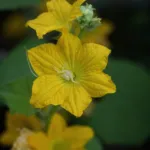 Melon or true melo (Cucumis melo) care guideCucumis melo
 Cantalupensis Group (Cucumis melo Cantalupensis Group)Cucumis melo Cantalupensis Group
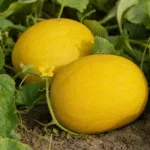 Mango melon (Cucumis melo Chito Group)Cucumis melo Chito Group
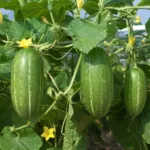 Oriental pickling melon (Cucumis melo Conomon Group)Cucumis melo Conomon Group
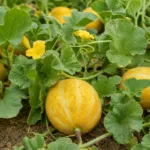 Dudaim melon (Cucumis melo Dudaim Group)Cucumis melo Dudaim Group
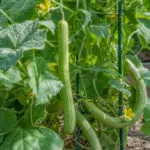 Flexuosus Group (Cucumis melo Flexuosus Group)Cucumis melo Flexuosus Group
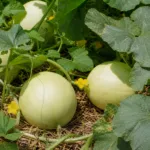 Inodorus Group (Cucumis melo Inodorus Group)Cucumis melo Inodorus Group
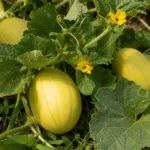 Makuwa Group (Cucumis melo Makuwa Group)Cucumis melo Makuwa Group
 Momordica Group (Cucumis melo Momordica Group)Cucumis melo Momordica Group