
 Source:
 Bacterial Wilt
Ralstonia solanacearum species complexBacterial Wilt overview
Bacterial wilt is a serious vascular disease caused by the soilborne bacterium Ralstonia solanacearum species complex. It commonly affects tomato, potato, eggplant, pepper, tobacco, geranium and other hosts. Plants may wilt suddenly while leaves remain green, and cut stems can release milky bacterial ooze. Symptoms and host range vary among bacterial strains, so laboratory confirmation is important.
Typical conditions
Overview
Bacterial wilt is a vascular disease rather than a foliar-spot disease. The bacterium usually enters through roots, natural openings or wounds, then moves upward through xylem vessels. Rapid blockage and tissue damage cause loss of water transport, producing wilt that may begin on one side of a plant or in the youngest leaves.
Tomato, potato and eggplant are important hosts, but documented susceptibility extends to pepper, tobacco, geranium and numerous other crops, ornamentals and weeds. Because Fusarium wilt, Verticillium wilt, bacterial canker, drought stress and root injury can look similar, visual diagnosis alone is unreliable.
Symptoms and identification
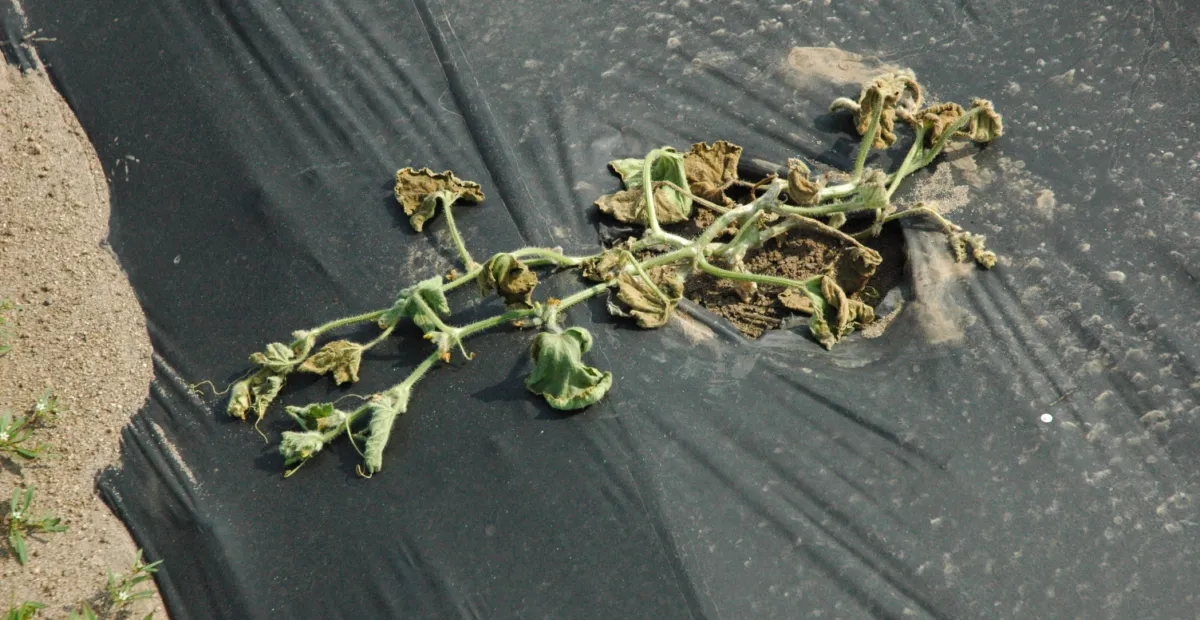
Symptoms commonly begin as midday wilting of young leaves, sometimes limited to one branch or one side of the plant. Affected plants may temporarily recover during cool nights or after irrigation, then wilt permanently as disease advances. Leaves can remain green while limp, or later become yellow, brown and necrotic.
Cut stems may show narrow brown-to-dark vascular streaks and may release sticky, milky-white bacterial ooze. A freshly cut stem placed in clear water can produce fine white bacterial streams, but this field test is not a substitute for laboratory identification. Tomato plants can die rapidly under warm conditions. Potato tubers may show a discolored vascular ring and cream-colored ooze that causes soil to adhere to the tuber.
Causes and spread
The pathogen is soilborne and is favored by movement of contaminated water, soil, plant debris, tools, hands, footwear, containers, transplants and infected seed potatoes. It can spread through irrigation runoff, flooding, drainage channels and splashing water. Root wounds caused by cultivation, nematodes or transplanting can increase infection.
Some hosts may carry the bacterium with few or no visible symptoms, allowing movement in propagation material or through persistent weeds. The exact host range depends on the strain or lineage; records for the Ralstonia solanacearum species complex should not automatically be applied to every isolate.
Life cycle and persistence
Ralstonia survives in infested soil, water, infected plant residues and living hosts. It commonly enters through root wounds or natural openings, reaches the xylem and multiplies to high cell densities. Bacterial cells and extracellular slime obstruct water-conducting vessels, leading to wilt and plant death.
Warm conditions, especially temperatures above about 82°F, generally accelerate disease development for many strains, although strain and host differences are substantial. The bacterium may persist between crops in wet soil, irrigation water or symptomless hosts. In the United States, suspected race 3 biovar 2 detections require official handling because of federal plant-health regulations.
Treatment and control
There is no dependable rescue treatment for a plant with advanced bacterial wilt. Remove severely affected plants with as much of the root system and surrounding soil as practical, bag them securely and dispose of them according to local guidance. Do not move suspect plants, soil, water or tools to uninfested areas.
For valuable plants or suspected regulated strains, stop work in the affected area and contact the state department of agriculture, state plant health official or USDA APHIS before extensive handling. Submit symptomatic tissue through a qualified diagnostic laboratory; do not rely solely on a home bacterial-streaming test.
For future plantings, combine crop rotation, drainage improvement, sanitation, clean planting stock and resistant cultivars. Grafting susceptible tomato scions onto suitable bacterial-wilt-resistant rootstocks can reduce losses in some southeastern U.S. production systems, but results depend on the rootstock, strain, soil and management.
Low-impact and biological control
Organic and low-input management is preventive rather than curative. Use certified or tested clean planting material, resistant grafted tomato rootstocks where available, raised or well-drained beds, drip irrigation and strict tool sanitation. Solarization with clear plastic during the hottest part of summer may reduce soilborne inoculum in suitable climates, but it is uneven in deep or wet soil and does not guarantee eradication.
Remove susceptible weeds and volunteers, prevent contaminated water from entering beds, and rotate with nonhost crops when feasible. Biological products, compost amendments and soil treatments have shown variable results and should not be treated as reliable stand-alone controls. Use only products allowed under the applicable organic certification program and approved for the crop and use site.
Prevention
- Purchase disease-free, reputable transplants and certified seed potatoes; do not save propagation material from symptomatic plants.
- Use drip irrigation where practical, prevent irrigation runoff between beds, and improve drainage. Avoid moving soil or water from suspect areas.
- Remove volunteer solanaceous plants and weeds near production beds, especially hosts growing along ditches or waterways.
- Disinfect tools, trays, stakes and work surfaces between plant lots. Wash hands and clean soil from footwear and equipment.
- Do not compost plants suspected of bacterial wilt unless the composting system is reliably managed to reach appropriate temperatures.
- Rotate away from susceptible crops and use resistant or moderately resistant cultivars where locally adapted. Resistant varieties reduce losses but may not prevent infection.
- In greenhouses, avoid shared subirrigation and separate suspect plant lots immediately. Commercial propagators should use documented sanitation, testing and traceability procedures.
Interesting facts
- Ralstonia solanacearum is a species complex, not a uniform strain, so symptoms, host range and temperature response can differ among isolates.
- A wilted plant may look temporarily better at night or after cooling because reduced water demand briefly masks vascular blockage.
- Milky bacterial streaming from a freshly cut stem is a useful warning sign, but laboratory testing is needed for reliable identification and regulatory decisions.
- Climbing nightshade, Solanum dulcamara, can act as a symptomless host and is particularly relevant near waterways.
- USDA APHIS regulates race 3 biovar 2 as a select-agent plant pathogen because of its threat to potato, tomato, eggplant and ornamental crops.
- Rose plants were identified by APHIS in 2026 as a potential host pathway for race 3 biovar 2, illustrating why host lists and import requirements can change as evidence develops.
No pesticide program should be assumed to cure established Ralstonia wilt. Use only products legally authorized for the specific crop and problem in the United States, and follow the current product label exactly. Copper products and other bactericides generally do not restore plants once the vascular system is colonized; consult your state extension service and diagnostic laboratory before considering any labeled treatment.