
 Source:
 Maple Tar Spot (Giant Tar Spot)
Rhytisma acerinumMaple Tar Spot (Giant Tar Spot) overview
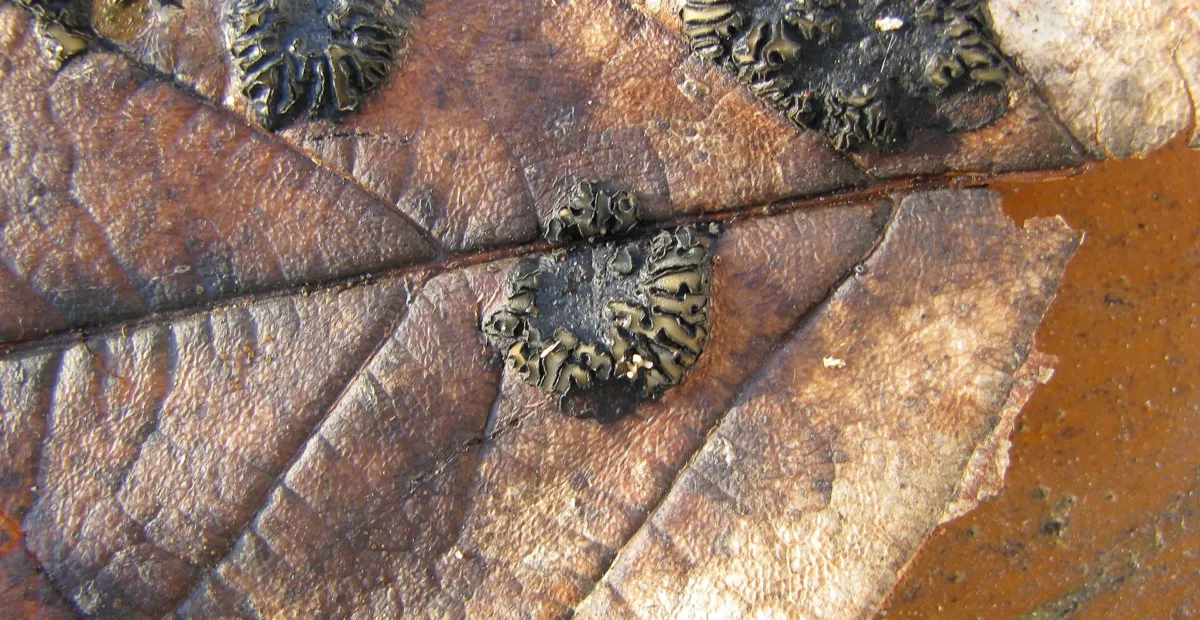
Maple tar spot is a conspicuous fungal leaf disease caused by Rhytisma acerinum, most characteristically affecting Norway maple and some other European maples. Pale yellow-green leaf spots appear in late spring or early summer and enlarge into shiny, raised, black tar-like patches by late summer. The disease is usually cosmetic, although severe infections may cause premature leaf drop.
Typical conditions
Overview
Maple tar spot caused by Rhytisma acerinum is a foliar disease most strongly associated in the United States with Norway maple (Acer platanoides). The pathogen is an introduced fungus in parts of North America and is also documented on sycamore maple (Acer pseudoplatanus) and other susceptible European maples.
The disease is highly visible but usually has limited biological impact. Heavy infections can contribute to early yellowing, browning or leaf drop, particularly on Norway maple, but the disease rarely kills trees or causes major long-term decline by itself.
Symptoms and identification
Initial symptoms usually develop after leaves expand, appearing as small, rounded pale green to yellow-green spots. Over several weeks, the spots enlarge and develop black fungal tissue called stromata.
- Shiny, black, tar-like patches on the upper leaf surface.
- Large irregular spots or multiple spots that merge into broad lesions.
- Yellow or pale green halos around developing lesions.
- Occasional cupping or slight distortion of the affected leaf area.
- Premature fall coloration and defoliation when infection is severe.
On Norway maple, the lesions may be large and coalescing, which is commonly described as giant tar spot. Similar black spots on native North American maples may be caused by other Rhytisma species, so species-level identification from symptoms alone can be uncertain.
Causes and spread
The fungus survives primarily in infected fallen leaves. During wet periods in spring, mature fruiting structures in the leaf litter release sexual spores. Wind and rain carry the spores to newly expanding maple leaves, where infection occurs through natural openings such as stomata.
Moist, sheltered sites, persistent leaf litter and repeated wetting of young foliage favor disease development. The disease is not normally spread from tree to tree by pruning tools, insects or contact between mature leaves. Local outbreaks may vary considerably from one year to the next because weather during the spring infection period is important.
Life cycle and persistence
Infected leaves fall in autumn with the fungus still embedded in the leaf tissue. The pathogen overwinters in this litter and develops mature spore-producing structures during the following spring.
- Overwintering stromata remain in fallen maple leaves.
- Spring moisture triggers development of fruiting bodies and release of ascospores.
- Spores reach expanding maple leaves by wind or splashing rain.
- Small pale spots develop after an incubation period of roughly several weeks.
- The lesions enlarge through summer and form black tar-like stromata in mid to late summer.
- Infected leaves eventually fall, returning the pathogen to the litter and completing the annual cycle.
Treatment and control
There is usually no need to treat an established tree with fungicides. The disease is primarily cosmetic, and leaves produced later in the season generally restore the tree's photosynthetic capacity after an ordinary infection period.
Remove and dispose of fallen infected leaves after leaf drop. If defoliation is unusually severe, assess the tree for additional stresses such as drought, root damage, girdling roots or other diseases. Protect the root zone from compaction and water the tree during prolonged dry periods according to site conditions.
In high-value nursery or specimen production, preventive treatment would need to begin before or during early leaf expansion and should be based on local Extension or plant-diagnostic guidance. Applications made after black tar-like spots are visible generally provide little benefit because the infection is already established.
Low-impact and biological control
No biological control product is routinely needed for home landscapes. The most effective low-impact approach is cultural sanitation:
- Collect fallen leaves thoroughly in autumn.
- Remove persistent leaf litter from planting beds beneath affected trees.
- Use municipal composting or another managed disposal system where available.
- Maintain balanced soil moisture and avoid practices that stress the tree.
Do not rely on homemade sprays or unverified microbial products. They have not been established as dependable controls for Rhytisma acerinum in ordinary United States landscapes.
Prevention
Sanitation is the most practical prevention measure for landscape trees.
- Rake and remove fallen maple leaves in autumn, especially beneath heavily affected Norway maples.
- Dispose of leaves through municipal yard-waste collection or another approved method; do not leave infected leaves in piles beneath the tree.
- Maintain tree vigor with appropriate watering during extended drought and avoid unnecessary root or trunk injury.
- Provide adequate spacing and air movement when planting new trees.
- Monitor young expanding leaves in spring if the tree had substantial disease the previous year.
Because spores can arrive from nearby trees and the fungi are widespread, sanitation may reduce disease pressure without guaranteeing complete elimination.
Interesting facts
The black “tar” is not spilled material but a compact fungal stroma containing reproductive structures. The disease name refers to its appearance on the leaf surface.
Rhytisma acerinum is particularly associated with European and Norway maples in North America, while tar spots on native red, silver or sugar maples are often caused by other species such as R. americanum or R. punctatum. Accurate species identification may require microscopic or laboratory examination.
Although affected leaves can fall early, tar spot usually has little effect on the long-term health of a mature tree when no other major stresses are present.
Fungicides are generally not recommended for maple tar spot in home landscapes. If treatment is considered for a nursery or high-value specimen, use only a product legally authorized for this crop and problem in the United States, confirm the current label and state requirements, and follow all label directions. Applications must be timed to protect expanding leaves before infection; spraying visible mature tar spots is unlikely to reverse symptoms.
Affected plants
The plants below are linked to this problem by structured host-plant data. The list updates automatically as new plant profiles are added.
 Field maple (Acer campestre) care guideAcer campestre
 Paperbark Maple (Acer griseum) care guideAcer griseum
 Downy Japanese Maple (Acer japonicum) care guideAcer japonicum
 Boxelder (Acer negundo) care guideAcer negundo
 Acer palmatum care guideAcer palmatum
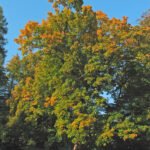 He Norway maple (Acer platanoides) care guideAcer platanoides
 Sycamore maple (Acer pseudoplatanus) care guideAcer pseudoplatanus
 Red maple (Acer rubrum) care guideAcer rubrum
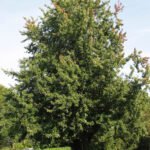 Silver maple (Acer saccharinum) care guideAcer saccharinum
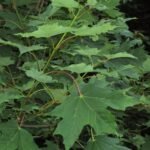 Sugar maple (Acer saccharum) care guideAcer saccharum
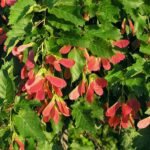 Tatar Maple (Acer tataricum) care guideAcer tataricum
 Amur Maple (Acer tataricum ginnala) care guideAcer tataricum ginnala