
 Source:
 Boxelder (Acer negundo) short overview
Boxelder (Acer negundo) is a fast-growing North American maple recognized by its opposite, pinnately compound leaves and paired winged seeds. It thrives in full sun to partial shade, tolerates wet soils and periodic drought, and is useful in riparian restoration, wildlife plantings, and difficult urban sites. Its early wind-pollinated flowers are inconspicuous, while its weak branches, short lifespan, and prolific seedlings require thoughtful placement and maintenance.
Taxonomic classification
Boxelder (Acer negundo) care guide
Light and placement
Best in full sun for sturdy, well-developed growth, though partial shade is tolerated. Use an open site with several hours of direct light and enough room for crown development. Excessive shade can produce a thinner, weaker crown and reduce vigor; intense reflected heat is usually tolerated if roots receive adequate moisture.
Watering and humidity
Water deeply and slowly during the first two growing seasons whenever the upper several inches of soil begin to dry. Once established, boxelder tolerates both periodic flooding and moderate drought, but performs best with consistent moisture. Reduce supplemental irrigation after leaf drop and avoid keeping container or planting-site soil continuously stagnant.
Soil and growing medium
Grow boxelder in ordinary garden soil that drains reasonably well but does not become excessively dry. It tolerates clay, silt, sand, gravelly alluvium, and periodically saturated ground. A loam or sandy loam enriched with organic matter supports establishment. Slightly acidic to slightly alkaline soil is acceptable; avoid permanently stagnant conditions around the root collar.
Feeding
Established trees usually need no routine fertilizer when growing in reasonably fertile soil. If a soil test identifies a deficiency, apply a balanced, slow-release fertilizer in early spring at the label rate. Compost can be used as a surface mulch. Avoid late-season feeding and excessive nitrogen, which can encourage weak, succulent growth.
Growth and habit
This maple establishes quickly and can colonize floodplains, stream margins, disturbed ground, and urban sites. Growth is often vigorous when young, but wood and branch unions are relatively weak, and older trees may develop storm damage, dieback, or an irregular crown. Allow generous clearance and inspect structural branches periodically.
Planting and repotting
Plant nursery stock in spring or fall while the soil is workable. Set the root flare level with or slightly above the surrounding soil, backfill with native soil, water deeply, and mulch broadly without touching the trunk. Give young trees room for a broad crown and avoid sites where weak branches could threaten structures, vehicles, or walkways.
Not generally suitable for long-term container culture because it develops a vigorous root system and rapidly becomes top-heavy. If grown temporarily in a container, transplant while dormant, use a deep container with drainage holes, and move it into the landscape before roots circle heavily.
Propagation and pruning
Propagation
Propagate primarily from fresh or properly stored seed. Sow samaras in fall outdoors or provide cold, moist stratification before spring sowing. Seedlings are genetically variable and may not reproduce named cultivars. Hardwood cuttings are possible but are generally unreliable; use specialist methods for selected clones.
Pruning
Prune during the dormant season or in dry weather, removing crossing, dead, weakly attached, or hazardous branches while they are small. Establish a strong central structure when young, but avoid aggressive topping and large unnecessary cuts. Because the wood is brittle, inspect branch unions after storms and remove damaged limbs promptly.
Overwintering
No special winter protection is normally required in USDA Zones 2–10. In colder regions, water newly planted trees before the ground freezes, maintain a 2–3 inch mulch layer away from the trunk, and protect young bark from rodents where browsing is common. Inspect for winter breakage after heavy snow or ice.
Uses
Useful for riparian restoration, erosion-control plantings, wildlife habitat, temporary shade, and naturalized landscapes. Birds and small mammals use the seeds, and the tree can rapidly recolonize disturbed moist ground. It is less suitable as a high-value specimen or street tree because branches are brittle, the lifespan is often limited, and seedlings can become abundant.
Appearance
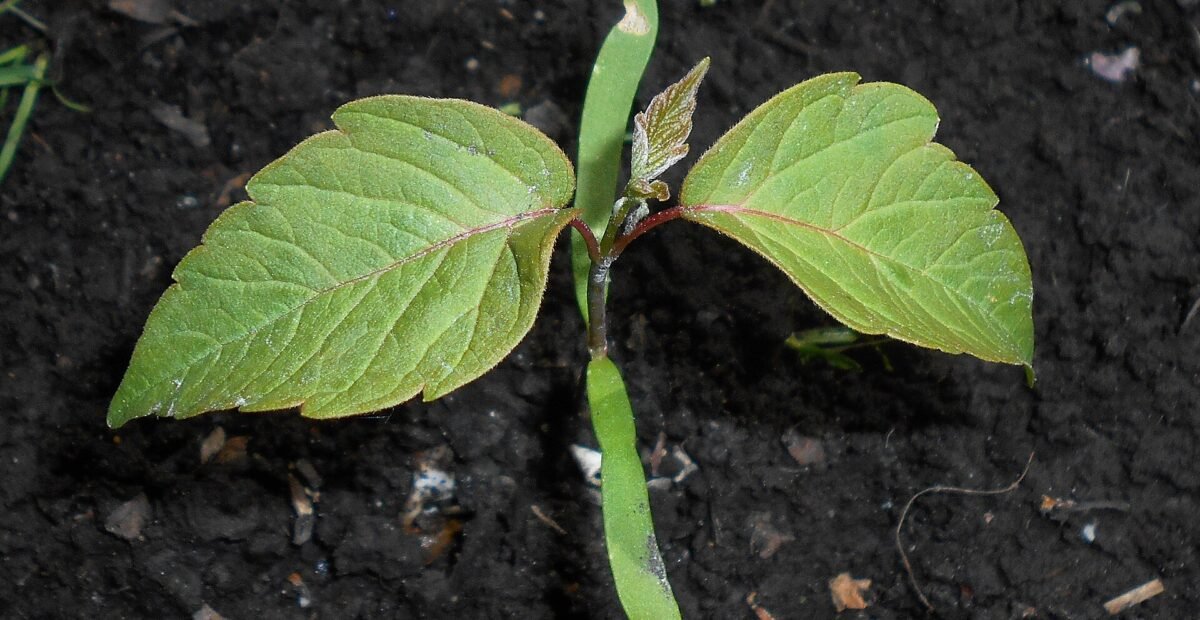
The most useful identification features are opposite branching and pinnately compound leaves, usually with three to seven leaflets. Leaflets are irregularly lobed or toothed and resemble ash more than typical maple leaves. Young twigs may be green or purplish, older bark becomes gray and furrowed, and paired samaras often hang in clusters and persist after leaf fall.
Flowering
Boxelder is dioecious, with male and female flowers generally borne on separate trees. Small, petal-less to nearly petal-less greenish or yellow-green flowers appear in drooping or clustered structures in early spring, often around the time leaves emerge. The flowers are specialized for wind pollination and are not showy ornamental blooms.
Pollination and visitors
Pollination is primarily by wind rather than bees, butterflies, or other animal visitors. The separate male and female trees, exposed stamens, reduced floral parts, and dangling inflorescences are consistent with anemophily.
Acer negundo photos
Click any photo for a larger view. Source, author and license are shown separately.
Diseases and pests
Diseases
Common problems include verticillium wilt, anthracnose, cankers, powdery mildew, and dieback associated with stress or weak wood. Improve site conditions, avoid trunk injury, prune out dead or diseased branches during dry weather, disinfect tools between cuts, and remove severely declining trees when structural safety is compromised.
Pests
Boxelder bugs, aphids, scale insects, borers, and gall-forming mites may occur. Maintain tree vigor, avoid unnecessary nitrogen, monitor trunks and branch unions, and use targeted treatment only when pests cause meaningful decline or nuisance. Remove heavily infested dead wood and seal no large pruning wounds.
Related diseases and pests
Only Plant Doctor profiles whose host data indicate this plant may be affected are shown here.
 DiseaseMaple powdery mildewSawadaea bicornis
 DiseaseCytospora CankerCytospora chrysosperma
 Environmental stressSalt stress
 Environmental stressFlooding injury
 PestLeopard mothZeuzera pyrina
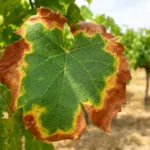 DiseaseXylella fastidiosa bacterial diseasesXylella fastidiosa
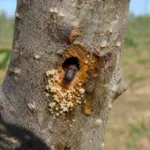 PestEuropean shot-hole borerXyleborus dispar (Fabricius)
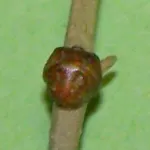 PestBlack scaleSaissetia oleae
Toxicity and pollen
Reliable evidence does not establish boxelder as a strongly poisonous landscape plant for people, dogs, cats, or children, and it is not generally highlighted on major toxic-plant lists. Nevertheless, any plant material can cause gastrointestinal upset if eaten, and large quantities of leaves, bark, or seeds should not be consumed. Seek medical or veterinary advice after significant ingestion or symptoms.
- Typical season
- Late winter through spring, varying by latitude and elevation
- Pollination / pollen
- Airborne, wind-dispersed tree pollen
Boxelder produces airborne pollen in late winter or spring, and its pollen is a documented aeroallergen in the United States. People with seasonal tree-pollen sensitivity may experience symptoms during flowering. Female trees produce little or no pollen, but seed-bearing trees can still contribute abundant samaras.
Native habitat
Native across much of North America, boxelder is especially characteristic of floodplains, riverbanks, stream margins, wet meadows, bottomlands, and other sites with periodic flooding or fluctuating moisture. It also tolerates drought, compacted ground, cold, and disturbance, helping it persist in both natural and heavily modified landscapes.
Interesting fact
Unlike most familiar maples, boxelder has pinnately compound leaves.
Frequently asked questions (FAQ)
The most relevant questions about this plant, with short and direct answers.
🌱Quick care
What is boxelder (Acer negundo)?⌄
Boxelder is a fast-growing, deciduous North American maple with compound leaves made of three to seven leaflets. It is a member of the Sapindaceae family and commonly grows along streams, lakeshores, floodplains, and disturbed sites.
How big does a boxelder tree get?⌄
Boxelder commonly grows about 30–60 feet tall and wide, although exceptional trees can become larger. Its crown is usually broad, rounded, and irregular, with branches that may divide close to the ground.
Is boxelder a maple tree?⌄
Yes, boxelder is a true maple, Acer negundo, and belongs to the maple group. It is unusual among maples because its leaves are compound rather than single-bladed.
How fast does boxelder grow?⌄
Boxelder grows quickly, especially in moist, open soil and during its early years. Its rapid growth is balanced by relatively weak wood, frequent branch damage, and a generally shorter landscape life than many slower-growing trees.
🌤️Environment and placement
Where should I plant a boxelder tree?⌄
Plant boxelder in a spacious location with full sun to partial shade and adequate room for its mature canopy. It is especially well suited to naturalized areas, stream edges, rain gardens, flood-prone sites, and difficult urban or rural locations.
Does boxelder grow in full shade?⌄
Boxelder performs best in full sun and can tolerate partial shade, but it is not a good choice for deep shade. Limited light can reduce vigor and produce a more open, irregular form.
What type of soil does boxelder need?⌄
Boxelder tolerates loam, clay, silt, sandy soil, and both wet and relatively dry conditions when drainage is adequate. Moist, reasonably fertile soil usually supports the strongest growth, but the tree is adaptable to difficult soils.
Can boxelder tolerate wet soil or flooding?⌄
Yes, established boxelder tolerates wet soil and short periods of flooding better than many landscape trees. Do not confuse moisture tolerance with a need for stagnant water; consistently waterlogged soil can still impair roots.
Is boxelder a good street tree?⌄
Boxelder can tolerate cold, drought after establishment, wet sites, and some urban conditions, but it is usually not a preferred street tree. Weak wood, irregular form, seeds, suckers, and boxelder bugs make better-structured species preferable where conditions allow.
💧Care and problems
Is boxelder drought tolerant?⌄
Established boxelder can tolerate periods of drought, particularly after its root system has developed. Young trees need regular, deep watering during dry weather, especially in their first several growing seasons.
How often should I water a newly planted boxelder?⌄
Water a newly planted boxelder deeply whenever the upper soil begins to dry, rather than relying on frequent shallow watering. Continue this establishment care through dry periods for the first one to two years, while avoiding prolonged standing water.
Does boxelder need fertilizer?⌄
Boxelder usually does not need fertilizer when planted in reasonably fertile soil and growing normally. A soil test is preferable before feeding, because unnecessary nitrogen can encourage weak, overly rapid growth.
Why are my boxelder branches breaking?⌄
Boxelder branches often break because the species has relatively weak, brittle wood and commonly develops multiple poorly attached stems. Wind, ice, heavy snow, decay, and improper pruning can increase the risk.
Are boxelder trees messy?⌄
Female boxelder trees can be messy because they produce abundant paired winged seeds that fall from late summer through winter and may produce seedlings. Male trees are generally less messy because they do not produce seed clusters.
Why are boxelder bugs on my tree or house?⌄
Boxelder bugs commonly gather on boxelder trees, especially female trees, and may move onto sunny walls or indoors in fall. They are mainly a nuisance and generally cause little serious damage to healthy trees.
How do I get rid of boxelder bugs?⌄
Reduce nearby seed-producing female boxelders when appropriate, seal building entry points, and remove bugs with a vacuum or outdoor water spray. Broad insecticide use is usually unnecessary unless infestations are severe and persistent.
What diseases affect boxelder trees?⌄
Boxelder can develop anthracnose, powdery mildew, cankers, and wood decay, particularly when stressed or injured. Improve site conditions, prune damaged wood correctly, and have serious trunk or branch problems assessed by a qualified arborist.
What insects attack boxelder trees?⌄
Boxelder bugs, borers, and other occasional pests can occur on boxelder. Boxelder bugs are usually nuisance insects, while borers and pests associated with stressed or damaged wood can cause more significant decline.
🪴Planting and repotting
Can I plant boxelder near my house?⌄
Boxelder is generally a poor choice close to buildings, driveways, play areas, or parking spaces because of its large spread, brittle branches, seeds, shallow roots, and potential for boxelder bugs. Plant it only where mature size and storm damage are acceptable.
When is the best time to plant a boxelder tree?⌄
Plant boxelder during its dormant season, typically in fall after leaf drop or in early spring before active growth begins. Water thoroughly after planting and maintain mulch over the root zone without piling it against the trunk.
How do I plant a boxelder tree?⌄
Dig a broad, shallow hole no deeper than the root ball and set the tree with the root flare at or slightly above soil level. Backfill with native soil, water deeply, and apply a 2–3-inch mulch layer while keeping mulch away from the trunk.
Can boxelder be grown in a container?⌄
Boxelder is not well suited to long-term container culture because it becomes a large, fast-growing tree with substantial roots and a broad canopy. A container may be used temporarily for a young sapling, but permanent planting is usually necessary.
✂️Propagation and pruning
How do I prune a boxelder tree?⌄
Prune boxelder during dormancy to remove dead, damaged, crossing, or weakly attached branches and to develop one strong central structure when practical. Avoid excessive topping, which stimulates weak regrowth and worsens structural problems.
Can boxelder be coppiced or cut back hard?⌄
Boxelder can resprout vigorously from stumps and roots after cutting, but hard cutting may produce numerous weak shoots and difficult-to-control regrowth. Remove unwanted trees completely when possible and monitor for suckers.
How do I grow boxelder from seed?⌄
Collect mature samaras in fall and provide cold, moist stratification before sowing, because boxelder seed commonly requires winter-like conditions to germinate. Seedlings establish best in moist soil with light and should be protected from drying out.
Does boxelder spread by suckers?⌄
Yes, boxelder may produce root suckers and stump sprouts, especially after injury, cutting, or disturbance. Remove unwanted shoots while young and avoid damaging major roots or the trunk.
⚠️Toxicity and safety
Is boxelder poisonous to people or pets?⌄
No specific major toxicity is documented for boxelder, but the plant should not be intentionally eaten by people or pets. Prevent ingestion of seeds, leaves, bark, or plant material and contact a poison-control or veterinary professional if a large amount is consumed.
Are boxelder leaves poisonous like poison ivy?⌄
No, boxelder leaves are not poison ivy, although their three- to seven-leaflet structure can look superficially similar. Boxelder does not cause the characteristic poison ivy skin reaction, but unidentified plants should still be handled cautiously.
Is boxelder wood dangerous?⌄
Boxelder wood is relatively soft and weak, so mature trees can pose a branch-failure risk during wind, ice, or heavy snow. Inspect large trees regularly and obtain an arborist evaluation when branches overhang structures or show decay.
🌸Flowering and special interest
Are boxelder trees male or female?⌄
Boxelder is dioecious, meaning individual trees are typically male or female. Female trees produce the conspicuous paired samaras, while male trees avoid that seed litter but still produce flowers and pollen.
When does boxelder bloom?⌄
Boxelder usually blooms in early to mid-spring, before or around leaf emergence, with small yellow-green flowers. The flowers are wind-pollinated and are not considered a major ornamental feature.
Does boxelder have fall color?⌄
Boxelder often develops yellow fall color, although the display can be variable and is usually less showy than that of ornamental maple species. Cultivars may offer more distinctive foliage or redder autumn color.
Does boxelder produce seeds?⌄
Female boxelder trees produce paired, winged samaras that mature in late summer or fall and may remain on the tree into winter. The seeds are dispersed by wind and can create volunteer seedlings in lawns, gardens, and disturbed ground.
Similar plants
 Azure Monkshood (Aconitum carmichaelii) care guideAconitum carmichaelii
 Monkshood (Aconitum ‘Stainless Steel’)Aconitum 'Stainless Steel'
 Monkshood (Aconitum ‘Bressingham Spire’)Aconitum 'Bressingham Spire'
 Golden full moon maple (Acer shirasawanum ‘Aureum’)Acer shirasawanum 'Aureum'
 Globosum (Acer platanoides ‘Globosum’)Acer platanoides 'Globosum'
 Striped maple (Acer pensylvanicum) care guideAcer pensylvanicum