

Cytospora Canker
Cytospora chrysospermaCytospora Canker overview
Cytospora chrysosperma causes a serious canker and dieback disease of poplars, aspens, cottonwoods, and willows, especially when trees are weakened by drought, winter injury, transplant shock, poor sites, pruning, or mechanical damage. Sunken bark lesions, reddish-brown discoloration, branch death, and yellow-to-red spore tendrils may develop during wet weather.
Typical conditions
Overview
Cytospora canker is a bark and wood disease of woody plants. In the United States, Cytospora chrysosperma is especially associated with Populus and Salix, including aspens, cottonwoods, ornamental poplars, and willows.
The fungus may persist in dead or apparently healthy bark and become pathogenic after drought, transplant shock, winter injury, severe pruning, sunscald, insect injury, construction damage, or other stress. Cankers can girdle branches and stems, causing progressive dieback and, in highly susceptible trees, eventual death.
Symptoms and identification
Early symptoms are slightly sunken, elliptical or elongated reddish-brown areas on branches or trunks. Bark may become cracked, discolored, or water-soaked, while the underlying sapwood can turn reddish brown to black.
- Branches beyond the canker wilt, die, and may show brick-red color in spring before fading brown or tan.
- Large cankers may be difficult to see beneath rough bark but can produce yellow, orange, or reddish threadlike spore tendrils after rain.
- Small black, pimplelike pycnidia may be visible in dead bark.
- Poplar seedlings and cuttings may develop dark, water-soaked blackstem lesions beginning at leaf scars, lenticels, or cut ends.
Symptoms overlap with other canker fungi, so species-level confirmation generally requires laboratory examination.
Causes and spread
Infection usually occurs through pruning cuts, broken branches, branch stubs, leaf scars, frost cracks, sunscald, insect wounds, or mechanical injuries. The fungus is favored when host defenses are reduced by drought, flooding or poor drainage, transplant shock, root damage, nutrient imbalance, defoliation, extreme temperatures, or unsuitable planting sites.
During wet weather, pycnidia and sometimes sexual fruiting structures release large numbers of spores. Wind-driven rain, splashing water, and contaminated pruning tools can move spores to fresh wounds. Dead branches and cankered bark are important sources of inoculum.
Life cycle and persistence
The fungus survives through winter as mycelium and spores in infected bark and wood. Fruiting bodies develop in dead or dying bark. When the bark becomes wet, pycnidia release colorless, one-celled conidia in sticky yellow-to-red tendrils; sexual fruiting bodies can release ascospores under suitable conditions.
After entering wounded or weakened tissue, the fungus grows through the bark, cambium, and outer wood. Cankers commonly enlarge during fall, winter, and early spring, although growth can accelerate during warm conditions. A canker eventually girdles a branch or stem, cutting off water and carbohydrate transport.
Treatment and control
There is no reliable treatment that eradicates an established canker from a major trunk or branch. On trees with localized infections, prune infected branches back to healthy wood, generally at least 4 to 6 inches below the visible canker when feasible. For branches arising from the trunk, remove the entire branch at the proper branch collar rather than leaving a stub.
Prune only in dry weather, disinfect tools between cuts, and remove or destroy infected debris. Do not place diseased branches in ordinary compost. If a trunk canker is extensive, if the tree is structurally unsafe, or if dieback is widespread, consult a certified arborist about removal or risk management.
Support remaining tree vigor with appropriate irrigation, mulch, protection from injury, and correction of drainage or site problems. Fungicides generally do not cure established Cytospora cankers and are usually less important than sanitation and stress reduction.
Low-impact and biological control
- Use sanitation as the primary nonchemical measure: remove dead branches and cankered material promptly.
- Prune during dry weather with clean, disinfected tools.
- Improve growing conditions with deep irrigation during drought, suitable mulch, reduced turf competition, and correction of damaging site conditions.
- Choose resistant or better-adapted species and cultivars when replacing severely affected trees.
- Biological products have not been established as a dependable cure for trunk or branch cankers of C. chrysosperma; cultural and preventive IPM measures should remain the foundation.
Prevention
- Select well-adapted poplar, aspen, cottonwood, or willow species and cultivars for the site and USDA hardiness conditions.
- Maintain adequate soil moisture during drought, watering deeply rather than frequently and avoiding chronic waterlogging.
- Apply a 2- to 4-inch layer of organic mulch over the root zone, keeping mulch away from the trunk.
- Protect trunks and branches from lawn equipment, construction, animal injury, sunscald, and unnecessary mechanical damage.
- Prune correctly, avoid severe pollarding, and schedule pruning during dry weather when practical.
- Inspect nursery stock and cuttings; discard material with blackstem lesions, cankers, or suspicious dead tissue.
- Remove dead or heavily cankered branches before they produce abundant spores.
Interesting facts
- Cytospora chrysosperma is also linked with the sexual morph name Valsa sordida.
- The fungus is often a weak parasite or saprophyte until host stress or wounding allows aggressive colonization.
- Lombardy poplar is particularly susceptible and may die within several years after infection becomes established.
- On poplar nursery stock, the disease may appear as blackstem, with dark lesions beginning at cut ends, leaf scars, or lenticels.
- Visible yellow or reddish spore tendrils are diagnostic signs of a Cytospora-type canker, but they do not always prove the species without laboratory confirmation.
No pesticide program should be assumed to cure established Cytospora canker. Use only products legally authorized for this crop, site, and disease in the United States, and follow the current product label exactly. Check the label and consult your state extension service or a licensed applicator before any treatment; many canker situations are managed primarily through pruning, sanitation, host selection, and stress reduction.
Affected plants
The plants below are linked to this problem by structured host-plant data. The list updates automatically as new plant profiles are added.
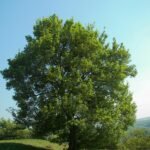 Field maple (Acer campestre) care guideAcer campestre
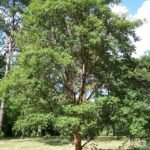 Paperbark Maple (Acer griseum) care guideAcer griseum
 Downy Japanese Maple (Acer japonicum) care guideAcer japonicum
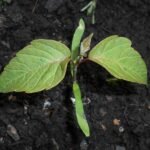 Boxelder (Acer negundo) care guideAcer negundo
 Acer palmatum care guideAcer palmatum
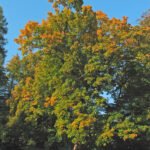 He Norway maple (Acer platanoides) care guideAcer platanoides
 Sycamore maple (Acer pseudoplatanus) care guideAcer pseudoplatanus
 Red maple (Acer rubrum) care guideAcer rubrum
 Silver maple (Acer saccharinum) care guideAcer saccharinum
 Sugar maple (Acer saccharum) care guideAcer saccharum
 Tatar Maple (Acer tataricum) care guideAcer tataricum
 Amur Maple (Acer tataricum ginnala) care guideAcer tataricum ginnala