
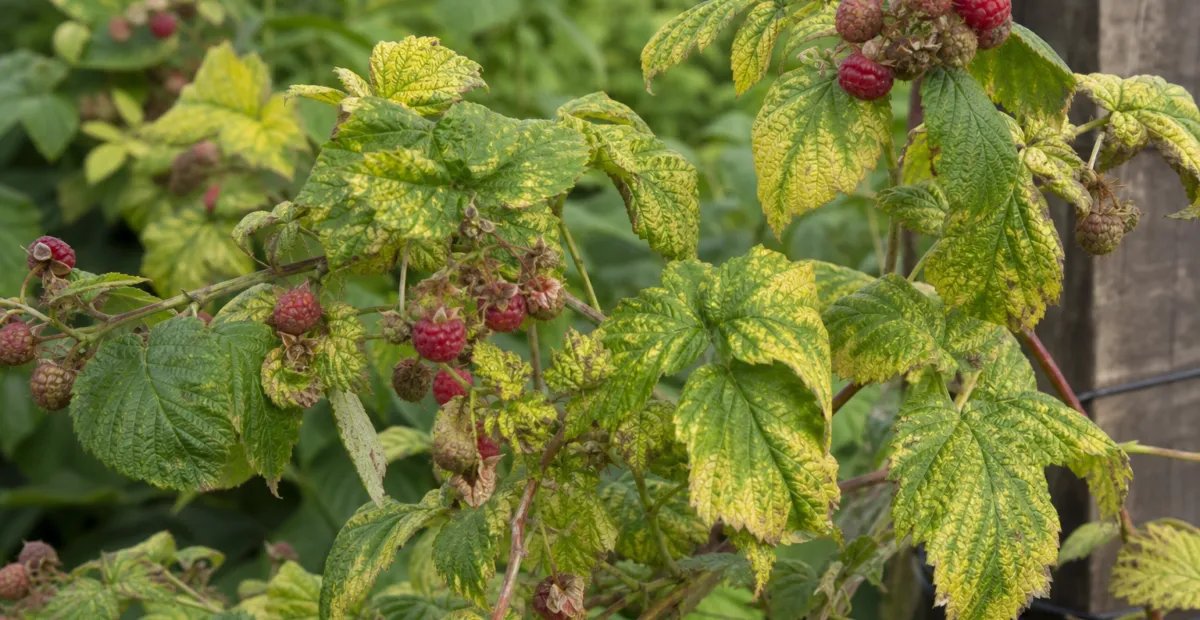
Raspberry bushy dwarf virus
Idaeovirus rubi (raspberry bushy dwarf virus; RBDV)Raspberry bushy dwarf virus overview
Raspberry bushy dwarf virus (RBDV) is a pollen- and seed-borne viral disease of raspberries, blackberries and related Rubus plants. Infected plants may show yellowing, weak or bushy growth, poor fruit set, and crumbly, misshapen berries, although infections can also remain symptomless. Because no curative treatment exists, certified virus-tested plants, removal of infected stock and careful management of flowering sources are central to control.
Typical conditions
Overview
Raspberry bushy dwarf virus (RBDV) is a virus disease of raspberries, blackberries and other susceptible Rubus plants. It is currently classified as Idaeovirus rubi, the type species of the genus Idaeovirus. Symptoms vary greatly with cultivar, virus strain and mixed infections.
In red raspberry, RBDV may be associated with raspberry yellows and crumbly fruit. These names are not diagnostic by themselves: similar symptoms can result from other viruses, nutritional problems, poor pollination or environmental stress. Laboratory testing is needed for reliable identification.
Symptoms and identification
Possible symptoms include:
- pale yellowing, chlorosis or mottling of raspberry leaves;
- weak, shortened or unusually bushy cane growth in some cultivars;
- reduced flowering, fruit set or crop uniformity;
- crumbly, unevenly developed or misshapen berries with drupelets that fail to fill;
- little or no visible symptom in tolerant cultivars or under some growing conditions.
Symptoms can be intensified by co-infection with other Rubus viruses. Affected plants should not be diagnosed from fruit appearance alone.
Causes and spread
RBDV is carried in infected pollen and can move horizontally when pollen from an infected plant pollinates a healthy flower. Pollinating insects may assist movement between blossoms, and experimental work shows that infected pollen tubes can initiate infection at the stigma. The virus can also pass through seed, producing infected seedlings.
No consistent natural insect vector is known. Mechanical transmission and graft transmission are possible experimentally or under propagation conditions, but they are not considered the main field-spread route. Long-distance introduction most often occurs through infected propagation material or seed.
Life cycle and persistence
The virus persists systemically in infected plant tissues, including reproductive tissues and pollen. During flowering, infected pollen can germinate on a healthy stigma; the pollen tube provides a route for infection of maternal tissues. Infected pollen can also carry the virus into developing seed, allowing vertical transmission to seedlings.
Once established, infection may remain perennial in the plant. In a flowering raspberry planting, repeated pollen exchange can gradually increase the proportion of infected plants over successive seasons. The rate depends on cultivar susceptibility, flowering overlap, pollinator activity and the presence of mixed infections.
Treatment and control
There is no curative field treatment that removes RBDV from an established raspberry or blackberry plant. Confirm suspected infections through a plant diagnostic laboratory, typically using serological or molecular testing, because symptoms overlap with other diseases and disorders.
For home gardens, remove and dispose of confirmed infected plants rather than composting them or moving suckers to new locations. For commercial or high-value plantings, rogue infected plants according to the nursery or certification program’s recommendations and replant with tested stock. Cultivar resistance or tolerance is useful, but protection can vary by virus strain; a cultivar described as resistant to one isolate may not be protected against all strains.
Low-impact and biological control
No organic spray reliably cures or suppresses systemic RBDV inside an infected plant. Organic and low-input management therefore relies on exclusion and sanitation:
- plant certified clean stock;
- remove infected plants and volunteer Rubus;
- avoid saving seed or cuttings from untested plants;
- maintain tool hygiene during pruning and propagation;
- use resistant or tolerant cultivars when their performance is documented for the local strain;
- reduce contact between healthy and infected flowering plantings where practical.
Insecticides aimed at pollinators are not an appropriate control strategy and can harm beneficial bees without eliminating the virus source.
Prevention
Use certified, virus-tested raspberry and blackberry plants from reputable nurseries. Do not propagate from plants with unexplained yellowing, crumbly fruit, poor fruit set or abnormal growth.
- Remove and destroy confirmed infected plants, including roots and crowns where practical.
- Do not collect seed or scion material from untested Rubus plants.
- Keep new plantings separated from old, unmanaged raspberry or blackberry patches and wild Rubus sources where feasible.
- Control volunteer and abandoned caneberry plants around production areas.
- Disinfect propagation tools between plants and avoid grafting or vegetative propagation from suspect material.
- Request virus testing before establishing valuable breeding, nursery or commercial stock.
Because pollen can transmit RBDV during flowering, simply pruning symptomatic canes does not reliably eliminate an infected plant.
Interesting facts
RBDV is unusual because pollen is both a reproductive tissue and an efficient means of plant-to-plant virus movement. Infected pollen can infect the pollinated mother plant as well as contribute to infected seed.
The virus has small, non-enveloped, roughly isometric particles and a multipartite positive-sense single-stranded RNA genome. Its host range in experimental inoculations is broader than its commonly observed natural host range, so a laboratory record of experimental susceptibility should not automatically be treated as evidence of important field spread.
“Bushy dwarf,” “raspberry yellows” and “crumbly fruit” can describe symptom syndromes rather than a uniquely identifiable virus. Mixed infections are common enough that diagnostic confirmation is especially important.
No pesticide cures raspberry bushy dwarf virus. Do not apply insecticides or other products for virus control unless they are legally authorized for the specific crop and problem in your country and state. In the United States, use only products with a current label permitting the intended crop, site and use, and follow all label directions; protect pollinators and comply with state requirements.