
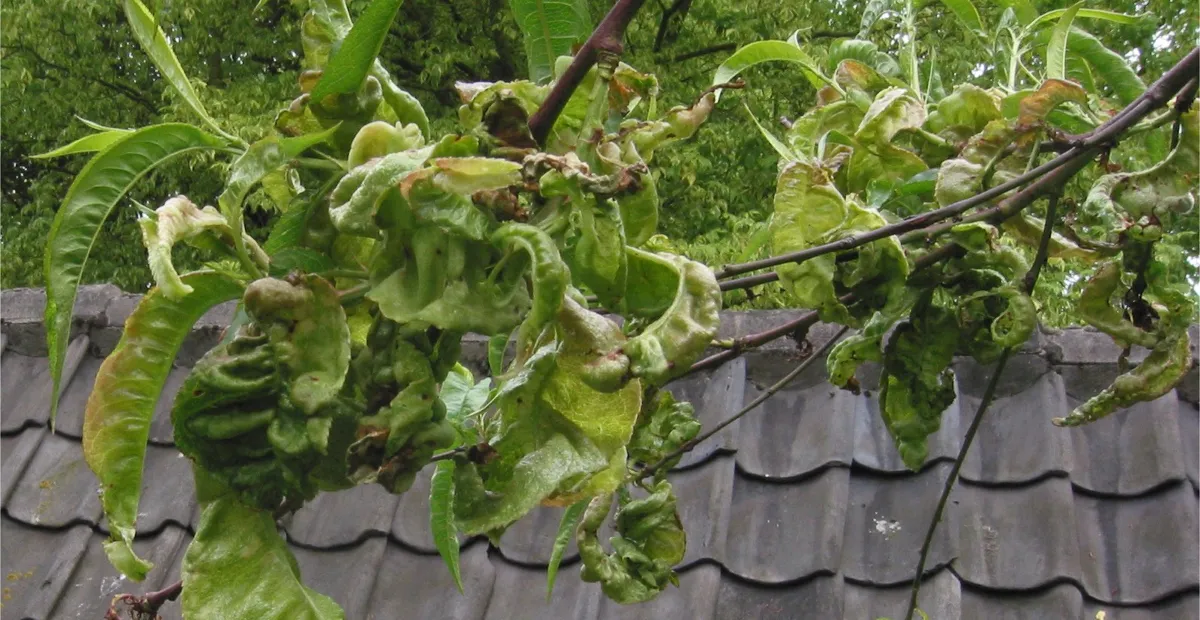
Peach leaf curl
Taphrina deformansPeach leaf curl overview
Peach leaf curl is a fungal disease of peach and nectarine trees caused by Taphrina deformans. It appears soon after bud break as thickened, puckered leaves colored red, yellow, or pale green, followed by browning and premature drop. Cool, wet weather favors infection, but careful dormant-season timing, sanitation, and appropriately labeled preventive treatments can protect the next flush of foliage.
Typical conditions
Overview
Peach leaf curl, also called leaf curl, is a fungal disease primarily affecting peach (Prunus persica) and nectarine trees. In spring, infected leaves become thick, puckered, curled, and conspicuously red, yellow, or pale green. Severely affected leaves usually turn brown and drop, forcing the tree to produce replacement foliage.
Repeated defoliation reduces photosynthetic capacity, weakens flower and fruit production, and can contribute to shoot and branch dieback. Symptoms on fruit and shoots occur less consistently than leaf symptoms, so diagnosis should consider the characteristic timing and appearance of the foliage.
Symptoms and identification
Symptoms typically develop about 1–2 weeks after leaves emerge. Young leaves show irregular red or purplish areas that become thickened, puckered, curled, and distorted. Affected tissue may later turn yellow, grayish white, brown, or brittle before the leaves fall.
- Severe infections can cause early-season defoliation and a second flush of relatively normal leaves.
- Young shoots may become thickened, shortened, distorted, and may die back.
- Fruit symptoms are uncommon but may include reddish, wrinkled, raised areas that later become corky and cracked.
- A pale or grayish-white powdery spore layer may develop on older distorted leaves.
Leaf distortion can also result from herbicide injury, mites, aphids, nutrient imbalance, or other diseases. The combination of red puckering, rapid spring development, and a peach or nectarine host is especially suggestive of peach leaf curl.
Causes and spread
The disease is spread by spores that persist on peach and nectarine tree surfaces and are carried by wind, rain splash, and water films into swelling buds. Cool, wet weather extends the period in which young tissue remains vulnerable. Dense canopies, poor air circulation, and repeated spring rainfall can increase the opportunity for infection.
Spread is not caused by insects feeding on the leaves. New infections are most important before or around bud break; older, fully expanded leaves are much less susceptible.
Life cycle and persistence
Taphrina deformans survives on the surfaces of twigs, buds, and within bud scales. Fall and winter moisture supports germination and production of budding yeast-like blastospores. Spores are moved by wind and splashing rain and infect susceptible young tissue when buds open.
Infection is favored by cool, wet conditions during bud break; dry weather and rapid warming reduce risk. The pathogen grows within newly infected tissue, producing the characteristic swelling and distortion. As infected leaves mature and die, spores are produced on their surfaces and return to tree surfaces, where the fungus persists until the next susceptible growth period.
Once leaves are visibly curled, the infection event has already occurred. Later sprays generally do not reverse the damage, although new foliage may emerge normally if weather becomes drier and warmer.
Treatment and control
There is no reliable curative treatment for leaves that are already puckered and distorted. Remove severely affected leaves or shoots only when this can be done without excessive tree stress; avoid stripping large amounts of foliage from a weakened tree.
- Water the tree adequately during drought, especially after premature defoliation, but avoid prolonged waterlogging.
- Maintain mulch over the root zone without piling it against the trunk.
- Use balanced fertility based on soil or tissue testing rather than high-nitrogen fertilization, which can promote soft, overly vigorous growth.
- Monitor the replacement flush for continued symptoms if cool, wet weather persists.
- Schedule the principal preventive treatment for the next dormant season, before bud swell.
For severe recurring disease, consult a local county Extension office or a certified arborist about cultivar choice, pruning, regional timing, and currently registered products.
Low-impact and biological control
For organically managed trees, prevention is the main strategy. Use a copper-based product or Bordeaux mixture only when it is currently allowed for the crop, production system, and disease under the applicable U.S. label or organic certification requirements.
- Apply during dormancy or delayed dormancy, before buds swell and green tissue emerges.
- Thoroughly cover twigs, buds, and branch surfaces; incomplete coverage can leave infection sites unprotected.
- Use resistant or more tolerant peach and nectarine cultivars when suitable for the local chilling requirement and climate.
- Remove and discard heavily infected fallen leaves and dead shoots where practical, while recognizing that sanitation alone does not eliminate spores residing on tree surfaces.
Organic status does not make a product automatically safe or legal. Follow the current product label and any organic-certification restrictions.
Prevention
Plan control before symptoms appear. In most U.S. growing regions, the critical window is after autumn leaf drop or in late winter, but before bud swell and green tissue emergence. The exact date varies with climate and cultivar development, so monitor buds rather than relying only on the calendar.
- Choose peach or nectarine cultivars with documented tolerance where available, while matching the cultivar to the local winter-chill requirement.
- Prune for an open canopy and remove dead or severely affected shoots during the appropriate dormant pruning period.
- Improve sunlight and air movement, and avoid unnecessary overhead irrigation during bud break.
- Apply a legally labeled preventive fungicide with complete coverage before infection conditions begin. In areas with prolonged winter or spring rainfall, the label may permit a second dormant or delayed-dormant application.
- Keep records of bud-break timing, rainfall, symptoms, and product use to improve next season’s timing.
Once leaves are visibly curled, prevention for that infection period is too late; focus on protecting the following season.
Interesting facts
- Peach leaf curl is often most damaging when cool spring weather remains wet for an extended period.
- Low-chill peach and nectarine cultivars may experience serious disease where winter and early spring conditions favor infection, although susceptibility varies among cultivars.
- After infected leaves drop, a replacement flush may look healthy, but the tree has already spent stored resources producing it.
- No peach or nectarine cultivar should be assumed immune; resistance or tolerance is relative and should be confirmed for the specific cultivar and region.
- Fruit infection is possible but much less common and usually less conspicuous than leaf infection.
Use only fungicides legally authorized and currently labeled in the United States for peach or nectarine, peach leaf curl, and the intended use site. Follow the current label exactly for timing, rate, application method, personal protective equipment, re-entry, harvest restrictions, and disposal. Do not apply a product solely because it is labeled for another crop or disease.