Potato powdery scab
Spongospora subterranea f. sp. subterraneaPotato powdery scab overview
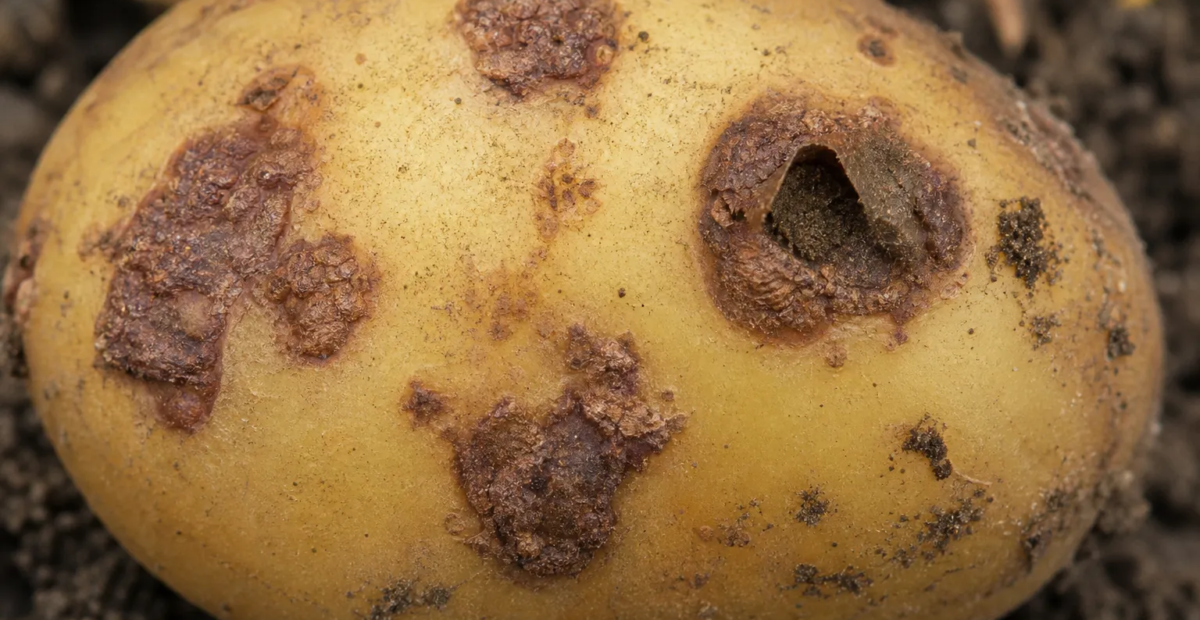
Potato powdery scab is a soil- and seed-borne disease caused by Spongospora subterranea f. sp. subterranea. It produces raised purple-brown pustules that rupture the potato skin and release a dark, powdery spore mass. The pathogen also forms galls on roots and stolons, may reduce plant performance, and can transmit potato mop-top virus. Diagnosis may require laboratory confirmation because symptoms resemble common scab and potato wart.
Typical conditions
Overview
Potato powdery scab is caused by Spongospora subterranea f. sp. subterranea, a fungus-like plasmodiophorid pathogen rather than a true fungus. Potato (Solanum tuberosum) is the principal crop host. The disease is most important because tuber lesions reduce appearance, marketability and seed quality; root and stolon infection can impair root function and plant performance.
Do not confuse it with common scab, caused by Streptomyces bacteria, or potato wart, caused by Synchytrium endobioticum. Mature powdery scab lesions may contain diagnostic dark spore balls, but laboratory or specialist confirmation is advisable when the diagnosis affects seed movement or field decisions.
Symptoms and identification
- Small purple-brown, pimple-like swellings develop on immature potato tubers.
- As tubers enlarge, lesions become raised, brown and wart-like, then rupture the skin and expose a dark olive-brown to black powdery mass of spores.
- Roots and stolons may develop cream to brown galls caused by pathogen multiplication in living tissue.
- Root dysfunction can reduce vigor and yield, although aboveground symptoms are often absent or nonspecific.
- Infected tubers may carry the pathogen without visible powdery scab, so symptom-free seed is not proof of freedom from infection.
- Because the pathogen can vector PMTV, internal necrotic arcs or rings, known as spraing, may occur when that virus is also present.
Causes and spread
The pathogen survives as durable resting spores aggregated into sporosori, also called spore balls, in infested soil and infected tubers. Spread occurs primarily through infected or contaminated seed potatoes, movement of infested soil on machinery, tools, footwear and vehicles, and movement of soil or water within and between fields. Wind-blown soil can also contribute to local spread.
Free water is required for the motile zoospores to move toward and infect host roots. Heavy or poorly drained soils, prolonged soil wetness and cool conditions during tuber initiation favor infection. Alternative hosts have been reported, but their epidemiological importance varies by pathogen population and region; potato remains the central host in U.S. production.
Life cycle and persistence
Resting spores can remain infectious in soil for many years, including more than 10 years in some field conditions. When susceptible roots are present and soil is sufficiently wet, resting spores germinate and release primary zoospores. These swim through water films, attach to root hairs or epidermal cells, and form infection structures.
The pathogen multiplies inside living root and stolon tissues, producing galls and secondary zoospores. Infection of developing tubers produces pustules that mature and rupture. The resulting sporosori return to soil with decaying roots, galls and crop residues or are carried on harvested tubers and soil. The pathogen can also acquire and transmit PMTV during root infection.
Treatment and control
There is no reliable curative treatment for an established field infestation. Remove and discard severely affected garden tubers rather than using them as seed, and do not move attached soil to clean beds. In commercial production, manage the problem preventively with clean seed, field selection, drainage, rotation, sanitation and cultivar choice.
After harvest, remove volunteer potatoes and manage weeds that may sustain the pathogen. Where a diagnosis is uncertain, seek laboratory confirmation because treatment decisions and regulatory implications differ for powdery scab, common scab and potato wart. Affected tubers may be unsuitable for fresh sale or seed even when plant growth appears acceptable.
Low-impact and biological control
- Use certified clean seed and select cultivars with useful powdery-scab resistance when available.
- Keep soil moving as little as possible from infested to clean areas, and wash or brush equipment before leaving a field.
- Use raised beds, organic-matter management and drainage improvements to reduce prolonged wetness in home gardens.
- Maintain a long rotation and remove volunteer potatoes and nightshade weeds.
- Biological and soil-suppressive approaches are under research, but no universal biological product or amendment should be assumed effective without local, crop-specific evidence.
Prevention
- Plant certified, disease-tested seed potatoes from a reputable supplier; do not save visibly scabby tubers for seed.
- Use cultivars with documented resistance or lower susceptibility where suitable for the market and region. Resistance to tuber scab and resistance to root galling are not always identical.
- Avoid planting potatoes in fields with a known powdery scab history when practical. Use a long rotation away from potato and manage volunteer potatoes.
- Improve drainage and avoid excessive irrigation or prolonged soil saturation, especially during tuber initiation.
- Prevent movement of infested soil by cleaning soil from planters, tillage tools, harvesters, tires, bins and footwear before entering clean fields.
- Control nightshade weeds and other suspected alternative hosts, while recognizing that host status and practical importance vary among regions.
- Submit representative tubers or roots to a state plant diagnostic laboratory when powdery scab is suspected or seed certification is involved.
Interesting facts
- Spongospora subterranea was historically treated as a fungus but is now classified among the plasmodiophorid, fungus-like protists.
- The pathogen has a worldwide distribution wherever potatoes are grown and is especially damaging through reduced tuber appearance and seed value.
- Root galling and tuber powdery scab are two expressions of infection by the same potato pathogen.
- Powdery scab lesions can be confused with common scab, but mature lesions contain granular dark spore balls rather than the typical corky tissue of common scab.
- The pathogen is important beyond skin blemishes because it can transmit potato mop-top virus, which may produce internal tuber necrosis known as spraing.
- Potato is the principal host, while documented alternative hosts include some other Solanum species and, in experimental or regional studies, selected weeds and rotation crops. Their ability to maintain field inoculum is not equally established everywhere.
No pesticide program should be assumed to provide dependable control of potato powdery scab. In the United States, use only products legally registered and currently labeled for potatoes and this specific problem in the state of use; follow the current label, including crop, rate, timing, worker-protection and preharvest requirements. Do not use a product labeled for common scab or another potato disease as a substitute. Chemical soil treatments, where permitted, are specialized commercial decisions and do not replace clean seed, drainage, sanitation and field selection.
Affected plants
The plants below are linked to this problem by structured host-plant data. The list updates automatically as new plant profiles are added.