
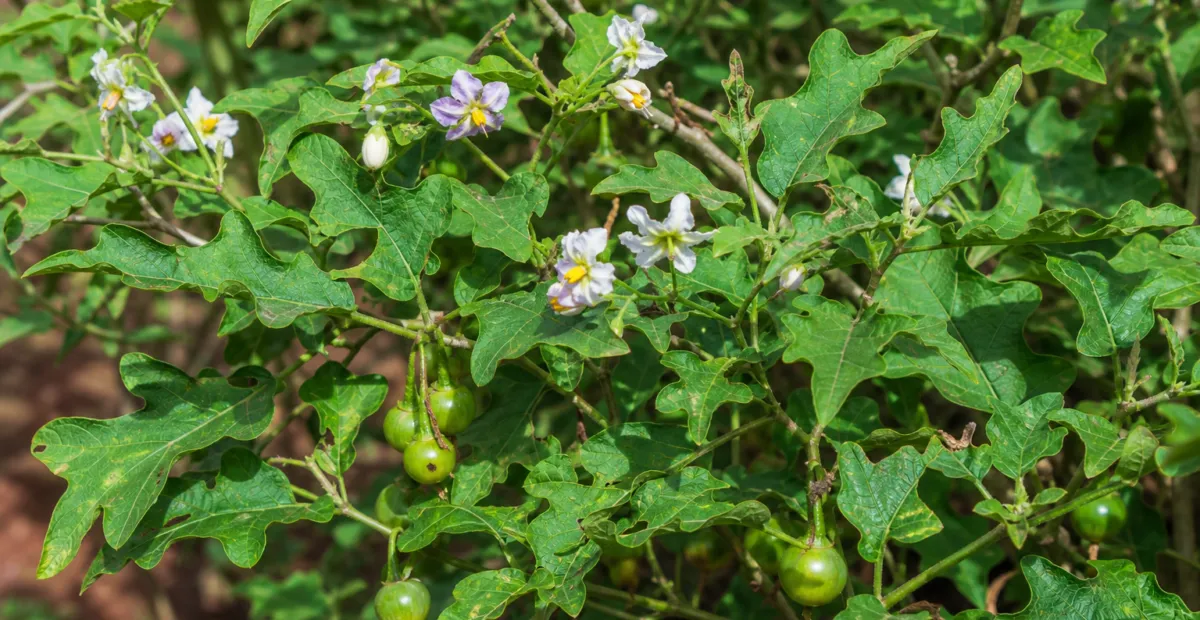
 AI-generated illustration
Solanum macrocarpon short overview
Solanum macrocarpon is a tropical African nightshade cultivated mainly for its edible leaves and bitter fruits, which are used as a cooked vegetable in parts of Africa and the Caribbean. It forms an upright, branched herb or shrub with large, lobed leaves, purple-tinged stems, star-shaped white to purple flowers, and rounded fruits that mature from green or pale tones to yellow, orange, white, or dark colors depending on the cultivar.
Taxonomic classification
Solanum macrocarpon care guide
Light and placement
Give the plant 6–8 hours of direct sun, ideally with unobstructed southern or southeastern exposure. In very hot climates, light afternoon shade can reduce leaf scorch and moisture stress. Weak, widely spaced growth and small leaves indicate inadequate light; bleached patches, crisp margins and midday wilt despite moist soil suggest excessive heat or root stress rather than a need for more shade.
Watering and humidity
Water deeply when the top inch of soil begins to dry, then allow excess water to drain fully. Keep the root zone evenly moist during flowering, leaf harvest and fruit development; do not alternate severe drying with saturation. Reduce watering modestly in cool indoor conditions, but do not let the container dry completely. Humidity is useful, especially indoors, but wet foliage and stagnant air encourage disease.
Soil and growing medium
Use fertile loam amended with compost, with enough organic matter to hold moisture while remaining porous. Raised beds or containers should drain freely because waterlogged roots decline quickly. A slightly acidic to neutral reaction is suitable; avoid strongly alkaline, compacted or saline soil. In containers, a high-quality vegetable mix with added compost and perlite or coarse bark provides a practical structure.
Feeding
Mix finished compost into the planting area before growth begins, then feed every 3–4 weeks with a complete vegetable fertilizer at label strength while plants are actively growing. A fertilizer with moderate nitrogen supports leafy harvests, but excessive nitrogen can produce soft foliage and delay fruiting. Stop routine feeding during cold, low-light indoor storage and after severe drought or root damage until new growth resumes.
Growth and habit
The species is erect and often strongly branched, behaving as a short-lived perennial in warm climates and as an annual where frost occurs. Some forms have prickles, while others are nearly unarmed. Regular harvesting encourages branching and keeps the plant productive; support may be useful when fruit load or lush growth causes stems to lean.
Planting and repotting
Start seed indoors with bottom heat and bright light, then harden seedlings for 7–10 days. Set out after the soil has warmed and frost danger has passed, planting at the same depth as in the seed tray. Choose a wind-protected sunny site and mulch lightly after establishment. In short-season areas, use black nursery containers or raised beds to warm roots and extend production.
Move container plants into a pot only one size larger when roots fill the existing container or growth slows. Use a fertile, well-drained vegetable mix and maintain the original planting depth. Repot in warm weather so roots can re-establish quickly. Afterward, water thoroughly and protect the plant from intense midday sun for several days.
Propagation and pruning
Propagation
Propagation is normally by seed. Sow fresh, clean seed in a sterile, lightly moist medium at about 1/4 inch deep, maintaining warmth and bright light. Germination commonly occurs within 1–2 weeks under favorable conditions. Transplant seedlings after they develop several true leaves, handling the roots gently. Cultivar identity may not remain uniform from saved seed.
Pruning
Remove damaged, diseased or overly weak stems with clean pruners. Harvest outer leaves regularly to encourage branching, but avoid removing most foliage at once. In warm climates, cut back lightly after a production cycle to renew the canopy. If overwintering indoors, shorten long stems by up to one-third before moving the plant inside, while retaining healthy nodes.
Overwintering
This species cannot tolerate frost. Before cool weather, move container plants indoors to a bright, warm location and inspect carefully for pests. Maintain temperatures above 50°F, water less often in reduced light, and avoid heavy feeding. In colder regions, plants are often more practical to replace from seed each season than to overwinter.
Uses
The leaves and fruits are used as cooked vegetables in several African and Caribbean food traditions, although cultivar choice and preparation matter because bitterness and alkaloid content vary. It can also be grown as a specialty edible, educational or ornamental container plant. Do not promote it as a medicinal treatment; documented traditional uses do not establish medical safety or efficacy.
Appearance
Leaves are large, ovate to obovate and deeply sinuate-lobed, with bases that taper into a short or indistinct petiole. Young foliage may be hairy or lightly prickly, and stems can show purple coloration. The rounded fruits are enclosed partly by an enlarging calyx and may mature yellow, orange, white or nearly black depending on the cultivated form.
Flowering
Inflorescences bear several five-parted flowers, with one larger long-styled flower commonly positioned near the base and smaller short-styled flowers above it. The corollas range from white to mauve, bluish or deep purple. Flowering and fruiting can continue through much of the year in warm tropical conditions; a reliable US outdoor month range is not established.
Pollination and visitors
The flowers have poricidal anthers, a structure commonly associated with vibration-assisted pollen collection by bees. A specific pollinator species for this exact plant was not sufficiently documented in the reviewed sources, so the visitor record is limited to the broader bee group. Pollinator activity is expected to be greatest in warm, sunny conditions when flowers are open.
Solanum macrocarpon photos
Click any photo for a larger view. Source, author and license are shown separately.
Diseases and pests
Diseases
Poor drainage, overhead watering and crowded foliage can promote damping-off, leaf spots, blights and root diseases. Use clean seed-starting media, rotate beds away from other Solanaceae, water at the soil line and provide airflow. Remove badly affected leaves promptly and avoid working among wet plants. Persistent wilt with poor growth may indicate root damage or nematodes rather than simple drought.
Pests
Watch for aphids, whiteflies, flea beetles, spider mites, thrips and caterpillars, especially in warm protected culture. Inspect leaf undersides weekly, remove light infestations with water or hand-picking, and use insecticidal soap only when necessary and according to its label. Avoid broad-spectrum insecticides during bloom because they can harm visiting bees.
Related diseases and pests
Only Plant Doctor profiles whose host data indicate this plant may be affected are shown here.
 PestBroad mitePolyphagotarsonemus latus (Banks)
 DiseasePythium damping-off, root rot and blightPythium aphanidermatum
 PestOnion thripsThrips tabaci Lindeman
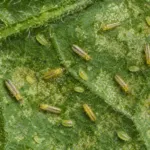 PestMelon thripsThrips palmi Karny
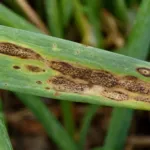 DiseaseStemphylium Leaf BlightStemphylium vesicarium (Wallr.) E.G. Simmons
 PestChilli thripsScirtothrips dorsalis Hood
 DiseaseDickeya solani blackleg and soft rot of potatoDickeya solani
 DiseaseSouthern blightAthelia rolfsii
Toxicity and pollen
Reliable plant-use references report bitter, potentially poisonous steroidal or spirosolane alkaloids in Solanum macrocarpon, with concentrations varying among plant parts, maturity stages and cultivars. Some cultivars are eaten cooked, but raw or unfamiliar fruits and large quantities of leaves should not be consumed. Keep harvested produce clearly identified, cook according to established culinary practice, and seek medical advice after a suspected ingestion.
- Pollination / pollen
- Pollen released from poricidal anthers and typically accessed by vibration
This is a flowering, insect-pollinated plant that produces pollen in its anthers, but species-specific airborne pollen counts and clinical allergy data for Solanum macrocarpon were not located. Because pollen is generally transferred by flower-visiting insects rather than released abundantly into the air, routine airborne exposure may be limited, but sensitive people should avoid handling flowers if symptoms occur.
Native habitat
It occurs in tropical and subtropical Africa, including forest edges, floodplains, riverbanks, cultivated ground and seasonally dry or intermittently moist sites. Plants can occur from low elevations to roughly 5,800 feet. Fertile soils with dependable moisture support growth, but the species is not adapted to freezing conditions.
Interesting fact
The species is strongly andromonoecious, producing different flower forms within an inflorescence. Its fruits can change from green-white to yellow, orange-yellow or other cultivar colors. The enlarged fruiting calyx may partly envelop the berry. Dry herbarium material can show a distinctive red-black coloration.
Frequently asked questions (FAQ)
The most relevant questions about this plant, with short and direct answers.
🌱Quick care
What is Solanum macrocarpon?⌄
Solanum macrocarpon is a tropical perennial nightshade cultivated for its edible leaves and eggplant-like fruits. It is commonly documented in English as African eggplant or gboma eggplant, but the scientific name is the safest identification label.
Is Solanum macrocarpon an annual or perennial?⌄
Solanum macrocarpon is a frost-tender perennial in tropical climates, but it is usually grown as an annual in much of the United States. Bring container plants indoors before temperatures approach 40°F.
🌤️Environment and placement
How much sun does Solanum macrocarpon need?⌄
Give Solanum macrocarpon full sun, ideally at least 6–8 hours daily. In very hot climates, light afternoon shade can reduce heat stress without greatly reducing production.
What USDA zones can grow Solanum macrocarpon outdoors?⌄
Solanum macrocarpon is best suited to frost-free USDA Zones 10–12 and warm parts of Zone 9. In colder zones, grow it as a summer annual or in a container that can be protected indoors.
What temperature is best for Solanum macrocarpon?⌄
Warm conditions around 70–90°F support strong growth in Solanum macrocarpon. Protect it from frost and prolonged temperatures below about 55°F, which can slow growth and fruit development.
Can Solanum macrocarpon survive winter indoors?⌄
Yes, Solanum macrocarpon can be overwintered indoors if kept above about 55°F in a bright location. Reduce watering slightly, inspect regularly for pests, and return it outdoors gradually after warm weather resumes.
💧Care and problems
How often should I water Solanum macrocarpon?⌄
Water Solanum macrocarpon whenever the top inch of soil begins to dry, keeping moisture consistent but not soggy. Mulch can help reduce evaporation and prevent uneven moisture that may reduce flowering or fruit quality.
How do I fertilize Solanum macrocarpon?⌄
Feed Solanum macrocarpon with compost or a balanced vegetable fertilizer during active growth. Avoid excessive nitrogen, which can produce large leaves with fewer flowers and fruits.
Why are the leaves of my Solanum macrocarpon turning yellow?⌄
Yellow leaves on Solanum macrocarpon may result from overwatering, poor drainage, nutrient deficiency, cold temperatures, or pests. Check soil moisture and roots first, then inspect the undersides of leaves for mites, aphids, or whiteflies.
What pests attack Solanum macrocarpon?⌄
Common pests of Solanum macrocarpon include aphids, whiteflies, spider mites, flea beetles, and caterpillars. Remove heavily damaged foliage, wash pests off with water, and use an appropriately labeled insecticidal soap or horticultural oil when necessary.
What diseases affect Solanum macrocarpon?⌄
Solanum macrocarpon can develop fungal leaf spots, wilts, root problems, and virus symptoms, especially under humid or poorly ventilated conditions. Use clean tools, avoid overhead watering, provide spacing, and remove severely diseased plants.
🪴Planting and repotting
Can Solanum macrocarpon grow in containers?⌄
Yes, Solanum macrocarpon grows well in a container at least 5 gallons in size with drainage holes. Use a fertile potting mix, provide strong sunlight, and expect to water more often than plants in the ground.
What soil does Solanum macrocarpon need?⌄
Use fertile, moisture-retentive but well-drained loam for Solanum macrocarpon. A slightly acidic to neutral soil with plentiful organic matter supports vigorous growth, while compacted or waterlogged soil can damage the roots.
When should Solanum macrocarpon be planted outdoors?⌄
Plant Solanum macrocarpon outdoors only after the danger of frost has passed and nighttime temperatures remain above about 55°F. Harden seedlings for 7–10 days before transplanting them into full sun.
How far apart should Solanum macrocarpon plants be spaced?⌄
Space Solanum macrocarpon plants about 18–30 inches apart, depending on cultivar vigor and whether you plan to prune. Wider spacing improves air circulation and makes harvesting easier.
✂️Propagation and pruning
How do I start Solanum macrocarpon from seed?⌄
Sow Solanum macrocarpon seeds about ¼ inch deep in a warm, sterile seed-starting mix and keep them evenly moist. Germination is generally better with bottom heat around 75–85°F and bright light after emergence.
Can Solanum macrocarpon be propagated from cuttings?⌄
Yes, Solanum macrocarpon can be propagated from healthy stem cuttings, although seed is the more common method. Root cuttings in a sterile, lightly moist medium under warm, humid conditions with bright indirect light.
Should Solanum macrocarpon be pruned?⌄
Light pruning is optional for Solanum macrocarpon and can remove damaged growth or improve airflow. Avoid heavy pruning during flowering and fruiting because it may reduce the harvest.
⚠️Toxicity and safety
Are Solanum macrocarpon leaves edible?⌄
Young Solanum macrocarpon leaves are used as a cooked vegetable in some regions, but they should not be eaten raw or from a plant that has not been positively identified. Preparation practices vary by cultivar and tradition, so follow a trusted culinary source.
Are Solanum macrocarpon fruits edible?⌄
Solanum macrocarpon fruits are used as food when properly identified and appropriately cooked. Do not eat unknown fruits, damaged fruit, or unripe plant material simply because it resembles an eggplant.
Can you eat Solanum macrocarpon raw?⌄
Raw consumption of Solanum macrocarpon is not recommended because safety and alkaloid levels can vary with plant part, maturity, and cultivar. Cook properly identified fruit using a reliable recipe instead.
Is Solanum macrocarpon poisonous to dogs and cats?⌄
Treat Solanum macrocarpon as potentially harmful to pets because it belongs to the nightshade family and different plant parts may contain irritating or toxic compounds. Keep pets from chewing the plant and contact a veterinarian or poison service if ingestion occurs.
Is Solanum macrocarpon safe for children?⌄
Keep Solanum macrocarpon away from children unless an adult has positively identified the harvest and is supervising preparation. Do not allow children to eat raw leaves, stems, or unripe fruit.
🌸Flowering and special interest
How long does Solanum macrocarpon take to produce fruit?⌄
Solanum macrocarpon commonly needs several months of warm growth before producing harvestable fruit, although timing varies by cultivar and growing conditions. Starting seeds indoors can extend the productive season in cooler U.S. regions.
How do I know when Solanum macrocarpon fruit is ready to harvest?⌄
Harvest Solanum macrocarpon fruit according to the cultivar, usually while it is firm and immature rather than fully soft. Use a knife or pruners to cut the stem, because pulling can damage the plant.
Does Solanum macrocarpon flower?⌄
Yes, Solanum macrocarpon produces small, typically star-shaped flowers that can develop into eggplant-like fruits after pollination. Warm temperatures, adequate sunlight, and even moisture encourage flowering.
Why is my Solanum macrocarpon flowering but not producing fruit?⌄
Poor fruit set in Solanum macrocarpon is often caused by cool temperatures, excessive heat, inconsistent watering, low light, or inadequate pollination. Gently shake flowering stems and keep moisture steady while maintaining warm, sunny conditions.
Does Solanum macrocarpon need pollination by bees?⌄
Solanum macrocarpon flowers are generally capable of self-pollination, but insects and gentle flower movement can improve fruit set. In a sheltered greenhouse or indoors, lightly shake the plant or use a small brush on open flowers.
Similar plants
 Azure Monkshood (Aconitum carmichaelii) care guideAconitum carmichaelii
 Monkshood (Aconitum ‘Stainless Steel’)Aconitum 'Stainless Steel'
 Monkshood (Aconitum ‘Bressingham Spire’)Aconitum 'Bressingham Spire'
 Golden full moon maple (Acer shirasawanum ‘Aureum’)Acer shirasawanum 'Aureum'
 Globosum (Acer platanoides ‘Globosum’)Acer platanoides 'Globosum'
 Striped maple (Acer pensylvanicum) care guideAcer pensylvanicum