
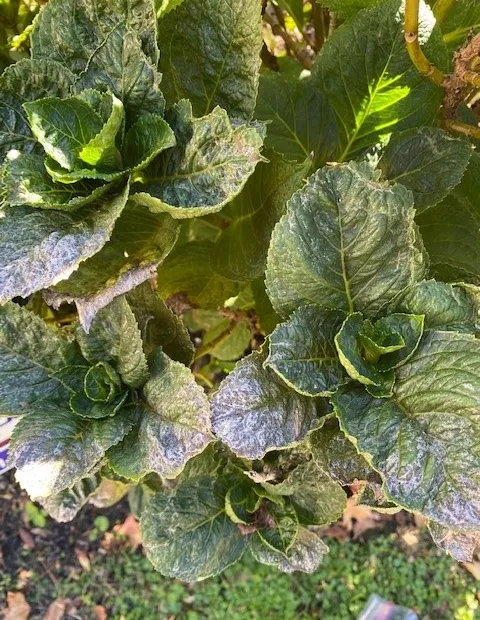
Chilli thrips
Scirtothrips dorsalis HoodChilli thrips overview
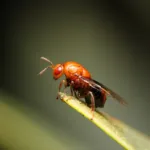
Chilli thrips (Scirtothrips dorsalis) is a tiny, invasive, highly polyphagous pest that attacks young leaves, shoots, flowers and developing fruit. Feeding causes bronzing, darkening, curling, distortion, scarring and stunting, with especially serious problems reported on strawberry, pepper, rose, citrus and other warm-season crops. Accurate identification usually requires a hand lens or laboratory confirmation.
Typical conditions
Overview
Adults are pale yellow to light brown, slender and generally less than 1 mm long; larvae are smaller, wingless and pale. Adults and larvae feed by rasping and sucking cell contents, especially along leaf midribs, margins, terminals, flowers and young fruit. Damage may be confused with other thrips, mites, chemical injury, nutrient stress or virus symptoms.
In the United States, chilli thrips is particularly important in warm-region nurseries, landscapes and specialty crops. Reported hosts include strawberry, pepper, tomato, eggplant, citrus, grape, rose, cotton, onion, garlic, bean, cucumber, squash, melon, sweet potato and numerous ornamental plants. Host susceptibility varies with plant species, cultivar, tissue age and local thrips populations.
Symptoms and identification
- Young leaves become bronzed, silvery, reddish or dark brown, often beginning along veins and margins.
- New growth may curl upward, become crinkled or distorted, and remain undersized; shoots can be stunted or die back under severe attack.
- Flowers and developing fruit may show scarring, bronzing, cracking, corky patches or distorted growth. In strawberry, darkened veins and petioles and damaged fruit are characteristic field concerns.
- Heavy infestations can cause premature leaf drop, severe defoliation and crop loss.
- Thrips, larvae, shed skins and dark fecal specks may be found with a hand lens on tender growth, along midribs, in leaf axils or beneath flower and fruit calyces.
Symptoms alone do not reliably separate S. dorsalis from other thrips. Place suspect material in a sealed bag and submit it to a county Extension office, state plant diagnostic laboratory or agricultural regulator for confirmation.
Causes and spread
Damage is caused directly by feeding and oviposition in plant tissue. Females insert single eggs into soft above-ground tissue, protecting them from contact sprays. Adults and larvae spread by flying, crawling and movement of infested plants, cuttings, flowers, fruit, equipment and workers. Wind-assisted movement may occur over short distances.
Weeds and volunteer plants can maintain local populations. Dense canopies, repeated flushes of tender growth, overlapping plantings and movement of infested nursery stock increase spread. In the United States, chilli thrips is known to transmit several plant viruses elsewhere in the world, but UF/IFAS reports no confirmed chilli-thrips-mediated disease transmission in the United States at the time of its management guidance.
Life cycle and persistence
The life cycle has six stages: egg, first-instar larva, second-instar larva, prepupa, pupa and adult. Females insert microscopic, kidney-shaped eggs into plant tissue. Eggs commonly hatch in about 5–8 days under favorable conditions. The two feeding larval stages develop in roughly 8–10 days, followed by short nonfeeding prepupal and pupal stages lasting about 2.6–3.3 days in warm conditions.
Prepupae and pupae may occur in leaf litter, curled leaves, leaf axils, flower or fruit calyces and other protected sites. Development is strongly temperature- and host-dependent; under favorable warm conditions, egg-to-adult development can take about 14–20 days, allowing overlapping generations. In colder US regions, populations may decline or survive only in protected sites, while Florida, southern Texas, Hawaii and other warm areas can support extended seasonal activity.
Treatment and control
Begin with confirmation and intensive scouting rather than treating every thrips found. Concentrate management on young terminals and other preferred feeding sites. Remove severely damaged tissue, reduce nearby weed hosts, and use a firm water spray on suitable plants to dislodge exposed larvae and adults. Repeat monitoring every few days during warm growth periods because eggs are protected inside tissue and new adults emerge continuously.
In protected culture and nurseries, establish biological control early and combine it with sanitation, exclusion and selective products when monitoring shows that intervention is justified. For crops with fruit or flowers, consider pollinator exposure, residue restrictions, reentry intervals and harvest intervals before any treatment. Contact the local county Extension office or state plant-health authority if chilli thrips is suspected in a new area or on regulated nursery stock.
Low-impact and biological control
Use an integrated approach based on sanitation, exclusion, monitoring and conservation of natural enemies. Commercially available predatory mites such as Neoseiulus cucumeris and Amblyseius swirskii can feed on young thrips larvae, and Orius minute pirate bugs and other generalist predators may contribute to suppression. Releases work best before populations become damaging and require suitable humidity, refuge and compatible pesticide choices.
Products based on approved entomopathogenic fungi, plant-derived materials or soaps and oils may provide suppression in some crops, but performance depends on coverage, formulation, weather, crop tolerance and repeated exposure of newly active stages. Use only products registered for organic production when organic certification is required, and follow the product label and current crop-specific Extension guidance.
Prevention
- Buy plants, cuttings and transplants from reputable suppliers and inspect new material before it enters the growing area.
- Quarantine incoming stock and monitor tender growth with a hand lens and yellow sticky cards; inspect leaf undersides, terminals, axils and calyces.
- Remove heavily infested leaves or shoots where practical, bag them and discard them away from production areas.
- Control weeds and volunteer hosts around greenhouses, nurseries and crop blocks, while avoiding unnecessary flowering-plant removal that could reduce beneficial insects.
- Separate plantings by production stage, clean tools and benches, and avoid moving infested plants through the operation.
- Use insect-exclusion screening where feasible and maintain balanced irrigation and nutrition; excessive nitrogen that drives soft flushes can increase attractiveness and damage.
- Use crop rotation and a host-free interval when practical, especially after severe infestations.
Interesting facts
- The common name is often written “chilli thrips” in US extension and international literature, although “chili thrips” also appears in some US materials.
- Females insert eggs inside plant tissue, so eggs are difficult to reach with contact sprays.
- Unlike many flower-focused thrips, S. dorsalis commonly feeds on young leaves, shoots, flowers and developing fruit.
- Its documented host range exceeds 150–225 plant taxa in many references, but reported host lists combine confirmed hosts, susceptible plants and regional records; local susceptibility should not be inferred from a broad list alone.
- Adults are small enough that a hand lens is useful, but reliable species identification commonly requires microscopic characters or molecular confirmation.
Use chemical control only when scouting and crop-specific thresholds or professional advice justify it. In the United States, use only a product legally registered and currently authorized by the EPA and the applicable state for chilli thrips on the specific crop or ornamental site. Follow the current label exactly, including rate, application method, personal protective equipment, reentry interval, preharvest interval, worker and pollinator precautions. Do not rely on repeated applications from one mode-of-action group; rotate effective groups according to current IRAC guidance and avoid harming biological-control agents whenever possible.
Affected plants
The plants below are linked to this problem by structured host-plant data. The list updates automatically as new plant profiles are added.
 Cootamundra wattle (Acacia baileyana) care guideAcacia baileyana
 Knife-leaf Wattle (Acacia cultriformis) care guideAcacia cultriformis
 Silver Wattle (Acacia dealbata) care guideAcacia dealbata
 Longleaf Wattle (Acacia longifolia) care guideAcacia longifolia
 Pearl Wattle (Acacia podalyriifolia) care guideAcacia podalyriifolia
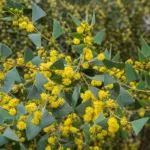 Acacia pravissima care guideAcacia pravissima
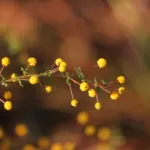 Prickly moses or western prickly moses (Acacia pulchella) care guideAcacia pulchella
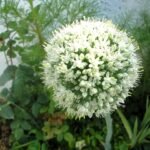 Onion (Allium cepa) care guideAllium cepa
 Allium christophii care guideAllium christophii
 Bunching onion (Allium fistulosum) care guideAllium fistulosum
 Giant Allium (Allium giganteum) care guideAllium giganteum
 Ornamental onion (Allium) care guideAllium