Apple Chlorotic Leaf Spot
Apple chlorotic leaf spot virus (ACLSV), genus Trichovirus, family BetaflexiviridaeApple Chlorotic Leaf Spot overview
Apple chlorotic leaf spot virus is a graft-transmitted virus of apple and other woody plants in the rose family. Many commercial apple cultivars carry it without obvious symptoms, but susceptible combinations may develop pale chlorotic leaf spots, ring patterns, bark symptoms, reduced vigor, or poorer fruit quality. Because symptoms overlap with other viruses and noninfectious disorders, laboratory testing is often needed for confirmation.
Typical conditions
Overview
Apple chlorotic leaf spot virus, abbreviated ACLSV, is a graft-transmissible virus associated with apple chlorotic leaf spot and several named disorders of pome and stone fruits. In the United States, many infected commercial apple trees show no conspicuous symptoms, so visual diagnosis alone is unreliable.
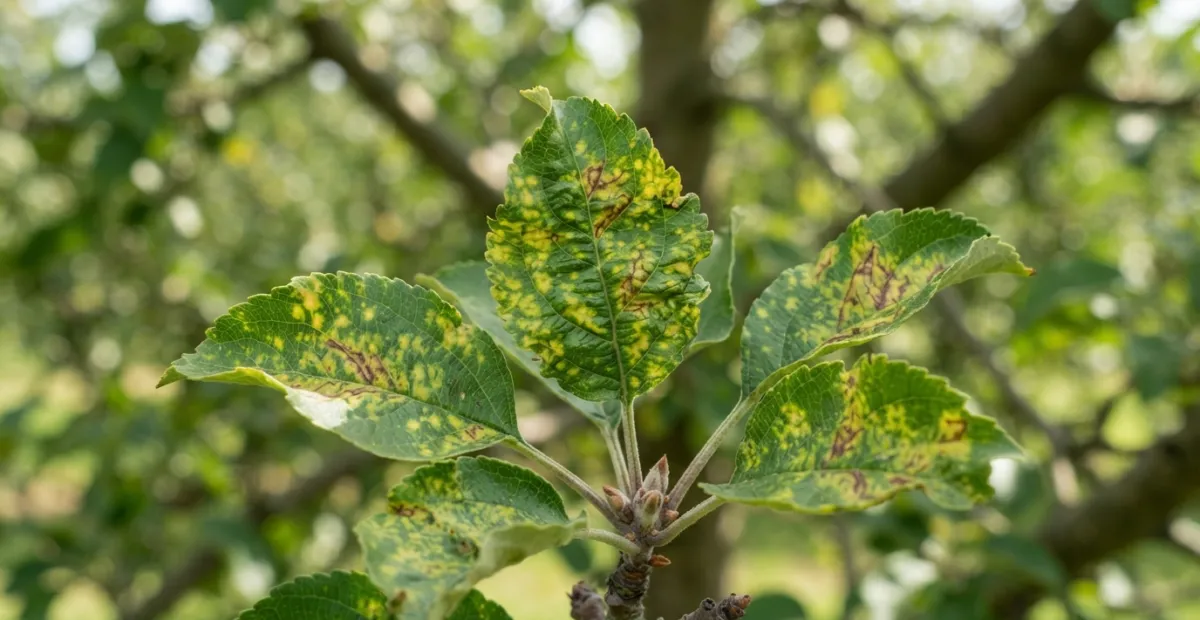
When a susceptible host or graft combination is involved, symptoms may include pale chlorotic leaf spots, rings or line patterns, reduced vigor, abnormal graft unions, bark disorders, and lower fruit quality. ACLSV may occur together with apple stem grooving virus, apple stem pitting virus, or other viruses, which can complicate diagnosis and increase disease impact.
Confirmation should be based on a diagnostic laboratory test such as RT-PCR or an approved index-testing system, especially before selecting propagation material or removing a valuable tree.
Symptoms and identification
- Apple leaves may show pale yellow to yellow-green spots, rings, line patterns, or diffuse chlorosis, particularly on susceptible cultivars or indicator plants.
- Many infected commercial apple cultivars remain symptomless, and symptoms may vary between years.
- Some apple rootstock–scion combinations can develop graft-union abnormalities or topworking disorders.
- In stone fruits, reported associations include plum bark split, plum pseudopox, apricot pseudopox, and chlorotic or ring-pattern symptoms.
- Pear may develop ring-pattern mosaic or reduced vigor in susceptible material.
- Fruit effects are variable and may include reduced size, uneven quality, or cultivar-specific surface symptoms, but these signs are not diagnostic by themselves.
Apple scab, apple mosaic virus, nutrient imbalance, herbicide injury, mite feeding, and weather-related chlorosis can produce similar leaf symptoms.
Causes and spread
ACLSV is commonly introduced and maintained through infected vegetative propagation material, including budwood, scions, grafts, and clonal rootstocks. Grafting and topworking efficiently move the virus between compatible woody hosts. Chance root grafts may allow tree-to-tree transmission in closely planted apple orchards, although their importance varies with site and planting conditions.
No consistently demonstrated natural insect vector is known. Current references generally do not support routine seed or pollen transmission as an important pathway. Mechanical transmission is possible under experimental conditions and may occur when sap-contaminated tools injure susceptible tissues, but grafting remains the principal practical concern.
Virus distribution within a tree can be uneven, so a negative sample does not always exclude infection. Sampling several appropriate tissues and using a qualified laboratory improves confidence.
Life cycle and persistence
After entering a tree through infected graft tissue, ACLSV moves systemically through living plant tissues and can persist for the life of a perennial host. Virus concentration and detectability can vary with season, tissue type, cultivar, and isolate. Infected trees may grow and fruit normally while serving as unnoticed sources of infected buds or scions.
The epidemiological cycle is therefore mainly a propagation cycle: infected mother plants produce infected budwood, grafted nursery trees establish infection, and further grafting distributes the virus. Root contact between neighboring trees may provide an additional orchard pathway. The virus does not have a typical fungal disease cycle involving spores or overwintering fruiting bodies.
Treatment and control
There is no curative treatment that removes ACLSV from an established orchard tree. Fungicides, insecticides, fertilizers, and pruning do not eradicate the virus. For a valuable tree, confirm the diagnosis before taking irreversible action because many symptoms are nonspecific.
In commercial propagation, the practical response is prevention and exclusion: discard or isolate confirmed infected mother plants, replace infected nursery trees or propagation material, and use certified virus-tested stock. Specialized clean-stock programs may use heat therapy, meristem culture, or repeated testing, but these are professional propagation procedures rather than backyard treatments.
If a confirmed infected tree is retained, avoid collecting budwood or scionwood from it and monitor nearby trees and grafting operations. Consult the state plant diagnostic laboratory, extension service, or certified nursery program for sampling and replacement decisions.
Low-impact and biological control
There is no organic spray, biological control, or soil amendment proven to cure ACLSV. Organic management should focus on exclusion and sanitation: use certified virus-tested planting material, maintain clean mother plants, sanitize grafting tools, avoid propagation from symptomatic or untested trees, and remove confirmed infected propagation stock.
Do not substitute neem oil, copper, sulfur, compost teas, microbial products, or foliar nutrients for virus management. These products do not eliminate a systemic virus and may delay correct diagnosis.
Prevention
- Purchase apple, pear, and stone-fruit nursery trees, rootstocks, and scionwood from reputable programs using virus-tested or certified clean stock.
- Maintain carefully selected, tested mother plants for budwood and avoid propagation from trees of unknown virus status, even when they appear healthy.
- Disinfect grafting and pruning tools between plants, particularly when making fresh cuts or topworking. Tool sanitation cannot cure an infected tree, but it reduces the chance of mechanical transfer.
- Do not topwork healthy trees with untested scions or buds.
- Plan orchard spacing and rootstock choices to reduce the likelihood of root contact where ACLSV is a concern.
- Submit questionable trees or propagation blocks for professional testing rather than relying on leaf appearance alone.
- Remove and replace confirmed infected nursery stock when practical, following local nursery and plant-health requirements.
Interesting facts
- ACLSV is one of the most widely distributed viruses associated with fruit trees.
- The virus has been known under related disease names, including apple latent virus type 1, pear ring pattern mosaic virus, plum pseudopox virus, and quince stunt virus.
- Symptoms can be strongly dependent on the host cultivar, rootstock–scion combination, and virus isolate.
- ACLSV has flexuous filamentous particles and a positive-sense RNA genome.
- Documented natural hosts include numerous pome and stone fruits and additional woody Rosaceae such as quince, almond, hawthorn, serviceberry, medlar, mountain ash, Japanese quince, and loquat, but host records and symptom severity vary among studies.
- Because infection is often latent, clean-stock certification and laboratory testing are more dependable than visual inspection.
No pesticide program is recommended because ACLSV is a systemic virus and chemical pesticides do not cure infected plants. Use only products legally authorized for the specific crop and problem in your country, and always follow the current product label. In the United States, consult the current state label and extension guidance before using any pesticide for a different, separately diagnosed problem.
Affected plants
The plants below are linked to this problem by structured host-plant data. The list updates automatically as new plant profiles are added.