
 Source:
 Mealy Plum Aphid
Hyalopterus pruni (Geoffroy, 1762)Mealy Plum Aphid overview
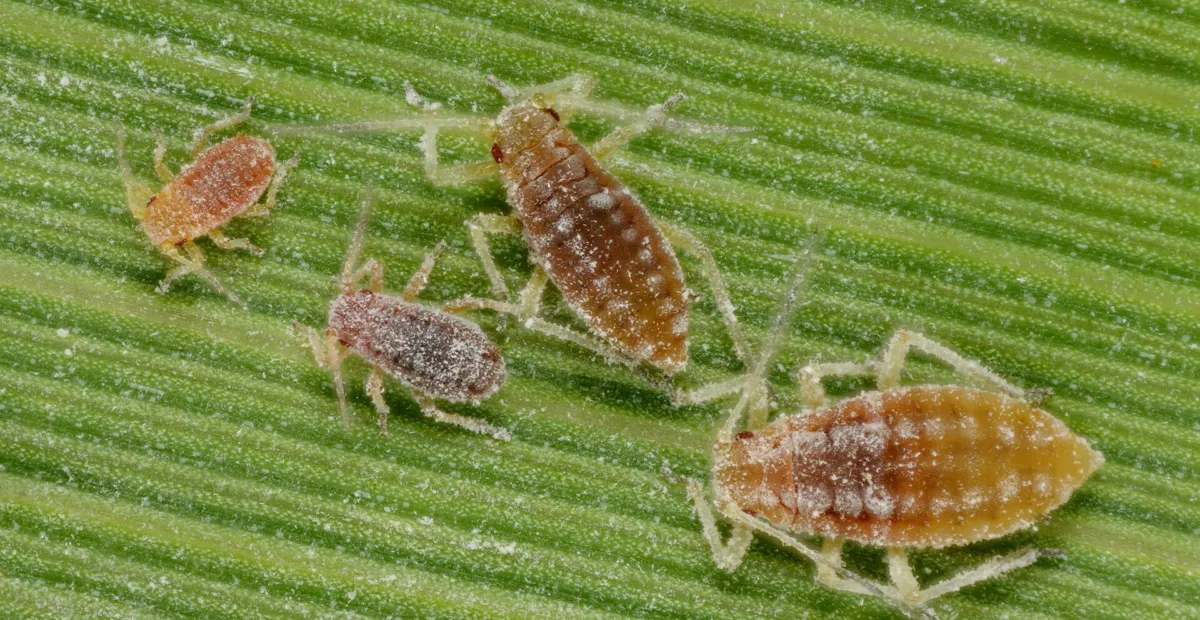
The mealy plum aphid, Hyalopterus pruni, is a small sap-feeding pest of plum and other Prunus trees. Pale green aphids covered in whitish wax cluster on leaf undersides and produce abundant honeydew, which can lead to sooty mold and reduced fruit growth. Populations may alternate seasonally between Prunus and reeds or cattails, although migration patterns vary by region and orchard conditions.
Typical conditions
Overview
The mealy plum aphid is a pale green to whitish-green aphid with a fine, flour-like wax covering. Wingless adults commonly hide on the undersides of plum leaves or within slightly curled foliage. Winged forms have a darker thorax and may disperse from Prunus to summer hosts such as reeds and cattails.
It is primarily an orchard and fruit-tree pest rather than a plant disease. Identification from photographs can be difficult because related aphids may look similar; confirmation may require an experienced diagnostician or microscopic examination.
Symptoms and identification
Early infestations may be inconspicuous. Inspect the undersides of plum, prune, peach or related leaves for pale green aphids covered with whitish wax. Leaves may become slightly curled, yellowed or prematurely shed, although severe distortion is not always present.
- Sticky honeydew on leaves, shoots, fruit or objects beneath the canopy
- Black sooty mold developing on honeydew-coated surfaces
- Reduced shoot vigor or smaller fruit during heavy infestations
- Premature leaf drop that may affect tree reserves and following-year flowering
- Ant activity around colonies, caused by ants harvesting honeydew
Causes and spread
Colonies spread when winged aphids move between Prunus trees or between seasonal host plants. Short-distance movement is promoted by crowded, untreated trees and vigorous succulent shoots. Ants may increase colony survival by defending aphids from natural enemies in exchange for honeydew. Infested nursery stock or plant material can also transport aphids or eggs.
Life cycle and persistence
Hyalopterus pruni generally has a two-host, annual cycle. Eggs overwinter on primary Prunus hosts, commonly near bud bases, and hatch around bud break or bloom. Several wingless generations develop on plum foliage during spring and early summer.
Winged aphids may appear in June or July and migrate to secondary hosts, especially common reed and cattails. In late summer or fall, winged sexual forms return to Prunus, where mating occurs and overwintering eggs are deposited. The number of generations and the extent of migration vary with climate, host availability and local population behavior; some aphids may remain on plum through summer.
Treatment and control
First determine whether colonies are causing meaningful damage. Light infestations with active natural enemies often need no treatment. If control is warranted, begin with water removal of accessible colonies, ant management, selective pruning of heavily infested shoots and improved monitoring.
For larger trees or commercial plantings, choose a locally approved, crop-labeled product only after consulting current state extension guidance and the product label. Apply for thorough coverage when aphids are exposed, while accounting for leaf protection, weather, pollinator activity, beneficial insects, resistance management and harvest intervals. Sooty mold usually fades after honeydew production stops; washing fruit or foliage may remove remaining deposits, but curled leaves will not necessarily uncurl after aphids are suppressed.
Low-impact and biological control
Use an integrated approach rather than routine calendar spraying.
- Rinse accessible colonies from foliage with a firm water spray, directing attention to leaf undersides and young shoots.
- Prune only excessively infested shoots when practical; avoid heavy pruning that stimulates lush regrowth.
- Conserve lady beetles, lacewings, syrphid larvae, minute pirate bugs and aphid parasitoids by avoiding unnecessary broad-spectrum insecticides.
- Control ants that protect aphid colonies, using physical barriers or other methods appropriate for the tree and site; do not contaminate trunks or soil with unapproved materials.
- Horticultural oils or insecticidal soaps may help against exposed colonies when the product label permits use on the crop. Thorough coverage is essential, and phytotoxicity precautions must be followed.
- Remove badly infested fallen leaves and manage excessive nitrogen and water-driven succulent growth.
Prevention
- Inspect plum and related Prunus trees from bud break through early summer, especially leaf undersides and curled leaves.
- Remove water sprouts and unwanted suckers, and maintain an open canopy without stimulating excessive soft growth.
- Avoid unnecessary high-nitrogen fertilization; base fertility decisions on soil, leaf or extension recommendations.
- Monitor nearby reeds and cattails when they occur close to orchards, recognizing that removal or treatment may be regulated or ecologically undesirable.
- Manage ants and preserve beneficial insects.
- Buy clean, reputable nursery stock and isolate and inspect new plants before placing them near established trees.
- In commercial orchards, use local extension monitoring and action thresholds rather than treating solely because aphids are present.
Interesting facts
- The white coating is waxy material on the aphid body, giving colonies a mealy appearance.
- Honeydew from feeding aphids supports dark sooty mold fungi but is not itself a fungal infection of the plant.
- Leaf curling can protect aphids from contact sprays, making early monitoring important.
- Many predators and parasitoids attack this aphid, including lady beetles, lacewings, syrphid larvae and aphid parasitoids.
- Related aphids can resemble H. pruni, so host plant, colony appearance and seasonal biology should be considered together.
Use pesticides only when monitoring shows that control is justified and only if the product is currently legally authorized and labeled for this pest and crop in your state and country. Follow the current label exactly, including crop, rate, timing, personal protective equipment, preharvest interval and pollinator precautions. Avoid broad-spectrum sprays that can destroy aphid predators and parasitoids.