
Allium rust
Puccinia alliiAllium rust overview
Allium rust is a wind-dispersed fungal disease associated mainly with garlic and other Allium crops. It produces conspicuous orange to reddish-brown pustules on leaves, later turning dark as survival spores develop. Severe infections can yellow and kill foliage prematurely, reducing bulb size and quality. Host range and naming can vary because Puccinia allii represents a taxonomically complex group of closely related rust fungi.
Typical conditions
Overview
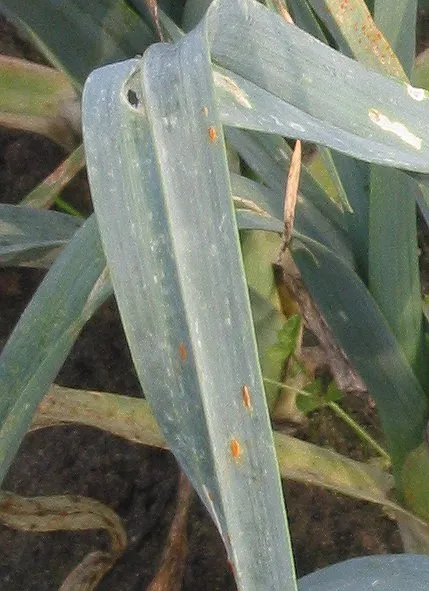
Allium rust usually begins as small pale flecks on older leaves. These enlarge into oval, elongated or diamond-shaped orange, reddish or dull-yellow pustules that release abundant airborne urediniospores. Later, the same lesions may become dark brown or black as teliospores develop.
When infection is extensive, leaves yellow, dry and die prematurely. Reduced green leaf area can limit bulb filling and lower yield, bulb size and market quality. Disease severity varies with the rust population, host cultivar, planting date and weather.
Symptoms and identification
- Small pale-yellow to whitish flecks, commonly 1–2 mm across, on leaf blades.
- Raised orange-red to dull-orange pustules, often 3–5 mm long and oval, elongated or diamond-shaped.
- Orange powder may rub off or become airborne when pustules rupture.
- Older leaves are often affected first, followed by younger leaves.
- Lesions may darken as black teliospores form.
- Severe infections cause chlorosis, premature leaf drying and reduced bulb development.
Rust can resemble other leaf-spot diseases. The combination of orange powdery pustules and later dark pustules is particularly useful diagnostically, but laboratory confirmation is advisable when the crop or diagnosis is economically important.
Causes and spread
The pathogen survives and reproduces on living Allium tissue. Urediniospores are readily dispersed by wind and can move from infected plants, volunteer garlic or onions, perennial and ornamental Alliums, and susceptible weeds into a new planting. Diseased crop residue and older plantings can maintain a local source of inoculum.
Spread is favored when leaves remain wet for several hours, especially during cool, humid weather. People, tools and handling can move infected plant material, although windborne spores are generally the major field-scale pathway.
Life cycle and persistence
Puccinia allii is generally described as an autoecious, macrocyclic rust capable of completing its development on Allium hosts, with several spore stages. However, North American and other populations may show a shortened hemicyclic life cycle in which uredinia and telia are the prominent stages. This variation, together with host specialization, is one reason the taxonomy is treated as a species complex.
Urediniospores repeatedly infect green leaves during favorable weather, producing new orange pustules and secondary spores in the same season. Teliospores form later in aging lesions and can contribute to survival between seasons. The exact overwintering importance of infected leaves, bulbs, volunteers and perennial hosts differs by region and rust type.
Treatment and control
Inspect plants frequently during cool, wet periods. Remove and dispose of the most heavily infected leaves or plants when this can be done without spreading spores; do not compost diseased material unless the composting process reliably reaches pathogen-killing temperatures.
Reduce leaf wetness, improve spacing and irrigation practices, and remove nearby volunteer or weedy Alliums. If the crop is valuable and disease is detected early, fungicide protection may help preserve green foliage, but products are preventive or protectant-oriented and cannot restore tissue already killed by rust. Follow the current product label and local extension recommendations.
Low-impact and biological control
- Use sanitation, crop separation and rotation as the primary nonchemical measures.
- Remove rusted leaves during dry weather and bag or otherwise contain them before disposal.
- Eliminate volunteer garlic, onions and susceptible ornamental or weedy Alliums near production beds.
- Use drip or low-splash irrigation and maintain good air circulation.
- Choose locally tested, less susceptible cultivars where available.
No broadly dependable biological-control program is established for home gardens in the United States. Avoid applying homemade sprays that may injure foliage or have not been validated for rust suppression.
Prevention
- Plant clean, disease-free cloves, sets or transplants from reputable sources.
- Use the most resistant or less susceptible cultivar available for the intended Allium crop; susceptibility differs among cultivars and rust populations.
- Separate garlic, onion, leek, chive and ornamental Allium plantings when practical, especially where rust has occurred.
- Rotate out of Allium crops for about 2–3 years where local conditions and crop value justify it.
- Remove volunteer Alliums, cull piles and susceptible weedy Alliums that can maintain green tissue.
- Improve air movement with appropriate spacing and avoid unnecessary overhead irrigation or late-day leaf wetting.
- After harvest, remove or destroy infected foliage and crop debris rather than leaving a green bridge between plantings.
Interesting facts
- In U.S. production guidance, rust is often most damaging on garlic, while onion damage may be greatest when onions are adjacent to heavily infected garlic.
- The name Puccinia allii is used broadly in practical crop guidance, but modern studies recognize substantial taxonomic complexity among rusts infecting Allium.
- Orange urediniospores support repeated spread during the growing season, whereas darker teliospores are associated with the later survival phase.
- Host susceptibility is not uniform: garlic, onion, scallion, chive, leek, shallot and ornamental Alliums may differ markedly depending on the rust population and cultivar.
Use only fungicide products legally authorized in the United States for the specific crop and disease, and follow the current label exactly, including application timing, rate, personal protective equipment, reentry interval, preharvest interval and resistance-management directions. Product registrations and labels vary by state, crop and use site; consult your state extension service or pesticide regulatory agency before treatment.
Affected plants
The plants below are linked to this problem by structured host-plant data. The list updates automatically as new plant profiles are added.
 Onion (Allium cepa) care guideAllium cepa
 Allium christophii care guideAllium christophii
 Bunching onion (Allium fistulosum) care guideAllium fistulosum
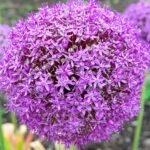 Giant Allium (Allium giganteum) care guideAllium giganteum
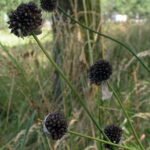 Ornamental onion (Allium) care guideAllium
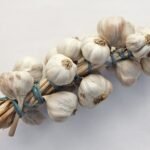 Garlic (Allium sativum) care guideAllium sativum
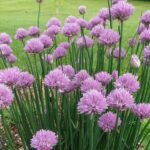 Chives (Allium schoenoprasum) care guideAllium schoenoprasum
 Ransoms (Allium ursinum) care guideAllium ursinum
 Wild leek or broadleaf wild leek (Allium ampeloprasum) care guideAllium ampeloprasum
 Shallot (Allium cepa Aggregatum Group)Allium cepa Aggregatum Group
 Cepa Group (Allium cepa Group)Allium cepa Cepa Group
 Rakkyo (Allium chinense) care guideAllium chinense