
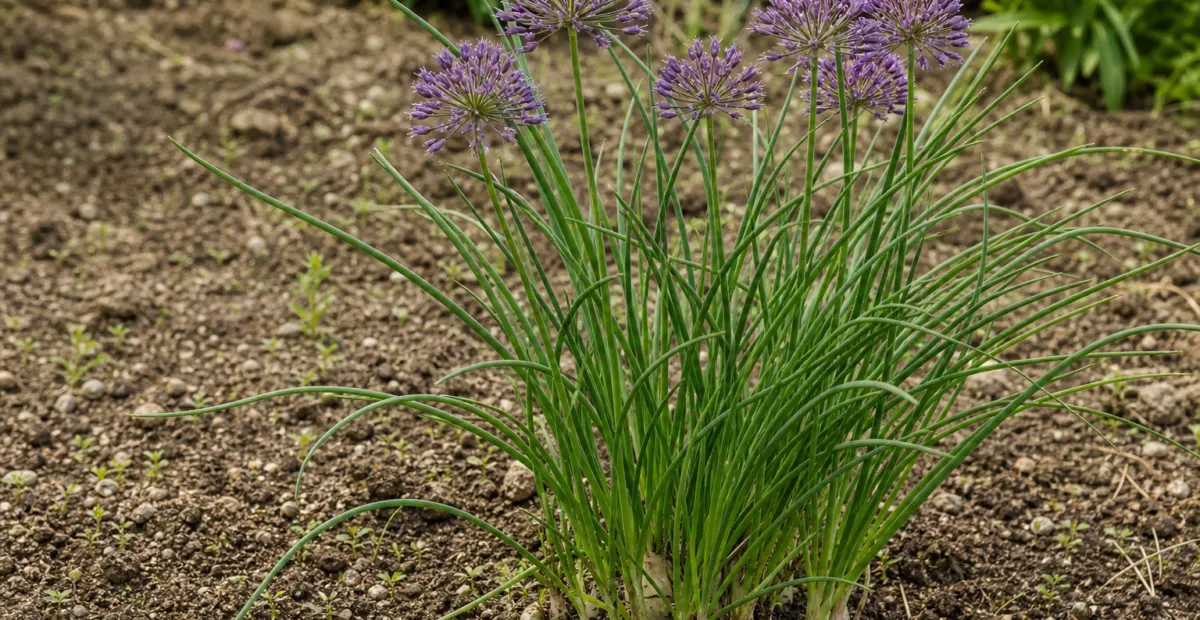
 AI-generated illustration
Rakkyo (Allium chinense) short overview
Rakkyo (Allium chinense) is a clumping, bulb-forming Asian onion grown in the United States mainly as a specialty edible. It produces narrow hollow leaves, divides readily, and forms small elongated bulbs valued for pickling and fresh use. Give it full sun, fertile well-drained soil, and regular moisture during active growth; container culture is useful where winters are severe. Rakkyo is an accepted species of Allium cultivated for small edible bulbs and tender onion-flavored foliage. It forms multiplying clumps of hollow leaves and may produce purple umbels, although seed set can be poor in cultivated plants.
Taxonomic classification
Rakkyo (Allium chinense) care guide
Light and placement
Choose an open site receiving at least 6 hours of direct sun, ideally with morning sun and good air movement. A south- or west-facing bed suits the crop, provided summer heat is not reflected excessively from walls. Pale, floppy growth suggests insufficient light; scorched leaf tips usually indicate heat, drought, salt, or root stress rather than simple excess sun.
Watering and humidity
Water deeply when the upper inch of soil begins to dry, keeping moisture steady during leaf growth and bulb enlargement. Reduce irrigation as foliage yellows and dormancy approaches, then keep dormant bulbs only slightly moist. Containers dry faster and may need more frequent checks, but never allow the pot to sit in water.
Soil and growing medium
Use fertile, friable soil with reliable drainage and moderate moisture retention. A raised bed or sandy loam is helpful where winter wetness is common. Available crop guidance places the preferred soil near pH 5.5–6.5, although the plant can tolerate a somewhat broader mildly acidic to neutral range. Avoid compacted clay and persistently saturated ground.
Feeding
Incorporate finished compost before planting and apply a balanced vegetable fertilizer only if soil fertility is low. Feed lightly during active leaf growth, then stop once bulbs begin sizing or foliage starts to yellow. Avoid heavy nitrogen, which encourages lush tops and can delay or reduce bulb quality.
Growth and habit
This herbaceous geophyte forms a compact clump as bulbs divide underground. Foliage grows during the active season and dies back as bulbs mature or dormancy begins. Harvest selectively if bulbs are wanted, leaving enough offsets and leaves to rebuild the clump for the next season.
Planting and repotting
Plant dormant bulbs in fall in mild climates or in early spring where winters are severe. Set bulbs about 1 inch deep, with the neck near the soil surface, and space them 3–4 inches apart for bulb production. Water after planting and keep the bed evenly moist while roots establish.
Repot or divide container-grown clumps in late summer or early fall after the foliage begins to decline. Separate crowded bulbs carefully, refresh the potting mix, and replant at the original depth. Choose a container with drainage holes and enough width for the clump to multiply.
Propagation and pruning
Propagation
Most practical propagation is by separating offsets or divided bulbs in late summer or early fall. Seed is possible in principle, but cultivated rakkyo may show poor seed set; division is more dependable and preserves the edible type.
Pruning
Remove yellowing foliage only after it has naturally declined, allowing nutrients to return to the bulbs. Cut spent flower stalks if seed production is not desired, but avoid removing healthy leaves during bulb development. Clear dead material at the end of the season to reduce pest and disease carryover.
Overwintering
In USDA Zones 6–7, mulch lightly after the ground cools and use a well-drained site to prevent freeze-thaw and winter rot. In colder areas, grow in containers and move them to an unheated, bright, protected space after foliage dies back. Keep bulbs cool and nearly dry during dormancy, then resume watering as growth returns.
Uses
Use the small bulbs fresh, cooked, or pickled; rakkyo is particularly associated with pickled preparations. Young foliage can be used as an onion-flavored garnish. Grow it in specialty vegetable beds or containers. Do not present traditional medicinal uses as established medical treatment, and keep plant material away from dogs and cats.
Appearance
Rakkyo produces narrow, upright to arching, hollow green leaves from clustered elongated bulbs. The underground bulbs divide to create a dense clump, while flowering plants send up a solid scape ending in a rounded purple umbel. Onion aroma from bruised tissue and the contrast between hollow leaves and solid scapes help distinguish it from some related onions.
Flowering
Mature plants can produce a solid flowering scape topped by a rounded umbel of small purple flowers. Flowering is less important than bulb production in cultivation, and seed production may be poor or absent in cultivated material; some sources report tetraploid plants with limited seed set.
Pollination and visitors
Open Allium umbels provide nectar and pollen resources for small bees, bumblebees, and hoverflies when flowers are available. The available evidence supports visitor groups rather than a confidently documented single pollinator species for Allium chinense.
Diseases and pests
Diseases
Prevent problems with well-drained soil, crop rotation, clean planting stock, and watering at the soil line. Watch for basal or bulb rots in wet ground and fungal leaf diseases during prolonged humidity. Remove badly affected plants and avoid replanting Alliums immediately in the same bed.
Pests
Common onion-family pests such as thrips, onion maggot, and bulb mites may occur, especially in stressed or repeatedly planted beds. Inspect new growth, maintain sanitation, rotate crops, and use row cover or locally approved controls when pressure is significant. Avoid planting damaged bulbs.
Related diseases and pests
Only Plant Doctor profiles whose host data indicate this plant may be affected are shown here.
 PestOnion MaggotDelia antiqua
 PestOnion thripsThrips tabaci Lindeman
 PestMelon thripsThrips palmi Karny
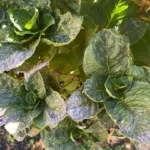 PestChilli thripsScirtothrips dorsalis Hood
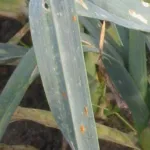 DiseaseAllium rustPuccinia allii
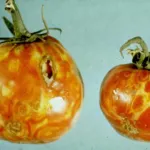 DiseaseTomato spotted wilt virusOrthotospovirus tomatomaculae (tomato spotted wilt virus; TSWV)
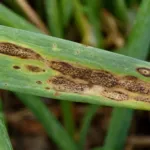 DiseaseStemphylium Leaf BlightStemphylium vesicarium (Wallr.) E.G. Simmons
 DiseaseRhizopus soft rotRhizopus stolonifer
Toxicity and pollen
As an Allium, rakkyo contains sulfur compounds associated with onion-family toxicosis when pets ingest sufficient plant material, especially concentrated or processed portions. Human culinary use is established, but large quantities may cause gastrointestinal upset. Keep bulbs and trimmings away from pets and seek veterinary advice after ingestion.
- Typical season
- Typically late spring through summer in the United States when flowering occurs
- Pollination / pollen
- Insect-carried pollen from open umbels
Rakkyo produces pollen only when it flowers. As an insect-pollinated onion relative, its pollen is not expected to be a major airborne allergen, but species-specific US aeroallergen data are limited; sensitive people should avoid handling flowering plants during symptoms and use ordinary garden precautions.
Native habitat
The species is native to south-central and southeastern China, including Hainan, and occurs in temperate to subtropical settings. It is associated with cultivated or disturbed ground and soils that are not persistently waterlogged. In the United States it is best treated as a specialty crop rather than a broadly naturalized landscape plant.
Interesting fact
Rakkyo is grown primarily for small bulbs used fresh or pickled rather than for large dry onions. Its leaves are hollow, while the seed stems are solid, a useful identification contrast. Cultivated material may have limited seed production, making bulb division the usual method of increase.
Frequently asked questions (FAQ)
The most relevant questions about this plant, with short and direct answers.
🌱Quick care
What is Rakkyo (Allium chinense)?⌄
Rakkyo is a perennial onion relative grown for its small, clustered bulbs and edible green leaves. It is also known as Japanese scallion or Chinese onion, but the documented common name for this plant is Rakkyo.
Is Rakkyo an onion or a chive?⌄
Rakkyo is an Allium in the onion family, not a true chive. Its hollow leaves can resemble chives, but it forms small bulbs at the base.
Does Rakkyo taste like an onion?⌄
Rakkyo has a crisp texture and a pronounced onion-like flavor that is often milder and fresher than common bulb onions. Pickling is a traditional way to prepare the bulbs.
🌤️Environment and placement
Can you grow Rakkyo in the United States?⌄
Yes, Rakkyo can be grown in the United States, especially where winters are not severe. In colder regions, provide winter protection or grow it in a container that can be sheltered.
What USDA hardiness zones are suitable for Rakkyo?⌄
Rakkyo is best treated as a tender perennial in colder parts of the United States because its frost tolerance is not well documented. Gardeners in areas with hard freezes should protect the bulbs with mulch or grow them under cover.
Does Rakkyo need full sun?⌄
Rakkyo grows best in full sun, with at least 6 hours of direct sunlight daily. Some light afternoon shade may be tolerated in hot climates, but too much shade can reduce growth and bulb development.
What soil is best for Rakkyo?⌄
Use fertile, well-drained loam or sandy loam for Rakkyo. Improve heavy clay with organic matter and avoid sites that remain waterlogged, because wet soil can cause bulb and root problems.
How do you overwinter Rakkyo in cold climates?⌄
In cold climates, mulch outdoor plantings heavily after the foliage declines or move container-grown plants to a sheltered, cool location. Keep bulbs from becoming waterlogged while dormant, and protect them from repeated hard freezes.
Can Rakkyo survive frost?⌄
Rakkyo may tolerate light frost once established, but it should be protected in climates with prolonged or severe freezes. Mulch, a cold frame, or an unheated sheltered structure can improve winter survival.
💧Care and problems
How much water does Rakkyo need?⌄
Rakkyo needs moderate moisture during active growth. Water when the soil surface begins to dry, then reduce watering when the foliage naturally declines or the bulbs enter dormancy.
How often should Rakkyo be fertilized?⌄
Fertilize Rakkyo lightly in fertile soil rather than applying heavy doses of nitrogen. Excess nitrogen can favor leafy growth over the formation of well-developed bulbs.
Why is my Rakkyo not forming bulbs?⌄
Rakkyo may fail to form good bulbs because of insufficient sunlight, poor fertility, overcrowding, drought, or unsuitable seasonal conditions. It may also need a summer dormant period for reliable bulb initiation, particularly outside climates where it is traditionally grown.
Why are my Rakkyo leaves turning yellow?⌄
Yellowing leaves may indicate natural seasonal dormancy, especially after the active growing period. If yellowing occurs while the plant should be growing, check for overwatering, poor drainage, nutrient deficiency, or damaged roots.
What pests commonly affect Rakkyo?⌄
Rakkyo can be affected by common Allium pests such as thrips, onion maggots, and aphids, although species-specific pest information is limited. Inspect leaves and the soil around bulbs regularly and correct stress conditions that weaken the plants.
🪴Planting and repotting
Can Rakkyo grow in a container?⌄
Yes, Rakkyo grows well in a container with drainage holes and fertile, well-drained potting mix. Choose a container wide enough for clumps to multiply and protect it from severe winter cold.
How do you plant Rakkyo bulbs?⌄
Plant healthy Rakkyo bulbs in fall where winters are mild, setting them in fertile, well-drained soil with the growing point facing upward. In colder climates, plant in a protected bed or container and cover the planting after the ground begins to freeze.
How deep should Rakkyo bulbs be planted?⌄
Plant Rakkyo bulbs deeply enough to cover them with roughly 2 to 3 inches of soil, adjusting slightly for bulb size and local conditions. Avoid planting so deeply that heavy, wet soil surrounds the bulb and restricts drainage.
When is the best time to plant Rakkyo in the United States?⌄
Fall is the usual planting season for Rakkyo bulbs in regions with mild winters, while early spring is safer where winter freezes are severe. Spring-planted bulbs may establish successfully but can produce less growth in their first season.
When should Rakkyo be harvested?⌄
Rakkyo bulbs are generally harvested in late summer after the foliage has matured or begun to die back. Leave some bulbs in the ground if you want the clump to continue growing and multiply.
✂️Propagation and pruning
How do you propagate Rakkyo?⌄
Rakkyo is most reliably propagated by separating offsets or dividing established bulb clumps. Seed propagation is possible in some references, but bulb division is the practical method because seed production may be limited or inconsistent.
Can Rakkyo be grown from seed?⌄
Rakkyo can sometimes be propagated from seed, but seed availability and seed production are limited compared with vegetative propagation. For dependable results, start with healthy bulbs or offsets.
When should Rakkyo clumps be divided?⌄
Divide Rakkyo clumps after flowering or during dormancy, when the bulbs can be lifted and separated with minimal disturbance. Replant the offsets promptly so they do not dry out.
Should Rakkyo be pruned?⌄
Rakkyo does not require routine pruning. Remove only damaged or diseased leaves, and allow healthy foliage to remain until it naturally yellows so the bulbs can store energy.
⚠️Toxicity and safety
Are Rakkyo bulbs edible?⌄
Yes, Rakkyo bulbs are traditionally eaten raw, cooked, or pickled, particularly in East Asian cuisines. The leaves and, in some sources, the flowers and young seedpods are also used as food.
Is Rakkyo toxic to dogs and cats?⌄
Rakkyo should be treated as potentially toxic to dogs and cats because it belongs to the Allium genus. Ingestion can damage red blood cells and may cause delayed signs of illness, so contact a veterinarian or pet poison service after suspected ingestion.
Can pets eat Rakkyo leaves or bulbs?⌄
No, do not intentionally feed Rakkyo leaves, bulbs, flowers, or other parts to pets. Allium toxicity can occur with raw, cooked, dried, or concentrated plant material, and cats are particularly sensitive.
What should I do if my pet eats Rakkyo?⌄
Contact your veterinarian or a pet poison service promptly after your pet eats Rakkyo. Do not wait for symptoms, because weakness, vomiting, pale gums, breathing changes, or anemia can develop several days after Allium exposure.
Is Rakkyo safe for humans to eat?⌄
Rakkyo is traditionally consumed as a vegetable and pickle by humans. As with other strongly flavored Alliums, eat it in normal culinary quantities and avoid consuming unidentified plants that may only resemble Rakkyo.
🌸Flowering and special interest
Does Rakkyo flower?⌄
Yes, Rakkyo can produce a solid flower stalk topped with a small cluster of pale flowers. Flowering may be inconsistent in cultivation, and the plant is usually grown more for its bulbs than for ornamental display.
When does Rakkyo bloom?⌄
Rakkyo commonly blooms during the warmer part of the growing season, although the exact timing depends on climate and cultivation conditions. Plants may produce few or no flowers when grown primarily for bulb production.
Similar plants
 Azure Monkshood (Aconitum carmichaelii) care guideAconitum carmichaelii
 Monkshood (Aconitum ‘Stainless Steel’)Aconitum 'Stainless Steel'
 Monkshood (Aconitum ‘Bressingham Spire’)Aconitum 'Bressingham Spire'
 Golden full moon maple (Acer shirasawanum ‘Aureum’)Acer shirasawanum 'Aureum'
 Globosum (Acer platanoides ‘Globosum’)Acer platanoides 'Globosum'
 Striped maple (Acer pensylvanicum) care guideAcer pensylvanicum