
 Source:
 Azure Monkshood (Aconitum carmichaelii) short overview
Azure Monkshood is a statuesque perennial for moist, fertile borders, producing deeply divided foliage and dense spikes of blue-purple, hooded flowers in late summer and fall. It performs in full sun or partial shade and adds strong vertical structure to cottage, woodland-edge, and cut-flower plantings. Every part is highly toxic, however, so gloves and careful placement are essential around children and pets.
Taxonomic classification
Azure Monkshood (Aconitum carmichaelii) care guide
Light and placement
Grow in full sun to partial shade. Morning sun with afternoon shade is useful in hot climates, while cooler regions can support more sun if the soil remains moist. Too little light produces weak, stretched stems and reduced flowering; excessive heat and reflected afternoon sun can scorch foliage or cause premature decline.
Watering and humidity
Water deeply whenever the surface begins to dry, keeping the root zone evenly moist without allowing standing water. Increase frequency during hot, dry spells and reduce it after foliage dies back in fall. Mulch can moderate soil temperature and moisture, but keep it away from the crown.
Soil and growing medium
Use fertile, humus-rich soil that stays evenly moist but drains freely. A loam amended with compost is suitable; avoid compacted clay, standing water, and very dry, sandy sites. A slightly acidic to neutral soil reaction is generally appropriate.
Feeding
Apply a thin layer of compost or a balanced slow-release perennial fertilizer in spring as growth begins. Avoid heavy nitrogen feeding, which can produce weak, leafy growth and increase lodging. Do not fertilize drought-stressed, waterlogged, or newly transplanted plants until they resume active growth.
Growth and habit
A clump-forming, upright herbaceous perennial that emerges in spring, builds a tall leafy framework, and flowers late in the season. Strong stems usually hold the flower spikes well, though plants grown in rich shade or exposed sites may need support. Cut stems back after frost or when the foliage collapses.
Planting and repotting
Plant nursery specimens in spring or early fall when the soil is workable. Set them at the same depth as in the pot, firm the soil gently, water deeply, and mulch lightly without covering the crown. Allow about 18–24 inches between plants for airflow and mature clump development.
Container-grown plants are best moved in early spring or fall, with minimal root disturbance. Use a deep container with drainage holes and a moisture-retentive but airy potting mix. Repot only when roots fill the container, and wear gloves during all handling.
Propagation and pruning
Propagation
Divide established clumps in early spring or fall, handling the roots with gloves. Seed propagation is possible but can be slow and irregular because Aconitum seeds commonly require a prolonged warm-and-cold dormancy sequence. Do not share plant material casually because all parts are toxic.
Pruning
Remove spent flower spikes if seed production is unwanted. After a hard frost or once the foliage has fully declined, cut stems to the ground and dispose of material carefully. Wear gloves and avoid touching the face while pruning.
Overwintering
Leave the dormant crown in the ground in Zones 3–7. After frost, cut back dead stems and apply a light winter mulch in exposed or very cold sites. Container plants have less root protection than in-ground plants and should be overwintered in a sheltered location where the mix does not stay waterlogged.
Uses
Use as a vertical accent in moist perennial borders, cottage gardens, woodland-edge plantings, and late-season cut-flower displays. It is ornamental only in ordinary garden use; traditional medicinal use does not make home preparation safe. Because of severe toxicity, avoid edible, school, playground, or freely accessible family-garden locations.
Appearance
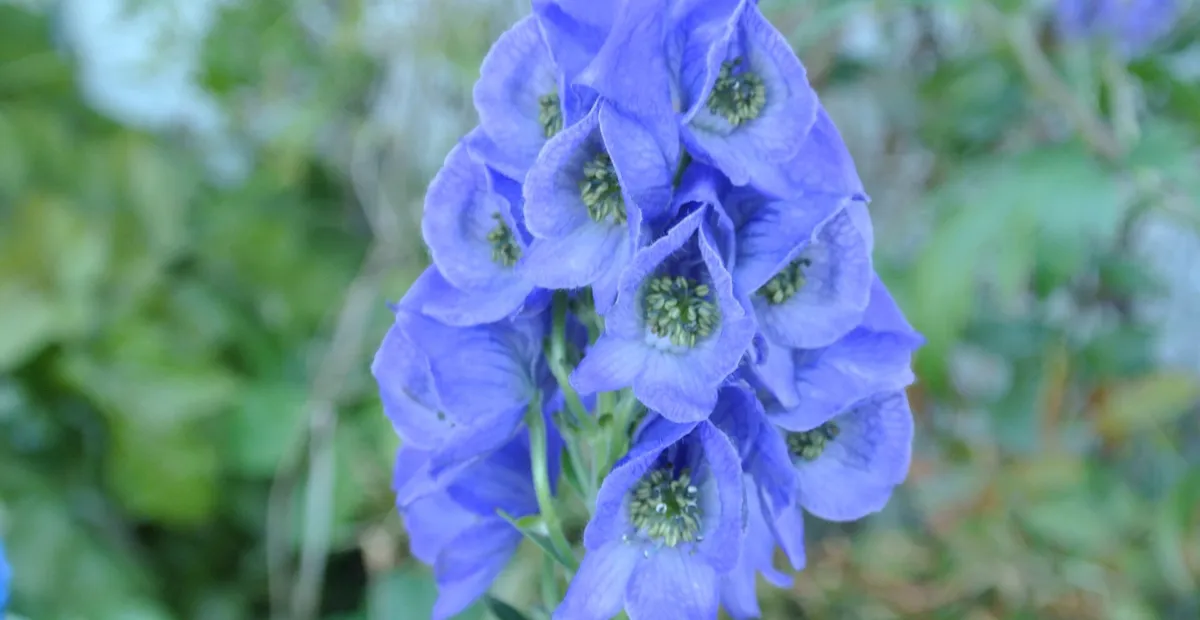
The plant has upright, sturdy stems bearing dark green leaves divided into multiple pointed lobes. Dense flower spikes rise above the foliage, and each blue-purple bloom has a prominent helmet-like upper sepal. The overall effect is architectural and vertical rather than spreading.
Flowering
The species forms dense terminal racemes or spikes of hooded flowers, usually opening from late summer into fall in the United States. The prominent upper sepal creates the characteristic helmet or hood shape, while the flowers are held above the foliage on strong upright stems.
Pollination and visitors
The hooded flowers are adapted primarily to visits by long-tongued bumblebees, which can work their way into the floral structure to reach nectar. Other bees may visit, but documentation is stronger for bumblebees than for a broad range of visitors.
Aconitum carmichaelii photos
Click any photo for a larger view. Source, author and license are shown separately.
Diseases and pests
Diseases
Prevent problems by providing airflow, avoiding overhead watering, and keeping foliage from staying wet overnight. Watch for crown or root rot in poorly drained soil and remove affected tissue promptly. Powdery mildew may occur in crowded, dry-rooted plantings; improve spacing and water at the soil line.
Pests
Aphids, spider mites, and leaf-chewing insects may occur, especially on stressed plants. Inspect new growth and leaf undersides regularly. Use a strong water spray for light aphid infestations, encourage natural enemies, and remove badly damaged foliage. Wear gloves whenever handling the plant.
Toxicity and pollen
All parts contain toxic diterpenoid alkaloids, with the roots especially hazardous. Ingestion can cause serious cardiovascular, neurologic, and gastrointestinal poisoning. Sap or plant material should not contact broken skin, eyes, or the mouth. Wear gloves and wash hands after handling; seek emergency help after suspected ingestion.
- Typical season
- Late summer through fall
- Pollination / pollen
- Insect-dispersed pollen
This is an insect-pollinated flowering perennial, so pollen is not typically released in large airborne clouds like wind-pollinated grasses or trees. Sensitive people should still avoid direct contact with flowers and plant material because low airborne pollen does not reduce the plant’s severe toxicity.
Native habitat
The species is native to China and is associated with cool, moist temperate conditions. In cultivation it favors fertile soils with reliable moisture, good drainage, and protection from prolonged drought. It is better suited to cool summer gardens than hot, dry exposures.
Interesting fact
The hooded upper sepal is a distinctive feature of Aconitum flowers, not a petal. Azure Monkshood is among the taller garden monkshoods and is valued for late-season color. Its poisonous chemistry also helps deter browsing livestock in its native range.
Frequently asked questions (FAQ)
The most relevant questions about this plant, with short and direct answers.
🌱Quick care
What is Azure Monkshood?⌄
Azure Monkshood is the common name for Aconitum carmichaelii, a hardy, clump-forming perennial in the buttercup family (Ranunculaceae). It is valued for its upright spikes of blue to violet, hood-shaped flowers.
Is Aconitum carmichaelii a perennial?⌄
Yes, Aconitum carmichaelii is a herbaceous perennial that dies back in winter and returns from its roots in spring. It is generally hardy in USDA Zones 3–8, depending on the cultivar and local conditions.
How big does Azure Monkshood get?⌄
Azure Monkshood commonly grows about 3–4 feet tall and 2–3 feet wide, although vigorous plants can become taller in ideal conditions. Staking may be needed in exposed or very fertile sites.
🌤️Environment and placement
Does Aconitum carmichaelii prefer sun or shade?⌄
Aconitum carmichaelii grows best in full sun to partial shade. In hot climates, afternoon shade helps reduce heat stress, while too much shade can produce weak stems and fewer flowers.
What is the best soil for Azure Monkshood?⌄
Use fertile, humus-rich, well-drained soil that remains consistently moist. Improve poor soil with compost, but avoid locations that stay waterlogged.
How much water does Aconitum carmichaelii need?⌄
It needs regular, consistent moisture and should not be allowed to dry out during active growth. Water deeply during dry spells, especially when planted in sandy soil or hot locations.
Can Azure Monkshood grow in hot summers?⌄
Azure Monkshood can struggle in hot summers, especially when nights remain warm or the soil dries out. Mulch, reliable moisture, and afternoon shade can improve performance in warmer regions.
Is Aconitum carmichaelii deer resistant?⌄
Aconitum carmichaelii is generally considered resistant to deer and rabbits. Its natural toxicity makes it less attractive to many browsing animals, although no plant is completely browse-proof.
💧Care and problems
How often should I fertilize Azure Monkshood?⌄
Usually, one spring application of compost or a balanced fertilizer is sufficient. Plants growing in fertile, humus-rich soil may need little or no supplemental fertilizer.
Does Azure Monkshood need staking?⌄
It may need staking if grown in windy sites, deep shade, or especially rich soil. Full sun generally produces stronger stems, while nearby support plants can also help keep the flower spikes upright.
Why is my Aconitum carmichaelii wilting?⌄
Wilting is most often caused by insufficient moisture, heat stress, root problems, or disease. Check soil moisture first, then improve drainage if the soil is persistently wet and inspect stems for signs of rot or vascular disease.
Why is my Azure Monkshood not flowering?⌄
Common causes include excessive shade, drought, hot conditions, transplant shock, or immature plants. Newly divided or transplanted clumps may need a year or two to re-establish before flowering well.
Does Azure Monkshood have pest or disease problems?⌄
It usually has few serious pest problems because the plant is highly toxic, but aphids, fungal stem rot, and Verticillium wilt can occur. Good drainage, adequate spacing, and avoiding prolonged drought help reduce stress-related problems.
Should I mulch around Aconitum carmichaelii?⌄
Yes, apply a 2–3-inch layer of organic mulch to conserve moisture and moderate soil temperatures. Keep mulch slightly away from the crowns and stems to reduce the risk of rot.
🪴Planting and repotting
When should I plant Azure Monkshood?⌄
Plant container-grown Azure Monkshood in spring or early fall, when temperatures are moderate and the soil can be kept evenly moist. Avoid planting during periods of extreme heat or drought.
How far apart should I plant Aconitum carmichaelii?⌄
Space plants about 18–30 inches apart, depending on the mature size of the cultivar. Adequate spacing improves airflow and gives each clump room to develop.
Can I grow Azure Monkshood in a container?⌄
Yes, it can be grown in a large container with fertile, well-drained potting mix and reliable moisture. Choose a heavy pot, provide afternoon shade in hot climates, and protect the container from extreme winter temperature swings.
✂️Propagation and pruning
How do you propagate Aconitum carmichaelii?⌄
The most practical method is division of established clumps in spring or fall. Seed propagation is possible, but germination can be slow or erratic and seedlings may take several years to flower.
When should I divide Azure Monkshood?⌄
Divide established plants in early spring or fall while they are dormant or growing slowly. Handle the roots carefully because divisions may take time to recover and can flower poorly the following season.
Can Azure Monkshood be grown from seed?⌄
Yes, but seed is often difficult and slow to germinate, and plants may not flower for several years. Fresh seed sown as soon as it ripens or exposed to an appropriate period of cold, moist conditions generally performs better than old, dry seed.
Should I deadhead Aconitum carmichaelii?⌄
Deadhead after flowering if you want to limit self-seeding and conserve plant energy. Cutting back spent flower spikes can also encourage a smaller later flush in favorable conditions.
When should I cut back Azure Monkshood?⌄
Cut back dead stems in late fall after the foliage has died back or in early spring before new growth begins. Wear protective gloves whenever handling the plant.
⚠️Toxicity and safety
Is Aconitum carmichaelii poisonous?⌄
Yes, Aconitum carmichaelii is highly toxic, and all parts of the plant can be dangerous if ingested. The roots and seeds are especially hazardous, so grow it only where accidental contact is unlikely.
Can Azure Monkshood be poisonous through skin contact?⌄
Yes, plant sap can cause harmful effects through skin contact in some people, especially when handling roots or damaged tissue. Wear waterproof gloves, avoid touching your face, and wash exposed skin and tools thoroughly afterward.
Is Azure Monkshood toxic to dogs and cats?⌄
Yes, Azure Monkshood should be considered toxic to dogs, cats, livestock, and people if eaten. Keep pets away from the plant and contact a veterinarian or poison-control service immediately if ingestion is suspected.
Can I plant vegetables where Aconitum carmichaelii grew?⌄
The toxin is contained in the plant rather than being transferred through the soil to neighboring plants. Remove every root and plant fragment carefully, and avoid growing root crops there if you are uncertain that toxic roots remain.
What precautions should I take when pruning Azure Monkshood?⌄
Wear waterproof gloves, long sleeves, and eye protection if sap may splash, and wash tools and hands afterward. Do not burn, compost, or leave discarded plant material where children, pets, or livestock can reach it.
🌸Flowering and special interest
When does Aconitum carmichaelii bloom?⌄
Azure Monkshood typically blooms from late summer into fall, making it one of the later-flowering monkshoods. Bloom time varies with climate, cultivar, and growing conditions.
What color are Azure Monkshood flowers?⌄
The flowers are usually deep blue, violet-blue, or azure and are arranged on upright spikes. Each flower has a distinctive hooded shape that gives monkshood its common name.
Is Aconitum carmichaelii good for pollinators?⌄
Its flowers can attract bees, butterflies, and hummingbirds, particularly when planted in a suitable pollinator garden. However, the plant should be positioned where children and pets cannot contact or ingest it.
Can Azure Monkshood be used as a cut flower?⌄
Yes, the tall flower spikes can be used in cut-flower arrangements. Cut and handle the stems only while wearing gloves, keep them away from food-preparation areas, and never allow plant material near children or pets.
Similar plants
 Striped maple (Acer pensylvanicum) care guideAcer pensylvanicum
 Monkshood (Aconitum ‘Stainless Steel’)Aconitum 'Stainless Steel'
 Dissectum (Acer palmatum ‘Dissectum’)Acer palmatum 'Dissectum'
 Globosum (Acer platanoides ‘Globosum’)Acer platanoides 'Globosum'
 Vitifolium (Acer japonicum ‘Vitifolium’)Acer japonicum 'Vitifolium'
 Lion’s head maple (Acer palmatum ‘Shishigashira’)Acer palmatum 'Shishigashira'