
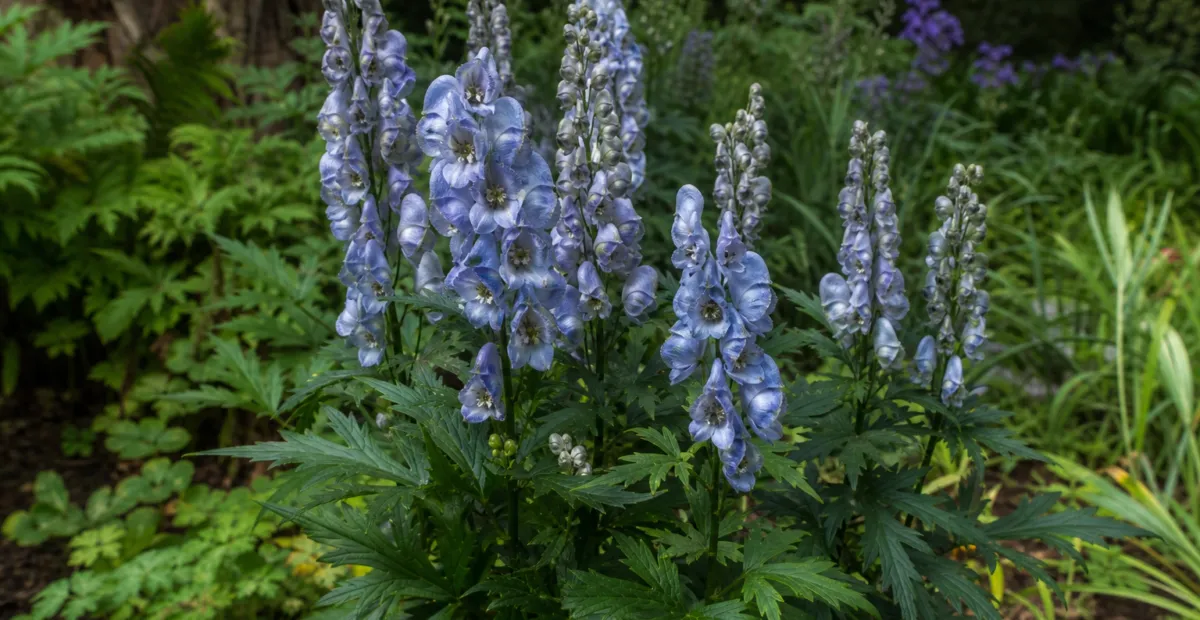
 AI-generated illustration
Monkshood (Aconitum ‘Stainless Steel’) short overview
Aconitum 'Stainless Steel' is an upright, clump-forming monkshood valued for its finely divided foliage and dense spikes of unusual steely-blue, hooded flowers. It performs best in rich, moisture-retentive but well-drained soil with regular watering, in full sun or partial shade. The cultivar suits borders, woodland-style plantings and cutting gardens, but all parts of Aconitum should be treated as highly poisonous if eaten and handled with gloves.
Taxonomic classification
Monkshood (Aconitum ‘Stainless Steel’) care guide
Light and placement
Grow in full sun to partial shade, preferably with protection from the hottest afternoon conditions. East- or north-facing exposures, woodland edges and open shade are useful placements. Full sun often produces sturdier stems, while light shade can help preserve blue color. Excessive shade may cause leaning, sparse growth and reduced flowering; hot, dry exposure can scorch foliage and shorten flower display.
Watering and humidity
Water deeply when the upper inch of soil begins to dry, aiming for steady moisture rather than repeated drought followed by flooding. Check plants more often in sandy soil, containers and hot weather. Reduce watering after foliage dies back, but do not allow container roots to become completely dry. Good drainage is essential because saturated crowns can rot.
Soil and growing medium
Use fertile, humus-rich soil that holds steady moisture without becoming waterlogged. Loam, clay, sand and chalky soils can work if amended with organic matter and given reliable drainage. A slightly acidic to alkaline reaction is tolerated; the key is even moisture and good structure rather than a narrow pH range.
Feeding
Top-dress with compost or well-rotted organic matter in spring. If growth is weak, apply a balanced, slow-release perennial fertilizer at label rate as new shoots emerge. Avoid heavy nitrogen feeding, which can produce soft, leafy growth and increase disease risk. Do not fertilize drought-stressed or waterlogged plants.
Growth and habit
This perennial forms a persistent clump and sends up strong, mostly upright flowering stems from a leafy crown. It generally needs less staking than many tall delphiniums, though exposed sites or rich, soft growth may still benefit from support. Divide only when necessary because disturbed plants can take time to regain full vigor.
Planting and repotting
Plant in spring or early fall while the soil is workable. Set the crown at the same depth as in the nursery pot, firm the soil gently and water thoroughly. Space plants about 18–24 inches apart, allowing airflow around the clump and room for flowering stems. Mulch lightly to conserve moisture, keeping mulch away from the crown.
Container plants are best moved in early spring, before vigorous growth begins. Use a deep, stable container with drainage holes and a fertile moisture-retentive mix. Repot only when crowded, because established monkshood can be slow to re-establish after root disturbance. Wear gloves during all handling.
Propagation and pruning
Propagation
Division is the most practical method and is usually carried out in fall or late winter, but divisions may re-establish slowly. Seed propagation is possible, although seedlings may not come true to the cultivar and germination can be irregular. Wear gloves and avoid contact with sap, roots and plant debris.
Pruning
No routine pruning is required during the growing season. Remove spent flower spikes if desired, using gloves, and cut stems back to the crown after foliage has yellowed or died down. Bag discarded material rather than using it as edible or medicinal material, and clean tools after handling.
Overwintering
Leave the crown in the ground in cold climates; the foliage dies back naturally after frost. Apply a light insulating mulch after the soil cools, especially for newly planted divisions or exposed sites, but keep the crown uncovered enough to prevent rot. Container plants are more vulnerable to freezing and should be sheltered in an unheated protected location.
Uses
A vertical accent for moist perennial borders, woodland edges and informal cottage-style plantings. The flowers can be used as cut material, with gloves and careful hygiene because the plant is toxic. It is also suitable for pollinator-oriented gardens where its safety requirements can be managed. Do not use it for culinary, medicinal or home-remedy purposes.
Appearance
The plant has deeply divided, finely cut leaves and upright stems that may show a subtle gray or blue-green flush. Dense terminal spikes carry distinctive helmet-shaped flowers in a smoky steel-blue range, often with lighter centers. The combination of dissected foliage, rigid vertical stems and hooded blooms distinguishes it from ordinary blue-flowered border perennials.
Flowering
The flowers are hooded, helmet-like structures arranged in dense upright spikes. In U.S. gardens, flowering is generally concentrated from early or midsummer into late summer, with timing influenced by climate, moisture and exposure. Spent flower spikes may be removed to improve appearance and sometimes encourage additional flowering, although rebloom is not guaranteed.
Pollination and visitors
Aconitum flowers are characteristically visited and pollinated mainly by long-tongued bumblebees; honeybees may also visit, although cultivar-specific observations for 'Stainless Steel' are limited. The hooded flower structure provides access to nectar for suitable insects. Pollinator activity is most relevant during the summer bloom period.
Diseases and pests
Diseases
Watch for powdery mildew, fungal stem or crown rots and Verticillium wilt, especially where air circulation is poor or soil remains saturated. Reduce risk by avoiding overhead irrigation, improving drainage and removing affected foliage. Dispose of diseased material rather than composting it, and sanitize tools after cutting infected stems.
Pests
Aphids may cluster on young shoots and flower stems. Inspect new growth regularly and use a strong water spray or an appropriate low-impact treatment when needed. Avoid broad-spectrum insecticides while flowers are open because the plant attracts insect visitors. Good spacing and steady growth reduce stress-related pest problems.
Toxicity and pollen
Aconitum species contain potent diterpenoid alkaloids, including aconitine, and are regarded as highly poisonous. The roots and tubers are especially dangerous, but all parts should be considered hazardous if swallowed. Sap may also irritate or numb skin. Wear gloves, avoid touching the face while handling, wash hands afterward, and never use this cultivar as food or medicine.
- Typical season
- Summer flowering season
- Pollination / pollen
- Insect-dispersed floral pollen
The plant releases pollen from conspicuous flowers, but reliable evidence for clinically important airborne allergy from this exact cultivar is lacking. Because Aconitum pollen is primarily handled by flower-visiting insects, exposure is likely lower than for strongly wind-pollinated plants, but sensitive people should still avoid unnecessary contact with flowers and pollen.
Native habitat
The cultivar is horticultural rather than a wild population, so it has no single confirmed native habitat. Its Aconitum background is associated with cool, moist temperate and montane environments. In cultivation it responds best to fertile soils that remain evenly moist, with protection from intense heat and prolonged drought.
Interesting fact
The cultivar is listed under more than one possible hybrid or species association in horticultural references, but the cultivar name itself is consistently recognized. Its unusual steel-blue flower color is the feature most often highlighted by growers. Like other Aconitum, the flowers have a helmet-like upper sepal that helps accommodate nectar-bearing petals.
Frequently asked questions (FAQ)
The most relevant questions about this plant, with short and direct answers.
🌱Quick care
How do you care for Aconitum 'Stainless Steel'?⌄
Grow Aconitum 'Stainless Steel' in full sun to partial shade, fertile moisture-retentive soil, and provide regular watering. Keep the soil evenly moist without leaving the plant in stagnant water.
Is Aconitum 'Stainless Steel' a perennial?⌄
Yes, Aconitum 'Stainless Steel' is a cold-hardy herbaceous perennial. Its foliage dies back after the growing season and returns from the crown in spring.
How big does Aconitum 'Stainless Steel' get?⌄
Aconitum 'Stainless Steel' typically grows about 3 to 4 feet tall and roughly 1 to 1½ feet wide. Its upright flower spikes make it useful toward the back of a perennial border.
🌤️Environment and placement
What light does Aconitum 'Stainless Steel' need?⌄
Aconitum 'Stainless Steel' grows in full sun to partial shade. In hot summer climates, partial shade and consistently moist soil can help prevent stress and premature foliage decline.
Can Aconitum 'Stainless Steel' grow in full sun?⌄
Yes, it can grow in full sun when the soil remains reliably moist. Afternoon shade may be preferable in areas with hot summers or drought-prone garden conditions.
Does Aconitum 'Stainless Steel' grow in shade?⌄
Aconitum 'Stainless Steel' tolerates partial shade and generally performs well there. Dense, dry shade can reduce flowering and weaken growth, so choose a bright location with adequate moisture.
What soil is best for Aconitum 'Stainless Steel'?⌄
Use fertile, moisture-retentive, well-drained soil enriched with organic matter. Avoid both extremely dry sandy soil and poorly drained areas where water remains around the roots.
What USDA hardiness zone is Aconitum 'Stainless Steel'?⌄
Aconitum 'Stainless Steel' is generally considered hardy in USDA Zones 4 through 8, although exact performance can vary with winter exposure, drainage, and the plant’s source.
Where should I plant Aconitum 'Stainless Steel' in the garden?⌄
Plant it in a moist perennial border, woodland-edge garden, or other site with rich soil and sun to partial shade. Its tall, upright flower spikes are best positioned behind shorter plants.
💧Care and problems
How often should I water Aconitum 'Stainless Steel'?⌄
Water regularly so the soil stays evenly moist, especially during establishment, flowering, and dry summer weather. Water deeply when the surface begins to dry rather than allowing repeated severe wilting.
Does Aconitum 'Stainless Steel' need fertilizer?⌄
It usually needs only moderately fertile soil and does not require heavy feeding. Apply compost or a balanced perennial fertilizer in spring if growth is weak or the soil is poor.
Does Aconitum 'Stainless Steel' need staking?⌄
Staking is sometimes helpful, particularly in exposed locations, rich soil, or partial shade where stems may become taller and less rigid. Plants grown in good light often remain reasonably upright.
What pests affect Aconitum 'Stainless Steel'?⌄
Aphids may occasionally infest Aconitum 'Stainless Steel', especially on tender growth and flower stems. Monitor the plant and use a low-impact control appropriate for the infestation if needed.
What diseases can affect Aconitum 'Stainless Steel'?⌄
Possible problems include fungal stem or crown rot, powdery mildew, and Verticillium wilt. Improve air circulation, avoid waterlogged soil, and remove badly affected plant material while wearing protective gloves.
Why is my Aconitum 'Stainless Steel' not flowering?⌄
Poor flowering is commonly associated with insufficient light, dry soil, young plants, or excessive competition from nearby roots. Give it bright light, consistent moisture, and time to establish before moving it.
🪴Planting and repotting
When is the best time to plant Aconitum 'Stainless Steel'?⌄
Plant Aconitum 'Stainless Steel' in spring or fall when temperatures are moderate and the soil can be worked. Fall planting is suitable where the plant has time to root before the ground freezes.
How far apart should Aconitum 'Stainless Steel' be planted?⌄
Space plants about 18 to 24 inches apart to allow for their mature width and good air circulation. Wider spacing may be useful in humid climates or rich soil where plants grow vigorously.
Can Aconitum 'Stainless Steel' be grown in a container?⌄
It can be grown in a large, stable container with drainage holes, fertile potting mix, and consistent moisture. Choose a deep pot because the plant becomes tall and can be top-heavy when flowering.
Can Aconitum 'Stainless Steel' be transplanted?⌄
Yes, it can be transplanted, but established plants may be slow to re-establish after disturbance. Move it in spring or fall, preserve as much of the root system as possible, and water thoroughly afterward.
✂️Propagation and pruning
How do you propagate Aconitum 'Stainless Steel'?⌄
Propagation is usually done by division, and seed propagation may also be possible. Wear protective gloves during all propagation work because the roots, sap, foliage, and seeds are highly toxic.
Can Aconitum 'Stainless Steel' be divided?⌄
Yes, divide it in fall after the foliage dies back or in late winter before active growth resumes. Handle the crown and roots with gloves, replant divisions promptly, and keep them evenly moist.
Should Aconitum 'Stainless Steel' be cut back?⌄
Cut the dead stems back after flowering or once the foliage has died down. Wear gloves and avoid touching your face while handling the plant, then dispose of trimmings safely.
⚠️Toxicity and safety
Is Aconitum 'Stainless Steel' poisonous?⌄
Yes, Aconitum 'Stainless Steel' is highly toxic if eaten, and all parts of the plant should be treated as poisonous. Keep it away from children, pets, and livestock, and never use it as an edible or medicinal plant.
Can touching Aconitum 'Stainless Steel' make you sick?⌄
Avoid direct skin contact because Aconitum sap may be harmful, especially through cuts or broken skin. Wear waterproof gloves and protective clothing when planting, dividing, pruning, or disposing of the plant.
Is Aconitum 'Stainless Steel' safe for dogs and cats?⌄
No, it should be considered unsafe for dogs and cats because ingestion can cause serious poisoning. Keep pets away from the plant and contact a veterinarian or animal poison service immediately if any part is eaten.
What should I do if someone eats Aconitum 'Stainless Steel'?⌄
Treat ingestion as a medical emergency and contact emergency services or Poison Control in the United States at 1-800-222-1222. Do not induce vomiting unless a medical professional specifically instructs you to do so.
🌸Flowering and special interest
When does Aconitum 'Stainless Steel' bloom?⌄
Aconitum 'Stainless Steel' generally blooms from mid- to late summer, with timing varying by climate and growing conditions. Its flowers are carried on tall, upright spikes above deeply divided foliage.
What color are the flowers of Aconitum 'Stainless Steel'?⌄
The flowers are typically described as pale steely blue to smoky gray-blue, often with darker veining. They have the characteristic hooded form associated with monkshoods.
Can Aconitum 'Stainless Steel' be used as a cut flower?⌄
Yes, the tall flower spikes can be used as cut flowers. Cut stems carefully with gloves, keep the plant material away from children and pets, and wash tools after use.
Does Aconitum 'Stainless Steel' attract pollinators?⌄
Its hooded flowers can provide nectar for some pollinating insects, particularly bumblebees. Because the plant is highly toxic, do not treat pollinator interest as a reason to allow people or pets to handle it.
Similar plants
 Sango Kaku (Acer palmatum ‘Sango Kaku’)Acer palmatum 'Sango Kaku'
 Dissectum (Acer palmatum ‘Dissectum’)Acer palmatum 'Dissectum'
 Mikawa Yatsubusa (Acer palmatum ‘Mikawa Yatsubusa’)Acer palmatum 'Mikawa Yatsubusa'
 Osakazuki (Acer palmatum ‘Osakazuki’)Acer palmatum 'Osakazuki'
 Golden full moon maple (Acer shirasawanum ‘Aureum’)Acer shirasawanum 'Aureum'
 Globosum (Acer platanoides ‘Globosum’)Acer platanoides 'Globosum'