
 Source:
 Mikawa Yatsubusa (Acer palmatum ‘Mikawa Yatsubusa’) short overview
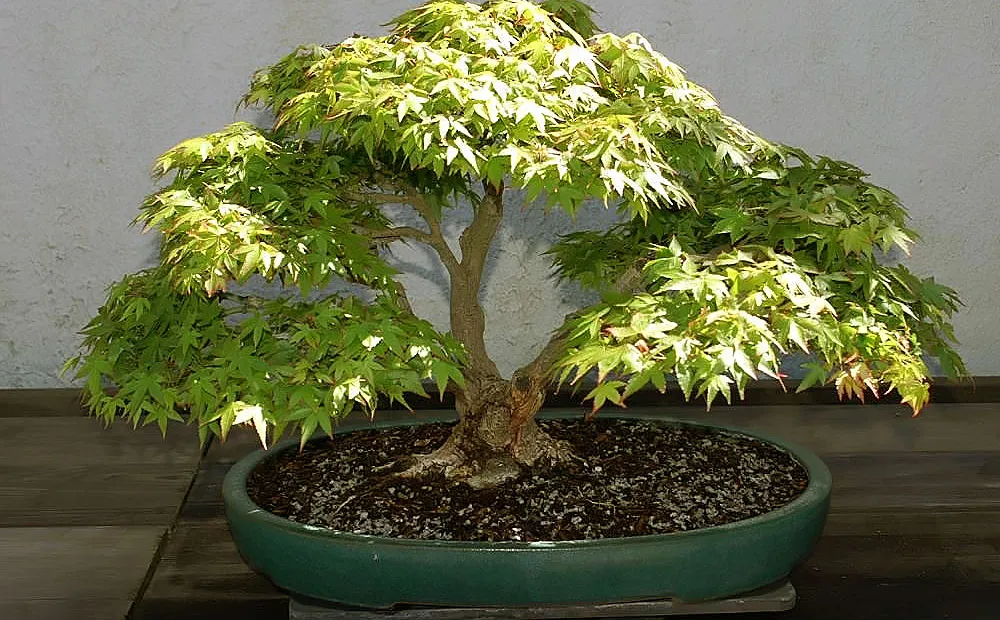
Acer palmatum 'Mikawa Yatsubusa' is a distinctive dwarf Japanese maple valued for its dense, shingle-like layers of overlapping leaves and slow, refined growth. Pale yellow-green spring foliage matures to green, then develops gold, orange, and red tones in fall. Grow it as a sheltered specimen, container plant, or bonsai subject in moist, well-drained soil with morning sun or filtered light in hotter regions.
Taxonomic classification
Mikawa Yatsubusa (Acer palmatum ‘Mikawa Yatsubusa’) care guide
Light and placement
Provide morning sun, dappled light, or partial shade, especially in hot regions; the cultivar can also grow in full sun where soil moisture is dependable and summer heat is moderate. East-facing or protected west-facing positions are useful. Pale, scorched, crisp leaf margins indicate excessive heat, drought, wind, or sun. Weak, stretched growth and reduced color suggest insufficient light.
Watering and humidity
Water deeply when the upper few inches of soil begin to dry, then allow excess water to drain. Keep moisture even from spring through summer, particularly during establishment and in containers. Reduce watering after leaf fall but do not allow container roots to become bone-dry. A 2–3 inch organic mulch layer helps moderate soil temperature and moisture, but it must not touch the trunk.
Soil and growing medium
Use a moisture-retentive but well-drained loam enriched with organic matter. Clay, loam, or sandy soils are suitable if drainage is reliable. Slightly acidic through neutral soil is a practical target, although established plants tolerate a broader pH range. Avoid compacted, waterlogged ground and abrupt root-zone drying.
Feeding
Apply a complete, slow-release fertilizer at label rates in early spring as growth begins, or top-dress with a modest amount of mature compost. Avoid heavy nitrogen feeding, which can produce coarse shoots and increase soft growth. Do not fertilize drought-stressed, freshly transplanted, or late-season plants; stop well before autumn dormancy.
Growth and habit
This is a slow-growing, dense, multi-branched maple with short internodes and a naturally compact habit. The overlapping foliage can become crowded, so maintenance is usually selective thinning rather than routine shearing. Protect the tree from drought, reflected heat, strong wind, and abrupt environmental changes.
Planting and repotting
Plant in fall or early spring while the tree is dormant. Set it with the root flare level with or slightly above the surrounding soil; do not bury the graft union if present. Space about 4 feet from nearby plants for a typical specimen, allowing extra room where a larger mature form is expected. Mulch broadly but keep mulch away from the trunk, and water deeply during the first two growing seasons.
Repot container plants in late winter or early spring before bud break, moving only one pot size larger. Preserve the root flare and avoid removing large portions of the root system at once. Refresh the outer portion of the mix and ensure the container has generous drainage. Container plants require more frequent watering and winter root protection than plants in the ground.
Propagation and pruning
Propagation
The exact cultivar is normally maintained by grafting onto Acer palmatum rootstock. Softwood cuttings can be possible under controlled mist and hormone conditions but are less dependable for home propagation. Seed does not reliably reproduce the named cultivar. Grafting is best left to experienced propagators and is generally performed during active growth or suitable dormant-season windows according to the method used.
Pruning
Prune selectively during dormancy or during a dry period in summer, removing dead, crossing, damaged, or poorly placed branches. Preserve the characteristic layered structure and avoid shearing the canopy. Do not remove large limbs unnecessarily, and monitor the graft union for shoots from the rootstock; remove those shoots at their origin.
Overwintering
In the ground, protect young plants from drying winter wind and repeated freeze-thaw cycles with mulch over the root zone. Container plants are more vulnerable because roots experience colder temperatures; move pots to a sheltered, unheated location or insulate the container while maintaining modest moisture. Delay early spring exposure if buds are swelling during a forecast freeze.
Uses
Use as a specimen tree in a small garden, woodland border, Japanese-style planting, patio container, or bonsai collection. Its layered canopy and exceptional autumn color provide ornamental value even where flowers are not the main feature. It is not recommended as a food or medicinal plant.
Appearance
The cultivar has opposite, palmately lobed leaves, usually with five to nine lobes and serrated margins. Leaves overlap tightly along the branches, producing layered tufts that can look almost shingled or contorted. New foliage is yellow-green, summer foliage becomes green, and autumn color can progress through gold, orange, red, and purple. Young bark is green to light brown.
Flowering
Small reddish-purple to greenish flowers appear in hanging clusters in spring, commonly around May and June in the United States. They are visually secondary to the foliage and are followed by paired winged samaras that may flush red as they mature.
Pollination and visitors
The small spring flowers may be visited by moths and other insects, but this cultivar is primarily grown for foliage and is not strongly documented as a major pollinator plant. Avoid describing it as highly pollinator-supportive solely because it flowers.
Diseases and pests
Diseases
Reduce stress by maintaining even soil moisture, avoiding overhead irrigation, and providing good air circulation. Leaf scorch is associated with heat, drought, wind, or excessive exposure rather than a single infectious disease. Anthracnose and other foliar diseases may occur during wet weather; remove badly affected fallen leaves and avoid unnecessary pruning during damp conditions.
Pests
Aphids, scale, leafhoppers, leafrollers, and chewing insects may occur. Inspect new growth and the undersides of leaves, especially on stressed container plants. Encourage natural predators, wash off light infestations with water, and use targeted horticultural products only when needed and according to the label. Remove rootstock shoots below a graft because they can outgrow the cultivar.
Toxicity and pollen
No authoritative evidence located that identifies Acer palmatum or this cultivar as a significant poisonous plant for people, dogs, or cats. Normal gardening hygiene remains appropriate: avoid deliberate consumption, wash hands after handling, and contact a medical or veterinary professional if an unusual exposure causes symptoms.
- Typical season
- Spring flowering period
- Pollination / pollen
- Low-volume, mainly insect-associated tree pollen
Japanese maple flowers release relatively little airborne pollen compared with strongly wind-pollinated trees because insects are important flower visitors. This does not guarantee zero allergy risk, and sensitive people may still react to seasonal tree pollen or nearby species. The cultivar-specific airborne-allergy evidence is limited.
Native habitat
The species is native to Japan and parts of Korea and naturally occurs in temperate woodland and forest-edge settings. It favors fertile, moist but well-drained soils and benefits from some protection from intense afternoon heat, drying wind, and late spring frost.
Interesting fact
The cultivar’s tightly stacked leaves create a distinctive layered or shingled appearance along the branches. Its name is associated with a small cluster of three rivers. The compact form is especially valued for bonsai and small-space gardens. Fall color may range through yellow, gold, orange, red, and purple depending on conditions.
Frequently asked questions (FAQ)
The most relevant questions about this plant, with short and direct answers.
🌱Quick care
What is Acer palmatum 'Mikawa Yatsubusa' commonly called?⌄
Acer palmatum 'Mikawa Yatsubusa' is commonly called Mikawa Yatsubusa Japanese maple. It is a compact, slow-growing Japanese maple cultivar valued for its layered, shingle-like foliage.
How big does Acer palmatum 'Mikawa Yatsubusa' get?⌄
Acer palmatum 'Mikawa Yatsubusa' typically grows about 4–6 feet tall and 4 feet wide in the landscape. Growth is slow, and final size varies with climate, pruning, and whether it is grown in a container.
Is Acer palmatum 'Mikawa Yatsubusa' a good small-space tree?⌄
Yes, Acer palmatum 'Mikawa Yatsubusa' is well suited to small gardens, courtyards, patios, and containers. Its compact, densely branched habit gives it a naturally sculptural appearance.
🌤️Environment and placement
How much sun does Acer palmatum 'Mikawa Yatsubusa' need?⌄
Give Acer palmatum 'Mikawa Yatsubusa' morning sun or partial shade for the best balance of growth and foliage quality. It can tolerate more sun when the soil stays evenly moist and the site is not excessively hot or windy.
Can Acer palmatum 'Mikawa Yatsubusa' grow in full sun?⌄
Acer palmatum 'Mikawa Yatsubusa' can tolerate full sun in suitable climates, especially with reliable moisture. In hot areas, afternoon shade is safer because intense exposure can cause leaf scorch.
What USDA hardiness zones are suitable for Acer palmatum 'Mikawa Yatsubusa'?⌄
Acer palmatum 'Mikawa Yatsubusa' is generally suitable for USDA Zones 5–9, although local exposure matters. Protect it from drying winds, late spring freezes, and severe winter temperature swings in colder sites.
What soil is best for Acer palmatum 'Mikawa Yatsubusa'?⌄
Use moist, well-drained loam enriched with organic matter for Acer palmatum 'Mikawa Yatsubusa'. Slightly acidic to neutral soil is suitable, but waterlogged ground should be avoided.
Where should I plant Acer palmatum 'Mikawa Yatsubusa' for protection?⌄
Plant Acer palmatum 'Mikawa Yatsubusa' in a sheltered location protected from strong wind and harsh afternoon sun. A position with morning light, afternoon shade, and consistent soil moisture is often ideal.
💧Care and problems
How often should I water Acer palmatum 'Mikawa Yatsubusa'?⌄
Water Acer palmatum 'Mikawa Yatsubusa' whenever the soil surface begins to dry, keeping the root zone evenly moist but not soggy. Container plants and trees in hot, windy weather may need more frequent watering.
Why are the leaves of Acer palmatum 'Mikawa Yatsubusa' turning brown?⌄
Brown leaf edges on Acer palmatum 'Mikawa Yatsubusa' are commonly associated with drought, heat, wind, or excessive sun exposure. Improve moisture consistency and provide afternoon protection, but avoid keeping the soil waterlogged.
Does Acer palmatum 'Mikawa Yatsubusa' need fertilizer?⌄
Acer palmatum 'Mikawa Yatsubusa' usually needs only light fertilization when growing in reasonably fertile soil. Apply a balanced, slow-release fertilizer in spring if growth is weak, and avoid heavy nitrogen applications that can produce soft growth.
What pests affect Acer palmatum 'Mikawa Yatsubusa'?⌄
Acer palmatum 'Mikawa Yatsubusa' may be affected by aphids, caterpillars, gall mites, or scale insects. Inspect new growth and the undersides of leaves, and address infestations early with an appropriate treatment.
What diseases can affect Acer palmatum 'Mikawa Yatsubusa'?⌄
Potential problems include leaf scorch, Verticillium wilt, and other stress-related disorders. Good drainage, careful watering, clean pruning practices, and avoiding root or trunk injury help reduce risk.
🪴Planting and repotting
When is the best time to plant Acer palmatum 'Mikawa Yatsubusa'?⌄
Plant Acer palmatum 'Mikawa Yatsubusa' in spring after the ground becomes workable or in fall before the soil freezes. Avoid planting during extreme summer heat or while the tree is actively drought-stressed.
Can Acer palmatum 'Mikawa Yatsubusa' be grown in a container?⌄
Yes, Acer palmatum 'Mikawa Yatsubusa' is particularly well suited to container growing. Use a pot with drainage holes, a well-drained organic potting mix, and monitor moisture closely during hot or dry weather.
How should I protect Acer palmatum 'Mikawa Yatsubusa' in a container over winter?⌄
Move a container-grown Acer palmatum 'Mikawa Yatsubusa' to a sheltered location and protect the pot from repeated freezing and thawing. Keep the dormant roots from becoming completely dry, but do not keep the soil saturated.
Can Acer palmatum 'Mikawa Yatsubusa' be used for bonsai?⌄
Yes, Acer palmatum 'Mikawa Yatsubusa' is widely regarded as a strong bonsai subject because of its compact growth, short internodes, dense branching, and naturally layered foliage. Bonsai specimens still require careful watering, root management, and protection from extreme heat.
✂️Propagation and pruning
How is Acer palmatum 'Mikawa Yatsubusa' propagated?⌄
Acer palmatum 'Mikawa Yatsubusa' is commonly propagated by grafting, layering, or selected cuttings. Propagation from seed will not reliably reproduce the named cultivar's exact foliage and growth habit.
Will seeds from Acer palmatum 'Mikawa Yatsubusa' grow true to type?⌄
No, seeds from Acer palmatum 'Mikawa Yatsubusa' should not be expected to produce exact copies of the parent plant. Seedlings may show some similar traits, but named-cultivar characteristics are preserved more reliably through vegetative propagation.
When should Acer palmatum 'Mikawa Yatsubusa' be pruned?⌄
Prune Acer palmatum 'Mikawa Yatsubusa' in late fall through winter while it is dormant, avoiding the coldest periods. Remove dead, damaged, crossing, or poorly placed branches, and avoid heavy pruning because this cultivar is naturally slow growing.
Does Acer palmatum 'Mikawa Yatsubusa' need regular shaping?⌄
Acer palmatum 'Mikawa Yatsubusa' usually needs only light corrective pruning because its layered, compact structure is a major ornamental feature. Remove unwanted shoots selectively rather than shearing the plant into a formal shape.
⚠️Toxicity and safety
Is Acer palmatum 'Mikawa Yatsubusa' toxic to people or pets?⌄
No specific toxicity is documented for Acer palmatum 'Mikawa Yatsubusa'. Even so, ornamental plants should not be eaten, and children or pets should be prevented from chewing plant material.
🌸Flowering and special interest
Does Acer palmatum 'Mikawa Yatsubusa' flower?⌄
Yes, Acer palmatum 'Mikawa Yatsubusa' produces small, inconspicuous flowers in spring. Its primary ornamental features are the dense layered foliage, compact form, and yellow, orange, and red fall color.
What color are the leaves of Acer palmatum 'Mikawa Yatsubusa' in fall?⌄
The foliage of Acer palmatum 'Mikawa Yatsubusa' can turn yellow, gold, orange, and red in fall. Color intensity depends on sunlight, temperature, moisture, and the length of the autumn season.
What makes Acer palmatum 'Mikawa Yatsubusa' distinctive?⌄
Acer palmatum 'Mikawa Yatsubusa' is distinctive for its closely layered leaves, dense branching, short internodes, and almost shingled or contorted appearance. Its compact form also makes it useful for containers and bonsai.
Similar plants
 Tatar Maple (Acer tataricum) care guideAcer tataricum
 Silver maple (Acer saccharinum) care guideAcer saccharinum
 Field maple (Acer campestre) care guideAcer campestre
 Crimson Queen (Acer palmatum ‘Crimson Queen’)Acer palmatum 'Crimson Queen'
 Aconitifolium (Acer japonicum ‘Aconitifolium’)Acer japonicum 'Aconitifolium'
 Atropurpureum (Acer palmatum ‘Atropurpureum’)Acer palmatum 'Atropurpureum'