
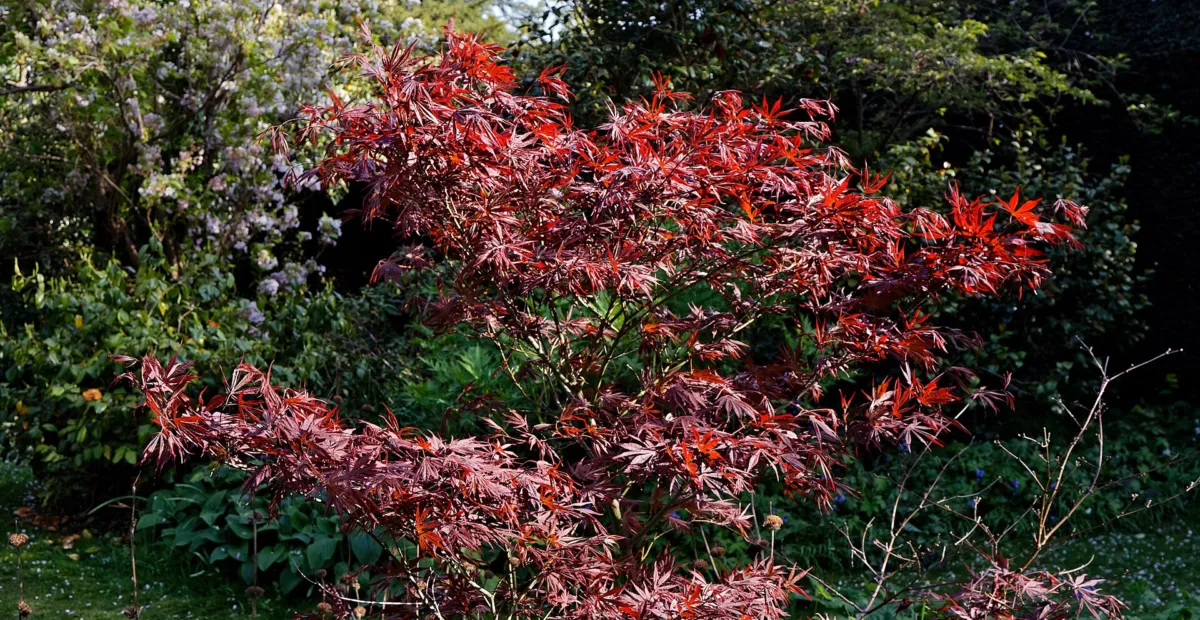
 Source:
 Atropurpureum (Acer palmatum ‘Atropurpureum’) short overview
Acer palmatum 'Atropurpureum' is a red-leaved Japanese maple selected for its rich wine-red to bronze palmate foliage and graceful, upright small-tree habit. The name can cover more than one clone or seed-grown line in horticultural trade, so color, size and leaf form may vary. In U.S. gardens it performs best in moist, well-drained, slightly acidic soil with morning sun or filtered light, shelter from drying wind, and protection from intense afternoon heat.
Taxonomic classification
Atropurpureum (Acer palmatum ‘Atropurpureum’) care guide
Light and placement
Provide morning sun, bright filtered light or partial shade, especially in hot-summer regions. An east-facing or lightly shaded woodland-edge position is usually safer than a fully exposed south- or west-facing site. Too much sun, heat, wind or drought can bleach and scorch leaves; too little light may reduce red coloration and produce a more open crown.
Watering and humidity
Water deeply when the upper inch of soil begins to dry, keeping the root zone evenly moist but not saturated. Newly planted trees need regular irrigation through the first two growing seasons; established plants still require supplemental water during heat, drought and windy weather. Mulch helps moderate soil temperature and evaporation, but do not rely on overhead misting.
Soil and growing medium
Use a loose, moisture-retentive but sharply drained loam enriched with organic matter. Slightly acidic to neutral soil is suitable; avoid persistently wet clay, compacted ground and strongly alkaline conditions, which can reduce vigor and contribute to chlorosis. Mulch broadly over the root zone without touching the trunk.
Feeding
Feed in early spring as growth begins with a complete slow-release fertilizer at the label rate, or apply a thin layer of finished compost. Avoid high-nitrogen feeding, midsummer fertilization and feeding drought-stressed or newly transplanted plants. Stop fertilizing by late summer so tender growth can harden before winter.
Growth and habit
Usually develops a picturesque, multi-stemmed or low-branched form with a rounded to vase-shaped crown. Growth is often slow to moderate, and the final habit can differ substantially among plants sold under this name. Avoid trying to force a new basic habit with severe cuts; guide structure gradually while young.
Planting and repotting
Plant in spring or fall when the soil is workable. Set the root flare level with or slightly above the surrounding soil; do not bury the trunk. Water deeply after planting and mulch the root zone 2–3 inches deep, keeping mulch away from the bark. Allow room for a broad, layered crown and shelter the site from drying winds.
Repot container plants in early spring before bud break, or immediately after leaf drop. Move up only one pot size, retain as much of the fine root system as possible, and use a free-draining woody-plant mix. Avoid repeated severe root pruning, especially with older specimens.
Propagation and pruning
Propagation
Commercial plants are commonly grafted; softwood cuttings may be attempted in early summer under high humidity, but rooting is variable. Seed does not come true to the named cultivar and is useful only for species-level plants or breeding. Propagation is best left to experienced growers.
Pruning
Prune lightly in late winter or during the dormant season, removing dead, crossing or poorly placed branches. Japanese maples generally need little routine cutting. Avoid heavy spring pruning when sap is flowing and avoid topping, which can ruin the natural layered structure and encourage weak regrowth.
Overwintering
In Zones 5–6, plant in a sheltered location and protect young trees from drying winter winds and rapid freeze-thaw cycles. Apply mulch over the root zone after the ground cools, without piling it against the trunk. Container plants have less root insulation than in-ground trees and should be overwintered in a protected, unheated location or insulated carefully.
Uses
Use as a specimen tree, foundation accent, woodland-edge planting, patio container plant or bonsai subject. Its strongest ornamental value is the red to wine-colored foliage and seasonal fall color. It is not recommended as a food or medicinal plant, and seed-grown plants will not reliably reproduce the named cultivar.
Appearance
Leaves are opposite, palmate and usually five-lobed, with rich reddish to purple coloration that may bronze or green somewhat in summer. Fine branches and smooth gray-brown bark contribute winter interest. Plants are typically upright, low-branched and layered, but the trade name encompasses variable forms and leaf proportions.
Flowering
Small reddish to purple flowers appear with or just after the emerging leaves in spring. They occur in branched clusters and are followed by paired winged samaras that mature later in the season. Flowers are ornamental only at close range and are usually secondary to the foliage display.
Pollination and visitors
The small spring flowers provide limited nectar and pollen resources for bees and other small insects. Documentation supports general insect visitation rather than a consistently recorded specialist pollinator for this exact cultivar.
Acer palmatum 'Atropurpureum' photos
Click any photo for a larger view. Source, author and license are shown separately.
Diseases and pests
Diseases
Watch for Verticillium wilt, anthracnose, leaf scorch and wood decay. Improve drainage, avoid root injury, remove diseased wood promptly, and disinfect pruning tools between cuts. Leaf scorch is often caused by drought, hot sun, wind or damaged roots rather than a pathogen.
Pests
Aphids, scale insects, caterpillars, gall mites and spider mites may occur. Inspect new growth and leaf undersides, especially during hot, dry weather. Encourage natural enemies, wash off light infestations, and use targeted horticultural oil or insecticidal soap only when necessary and according to the product label.
Related diseases and pests
Only Plant Doctor profiles whose host data indicate this plant may be affected are shown here.
 Environmental stressFlooding injury
 PestLeopard mothZeuzera pyrina
 DiseaseXylella fastidiosa bacterial diseasesXylella fastidiosa
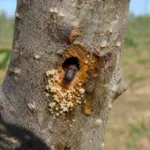 PestEuropean shot-hole borerXyleborus dispar (Fabricius)
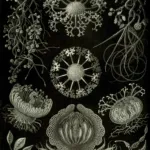 DiseaseMaple powdery mildewSawadaea bicornis
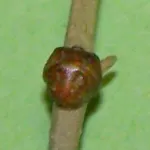 PestBlack scaleSaissetia oleae
 DiseaseMaple Tar Spot (Giant Tar Spot)Rhytisma acerinum
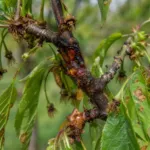 DiseaseBacterial blight and cankerPseudomonas syringae pv. syringae
Toxicity and pollen
No authoritative source located in this review identifies Acer palmatum 'Atropurpureum' as toxic to people or common household pets. That absence is not proof of complete safety, and eating large quantities of any ornamental plant can cause gastrointestinal upset. Prevent children and animals from consuming plant material and seek professional advice after significant ingestion.
- Typical season
- April–May
- Pollination / pollen
- Insect-carried pollen; limited airborne dispersal
This is an insect-pollinated deciduous maple with small spring flowers, so airborne pollen exposure is generally limited compared with strongly wind-pollinated trees. Sensitive individuals may still react to seasonal pollen, and local exposure depends on plant abundance, weather and flowering conditions.
Native habitat
The species is associated with woodland margins and understory conditions in Japan, Korea and parts of China. It favors protected sites, evenly moist soils, organic matter and good drainage. Cultivated red-leaved forms retain the species' preference for shelter even when grown in open gardens.
Interesting fact
The cultivar name is not consistently applied in commerce and may represent several red-leaved selections.
Purple-leaved forms color best with good light but can scorch in hot exposure.
The winged fruits are paired samaras typical of maples.
The species has been cultivated in Japan for centuries.
The foliage may shift toward bronze, green, orange or scarlet during the season.
Frequently asked questions (FAQ)
The most relevant questions about this plant, with short and direct answers.
🌱Quick care
How do you care for Acer palmatum 'Atropurpureum'?⌄
Give Acer palmatum 'Atropurpureum' morning sun or filtered light, evenly moist well-drained soil, and shelter from drying wind and intense afternoon sun. Mulch around the root zone, but keep mulch away from the trunk.
How much sun does Acer palmatum 'Atropurpureum' need?⌄
Acer palmatum 'Atropurpureum' grows well in morning sun or partial shade, with protection from harsh afternoon exposure. It can tolerate more sun in cooler USDA Zones 5–6 if the soil stays reliably moist.
How often should you water Acer palmatum 'Atropurpureum'?⌄
Water Acer palmatum 'Atropurpureum' whenever the upper few inches of soil begin to dry, providing a deep soaking rather than frequent light watering. Increase watering during hot, dry weather, especially while the tree is establishing.
What USDA hardiness zones are suitable for Acer palmatum 'Atropurpureum'?⌄
Acer palmatum 'Atropurpureum' is generally suitable for USDA Zones 5–8. In Zones 7–8, afternoon shade and dependable moisture help reduce summer leaf scorch.
How big does Acer palmatum 'Atropurpureum' get?⌄
Acer palmatum 'Atropurpureum' can mature at roughly 15–25 feet tall and wide, although size varies with climate, rootstock, and growing conditions. It is typically a slow-growing small tree.
🌤️Environment and placement
Where should I plant Acer palmatum 'Atropurpureum'?⌄
Plant Acer palmatum 'Atropurpureum' in a sheltered location with morning sun, filtered light, or partial shade and protection from strong wind. Choose a site with enough room for its mature canopy instead of relying on heavy pruning to control size.
Can Acer palmatum 'Atropurpureum' grow in full sun?⌄
Acer palmatum 'Atropurpureum' can grow in full sun in cooler parts of its range if its roots remain evenly moist. In hot or dry areas, full afternoon sun commonly causes leaf scorch and faded summer color.
Can Acer palmatum 'Atropurpureum' grow in clay soil?⌄
Acer palmatum 'Atropurpureum' can grow in clay soil if it drains well and does not remain saturated. Improve structure with organic matter and avoid planting where water collects after rain.
What type of soil does Acer palmatum 'Atropurpureum' prefer?⌄
Acer palmatum 'Atropurpureum' prefers moist, well-drained loam enriched with organic matter and a slightly acidic to neutral reaction. Good drainage is more important than achieving a precise soil pH.
Can Acer palmatum 'Atropurpureum' grow in a container?⌄
Acer palmatum 'Atropurpureum' can be grown in a large container with drainage holes and a well-drained, moisture-retentive potting mix. Container roots are more vulnerable to heat, drought, and winter cold than roots planted in the ground.
💧Care and problems
Why are the leaves of Acer palmatum 'Atropurpureum' turning brown?⌄
Brown leaf margins or patches on Acer palmatum 'Atropurpureum' are most often caused by heat, dry soil, wind, or excessive sun exposure. Keep the soil evenly moist and provide afternoon shade, but do not leave the roots waterlogged.
Why is Acer palmatum 'Atropurpureum' losing its red color?⌄
The foliage of Acer palmatum 'Atropurpureum' may fade toward purple-green or green during summer heat, especially in strong sun. This seasonal color change is normal, while severe fading can be worsened by heat stress or insufficient moisture.
Why is Acer palmatum 'Atropurpureum' wilting even though the soil is wet?⌄
Wilting despite wet soil may indicate root stress from poor drainage, heat damage, or root disease rather than a lack of water. Check that excess water drains freely and avoid repeated irrigation until the soil surface begins to dry.
What pests affect Acer palmatum 'Atropurpureum'?⌄
Aphids, scale insects, and occasionally borers can affect Acer palmatum 'Atropurpureum'. Healthy trees usually tolerate minor infestations, but persistent pests should be identified and treated according to the specific insect.
Is Acer palmatum 'Atropurpureum' susceptible to disease?⌄
Acer palmatum 'Atropurpureum' has no major routine disease problem, but it can suffer from root problems in poorly drained soil and may be susceptible to Verticillium wilt. Avoid waterlogged sites and remove severely affected plant material.
🪴Planting and repotting
When is the best time to plant Acer palmatum 'Atropurpureum'?⌄
Plant Acer palmatum 'Atropurpureum' in spring after severe freezes or in early fall while the soil is still workable. Avoid planting during extreme summer heat or when the ground is frozen.
How do you plant Acer palmatum 'Atropurpureum' in the ground?⌄
Plant Acer palmatum 'Atropurpureum' with the root flare at or slightly above soil level in a wide, well-drained hole. Backfill with native soil, water deeply, and apply a few inches of mulch without touching the trunk.
How do you transplant Acer palmatum 'Atropurpureum'?⌄
Transplant Acer palmatum 'Atropurpureum' during dormancy or mild weather, preserving as much of the root ball as possible. Water consistently after transplanting and protect the tree from strong sun and wind while it reestablishes.
Can Acer palmatum 'Atropurpureum' be grown as a bonsai?⌄
Acer palmatum 'Atropurpureum' can be grown as a bonsai because it responds to container culture and structural training. Bonsai specimens require careful root-zone moisture management, protection from extreme heat, and winter protection appropriate to the local climate.
✂️Propagation and pruning
How is Acer palmatum 'Atropurpureum' propagated?⌄
Acer palmatum 'Atropurpureum' is commonly propagated by grafting, while softwood cuttings may work under controlled conditions. Seed will not reliably reproduce the named cultivar’s foliage color and growth characteristics.
Can you grow Acer palmatum 'Atropurpureum' from seed?⌄
You can grow Acer palmatum from seed, but seedlings may not retain the distinctive traits of Acer palmatum 'Atropurpureum'. Use grafting or cuttings when preserving the named cultivar is important.
Can Acer palmatum 'Atropurpureum' be propagated from cuttings?⌄
Acer palmatum 'Atropurpureum' can sometimes be propagated from softwood cuttings, but rooting is less dependable than grafting. Use healthy, current-season shoots and controlled humidity for the best chance of success.
When should you prune Acer palmatum 'Atropurpureum'?⌄
Prune Acer palmatum 'Atropurpureum' during winter dormancy or another period when sap flow is low. Avoid unnecessary spring pruning because maples can bleed sap heavily, and avoid removing large amounts of growth at once.
How do you prune Acer palmatum 'Atropurpureum'?⌄
Prune Acer palmatum 'Atropurpureum' mainly to remove dead, crossing, weak, or poorly attached branches and to improve structure. Make clean cuts just outside the branch collar and preserve its natural shape.
⚠️Toxicity and safety
Is Acer palmatum 'Atropurpureum' poisonous to dogs or cats?⌄
No specific toxicity is documented for Acer palmatum 'Atropurpureum', but it should not be deliberately eaten by people or pets. Contact a veterinarian or poison-control service if a large amount is consumed or symptoms develop.
Is Acer palmatum 'Atropurpureum' safe to plant near children?⌄
Acer palmatum 'Atropurpureum' is generally suitable for family landscapes because no specific toxicity is documented. Still, discourage children from eating leaves, bark, seeds, or any other plant material.
🌸Flowering and special interest
Does Acer palmatum 'Atropurpureum' flower?⌄
Acer palmatum 'Atropurpureum' produces small reddish flowers in spring, but the blooms are not usually its main ornamental feature. Its colored foliage, branching structure, and fall display provide most of its landscape interest.
What color are the leaves of Acer palmatum 'Atropurpureum'?⌄
The leaves of Acer palmatum 'Atropurpureum' emerge red to purple-red and may shift toward bronze, purple-green, or green during summer heat. Fall color can become red again, depending on weather and growing conditions.
Does Acer palmatum 'Atropurpureum' lose its leaves in winter?⌄
Yes, Acer palmatum 'Atropurpureum' is deciduous and loses its leaves in fall or early winter. Its bare branching and bark provide limited winter interest until new foliage emerges in spring.
Similar plants
 Red maple (Acer rubrum) care guideAcer rubrum
 Sycamore maple (Acer pseudoplatanus) care guideAcer pseudoplatanus
 Tatar Maple (Acer tataricum) care guideAcer tataricum
 Acer palmatum care guideAcer palmatum
 Paperbark Maple (Acer griseum) care guideAcer griseum
 Red Snakebark Maple (Acer capillipes) care guideAcer capillipes