
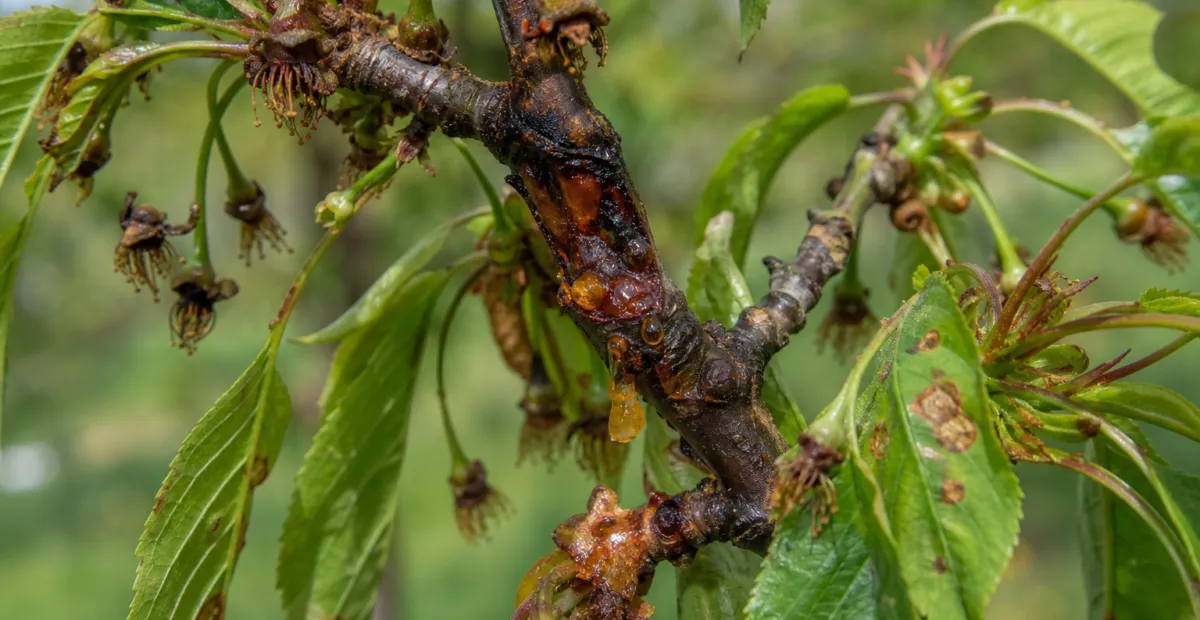
Bacterial blight and canker
Pseudomonas syringae pv. syringaeBacterial blight and canker overview
Pseudomonas syringae pv. syringae is a bacterial pathogen with a broad and variable host range. In the United States it can cause leaf spots, blossom blast, shoot dieback, bacterial cankers and gummosis on cherries, peaches, lilacs, pears, beans and other plants. Disease is most likely when susceptible young tissue is wet, cool and wounded. Diagnosis should consider the host, symptom pattern and look-alike diseases such as fire blight.
Typical conditions
Overview
This disease is commonly called bacterial blight, bacterial canker, blossom blast or bacterial brown spot, depending on the host and affected tissue. The same pathovar can produce different syndromes on woody ornamentals, stone fruits, pears, beans and other crops.
Symptoms can resemble fire blight, fungal leaf spots, frost injury, sunscald or other bacterial diseases. A laboratory diagnosis is advisable when plant value, crop loss or regulatory decisions matter. Pathogen detection from a lesion does not by itself prove that the bacterium caused every symptom, because Pseudomonas syringae may also live on plant surfaces without producing disease.
Symptoms and identification
- Leaves: small water-soaked or brown-to-black spots, often with a diffuse yellow halo; lesions may merge, become vein-limited, or drop out and leave ragged or shot-holed foliage.
- Flowers and buds: brown, limp flowers; blackened buds; blossom blast before flowers open.
- Shoots: black streaks, one-sided blight, wilted shoot tips and dieback when lesions girdle succulent growth.
- Woody tissue: dark, sunken or rough cankers, branch dieback and sometimes reddish-brown discoloration beneath the bark. Stone fruits may produce amber or reddish-brown gum; sour sap can occur in some trees.
- Fruit and pods: sunken brown spots, surface lesions or reduced quality, depending on host and strain.
Symptoms are often most conspicuous in spring or after prolonged cool, wet weather. Fire blight on apple, pear and related hosts can look similar, but laboratory or expert diagnosis may be needed.
Causes and spread
Spread is promoted by splashing rain, overhead irrigation, wet tools, hands, pruning equipment, infected propagation material and movement through crowded plantings. The bacterium enters through wounds and natural openings, including stomata, lenticels, flower structures and leaf scars. Frost injury, insect feeding, pruning, transplant stress and excessive succulent growth can increase susceptibility.
Risk is highest when susceptible tissue remains wet during cool weather. Dry, warm conditions usually slow disease development, although the pathogen may remain on plant surfaces and recur when favorable conditions return.
Life cycle and persistence
The bacterium can survive on infected buds, cankers, plant debris, weeds, dormant tissue and symptomless plant surfaces. It may persist as an epiphyte without immediately causing disease. During wet periods it is moved by rain splash, irrigation, tools, hands and contact between wet plants.
Infection occurs through natural openings such as stomata, lenticels and flower structures, or through wounds caused by frost, pruning, insects and mechanical injury. Once inside susceptible tissue, the bacterium multiplies and produces necrotic lesions, blossom blight or cankers. In woody plants, cankers and infected buds can carry the pathogen between seasons.
Treatment and control
There is no dependable in-season cure for bacteria already established in a canker. Remove isolated infected shoots or branches below visible disease during dry weather, then disinfect tools between cuts. Remove severely diseased annual plants or nursery plants rather than attempting to rehabilitate them, especially where neighboring plants are at risk.
Correct irrigation, crowding, drainage, frost-injury and nutrition problems. Protect remaining healthy tissue from rain splash and handling while wet. On valuable trees, retain a qualified arborist or plant diagnostic laboratory when cankers occur on the trunk, near the crown, or on a major scaffold branch.
Preventive bactericides may have a role in selected crops and situations, but timing is critical and control is inconsistent. They should be considered only after confirming the host-specific diagnosis and checking the current US product label.
Low-impact and biological control
No organic treatment reliably eliminates bacteria established in a woody canker. Organic and low-input management therefore emphasizes prevention and sanitation:
- Remove badly infected branches or shoots several inches below visible cankers, cutting back to healthy wood when practical.
- Prune only during dry weather; disinfect tools between cuts and avoid moving from diseased to healthy plants.
- Remove and discard diseased leaves, flowers and fallen debris. Do not place symptomatic material in home compost unless the composting system reliably reaches pathogen-inactivating temperatures.
- Use drip or soil-level irrigation, improve spacing and airflow, and avoid handling plants while foliage is wet.
- Start with clean seed, certified or reputable nursery stock, and disease-free cuttings or plugs.
- Maintain balanced nutrition and avoid excessive nitrogen that produces highly susceptible succulent growth.
- Where permitted and appropriate for the crop, a labeled organic copper product may provide preventive—not curative—suppression; check the current US label and observe phytotoxicity precautions.
Prevention
- Choose locally adapted, healthy plants and avoid stock with dark cankers, dead buds, unexplained dieback or active gumming.
- Improve drainage and air circulation; space plants so foliage dries quickly.
- Use drip, soaker or carefully directed soil-level irrigation instead of overhead watering.
- Prune on dry days with clean, sharp tools. Avoid unnecessary pruning in wet fall or spring conditions and protect pruning wounds from contamination.
- Prevent frost and mechanical injury where feasible, and manage insects that create entry wounds.
- Do not overfertilize with nitrogen. Maintain steady plant health without forcing soft, late-season growth.
- In vegetable and nursery production, use clean seed or transplants, sanitize benches and containers, remove symptomatic plants promptly and avoid working plants when wet.
- For recurring orchard or landscape problems, identify the affected host and disease syndrome before selecting resistant cultivars or any preventive product.
Interesting facts
- Pseudomonas syringae is not one uniform disease syndrome: symptoms depend strongly on the plant host, strain, tissue and weather.
- Some strains produce ice-nucleation activity that can promote frost injury at comparatively mild subfreezing temperatures, although frost injury and bacterial infection are not interchangeable diagnoses.
- The bacterium may be present on apparently healthy plants, so removing visible symptoms and reducing wetness are both important.
- Young, succulent tissue is generally more vulnerable than mature tissue.
Use only bactericides or other pesticide products legally authorized and currently labeled in the United States for the specific crop, site and disease. Follow the current label exactly, including rates, timing, protective equipment, re-entry and preharvest requirements. Copper products may provide preventive suppression in some crops, but performance is variable, resistance and phytotoxicity are possible, and no product reliably cures an established canker. Do not apply antibiotics or off-label products in home gardens or commercial plantings.
Affected plants
The plants below are linked to this problem by structured host-plant data. The list updates automatically as new plant profiles are added.
 Field maple (Acer campestre) care guideAcer campestre
 Paperbark Maple (Acer griseum) care guideAcer griseum
 Downy Japanese Maple (Acer japonicum) care guideAcer japonicum
 Boxelder (Acer negundo) care guideAcer negundo
 Acer palmatum care guideAcer palmatum
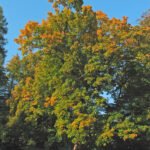 He Norway maple (Acer platanoides) care guideAcer platanoides
 Sycamore maple (Acer pseudoplatanus) care guideAcer pseudoplatanus
 Red maple (Acer rubrum) care guideAcer rubrum
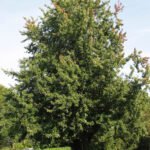 Silver maple (Acer saccharinum) care guideAcer saccharinum
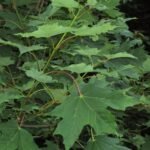 Sugar maple (Acer saccharum) care guideAcer saccharum
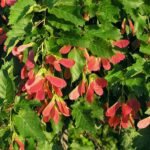 Tatar Maple (Acer tataricum) care guideAcer tataricum
 Amur Maple (Acer tataricum ginnala) care guideAcer tataricum ginnala