
Brown Rot of Stone Fruit
Monilinia fructicolaBrown Rot of Stone Fruit overview
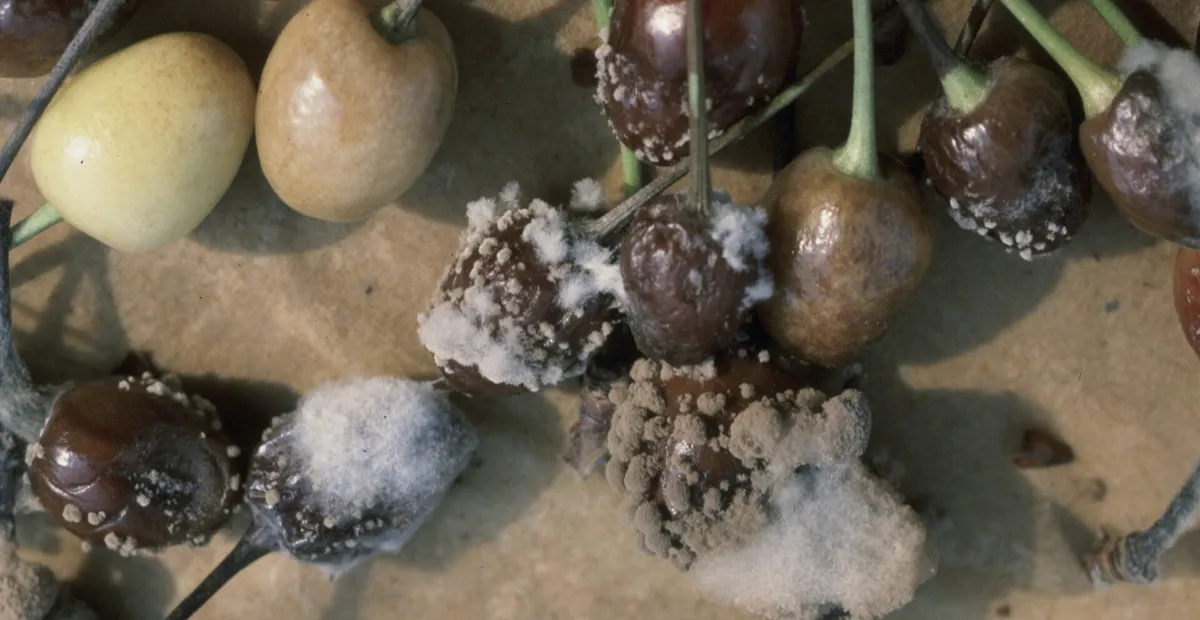
Brown rot of stone fruit, caused by the fungus Monilinia fructicola, attacks blossoms, twigs and fruit. In spring it can turn blossoms brown and create cankers; as peaches, nectarines, cherries, plums and apricots ripen, small firm brown spots may spread rapidly across the fruit. Tan-gray spore tufts and mummified fruit provide important clues and sources of infection for the next crop.
Typical conditions
Overview
Brown rot is one of the most important diseases of peaches, nectarines, cherries, plums and apricots in the United States. Monilinia fructicola is the principal brown-rot species in much of North America, although other Monilinia species can produce similar symptoms. The disease has two connected phases: blossom and twig blight in spring, followed by fruit rot as fruit mature.
On ripening fruit, infections often begin as a small, firm, circular brown spot and can expand quickly. Under wet or humid conditions, tan-to-gray fungal spore masses form on the lesion. Infected fruit frequently remain attached and dry into persistent “mummies.”
Symptoms and identification
Blossoms: Flowers wilt, turn brown and remain attached to the twig, sometimes with gummy exudate. Infection may extend through the flower stem into the spur or twig.
Twigs: Brown, sunken or discolored cankers develop below infected blossoms or around injured shoots. If a canker girdles a twig, leaves beyond it wilt, turn brown and remain attached. Moist weather may produce small tan-to-gray spore tufts.
Fruit: A small firm brown lesion enlarges rapidly on ripening fruit. The fruit may become extensively decayed while remaining firm initially, then shrivel into a mummy. Tan-to-gray sporulation commonly develops, especially during wet weather, and rotted fruit may occur in clusters stuck together.
Causes and spread
- Overwintered mummified fruit and infected twigs provide the primary spring inoculum.
- Rain, irrigation splash, wind and contact move spores to blossoms and fruit.
- Wet flowers are vulnerable to blossom infection, particularly during prolonged spring rainfall.
- Ripening fruit become increasingly susceptible.
- Insect feeding, hail, cracking, pruning injuries, stem rub and fruit-to-fruit contact facilitate infection.
- Dense canopies and tightly packed fruit clusters retain moisture and allow rapid secondary spread.
Life cycle and persistence
The fungus survives between seasons in mummified fruit left on trees or the orchard floor and in infected twigs, spurs and cankers. In spring, these tissues produce spores that are moved by rain splash, wind and contact.
During bloom, spores infect wet floral tissues. Infection may progress into the peduncle and twig, creating cankers that produce additional spores. Flowers need several hours of wetness for infection, with the required wet period generally shorter at warmer temperatures.
Immature green fruit are comparatively less susceptible unless wounded. Susceptibility increases substantially as fruit ripen. Insects, hail, cracking and contact between fruit create entry points, and sporulating fruit can rapidly infect neighboring fruit. Mummies and cankered wood then maintain the disease cycle.
Treatment and control
Remove and discard infected fruit as soon as it is found, including fruit attached to the tree and fallen fruit beneath it. Prune diseased twigs and cankers during dry weather, cutting into apparently healthy wood and disinfecting tools when moving between visibly diseased and healthy sections.
For recurring or severe disease, fungicide protection is generally most effective when timed to the crop stage: bloom protection limits blossom and twig blight, while applications during the preharvest ripening period protect fruit. Green fruit usually need less protection than fruit approaching maturity, but local weather, cultivar, crop and disease pressure determine risk.
Rotate fungicide modes of action only according to current extension recommendations and the product label. Resistance has been reported in some M. fructicola populations, so sanitation, canopy management and careful timing remain essential.
Low-impact and biological control
Use an integrated approach rather than relying on a single treatment. Remove and destroy mummified fruit from the tree and ground before bud break, and continue removing fallen, overripe or diseased fruit during the season. Do not leave thinned fruit beneath the canopy where irrigation or rain can wet it.
Prune out dead twigs, spurs and cankers during the dormant season, cutting well below visibly diseased tissue. Improve air circulation with appropriate pruning, avoid unnecessary overhead irrigation, harvest promptly as fruit ripen, and handle fruit gently to limit wounds.
Where permitted by the product label and crop-use regulations, sulfur-based products or registered biological fungicides may contribute to an organic or reduced-synthetic program. Efficacy depends on formulation, timing, weather and disease pressure; protect blossoms and ripening fruit according to the current label and avoid applications that could harm pollinators or cause crop injury.
Prevention
- Before spring growth, remove all mummified fruit from trees and the orchard floor.
- Prune out brown-rot cankers and dead twigs during dormancy; remove prunings from the orchard.
- Pick up fallen fruit and discard diseased or overripe fruit promptly.
- Thin fruit clusters and prune for better air movement, following the crop’s normal horticultural practices.
- Prevent insect injury and manage cracking, hail exposure and other causes of fruit wounds where practical.
- Harvest fruit as it reaches maturity and handle it carefully during picking, packing and storage.
- In areas with recurring disease, use local extension disease-warning tools and a crop-specific, label-compliant fungicide or biological program that targets bloom and preharvest risk periods.
Interesting facts
- Monilinia fructicola is the brown-rot species most commonly associated with North American peach-growing regions.
- A single infected ripe fruit can spread rot rapidly through a touching cluster.
- Brown-rot mummies can remain attached to trees into the following growing season.
- Blossom infection and fruit infection are related but occur at different crop stages and require different management timing.
- Symptoms alone may not reliably distinguish M. fructicola from other brown-rot Monilinia species.
Use only fungicide products legally authorized and currently labeled in the United States for the specific crop and brown rot use. Follow the entire current label, including application timing, rate, personal protective equipment, reentry interval, preharvest interval, pollinator precautions and resistance-management requirements. Product registrations and homeowner availability vary by state and crop; do not rely on a product name alone.
Affected plants
The plants below are linked to this problem by structured host-plant data. The list updates automatically as new plant profiles are added.
 Apple tree (Malus domestica) care guideMalus domestica
 Tree Aeonium (Aeonium arboreum) care guideAeonium arboreum
 Acorn banksia or orange banksia (Banksia prionotes) care guideBanksia prionotes
 Tuftroot (Dieffenbachia seguine) care guideDieffenbachia seguine
 Crested Coelogyne (Coelogyne cristata) care guideCoelogyne cristata
 Cymbidium insigne care guideCymbidium insigne
 Moth orchid (Phalaenopsis ‘Harlequin’)Phalaenopsis 'Harlequin'
 He giant barrel cactus (Echinocactus platyacanthus) care guideEchinocactus platyacanthus
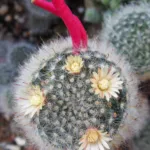 Powderpuff Cactus (Mammillaria bocasana) care guideMammillaria bocasana
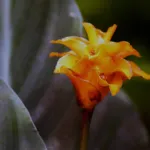 Eternal Flame (Goeppertia crocata) care guideGoeppertia crocata
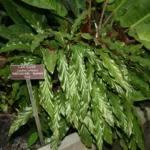 Due to its fuzzy (Goeppertia rufibarba) care guideGoeppertia rufibarba
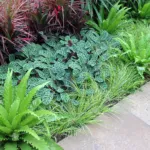 Colorama Madagascar dragon tree (Dracaena marginata ‘Colorama’)Dracaena marginata 'Colorama'