
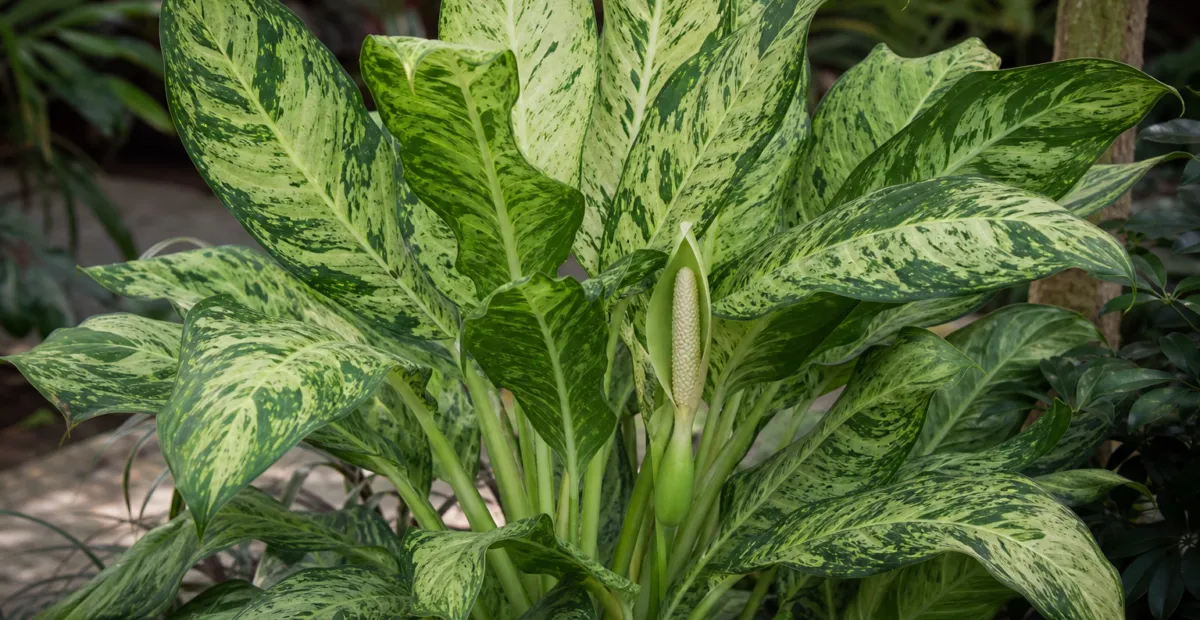
 AI-generated illustration
Tuftroot (Dieffenbachia seguine) short overview
Tuftroot, Dieffenbachia seguine, is a tropical evergreen aroid cultivated in the United States primarily as a foliage houseplant. Its upright cane-like stems carry large, glossy leaves that may be green, cream-mottled or yellow-variegated. Give it bright filtered light, warm temperatures, steady but not saturated moisture and moderate to high humidity. Handle with gloves: the sap contains calcium oxalate crystals that can irritate skin, eyes, mouth and throat.
Taxonomic classification
Tuftroot (Dieffenbachia seguine) care guide
Light and placement
Provide bright filtered light, such as an east-facing window or a position several feet from a bright south- or west-facing window behind a sheer curtain. Gentle morning sun is usually tolerated, but harsh direct afternoon sun can scorch leaves. Very dim light causes stretched growth, smaller leaves and weaker variegation; excessive light causes bleaching, crisp brown patches and curling.
Watering and humidity
Water thoroughly when the top 1–2 inches of mix feel dry, then allow excess water to drain completely. Empty saucers and never leave the pot standing in water. Water less often in cool, dim winter conditions and more frequently during warm, bright growth. Consistent moisture is useful, but repeated saturation can damage roots.
Soil and growing medium
Use a loose, peat-free or peat-based houseplant mix amended for drainage with perlite, fine bark or similar material. The substrate should hold some moisture without remaining waterlogged. A slightly acidic to neutral reaction is suitable; compact, poorly aerated soil increases the risk of root problems.
Feeding
Feed during active growth with a balanced liquid houseplant fertilizer diluted to half the label rate about every 4–6 weeks. Water the plant first if the mix is dry. Reduce or stop feeding in dim winter conditions or when growth is stalled; excess fertilizer can cause salt buildup and brown leaf margins.
Growth and habit
This species forms an upright clump of stout, fleshy canes, with leaves concentrated toward the stem tips. Older lower leaves may fall, exposing the cane and creating a top-heavy appearance. Rotate containers periodically and support or prune elongated stems if the plant begins leaning.
Planting and repotting
In the United States, grow outdoors only during reliably warm weather and plant after frost danger has passed. Set the root ball at the same depth as before; do not bury the cane. Space plants about 24–36 inches apart where a warm, shaded outdoor planting is appropriate, allowing room for mature foliage.
Repot in spring or early summer when roots fill the container or growth slows. Move up only one pot size, preserve the root ball where possible, and use a drainage hole. After repotting, water thoroughly and keep the plant in bright filtered light while it re-establishes.
Propagation and pruning
Propagation
Propagate during active growth from tip cuttings, cane sections with a viable bud, division of clustered stems, or air layering. Keep cuttings warm in a lightly moist, airy medium. Wear gloves and prevent sap from contacting skin, eyes or the mouth.
Pruning
Remove yellowing or damaged leaves at the base with clean tools. If a cane becomes bare or too tall, cut it back above a node during active growth; new shoots may develop below the cut, while healthy sections can be used for propagation. Wear gloves and disinfect tools after cutting.
Overwintering
Bring outdoor plants indoors before temperatures approach 55°F, and avoid exposure below about 50°F. Keep the plant in bright filtered light, reduce watering as growth slows, and check carefully for pests before moving it inside. Protect from cold windows, drafts and forced-air heat.
Uses
Primarily used as an indoor foliage plant in homes, offices, conservatories and shaded containers. In frost-free climates it can be grown as a tropical landscape or patio accent. It is not an edible plant, and its toxicity makes placement away from children, dogs, cats and grazing animals essential.
Appearance
Leaves are large, glossy and ovate-oblong with pointed tips; coloration ranges from solid green to irregular cream or yellow mottling. The thick green stem is marked by conspicuous leaf scars as older leaves drop. The plant’s clustered, cane-forming habit and pale-spotted spathe help distinguish it from unrelated broad-leaved houseplants.
Flowering
The inflorescence is a typical aroid spadix enclosed by a pale green spathe. Flowers are small and densely arranged, with female flowers below male flowers and a sterile zone between them. Flowering and fruiting can occur for much of the year in tropical conditions, with more activity reported from late dry season into the early wet season; indoor flowering is sporadic.
Pollination and visitors
The species produces a specialized aroid inflorescence, but a consistently documented primary pollinator or visitor species was not established for this profile. Do not treat its pollen or floral biology as evidence of strong pollinator-garden value.
Dieffenbachia seguine photos
Click any photo for a larger view. Source, author and license are shown separately.
Diseases and pests
Diseases
Prevent disease by avoiding saturated soil, wet foliage and poor air circulation. Root or stem rot is associated with overwatering and damaged tissues. Leaf spot and blight may appear as spreading brown lesions; remove badly affected leaves, isolate symptomatic plants and correct moisture and ventilation problems.
Pests
Inspect regularly for spider mites, mealybugs, scale and aphids, especially in dry indoor air. Isolate infested plants, remove visible insects with a cotton swab or water rinse, and use insecticidal soap or another labeled treatment as directed. Improve airflow without exposing the plant to cold drafts.
Related diseases and pests
Only Plant Doctor profiles whose host data indicate this plant may be affected are shown here.
 Environmental stressOverwatering
 PestCotton mealybugPhenacoccus solenopsis Tinsley
 DiseaseEuropean brown rot and blossom blightMonilinia laxa (Aderhold & Ruhland) Honey
 DiseaseBrown Spot Needle BlightLecanosticta acicola
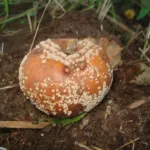 DiseaseEuropean brown rotMonilinia fructigena
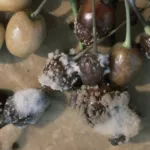 DiseaseBrown Rot of Stone FruitMonilinia fructicola
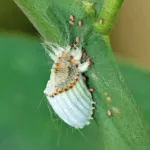 PestCottony Cushion ScaleIcerya purchasi
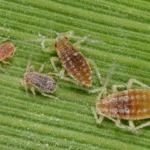 PestMealy Plum AphidHyalopterus pruni (Geoffroy, 1762)
Toxicity and pollen
Dieffenbachia tissues and sap contain needle-like calcium oxalate crystals and other irritating compounds. Chewing or swallowing can cause intense burning, swelling and difficulty speaking or swallowing; sap may irritate skin and seriously irritate the eyes. Wear gloves, wash hands after handling and seek poison-control or veterinary advice after ingestion.
- Typical season
- Not clearly documented for United States indoor cultivation
- Pollination / pollen
- Limited, localized flower pollen
As an angiosperm, the plant produces pollen when it flowers, but indoor Dieffenbachia is usually an infrequent or sporadic bloomer and its pollen is not generally regarded as a major airborne seasonal source. Sensitive individuals should still avoid contact with flowers and sap and maintain good indoor hygiene.
Native habitat
Dieffenbachia seguine is a tropical American forest plant associated with warm, humid environments including shaded woodland, forest margins and other moist habitats. It generally grows in organically enriched, well-aerated soils with protection from intense midday sun and cold temperatures.
Interesting fact
The species has a cane-like stem marked by old leaf scars. Its aroid inflorescence is a spadix enclosed by a spathe rather than a conventional flower. Red fleshy berries can develop after pollination in suitable tropical conditions. Several historic Dieffenbachia names are now treated as synonyms or included within this species.
Frequently asked questions (FAQ)
The most relevant questions about this plant, with short and direct answers.
🌱Quick care
How do you care for Dieffenbachia seguine tuftroot?⌄
Give tuftroot bright filtered light or partial shade, evenly moist but well-drained soil, moderate warmth, and protection from frost and cold drafts. Let the surface begin to dry before watering again, and never leave the pot sitting in water.
Is Dieffenbachia seguine easy to grow indoors?⌄
Yes, Dieffenbachia seguine is generally easy to grow indoors when it receives filtered light, consistent moisture, warmth, and adequate humidity. The main risks are overwatering, cold exposure, and accidental ingestion.
How often should I water Dieffenbachia seguine?⌄
Water Dieffenbachia seguine when the top inch of potting mix feels dry, then water thoroughly until excess drains from the pot. The schedule varies with light, temperature, pot size, and season, so check the soil rather than using a fixed calendar.
🌤️Environment and placement
How much light does Dieffenbachia seguine need?⌄
Dieffenbachia seguine grows best in bright filtered light or partial shade. It tolerates lower light, but growth may become slower and weaker, while harsh direct sun can scorch the leaves.
Can Dieffenbachia seguine grow in low light?⌄
Dieffenbachia seguine can tolerate low light, but it usually performs better in a brighter indirect location. Move it closer to a window with filtered light if it becomes leggy or produces smaller, less colorful leaves.
Can Dieffenbachia seguine tolerate direct sunlight?⌄
Dieffenbachia seguine may tolerate mild early-morning or late-afternoon sun, but strong direct sunlight can bleach or burn its foliage. Use a sheer curtain or place it several feet from a bright south- or west-facing window.
What temperature is best for Dieffenbachia seguine?⌄
Keep Dieffenbachia seguine in a consistently warm indoor environment and protect it from cold drafts, sudden temperature drops, and frost. It is a frost-tender tropical plant and should not be exposed to freezing conditions.
Does Dieffenbachia seguine need humidity?⌄
Dieffenbachia seguine benefits from moderate to high humidity, especially in heated or air-conditioned homes. A humidifier or grouping plants together is generally more effective than frequent misting.
Can Dieffenbachia seguine grow outdoors in the United States?⌄
Dieffenbachia seguine can grow outdoors year-round only in warm, frost-free parts of the United States, while elsewhere it is usually grown as a container plant and brought indoors before cold weather. Provide bright shade and shelter from temperature extremes.
💧Care and problems
Why are the leaves of my Dieffenbachia seguine turning yellow?⌄
Yellow leaves on Dieffenbachia seguine commonly indicate overly wet soil, poor drainage, aging foliage, or insufficient light. Check the roots and potting mix before watering again, and remove only leaves that are fully yellow or damaged.
Why are the leaves of my Dieffenbachia seguine turning brown?⌄
Brown leaf tips or edges can result from dry soil, low humidity, salt buildup, direct sun, or cold drafts. Correct the environmental stress, water consistently, and trim damaged tissue with clean tools if desired.
Why is my Dieffenbachia seguine drooping?⌄
Dieffenbachia seguine may droop because the soil is too dry, the roots are staying waterlogged, or the plant has been exposed to cold. Check soil moisture and drainage first, then adjust watering and placement accordingly.
How do I prevent root rot in Dieffenbachia seguine?⌄
Prevent root rot by using a loose, moisture-retentive but well-drained houseplant mix and a pot with drainage holes. Water thoroughly only after the surface has begun to dry, and discard excess water from the saucer.
Should I fertilize Dieffenbachia seguine?⌄
Yes, Dieffenbachia seguine can be fertilized during active growth with a balanced houseplant fertilizer used according to the product label. Avoid heavy feeding when growth is slow or the plant is stressed by cold, drought, or root problems.
How do I clean Dieffenbachia seguine leaves?⌄
Wipe Dieffenbachia seguine leaves gently with a clean, damp cloth to remove dust and improve their appearance. Wear gloves and wash your hands afterward because the sap can irritate skin and eyes.
Why is my Dieffenbachia seguine losing leaves?⌄
Leaf loss may follow overwatering, underwatering, cold drafts, sudden changes in light, root damage, or normal aging of lower leaves. Stabilize the plant’s conditions and inspect the roots if the decline is rapid or accompanied by soft stems.
How do I make Dieffenbachia seguine grow fuller?⌄
Provide brighter filtered light, rotate the pot periodically, and prune tall stems to encourage new growth from lower nodes. Healthy stem sections can also be propagated and replanted in the same container for a fuller appearance.
🪴Planting and repotting
What is the best soil for Dieffenbachia seguine?⌄
Use a loose, fertile, moisture-retentive but well-drained houseplant mix for Dieffenbachia seguine. A standard indoor potting mix amended with materials that improve aeration can help prevent compacted, waterlogged roots.
When should I repot Dieffenbachia seguine?⌄
Repot Dieffenbachia seguine when roots circle the container, emerge from drainage holes, or the soil dries unusually fast. Move it into a pot only slightly larger than the current one and repot during active growth when possible.
How deep should I plant Dieffenbachia seguine?⌄
Plant Dieffenbachia seguine at the same depth it was growing previously, with the stem base and root crown level with the soil surface. Planting the stem too deeply can encourage rot, especially in wet mix.
✂️Propagation and pruning
How do you propagate Dieffenbachia seguine?⌄
Propagate Dieffenbachia seguine by stem cuttings, root cuttings, or division of rooted basal shoots. Place viable stem sections in a warm, humid propagation medium with at least one node, and keep the medium lightly moist rather than saturated.
Can you propagate Dieffenbachia seguine in water?⌄
Yes, a healthy Dieffenbachia seguine stem cutting can often root in water, provided at least one node is submerged and the container is kept in bright filtered light. Transfer it to a well-drained potting mix after roots develop.
How do you prune Dieffenbachia seguine?⌄
Prune Dieffenbachia seguine by cutting a tall or damaged stem just above a node with clean, sharp tools. Wear gloves, avoid touching your face, and keep pets and children away from the cut sap and discarded plant material.
⚠️Toxicity and safety
Is Dieffenbachia seguine poisonous to humans?⌄
Yes, Dieffenbachia seguine is highly toxic and irritating if chewed or swallowed. Its sap can cause intense mouth and throat irritation, so keep the plant and all cuttings away from children and seek poison-control or medical guidance after exposure.
Is Dieffenbachia seguine toxic to cats and dogs?⌄
Yes, Dieffenbachia seguine is toxic to cats and dogs if chewed or eaten. Keep it securely out of reach, and contact a veterinarian promptly if a pet develops drooling, oral pain, vomiting, or difficulty swallowing.
Should I wear gloves when pruning Dieffenbachia seguine?⌄
Yes, wear gloves when pruning, repotting, or propagating Dieffenbachia seguine because its sap is irritating. Wash exposed skin and tools afterward, and avoid contact with the eyes, mouth, and open cuts.
What should I do if Dieffenbachia seguine sap gets in my eyes?⌄
Rinse the affected eye immediately with clean, lukewarm running water and seek medical advice, especially if pain, swelling, or vision changes persist. Do not rub the eye, and keep the plant label available when contacting a medical professional.
🌸Flowering and special interest
Does Dieffenbachia seguine flower indoors?⌄
Dieffenbachia seguine can flower indoors, but flowering is uncommon and the blooms are not usually the plant’s main ornamental feature. Its inflorescence consists of a spathe surrounding a spadix and may appear more readily on mature, vigorously growing plants.
What does a Dieffenbachia seguine flower look like?⌄
A Dieffenbachia seguine flower is an aroid inflorescence made of a greenish spathe and a spadix rather than a typical petaled flower. It is usually less showy than the foliage and may later produce berries under suitable conditions.
Should I cut off a Dieffenbachia seguine flower?⌄
You do not need to remove a Dieffenbachia seguine flower unless you prefer the plant’s appearance or want to redirect energy toward foliage. If you cut it, wear gloves because the sap is irritating and toxic if swallowed.
Similar plants
 Azure Monkshood (Aconitum carmichaelii) care guideAconitum carmichaelii
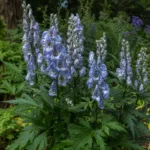 Monkshood (Aconitum ‘Stainless Steel’)Aconitum 'Stainless Steel'
 Monkshood (Aconitum ‘Bressingham Spire’)Aconitum 'Bressingham Spire'
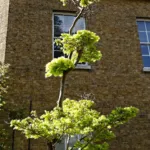 Golden full moon maple (Acer shirasawanum ‘Aureum’)Acer shirasawanum 'Aureum'
 Globosum (Acer platanoides ‘Globosum’)Acer platanoides 'Globosum'
 Striped maple (Acer pensylvanicum) care guideAcer pensylvanicum