
European brown rot
Monilinia fructigenaEuropean brown rot overview
European brown rot is a quarantine fungal disease caused by Monilinia fructigena. It primarily affects apples, pears and other pome fruits, but can also infect stone fruits and several ornamental or wild hosts. Brown, rapidly enlarging fruit lesions may develop cream-to-buff spore tufts, while infected fruit shrivels into persistent mummies. In the United States, a suspected detection warrants professional confirmation because the pathogen is not known to be established in North America.
Typical conditions
Overview
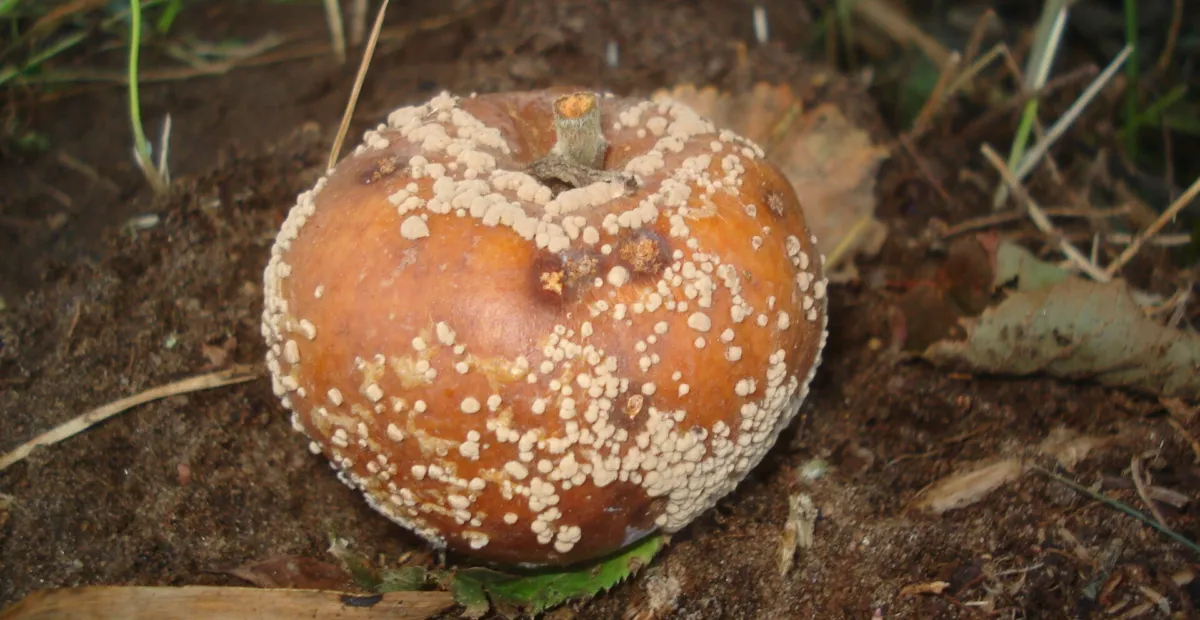
Monilinia fructigena causes European brown rot, also called apple brown rot in some diagnostic references. The disease is usually most conspicuous on ripening or ripe fruit, where a small, firm, circular brown lesion enlarges into a soft brown decay. Under humid conditions, cream-white to buff sporulation may form in concentric rings. Infected fruit may fall or dry into hard mummies that remain attached to branches or persist on the orchard floor.
The fungus can also cause blossom blight, spur and twig cankers, shoot dieback and occasional leaf lesions. In the United States, brown rot symptoms are more commonly caused by established Monilinia fructicola or M. laxa. A suspected M. fructigena finding should therefore be submitted through state plant-health or diagnostic channels for confirmatory identification rather than diagnosed from appearance alone.
Symptoms and identification
- Small, tan-brown to brown, circular, firm spots on fruit that enlarge rapidly, especially as fruit ripens.
- Cream-white, buff or gray-brown tufts of conidia may develop on the fruit surface, often in concentric rings when humidity is favorable.
- Fruit becomes soft and decayed, then may fall or dry into a wrinkled, hard mummy that remains on the tree or lies beneath it.
- Blossoms may wilt and turn brown; infected spurs, leaves and young shoots can collapse, with small cankers and occasional dieback.
- Visual symptoms overlap with brown rot caused by M. fructicola, M. laxa and related species, so laboratory confirmation is important.
Causes and spread
The pathogen survives in mummified fruit, infected blossom parts, peduncles and cankers. Conidia are spread locally by wind-driven rain, rain splash and contact between crowded or wounded fruit; insects can also carry spores and create infection courts while feeding. Ascospores may be produced in apothecia arising from fallen mummies, although these structures are rarely observed in many orchards.
Fruit can be infected during development, but disease is generally most severe during ripening. Wounds caused by hail, cracking, pruning, birds, insects or fruit-to-fruit contact greatly increase risk. Blossom infection is favored by prolonged wetness, while warm, humid weather during the two to three weeks before harvest can produce rapid fruit losses.
Life cycle and persistence
- The fungus overwinters in attached or fallen mummified fruit, infected spurs, blossom remains and cankers.
- In spring, conidia and, less commonly, ascospores are released during wet weather and reach open blossoms and young tissues.
- Infected flowers may collapse, and the pathogen can extend into spurs or shoots, creating additional inoculum.
- As fruit enlarges and sugar content rises, susceptibility increases, particularly during the final weeks before harvest.
- New fruit infections produce brown lesions and sporodochia bearing lemon-shaped conidia. Diseased fruit either decays, falls or becomes a mummy, restarting the cycle.
Treatment and control
Remove visibly rotted fruit, fallen fruit and attached mummies promptly and dispose of them away from the planting. Prune infected spurs, twigs and cankers back to healthy tissue during dry conditions. Improve canopy ventilation and harvest promptly as fruit reaches maturity. These measures reduce inoculum but will not cure fruit that is already internally infected.
Because M. fructigena is difficult to separate visually from other brown rot fungi, preserve representative symptomatic tissue and seek confirmation before making a species-specific management decision. If the organism is suspected in the United States, avoid moving infected plant material and contact a state diagnostic service or State Plant Health Director.
Low-impact and biological control
Organic and low-input management should center on sanitation and exclusion: remove mummies and fallen fruit frequently, prune infected tissue, thin crowded clusters, improve airflow and prevent fruit injury. Keep irrigation off flowers and fruit where feasible, and harvest without bruising. Commercial biological products based on antagonistic microorganisms may have a role in some production systems, but performance is variable and should be evaluated through locally validated extension recommendations and the product label. Biological control should not replace sanitation.
Prevention
- Remove and destroy mummified and rotting fruit from trees and the orchard floor before spring bloom and throughout the season; do not leave cull piles beside the orchard.
- Prune out blighted spurs and cankers during dry weather and disinfect tools between suspect trees.
- Thin fruit clusters to reduce fruit-to-fruit contact, and handle fruit carefully to prevent skin injuries.
- Control cracking, insect feeding and bird damage where practical, because wounds provide efficient entry points.
- Maintain an open canopy, good orchard air movement and rapid drying through appropriate pruning, spacing and irrigation management.
- Use clean, disease-free planting material and avoid moving suspect fruit, budwood or nursery stock across regulated areas.
- In the United States, report a credible suspected detection to the appropriate State Plant Health Director or plant diagnostic laboratory because the species is treated as a quarantine concern.
Interesting facts
- M. fructigena is often more important on pome fruits than on stone fruits, unlike the pattern commonly associated with M. fructicola in North America.
- The species has been reported from Europe, Asia, northern Africa and parts of South America, but authoritative U.S. plant-health references state that it is not known to be established in North America.
- Its asexual spores are lemon-shaped and produced in bead-like chains on sporodochia.
- Apothecia can arise from fallen mummies, but they are rarely seen in ordinary orchard conditions.
- Species-level identification may require standardized culture work, morphology and molecular testing because symptoms and some diagnostic characters overlap among brown rot fungi.
Use fungicides only when a product is legally authorized and currently labeled for the specific crop, disease and use site in the United States. Follow the current label exactly, including rate, timing, re-entry interval, preharvest interval, personal protective equipment and resistance-management directions. Do not assume that a product labeled for brown rot caused by another Monilinia species is authorized for confirmed or suspected M. fructigena; consult state extension guidance and the relevant state or federal label before application.
Affected plants
The plants below are linked to this problem by structured host-plant data. The list updates automatically as new plant profiles are added.
 Hardy Kiwi (Actinidia arguta) care guideActinidia arguta
 Kiwifruit (Actinidia chinensis deliciosa) care guideActinidia chinensis deliciosa
 Apple tree (Malus domestica) care guideMalus domestica
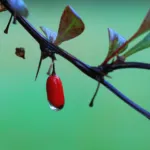 Thunberg’s Barberry (Berberis thunbergii) care guideBerberis thunbergii
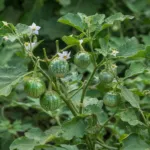 Solanum aethiopicum care guideSolanum aethiopicum
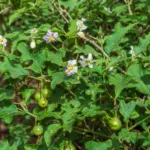 Solanum macrocarpon care guideSolanum macrocarpon
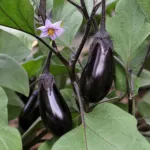 Eggplant (Solanum melongena) care guideSolanum melongena
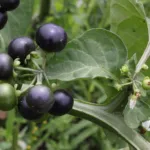 Garden Huckleberry (Solanum scabrum) care guideSolanum scabrum
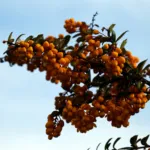 Darwin’s Barberry (Berberis darwinii) care guideBerberis darwinii
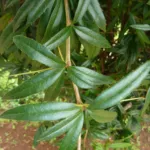 Wintergreen barberry (Berberis julianae) care guideBerberis julianae
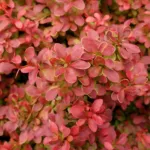 Admiration (Berberis thunbergii ‘Admiration’)Berberis thunbergii 'Admiration'
 Atropurpurea (Berberis thunbergii ‘Atropurpurea’)Berberis thunbergii 'Atropurpurea'