
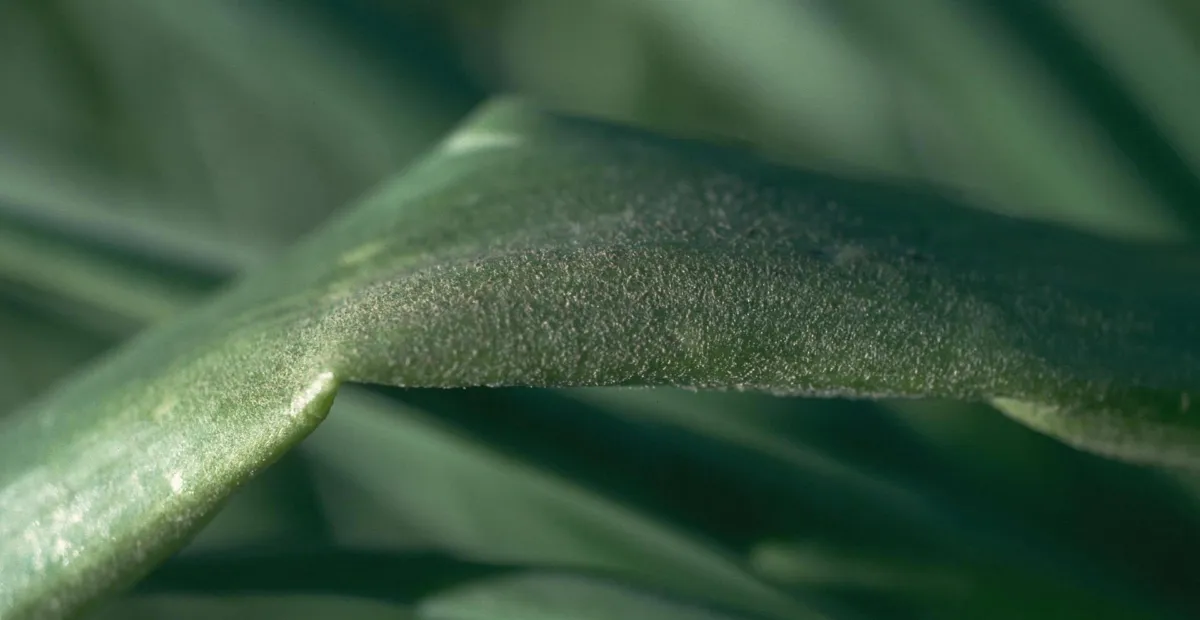
 Source:
 Onion downy mildew
Peronospora destructorOnion downy mildew overview
Onion downy mildew is a fast-spreading oomycete disease of onions and other Allium crops caused by Peronospora destructor. It favors cool temperatures, prolonged leaf wetness, and very high humidity. Pale, elongated lesions develop on older leaves, followed by fuzzy gray to violet sporulation, rapid leaf collapse, reduced bulb growth, and occasionally watery, systemically infected bulbs during storage.
Typical conditions
Overview
Onion downy mildew is caused by the water mold Peronospora destructor, not by a true fungus. It is an important disease of bulb onions and can also affect garlic, shallot, leek, bunching onion, and chives. Disease often begins in scattered or circular patches and expands downwind as airborne spores move through a wet crop.
Severe foliar infection reduces photosynthetic area and bulb size. Infection of seed stalks, flowers, or bulbs may occur, and systemically infected bulbs can become soft, watery, poorly stored, or prone to premature sprouting.
Symptoms and identification
Early symptoms are pale-green to yellow, elongated or irregular lesions, usually on older leaves. As lesions enlarge, affected tissue becomes tan, brown, or sometimes violet-purple and collapses. During dew, rain, or very high humidity, fine grayish-white to gray-violet downy growth may appear on the lesion surface.
At field scale, yellowed circular or irregular patches may enlarge in the direction of prevailing winds. Seed stalks and flower parts can also develop sporulation. Bulbs affected systemically may be stunted, spongy, soft, watery, amber-colored, or prematurely sprouting in storage.
Purple or dark coloration is not diagnostic by itself because secondary pathogens, especially those associated with purple blotch or Stemphylium leaf blight, may colonize downy-mildew lesions.
Causes and spread
The pathogen enters plantings from infected bulbs, sets, transplants, volunteer Allium plants, cull piles, and infected crop debris. Spores are produced on living infected tissue and are dispersed primarily by wind; splashing water can also move spores locally.
Infection requires susceptible tissue plus a sufficiently long period of leaf wetness. Dense canopies, poor airflow, overhead irrigation, nighttime dew, fog, and persistent humidity favor disease development. Spores produced during favorable nights may infect nearby plants rapidly, allowing epidemics to build over successive infection cycles.
Life cycle and persistence
Peronospora destructor survives between crops mainly in living infected Allium material, including volunteer plants, perennial plantings, cull piles, infected bulbs, and plant debris. The pathogen produces spore-bearing structures on wet leaves, commonly during humid nighttime conditions.
Airborne spores land on healthy leaves and germinate when the leaf remains wet. The pathogen penetrates the leaf, grows internally, and produces new sporulation after a latent period commonly lasting about 8–16 days, depending on temperature, host condition, and moisture. New spores can spread the disease to additional plants, so several cycles may destroy much of the foliage in a favorable season.
Treatment and control
Inspect plants frequently during cool, humid weather, especially after extended dew, fog, or rainfall. Confirm the diagnosis carefully because purple blotch, Stemphylium leaf blight, bacterial diseases, herbicide injury, and nutrient problems can produce overlapping lesions.
Remove isolated, heavily diseased plants when practical, reduce leaf wetness, and correct irrigation or canopy-density problems immediately. Once extensive sporulation is present, sanitation alone may not stop spread; protect remaining healthy foliage through an integrated, preventative management program.
For commercial crops, use disease forecasting or local Extension guidance when available, begin protection before or at the earliest credible risk period, and rotate fungicide modes of action to reduce resistance risk. Fungicides generally protect healthy tissue better than they restore leaves that have already collapsed.
Low-impact and biological control
Organic management is based mainly on prevention and sanitation: use clean planting material, rotate out of Allium crops, remove volunteers and cull piles, improve airflow, and keep foliage dry. Drip irrigation and morning irrigation can reduce the wetness periods required for infection.
Some biological or organically permitted products may provide suppression, but performance depends on the product, crop, disease pressure, and local label. They should be treated as components of an IPM program rather than dependable cures for established systemic infections. Verify organic certification and crop-specific authorization before use.
Prevention
- Plant certified or otherwise disease-free seed, sets, bulbs, and transplants.
- Remove volunteer onions, garlic, shallots, leeks, and chives, especially near production beds and cull piles.
- Use at least a 3-year rotation away from onions and related Allium crops where downy mildew has occurred.
- Improve spacing and airflow; avoid excessively dense plantings and excessive nitrogen that produces lush, slow-drying foliage.
- Prefer drip or furrow irrigation where practical, and irrigate early enough for foliage to dry before night.
- Remove and dispose of badly diseased plants and crop debris. Do not compost infected material unless the process reliably reaches pathogen-killing temperatures.
- Harvest mature bulbs promptly under suitable dry conditions and cure them thoroughly before storage.
- Choose cultivars with documented resistance or improved tolerance when available for the intended US growing region.
Interesting facts
- Peronospora destructor belongs to the oomycetes, commonly called water molds, even though the disease resembles a fungal mildew.
- The pathogen is highly specialized and is associated primarily with plants in the genus Allium.
- Leaf wetness and humidity are often more decisive than rainfall alone; heavy dew or fog can create suitable infection conditions.
- Downy mildew patches may expand in the prevailing-wind direction because spores are airborne.
- Secondary fungi can darken old lesions, so violet or purple tissue should not be used as the sole basis for diagnosis.
- Systemically infected bulbs may appear acceptable initially but soften, become watery, or sprout prematurely during storage.
Use only fungicide products legally authorized for onion, garlic, or the specific Allium crop and disease in the United States and in the applicable state. Follow the current EPA-approved label exactly, including crop, disease, rate, timing, personal protective equipment, reentry interval, preharvest interval, application limits, and resistance-management requirements. Product registrations and labels can change; do not rely on an old spray schedule or use a product labeled only for another crop or disease.
Affected plants
The plants below are linked to this problem by structured host-plant data. The list updates automatically as new plant profiles are added.
 Onion (Allium cepa) care guideAllium cepa
 Allium christophii care guideAllium christophii
 Bunching onion (Allium fistulosum) care guideAllium fistulosum
 Giant Allium (Allium giganteum) care guideAllium giganteum
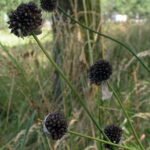 Ornamental onion (Allium) care guideAllium
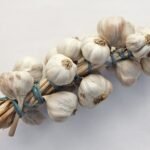 Garlic (Allium sativum) care guideAllium sativum
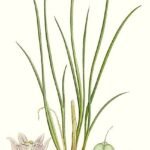 Chives (Allium schoenoprasum) care guideAllium schoenoprasum
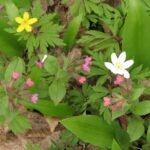 Ransoms (Allium ursinum) care guideAllium ursinum