
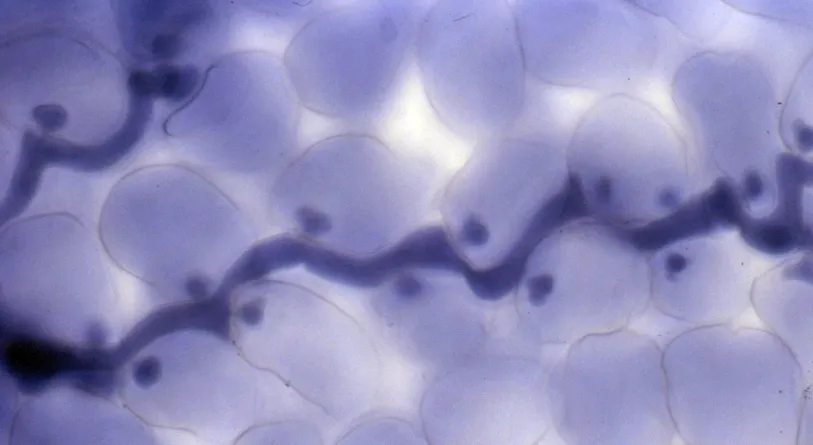
Downy Mildew Caused by Hyaloperonospora parasitica
Hyaloperonospora parasiticaDowny Mildew Caused by Hyaloperonospora parasitica overview
Hyaloperonospora parasitica is an oomycete associated with downy mildew on selected plants in the mustard family, including shepherd’s purse and some ornamental brassicas. Identification is complicated because the historic name Peronospora parasitica covered several host-specialized lineages now separated taxonomically. Cool, humid conditions favor yellow leaf lesions and pale gray to white sporulation on lower surfaces.
Typical conditions
Overview
Downy mildew develops when the pathogen colonizes living plant tissue and produces spore-bearing structures through stomata, usually on leaf undersides. Symptoms vary by host but commonly begin as pale green to yellow areas, often bounded or influenced by leaf veins, followed by browning, necrosis, distortion or premature leaf loss.
In the United States, the historical H. parasitica name may appear in extension, diagnostic and older crop literature for diseases now assigned more narrowly. Do not assume that every downy mildew on a brassica is caused by this exact species; host, location, morphology and molecular testing can change the diagnosis.
Symptoms and identification
- Pale green, yellow or yellow-white spots on the upper leaf surface.
- Lesions may be angular or vein-limited, particularly on young leaves and seedlings.
- White, gray, lavender-gray or slightly downy sporulation may appear on the lower leaf surface, petioles or stems during cool, humid weather.
- Advanced leaves may turn brown, collapse, become distorted or drop prematurely.
- Seedlings can show cotyledon spotting, stunting and loss of vigor; severe infections may affect marketable foliage or developing heads.
Downy growth is usually most visible early in the morning or after prolonged leaf wetness. Powdery mildew, Botrytis gray mold, nutrient deficiencies and bacterial leaf spots can look similar, so the underside of the leaf should be examined closely.
Causes and spread
The pathogen is an obligate parasite and requires living host tissue for active growth and reproduction. New infections are commonly initiated by airborne or water-dispersed sporangia or conidia from infected plants. Rain splash, overhead irrigation, wet tools, hands, plant debris and movement of infected transplants can spread inoculum locally.
Some populations can survive between seasons in infected living plants, crop residues or thick-walled sexual spores, depending on the host-lineage and local conditions. Volunteer brassicas and susceptible weeds, including shepherd’s purse, may help maintain inoculum. Because the historical species concept was broad, host range should be interpreted cautiously.
Life cycle and persistence
Under favorable conditions, asexual spores land on wet foliage, germinate and penetrate the leaf. The pathogen grows between plant cells and forms haustoria that absorb nutrients from living host cells. After an incubation period commonly measured in days to roughly two weeks, branched sporangiophores emerge through stomata and release new spores, producing repeating secondary infection cycles.
Sexual reproduction can produce thick-walled oospores in infected tissue or residues in some host-pathogen combinations. These structures may survive unfavorable periods and germinate when moisture and a susceptible host are again available. The exact importance of oospores differs among lineages and crops.
Treatment and control
Inspect both leaf surfaces and confirm the diagnosis before treating. Remove isolated infected leaves when practical, bagging them rather than shaking spores through the planting. Reduce humidity and leaf wetness immediately by thinning crowded growth, improving ventilation and changing irrigation practices.
Once systemic tissue infection is extensive, pruning alone will not cure the plant. In valuable crops, fungicides or oomycete-targeted products work best as part of an integrated program and generally protect new growth more effectively than they reverse existing lesions. Product performance and resistance risk vary by crop, pathogen lineage and local disease pressure.
Low-impact and biological control
- Use sanitation, spacing, morning soil-level irrigation and removal of infected tissue as the primary low-input measures.
- Discard heavily infected container plants rather than composting them unless the composting system reliably reaches pathogen-inactivating temperatures.
- Use resistant cultivars and clean propagation material where available.
- Some biological or reduced-risk products are labeled for downy mildew or oomycete diseases, but efficacy is variable and usually greatest when applications begin before severe infection.
- Follow the product label and any organic-certification requirements; “natural” does not automatically mean effective or legally permitted for the crop.
Prevention
- Start with clean, locally adapted seed and disease-free transplants.
- Inspect nursery plants before purchase and isolate suspicious brassicas or ornamental hosts.
- Provide adequate spacing, full sun and good air circulation.
- Water at the soil line in the morning; avoid frequent overhead irrigation and handling wet foliage.
- Remove badly infected leaves and promptly remove severely affected annual plants.
- Control volunteer brassicas and susceptible cruciferous weeds near production beds.
- Rotate brassica plantings when practical and bury or remove diseased residues according to local practice.
- Choose resistant or less susceptible cultivars when resistance is documented for the specific crop and region, recognizing that effectiveness may vary among pathogen populations.
Interesting facts
- Downy mildews are oomycetes, not true fungi, even though they produce fungus-like mycelium and spore-bearing structures.
- Hyaloperonospora parasitica was formerly reported widely under the name Peronospora parasitica.
- The classic Arabidopsis downy-mildew research system historically called H. parasitica is now generally treated as Hyaloperonospora arabidopsidis, illustrating why older host-range records require taxonomic caution.
- Many downy mildew pathogens are highly specialized: an isolate capable of infecting one brassica or ornamental host may not infect another.
- Sporulation is often easiest to see on the lower leaf surface during cool, humid mornings.
Use only products legally authorized in the United States for downy mildew or the specific crop and site. Follow the current product label exactly, including crop, target disease, rate, personal protective equipment, re-entry interval, preharvest interval and application limits. Do not use a product merely because it is labeled for powdery mildew or another disease. Rotate labeled modes of action when permitted and avoid repeated use of a single active ingredient to reduce resistance risk.
Affected plants
The plants below are linked to this problem by structured host-plant data. The list updates automatically as new plant profiles are added.
 Ethiopian Rape (Brassica carinata) care guideBrassica carinata
 Brown Mustard (Brassica juncea) care guideBrassica juncea
 Rapeseed (Brassica napus) care guideBrassica napus
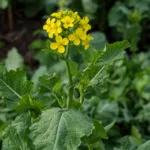 Urnip rape (Brassica rapa) care guideBrassica rapa
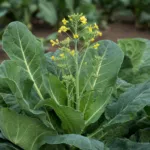 Collard greens (Brassica oleracea) care guideBrassica oleracea
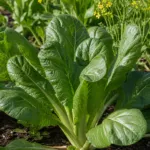 Integrifolia Group (Brassica juncea Integrifolia Group)Brassica juncea Integrifolia Group
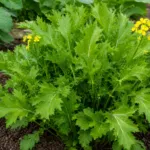 Multiceps Group (Brassica juncea Multiceps Group)Brassica juncea Multiceps Group
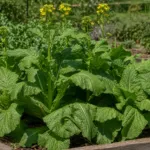 Broad-leaved mustard (Brassica juncea Rugosa Group)Brassica juncea Rugosa Group
 Black Mustard (Brassica nigra) care guideBrassica nigra
 Castanea dentata care guideCastanea dentata
 Camphor basil (Ocimum kilimandscharicum) care guideOcimum kilimandscharicum
 Ocimum basilicum minimum care guideOcimum basilicum minimum