
 Source:
Castanea dentata short overview
Castanea dentata is a tall, deciduous tree native to the forests of eastern North America. Once a dominant canopy species, it was widely valued for sweet edible nuts, rot-resistant wood, and wildlife habitat before chestnut blight devastated mature populations. It prefers full sun, acidic to neutral well-drained soil, and consistent moisture during establishment. Today it is grown mainly for conservation, restoration, breeding, and heritage planting, with disease management essential.
Taxonomic classification
Castanea dentata care guide
Light and placement
Choose full sun with unobstructed overhead light, ideally on a south- or west-facing woodland edge or open field margin. Young trees tolerate some light competition but grow less vigorously in deep shade. Sparse, stretched growth and reduced nut production suggest insufficient light; scorched foliage usually indicates drought, root damage, or reflected heat rather than excess sun alone.
Watering and humidity
Water deeply and slowly when the upper few inches of soil begin to dry, especially during the first two growing seasons. Maintain even moisture during establishment but never leave roots saturated. Mature trees are more drought tolerant once rooted, though prolonged summer drought can reduce growth and nut production. Mulch broadly with organic material, keeping it away from the trunk.
Soil and growing medium
Use deep, well-drained loam or sandy loam with good aeration and moderate moisture retention. Slightly acidic soil is preferred, though established trees tolerate a broader range toward neutral. Avoid compacted, waterlogged sites and heavy clay; improve drainage rather than creating a rich, water-retentive planting pocket.
Feeding
Feed only when a soil test or visible nutrient deficiency indicates a need. Apply a thin compost layer in spring, or use a slow-release balanced fertilizer at label rates while the tree is establishing. Do not fertilize drought-stressed, newly transplanted, or diseased trees heavily; excessive nitrogen can promote weak growth and does not solve chestnut blight.
Growth and habit
A vigorous young tree develops a tall, straight form in open light, while forest-grown individuals compete toward the canopy. After blight kills stems, established roots commonly resprout, producing multistemmed growth that may persist without reaching reproductive maturity. Maintain a broad weed-free root zone and inspect stems regularly for cankers.
Planting and repotting
Plant dormant bare-root or container-grown trees in early spring or fall, choosing full sun and a site with excellent drainage. Set the root flare level with the surrounding soil and do not bury the stem. Use a wide weed-free circle and mulch lightly without touching the bark. Plant compatible chestnut trees nearby if seed production is important.
Young seedlings develop a strong taproot and should be moved while dormant, preferably from deep containers before roots circle. Container culture is temporary rather than a long-term solution for this large tree. Transplant with the root ball intact, keep the root flare at soil level, and water consistently through the first growing season.
Propagation and pruning
Propagation
Fresh nuts are the standard method. Collect ripe nuts promptly, protect them from rodents, keep them moist and cold rather than dry, and sow in a deep container after stratification or in a protected outdoor bed. Seedlings form a taproot and should be transplanted young. Clonal propagation and grafting are specialized conservation or nursery techniques.
Pruning
Prune during dormancy to remove crossing, damaged, or poorly attached branches and to establish one central leader where appropriate. Avoid unnecessary cuts because wounds can provide entry points for pathogens. Do not treat routine pruning as a cure for chestnut blight; infected stems require diagnosis and a site-specific management plan.
Overwintering
Outdoor trees are naturally winter hardy across much of the eastern and central United States. Protect young trunks from rodents and winter sunscald where needed, maintain a light mulch layer over the root zone, and avoid late-season nitrogen that encourages tender growth. Do not overwinter established trees indoors.
Uses
Historically used for edible nuts, wildlife food, durable lumber, poles, fencing, furniture, and restoration planting. Today its strongest uses are conservation collections, ecological restoration, heritage landscapes, and breeding programs. Planting should comply with local disease-prevention guidance, and potentially infected wood should not be transported.
Appearance
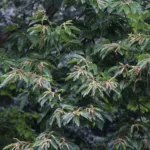
Leaves are long, narrow, glossy green, and sharply serrated, with each tooth ending in a bristle-like point. Young bark is smooth and gray, becoming deeply furrowed with age. Male flowers form conspicuous pale catkins, while female flowers develop into rounded, densely spiny burs. Mature trees traditionally have a tall, straight trunk and broad crown.
Flowering
Separate male and female flowers occur on the same tree. Long, pale catkin-like staminate inflorescences appear in early to midsummer, with pistillate flowers positioned near the bases of some catkins. Fertilized flowers develop into spiny burs containing usually one to three nuts, which mature in the first year.
Pollination and visitors
The species is primarily wind-pollinated, but its conspicuous midsummer catkins can be visited by insects seeking pollen or floral resources. Reliable species-level visitor records are not sufficiently consistent here to name a primary animal pollinator or assign bee, butterfly, or other visitor codes.
Castanea dentata photos
Click any photo for a larger view. Source, author and license are shown separately.
Diseases and pests
Diseases
Chestnut blight, caused by Cryphonectria parasitica, is the defining disease threat and can kill aboveground stems rapidly. Inspect bark for sunken orange-brown cankers and flagging foliage. Remove infected material only when appropriate for the restoration program, sanitize tools, avoid moving infected wood, and favor documented blight-tolerant material where available. Root rot may occur in persistently wet soil.
Pests
Chestnut weevil larvae can damage nuts, while bark and foliage may be attacked by caterpillars, scale insects, and borers. Encourage tree vigor, monitor young trees, remove severely infested material when practical, and use site-appropriate integrated pest management rather than routine broad-spectrum spraying.
Related diseases and pests
Only Plant Doctor profiles whose host data indicate this plant may be affected are shown here.
 DiseaseChestnut blightCryphonectria parasitica (Murrill) M.E. Barr
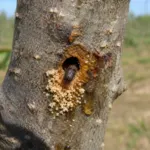 PestEuropean shot-hole borerXyleborus dispar (Fabricius)
 DiseasePhytophthora cambivora root and crown rotPhytophthora cambivora (often written Phytophthora × cambivora in modern taxonomic treatments)
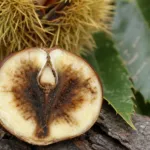 DiseaseChestnut brown rotGnomoniopsis smithogilvyi
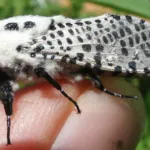 PestLeopard mothZeuzera pyrina
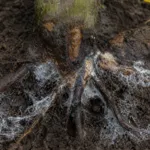 DiseaseWhite Root Rot (Rosellinia Root Rot)Rosellinia necatrix Berl. ex Prill. (synonym: Dematophora necatrix)
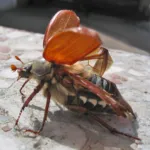 PestCommon cockchafer (European cockchafer)Melolontha melolontha
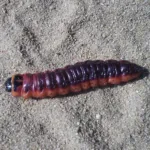 PestGoat MothCossus cossus
Toxicity and pollen
The mature nuts are edible when properly identified and prepared, but raw or spoiled nuts should not be eaten. The main practical concern is food allergy in susceptible people rather than inherent ornamental toxicity. Avoid using medicinal preparations from bark, leaves, or other parts without qualified guidance; historical medicinal use is not evidence of safety or efficacy.
- Typical season
- Late spring to midsummer, typically June–July
- Pollination / pollen
- Light, wind-dispersed tree pollen
Castanea dentata releases abundant, light pollen from male catkins in late spring to midsummer. Wind-dispersed pollen can contribute to seasonal airborne exposure, although individual allergy sensitivity varies and published species-specific clinical information is limited. People with known tree-pollen allergy should monitor local pollen conditions during flowering.
Native habitat
Native to rich deciduous and mixed forests of eastern North America, especially hillsides, ridges, and well-drained uplands from southern Canada through the Appalachian region and parts of the Southeast. It occurs from low elevations to roughly 3,900 feet and is associated with oak-dominated forest communities.
Interesting fact
Before chestnut blight, American chestnut was a dominant eastern forest tree and could reach about 100 feet tall. Its wood was light, strong, and naturally rot resistant. The species often survives through root systems that repeatedly produce blight-susceptible sprouts. Its sweet nuts were important food for people and wildlife.
Frequently asked questions (FAQ)
The most relevant questions about this plant, with short and direct answers.
🌱Quick care
What is Castanea dentata?⌄
Castanea dentata is the American chestnut, a deciduous North American tree in the beech family, Fagaceae. It is valued for its edible nuts, wildlife habitat, timber history, and restoration importance.
How much sunlight does Castanea dentata need?⌄
Castanea dentata grows best in full sun. Strong direct light encourages straighter growth, flowering, and nut production, while shaded plants may grow more slowly and fruit poorly.
How often should I water Castanea dentata?⌄
Water Castanea dentata to maintain moderate, even moisture, especially during its first few growing seasons. Once established, it can tolerate some dry periods but performs poorly in persistently waterlogged soil.
What soil is best for Castanea dentata?⌄
Plant Castanea dentata in well-drained, slightly acidic loam or sandy loam. Avoid heavy, compacted, alkaline, or poorly drained sites because chestnut roots are vulnerable to prolonged saturation.
🌤️Environment and placement
Where should I plant Castanea dentata in the United States?⌄
Choose a sunny, well-drained site suited to your local climate, particularly within or near the tree’s historic eastern North American range. Give it ample room because mature trees can become large and broad.
Is Castanea dentata hardy?⌄
Castanea dentata is generally cold-hardy, but successful growth also depends on drainage, summer moisture, local disease pressure, and the source of the planting material. Hardiness alone does not protect it from chestnut blight.
How large does Castanea dentata get?⌄
In favorable conditions, Castanea dentata can become a large forest tree, historically reaching roughly 80 to 100 feet tall or more. Many surviving trees remain smaller because blight repeatedly kills their stems and they resprout from the base.
Can Castanea dentata grow in shade?⌄
Young Castanea dentata can tolerate some shade, but full sun produces better growth, flowering, and nut development. Open woodland edges, clearings, and sunny restoration sites are generally more suitable than dense forest interiors.
💧Care and problems
What is killing American chestnut trees?⌄
Chestnut blight, caused by the fungus Cryphonectria parasitica, is the main reason Castanea dentata became nearly extinct as a mature forest tree. The fungus forms bark cankers that girdle stems, although roots may survive and send up sprouts.
Can I grow a blight-resistant Castanea dentata?⌄
You may be able to obtain restoration or research material with improved blight resistance, but resistance varies by lineage and is not the same as complete immunity. Verify provenance, legal availability, and planting guidance through reputable American chestnut restoration programs.
Should I plant a pure American chestnut in my yard?⌄
You can grow Castanea dentata as a conservation or specimen tree, but ordinary trees may eventually develop chestnut blight, especially in the historic range. Choose documented material and understand that planting a non-resistant tree is unlikely to provide a permanent mature tree there.
Why is my Castanea dentata not producing nuts?⌄
A Castanea dentata may fail to produce nuts because it is too young, lacks a compatible second chestnut for cross-pollination, receives too little sun, or is stressed by disease or poor growing conditions. The species is generally self-incompatible, so one isolated tree is unlikely to set a full crop.
How can I tell if Castanea dentata has chestnut blight?⌄
Look for sunken or swollen bark cankers, cracked bark, orange-yellow fungal structures, wilting foliage above a damaged area, and repeated dieback. Diagnosis can be difficult, so suspected cases should be evaluated by a qualified arborist, extension specialist, or chestnut restoration expert.
🪴Planting and repotting
When is the best time to plant Castanea dentata?⌄
Plant Castanea dentata in early spring or fall while temperatures are moderate and soil moisture is reliable. Spring planting is often preferable for bare-root seedlings, while container plants can be transplanted during a broader window if watering is consistent.
How deep should I plant a Castanea dentata seedling?⌄
Plant a Castanea dentata seedling at the same depth it was growing in its container or nursery bed, with the root flare level with or slightly above the surrounding soil. Do not bury the trunk or compress soil around the roots.
Can Castanea dentata be grown in a container?⌄
Castanea dentata can be started temporarily in a deep container, but it is not a good long-term container plant. Its developing taproot and vigorous growth make early transplantation into a permanent, well-drained site important.
Is Castanea dentata difficult to transplant?⌄
Castanea dentata can be difficult to transplant because it develops a substantial taproot and dislikes major root disturbance. Plant young trees promptly, keep the root ball intact, and avoid moving established specimens unless absolutely necessary.
✂️Propagation and pruning
How do I grow Castanea dentata from seed?⌄
Sow fresh Castanea dentata nuts about one-half to 1 inch deep in a well-drained medium, with the pointed radicle oriented down or sideways. Keep the nuts cool and moist rather than allowing them to dry, then protect emerging seedlings from rodents.
Do Castanea dentata seeds need cold stratification?⌄
Fresh Castanea dentata nuts generally require a cool, moist storage period before they germinate reliably. Store them in a moist medium under refrigeration, never frozen, and sow them as soon as the embryo begins to grow.
Can Castanea dentata be propagated from cuttings?⌄
Castanea dentata is not usually propagated easily from ordinary hardwood cuttings. Seed propagation, grafting, and specialized nursery or tissue-culture methods are more practical, particularly for preserving selected restoration material.
Does Castanea dentata need pruning?⌄
Castanea dentata usually needs only structural pruning when young and removal of dead, damaged, crossing, or weakly attached branches. Prune during dry weather with clean tools, and avoid unnecessary wounds because the species is vulnerable to serious disease.
⚠️Toxicity and safety
Are Castanea dentata nuts poisonous?⌄
Castanea dentata nuts are not generally considered poisonous, but they can cause allergic reactions and should not be confused with toxic horse chestnuts or buckeyes. People with tree-nut allergies should avoid them unless cleared by a medical professional.
Are Castanea dentata burs dangerous?⌄
Yes, the burs can cause painful punctures because they are covered with many sharp spines. Wear sturdy gloves and use tools rather than bare hands when collecting fallen burs or extracting nuts.
Is Castanea dentata safe for pets?⌄
No specific serious toxicity is firmly established for Castanea dentata, but pets should not be allowed to eat large quantities of nuts, burs, or spoiled material. Contact a veterinarian if a pet consumes an unusual amount or shows vomiting, weakness, or breathing problems.
🌸Flowering and special interest
When does Castanea dentata flower?⌄
Castanea dentata usually flowers in late spring or early summer, after the leaves have nearly expanded. Its long male catkins are conspicuous, while the smaller female flowers occur near the bases of some catkins.
Does Castanea dentata need another tree to produce nuts?⌄
Yes, Castanea dentata generally needs pollen from a genetically different chestnut tree for reliable nut production. Planting compatible trees nearby improves pollination, although flowering time and genetic compatibility also matter.
Are Castanea dentata nuts edible?⌄
Yes, the nuts of Castanea dentata are edible when properly identified, harvested, and prepared. They are enclosed in sharply spined burs and should not be eaten raw or stored carelessly because chestnuts can spoil and develop mold.
Similar plants
 Japanese Chestnut (Castanea crenata) care guideCastanea crenata
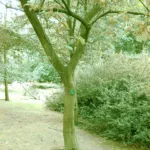 Castanea ‘Pumila’Castanea 'Pumila'
 Bottlebrush buckeye (Aesculus parviflora) care guideAesculus parviflora
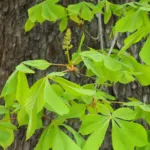 Conker-tree (Aesculus hippocastanum) care guideAesculus hippocastanum
 He Chinese chestnu (Castanea mollissima) care guideCastanea mollissima
 Castanea ‘Sativa’Castanea 'Sativa'