
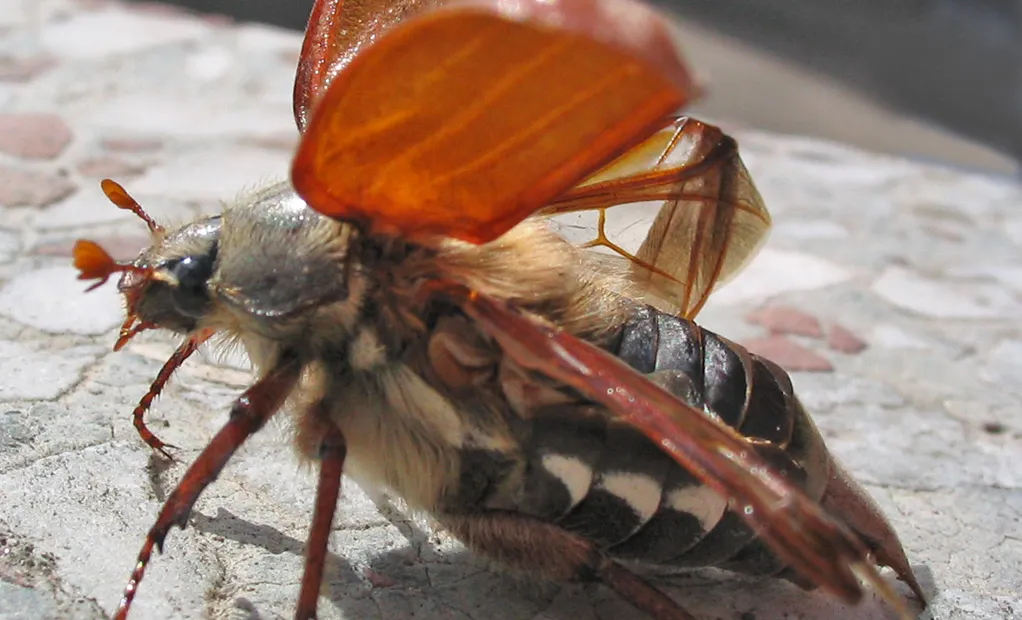
Common cockchafer (European cockchafer)
Melolontha melolonthaCommon cockchafer (European cockchafer) overview
The common cockchafer, or European cockchafer, is a large scarab beetle whose adults chew foliage while its soil-dwelling grubs feed on plant roots. Heavy infestations can weaken or kill turf, vegetable crops, field crops, nursery stock and young trees. Because similar white grubs are common in the United States, confirmed identification is important before choosing control measures.
Typical conditions
Overview
Melolontha melolontha is a large scarab beetle native to Europe and parts of western Asia. Adults are generally about 1–1.2 inches long, brown, ridged along the wing covers, and equipped with distinctive fan-shaped antennae. The larvae are thick, creamy-white, C-shaped grubs with brown head capsules.
Adults chew leaves of deciduous trees and shrubs. Larvae feed below ground on roots, especially grasses and other herbaceous plants, and can cause patchy turf decline, poor establishment of crops, wilting nursery plants and root loss in young trees. Identification should not rely on the common name alone because North American white grubs include many unrelated scarab species.
For US gardeners, a suspected M. melolontha should be treated as an identification and plant-health matter rather than assumed to be an ordinary June beetle or masked chafer.
Symptoms and identification
- Adults produce irregular holes, scalloped margins or partial defoliation on tree and shrub leaves, usually most noticeable during spring flights.
- Root-feeding larvae cause thinning or yellowing turf, loose sod, wilting plants, reduced vigor and poor establishment.
- Severely damaged turf may be peeled back easily because roots have been eaten. Birds, skunks, raccoons or other animals may tear the lawn while searching for grubs.
- Symptoms are nonspecific. Similar damage can be caused by other scarab grubs, root-feeding insects, drought, root diseases or compacted soil.
Causes and spread
Damage is caused by feeding, not by a plant pathogen. Females deposit eggs in soil, commonly in grassland, turf, field margins, pastures or cultivated ground. Larvae remain underground and move through the root zone as they develop. Adults may fly several miles from emergence sites and aggregate in suitable tree canopies for feeding and mating.
Infested soil, sod, nursery plants with attached soil and other growing media can move immature stages. In the United States, regulatory status and reporting requirements may vary by state, so suspected interceptions should be handled according to local plant-health guidance.
Life cycle and persistence
The species commonly has a three-year life cycle, although development varies with climate, latitude, elevation, soil and food supply. Adults emerge from the soil in spring, often from April through June in temperate regions, feed on foliage, mate and lay eggs in the soil.
Eggs hatch after several weeks. Young grubs feed on fine roots, overwinter in the soil, and resume feeding in spring. The oldest larvae generally cause the greatest root injury. Mature larvae pupate in a soil cell, and the new adults remain underground until the following spring. Annual or altered cycles can occur in some regions.
Treatment and control
Confirm the grub or adult before taking action. For turf and beds, sample several locations by cutting small sections of sod or examining soil around declining plants. Count grubs and assess root loss; many white grubs do not justify treatment.
On small trees and shrubs, hand-pick or shake adults onto a sheet during feeding periods and remove them. For root injury, improve plant establishment, correct irrigation or compaction problems, and replant severely damaged annuals after removing accessible grubs. In turf, renovation or reseeding may be more practical than insecticide when damage is extensive.
Because M. melolontha is not a routine established pest throughout the United States and white-grub species differ substantially, consult a county extension office or state plant-health diagnostician for species confirmation and a locally appropriate threshold.
Low-impact and biological control
- Hand-collect adults from small plants and destroy or relocate them where permitted.
- Expose grubs during soil preparation, shallow cultivation or turf renovation and allow birds to forage, while minimizing root disturbance to desired plants.
- Use poultry only where safe and practical, recognizing that scratching can damage turf and plant roots.
- Commercial entomopathogenic fungi or nematodes may suppress some scarab grubs, but performance is species-, soil-, moisture- and timing-dependent. Use only products registered or legally permitted for the crop and pest in the United States and follow the label.
- Encourage predators and maintain diverse plantings rather than relying on routine preventive insecticide applications.
Prevention
- Inspect incoming sod, nursery stock and soil-containing materials for large white grubs before planting or moving them.
- Maintain vigorous turf through appropriate mowing, irrigation and fertility practices, while avoiding unnecessary irrigation that favors lush grass and egg-laying habitat.
- Reduce unmanaged grassy areas near high-value plantings where cockchafer activity is confirmed.
- Use physical barriers or insect netting over small, valuable plants during local adult flight periods.
- Monitor susceptible trees and turf in spring and inspect roots or soil rather than treating from foliage symptoms alone.
- Support insectivorous birds and other wildlife where compatible with local garden goals; avoid broad-spectrum treatments that eliminate natural enemies.
Interesting facts
- The common cockchafer is also called the May beetle or May bug, although adults may appear outside May depending on weather and location.
- The pointed structure at the end of the abdomen is associated with egg laying and is not a stinger.
- Adults and larvae occupy very different habitats: adults feed above ground, while larvae spend most of their lives in soil.
- Large regional flights can occur after several years of underground development, producing conspicuous but sometimes temporary outbreaks.
- Several other European cockchafer species, including Melolontha hippocastani, can resemble this species and have overlapping host plants.
Do not use a pesticide program based only on the name “white grub” or “June bug.” If chemical control is warranted, use only a product legally authorized in your state for the identified pest and crop or site, and follow the current label exactly, including application timing, irrigation requirements, reentry restrictions, pollinator precautions and disposal directions. A local extension specialist should confirm the species and whether treatment is justified.
Affected plants
The plants below are linked to this problem by structured host-plant data. The list updates automatically as new plant profiles are added.
 Field maple (Acer campestre) care guideAcer campestre
 Paperbark Maple (Acer griseum) care guideAcer griseum
 Downy Japanese Maple (Acer japonicum) care guideAcer japonicum
 Boxelder (Acer negundo) care guideAcer negundo
 Acer palmatum care guideAcer palmatum
 He Norway maple (Acer platanoides) care guideAcer platanoides
 Sycamore maple (Acer pseudoplatanus) care guideAcer pseudoplatanus
 Red maple (Acer rubrum) care guideAcer rubrum
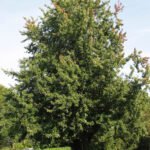 Silver maple (Acer saccharinum) care guideAcer saccharinum
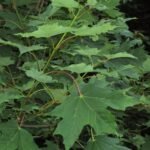 Sugar maple (Acer saccharum) care guideAcer saccharum
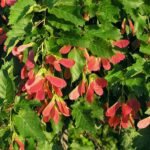 Tatar Maple (Acer tataricum) care guideAcer tataricum
 Amur Maple (Acer tataricum ginnala) care guideAcer tataricum ginnala