
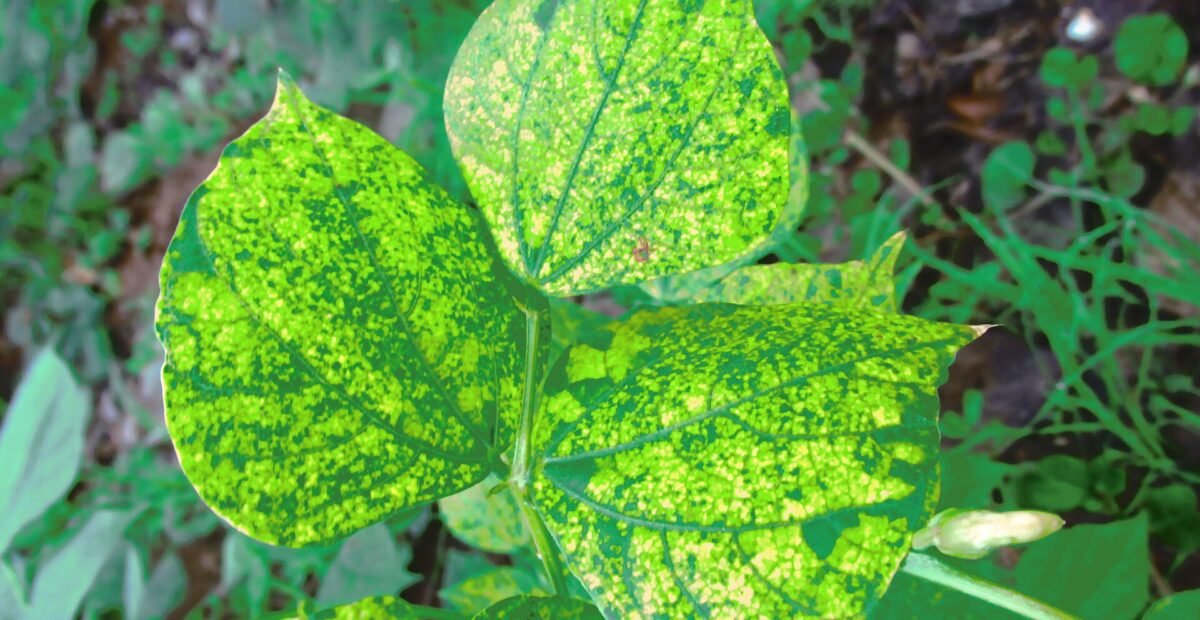
Bean yellow mosaic
Bean yellow mosaic virusBean yellow mosaic overview
Bean yellow mosaic is a viral disease caused by Bean yellow mosaic virus (BYMV), most often recognized by sharply contrasting yellow and green mottling on bean leaves. Infected plants may also become curled, puckered, stunted, or poorly productive. BYMV is commonly introduced from infected legume or ornamental hosts and spread rapidly by aphids, so prevention and early removal are more useful than attempts to cure infected plants.
Typical conditions
Overview
BYMV usually appears as a contrasting yellow-and-green mosaic or mottle on bean leaves. Symptoms can be mild or severe depending on bean cultivar, virus strain, plant age at infection, and growing conditions. Young infections are more likely to reduce growth, flowering, pod set, and final yield.
Do not diagnose BYMV from yellowing alone. Nutrient deficiencies, herbicide injury, aphid feeding, bean common mosaic virus, cucumber mosaic virus, and other disorders can look similar. Strong yellow mosaic combined with leaf distortion and a nearby legume or gladiolus source increases suspicion.
Symptoms and identification
- Bright yellow to green mosaic, mottling, or irregular chlorotic patches on leaflets.
- Leaf puckering, wrinkling, downward cupping, curling, stiffness, or abnormal glossiness.
- Young leaves may be narrow, malformed, or distorted.
- Early infection can cause stunting, bunchy growth, delayed development, flower shedding, and reduced pod or seed production.
- Pods are often less conspicuously affected than leaves, although pod number, size, or seed number may decline.
Symptoms vary widely among host species and virus strains. Bean common mosaic virus often produces predominantly light- and dark-green mosaic rather than the striking yellow-green contrast associated with BYMV, but visual separation is not always reliable.
Causes and spread
BYMV is spread primarily by aphids in a nonpersistent manner. Aphids can acquire the virus during brief probes on infected plants and transmit it to healthy beans during subsequent probing, often within seconds. Important vector records include pea aphid (Acyrthosiphon pisum), green peach aphid (Myzus persicae), and bean aphid (Aphis fabae), among other species.
Common reservoirs include clovers, alfalfa, vetches, other legumes, weeds, and some ornamental plants such as gladiolus. BYMV is generally not considered seed-transmitted in common bean, although seed transmission is documented or suspected in some other legume hosts and varies by host, cultivar, and virus strain.
Life cycle and persistence
The virus survives between bean crops in infected perennial or volunteer legumes, weeds, and susceptible ornamentals. Winged or migrating aphids move from these sources into bean plantings, acquire BYMV during brief feeding probes, and inoculate nearby plants. The virus then spreads systemically through infected bean tissue.
New infections may become visible after several days to roughly two weeks, but the interval varies with temperature, host genotype, virus strain, and plant age. Aphid insecticides generally do not prevent initial transmission effectively because nonpersistent transmission occurs before the insecticide can stop probing.
Treatment and control
There is no curative treatment that removes BYMV from an infected bean plant. Markedly symptomatic plants are usually unproductive and should be pulled, bagged, and disposed of rather than composted. Remove nearby volunteer legumes and weeds that may maintain the virus or attract vector aphids.
In commercial or high-value plantings, confirm the diagnosis through a plant disease clinic or diagnostic laboratory, especially when seed production, cultivar selection, or quarantine decisions are involved. Manage the next crop with resistant varieties, separation from reservoir hosts, and early scouting rather than relying on late rescue sprays.
Low-impact and biological control
- Remove infected plants and nearby virus-reservoir weeds by hand.
- Use reflective or aluminized mulch to discourage aphid landing during early crop growth.
- Conserve lady beetles, lacewings, syrphid larvae, parasitoid wasps, and other natural enemies by avoiding unnecessary broad-spectrum insecticides.
- Use strong water sprays to dislodge aphids from young plants when practical, recognizing that this will not reliably prevent virus transmission.
- Maintain weed-free bed margins and avoid planting beans immediately beside clover or other susceptible legume cover crops.
Organic production does not eliminate the need for sanitation and resistant varieties. No organically acceptable treatment can cure a systemically infected plant.
Prevention
- Plant cultivars with documented BYMV resistance or tolerance when suitable varieties are available for the crop and region.
- Keep beans as far as practical from clover, alfalfa, vetch, gladiolus, and unmanaged legume weeds; this is especially important in seed-production plantings.
- Remove volunteer beans and broadleaf weeds that may harbor viruses or aphids.
- Inspect plants frequently from emergence through flowering. Remove and discard strongly symptomatic plants promptly, before aphids can move the virus further.
- Use clean, reputable seed and healthy transplants. BYMV is not normally seedborne in common bean, but other bean viruses may be, so clean seed remains important for diagnosis and prevention.
- Use reflective mulch where practical to delay aphid landing and virus spread, particularly in small vegetable plantings.
- Disinfect hands and tools after handling symptomatic plants, and avoid moving sap from infected plants to healthy beans during pruning or harvesting.
Interesting facts
- BYMV belongs to the genus Potyvirus and family Potyviridae.
- Its host range includes both dicotyledonous and monocotyledonous plants and is broader than the name “bean” suggests.
- More than 20 aphid species have been reported as vectors or associated with spread in different regions and virus isolates.
- BYMV and bean common mosaic virus frequently occur in the same production systems, making visual diagnosis difficult.
- Transmission is so rapid that killing or repelling aphids after they have begun probing may not prevent the first infection.
No pesticide program is recommended as a cure for BYMV. Aphid insecticides are generally unreliable for preventing nonpersistent virus transmission and may disrupt natural enemies. Use only products legally authorized for the specific crop and problem in your country, and follow the current product label, state requirements, re-entry intervals, and preharvest intervals. In the United States, verify the label and crop registration before any use.
Affected plants
The plants below are linked to this problem by structured host-plant data. The list updates automatically as new plant profiles are added.
 Broad Bean (Vicia faba) care guideVicia faba
 He tepary bea (Phaseolus acutifolius) care guidePhaseolus acutifolius
 Snap bean (Phaseolus coccineus) care guidePhaseolus coccineus
 Butter bea (Phaseolus lunatus) care guidePhaseolus lunatus
 String Bean (Phaseolus vulgaris) care guidePhaseolus vulgaris
 Lentil (Vicia lens) care guideVicia lens
 Black Gram (Vigna mungo) care guideVigna mungo
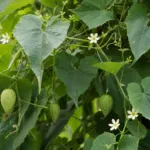 Musk cucumber (Sicana odorifera) care guideSicana odorifera
 Romaine lettuce (Lactuca sativa Longifolia Group)Lactuca sativa Longifolia Group
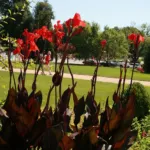 Canna lily (Canna ‘Australia’)Canna 'Australia'
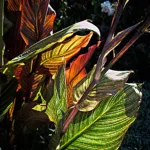 Canna lily (Canna ‘Bengal Tiger’)Canna 'Bengal Tiger'
 Canna lily (Canna ‘Black Knight’)Canna 'Black Knight'