
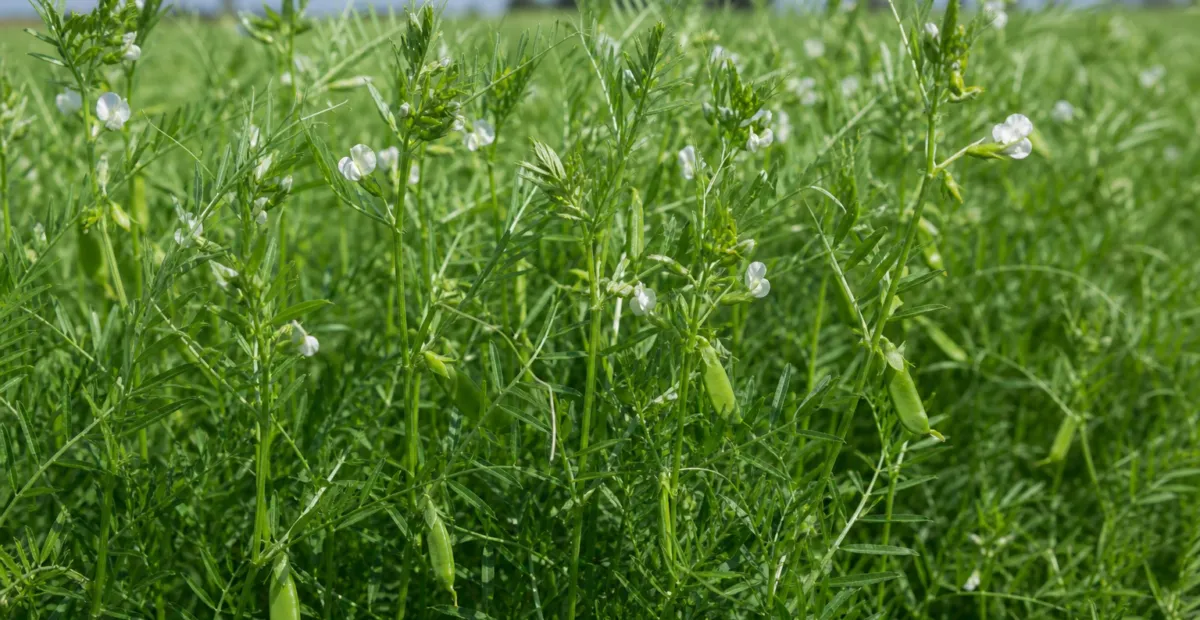
Lentil (Vicia lens) short overview
Vicia lens, the lentil, is a cool-season annual legume cultivated for its protein-rich, lens-shaped seeds. It grows best in full sun, well-drained soil and moderate moisture, with delicate foliage, small pale flowers and short pods. In the United States it is primarily a field or vegetable-garden crop rather than an ornamental, and it performs best when established early in spring. Vicia lens is the accepted botanical name used here for lentil, a cool-season annual legume in Fabaceae. It forms slender, spreading plants with tendril-tipped compound leaves, small pale pea-like flowers and short pods containing flattened edible seeds.
Taxonomic classification
Lentil (Vicia lens) care guide
Light and placement
Choose an open site receiving at least 6 hours of direct sun, ideally with southern or southeastern exposure. Morning sun and good air movement help foliage dry quickly. Weak, stretched growth and poor pod set indicate insufficient light; excessive heat and drought stress at a hot west-facing site can shorten flowering and reduce seed fill.
Watering and humidity
Water deeply enough to moisten the root zone, then allow the surface to dry slightly before watering again. Keep moisture steady during germination, flowering and pod development, but reduce irrigation as pods mature and stop watering once plants are drying down unless severe drought threatens seed formation. Avoid saturated soil and overhead watering.
Soil and growing medium
Use loose, well-drained loam or sandy loam with good moisture-holding capacity but no prolonged saturation. Lentils tolerate relatively lean soil and generally perform poorly in compacted or waterlogged ground. A near-neutral soil reaction is suitable; avoid excessive nitrogen, which can encourage foliage at the expense of seed production.
Feeding
Lentils generally need little fertilizer when grown in reasonably fertile soil. Incorporate mature compost before sowing if the soil is poor, but avoid heavy nitrogen applications because they can produce excessive vegetative growth and delay maturity. A soil test is preferable to routine feeding; do not fertilize drought-stressed plants.
Growth and habit
Plants are slender, branching and often somewhat spreading or scrambling rather than strongly upright. Their shallow, fine-rooted habit benefits from early weed control and even moisture during flowering and pod fill. Avoid frequent disturbance once stems begin flowering, because the plants can lodge or tangle.
Planting and repotting
Sow directly as soon as the soil can be worked in early spring. Place seeds about 1–1½ inches deep in prepared soil and keep the seedbed evenly moist until emergence. Provide support or a low trellis in exposed sites if stems sprawl, and control weeds early because seedlings are not strongly competitive.
Usually grown directly in the ground and not repotted. If started in containers, transplant very young seedlings carefully before roots become crowded, minimizing disturbance to the delicate root system.
Propagation and pruning
Propagation
Propagate by seed. Direct sowing is preferred because lentils develop a root system that can be disturbed by transplanting. Use fresh, clean seed and sow in early spring or another cool growing window.
Pruning
No routine pruning is needed. Do not cut plants during active growth because the crop is harvested for pods and seeds. After the pods have matured and dried, remove spent plants and crop debris to reduce disease carryover.
Overwintering
This is normally treated as a spring or cool-season annual in the United States. It does not require indoor overwintering. In mild climates, fall sowing may be possible, but winter survival and disease risk vary substantially by region; protect young plants from hard freezes with a temporary frost cover.
Uses
Primarily grown for its edible dried seeds, which are used in soups, stews, dals and other pulse dishes. It can also be grown as a small-scale legume crop or cool-season garden plant. The species is not usually selected as a showy ornamental, and culinary use requires proper cooking of the harvested seeds.
Appearance
The plant has slender green stems bearing paired, pinnate leaflets with a terminal tendril or awn. Its small axillary flowers are followed by short, flattened pods. The compressed, lens-shaped seeds distinguish lentil from many other small-seeded legumes, although field identification among related vetches may require technical characters.
Flowering
Small pea-family flowers arise from the leaf axils and are typically white, pale blue or violet, sometimes with subtle darker markings. Flowers open over a short period; most seed set occurs through self-pollination, although occasional cross-pollination by small insects can occur.
Pollination and visitors
Flowers are mainly self-pollinated. Occasional cross-pollination can be mediated by thrips or other small insects, but the species is not documented here as a strong nectar or pollen resource for a particular named pollinator.
Diseases and pests
Diseases
Use clean seed, rotate away from legumes and avoid overhead irrigation. Watch for root rots, damping-off, Ascochyta blight and rust-like foliar symptoms. Improve drainage and remove severely affected plants; fungicides should follow current local labels and crop recommendations.
Pests
Monitor seedlings for aphids, cutworms, leaf miners and pea aphid-like sap feeders. Remove weeds that shelter pests, use row covers for young plants where practical, and encourage beneficial insects. Treat only when damage is significant and follow current product labels for edible crops.
Toxicity and pollen
The mature seeds are a widely eaten food. As with other pulses, uncooked seeds contain antinutritional compounds and should be properly cooked before eating. No reliable evidence was found establishing Vicia lens foliage or seeds as a specifically poisonous ornamental plant, so ordinary food hygiene and supervision around children and pets are appropriate.
- Typical season
- Spring
- Pollination / pollen
- Mostly retained within self-pollinating flowers
Lentil flowers produce pollen, but the crop is predominantly self-pollinating and is not generally characterized as a major airborne pollen source. Sensitized people can still react to legume pollen or lentil proteins, so individual allergy history matters more than a crop-wide allergy rating.
Native habitat
The species is associated with temperate and Mediterranean-region climates and occurs in open, seasonally dry habitats and cultivated landscapes. It favors sunny sites with moderate rainfall, well-drained soils and a cool growing season, while heat and excess moisture can reduce performance.
Interesting fact
The species has a long history of taxonomic treatment under both Vicia and Lens. Its seeds are characteristically flattened and lens-shaped, and the crop is valued for protein-rich edible pulses. Lentils are cool-season legumes that can contribute biologically fixed nitrogen through root symbioses, although nodulation depends on compatible rhizobia.
Frequently asked questions (FAQ)
The most relevant questions about this plant, with short and direct answers.
🌱Quick care
What is Vicia lens?⌄
Vicia lens is the lentil, an annual legume grown for its edible, lens-shaped seeds. Modern taxonomic references accept Vicia lens, while Lens culinaris remains a widely used synonym in agricultural and gardening sources.
Is lentil easy to grow in a home garden?⌄
Lentil is relatively easy to grow when given full sun, cool weather, well-drained soil, and careful weed control. Its plants are small and delicate, so harvests are usually modest in a home garden.
🌤️Environment and placement
How much sun does lentil need?⌄
Lentil needs full sun, ideally at least 6 hours of direct sunlight daily. Good light supports sturdier growth, flowering, and seed production.
What climate is best for growing lentils?⌄
Lentils grow best in cool, relatively dry conditions with a long enough season for pods to mature. They tolerate light spring frost but generally perform poorly in hot, humid weather or persistently wet soil.
Can lentils survive frost?⌄
Young lentil plants tolerate light frost and may recover from minor cold damage. Severe freezes, repeated frost, or freezing conditions during flowering and pod filling can reduce growth and yield.
What USDA hardiness zone is suitable for lentils?⌄
Lentils are best treated as cool-season annuals rather than as a permanent hardiness-zone plant. In the United States, sowing time and local spring or fall conditions matter more than the USDA zone alone.
What type of soil does lentil need?⌄
Lentil prefers well-drained loam or sandy loam with moderate fertility and a near-neutral pH. Avoid heavy clay, compacted ground, and sites that stay wet after rain.
Can lentils fix nitrogen in the soil?⌄
Lentils can fix atmospheric nitrogen when compatible Rhizobium bacteria form healthy root nodules. Nitrogen fixation is not automatic in every soil, so inoculation may be beneficial where lentils or related legumes have not been grown before.
💧Care and problems
How often should lentils be watered?⌄
Water lentils moderately, keeping the soil lightly and evenly moist during germination and early growth. Once established, allow the surface to dry slightly between waterings and reduce irrigation as pods mature.
Are lentils drought tolerant?⌄
Established lentils have some drought tolerance, but drought during flowering and pod development can sharply reduce seed formation. Consistent moisture is most important during germination and reproductive growth.
Do lentils need a trellis?⌄
Lentils usually do not require a trellis, but their slender stems can sprawl or lodge as pods develop. Short netting, twiggy supports, or closely spaced plants can help keep the crop off the ground.
Do lentils need fertilizer?⌄
Lentils generally need little nitrogen fertilizer because they are legumes that can obtain nitrogen through root nodules. Excess nitrogen may produce leafy growth instead of better seed production, so test the soil and fertilize only for demonstrated deficiencies.
Why are my lentil plants turning yellow?⌄
Yellowing can result from natural maturity, overwatering, poor drainage, nitrogen-fixation problems, or root disease. If yellowing occurs early, check soil moisture, drainage, root health, and whether the seed was inoculated appropriately.
Why are my lentil plants falling over?⌄
Lentils may fall over because of weak, elongated growth, dense planting, wind, heavy rain, or pod weight. Grow them in full sun, avoid excess nitrogen, and use low support or netting if lodging becomes a problem.
Why are lentil pods not filling?⌄
Poor pod filling is commonly associated with heat, drought, excessive rain, weak pollination, or nutrient and disease stress. Keep plants evenly watered during flowering and pod development, but avoid saturated soil.
How do I control weeds around lentils?⌄
Control weeds early with shallow cultivation, hand weeding, or a clean mulch that does not bury the stems. Lentils compete poorly with weeds, especially during establishment, and their shallow roots can be damaged by deep cultivation.
🪴Planting and repotting
Can lentils grow in containers?⌄
Lentils can grow in containers if the pot is at least 8 to 12 inches deep, has drainage holes, and receives full sun. A wider container is useful because the plants are usually sown in groups rather than grown as a single specimen.
When should I plant lentils in the United States?⌄
Plant lentils in early spring as soon as the soil is workable and cool, commonly when soil temperatures are around 40°F or slightly higher. In suitable mild climates, fall planting may also be possible, but local disease and winter conditions must be considered.
How deep should lentil seeds be planted?⌄
Sow lentil seeds about 1 to 1½ inches deep in prepared soil. Planting too shallow can leave seeds vulnerable to drying, while planting too deeply can delay emergence.
How far apart should lentil plants be spaced?⌄
Space lentil seeds about 1 to 2 inches apart in rows 6 to 12 inches apart. Dense spacing can improve ground coverage but may increase competition, humidity, and difficulty during harvest.
Should lentil seed be inoculated before planting?⌄
Inoculating lentil seed with the appropriate Rhizobium bacteria can improve nitrogen fixation, especially where lentils or related legumes have not previously been grown. Use an inoculant labeled for lentils rather than a general-purpose product.
✂️Propagation and pruning
Can lentils be grown as a cover crop?⌄
Lentils can be used as a cool-season legume cover crop, although they are generally more valuable for seed production than for large amounts of biomass. Mow or terminate plants before mature seed drop if you do not want them to reseed.
How are lentils propagated?⌄
Lentils are propagated from seed and are normally direct-sown because they develop a relatively sensitive root system. Use clean, viable seed and avoid disturbing seedlings after emergence.
Can I grow lentils from grocery-store lentils?⌄
Dried grocery-store lentils may germinate, but they are not guaranteed to be viable, true to type, or adapted to your growing conditions. Garden or agricultural seed is more reliable, particularly when you need disease-tested seed or a known maturity time.
Do lentils need pruning?⌄
Lentils do not need pruning. Removing stems or foliage can reduce flowering and seed production, so limit maintenance to weeding, support, and removal of clearly diseased material.
⚠️Toxicity and safety
Can I eat lentil seeds straight from the plant?⌄
Lentil seeds should be thoroughly cooked before eating. Do not eat unknown wild seeds or uncooked lentils, because their safety and digestibility have not been established in the same way as properly prepared food lentils.
Are lentil plants poisonous to dogs or cats?⌄
No specific toxicity for Vicia lens has been established in the supplied plant record, but pets should not be encouraged to eat the plant or raw seeds. Contact a veterinarian or animal poison service if a pet consumes a large amount or develops symptoms.
Are lentil plants toxic to humans?⌄
No specific toxicity is established for the lentil plant in the supplied context, but the seeds should be cooked before consumption. Avoid eating plants or seeds that have been misidentified, chemically treated, or contaminated.
🌸Flowering and special interest
How long do lentils take to mature?⌄
Most lentils mature in roughly 80 to 110 days, although cultivar, temperature, moisture, and planting date affect the timing. Harvest begins when most pods are filled and the lower pods have turned tan or brown.
How do I know when lentils are ready to harvest?⌄
Harvest lentils when most plants are yellowing, the lower pods are dry, and the seeds inside are firm and fully colored. Pull or cut the plants, allow them to finish drying in a protected, well-ventilated place, then thresh and clean the seeds.
Do lentils have flowers?⌄
Yes, lentils produce small pea-family flowers, commonly white to pale blue or violet depending on the type. Flowers are followed by short pods containing the edible seeds.