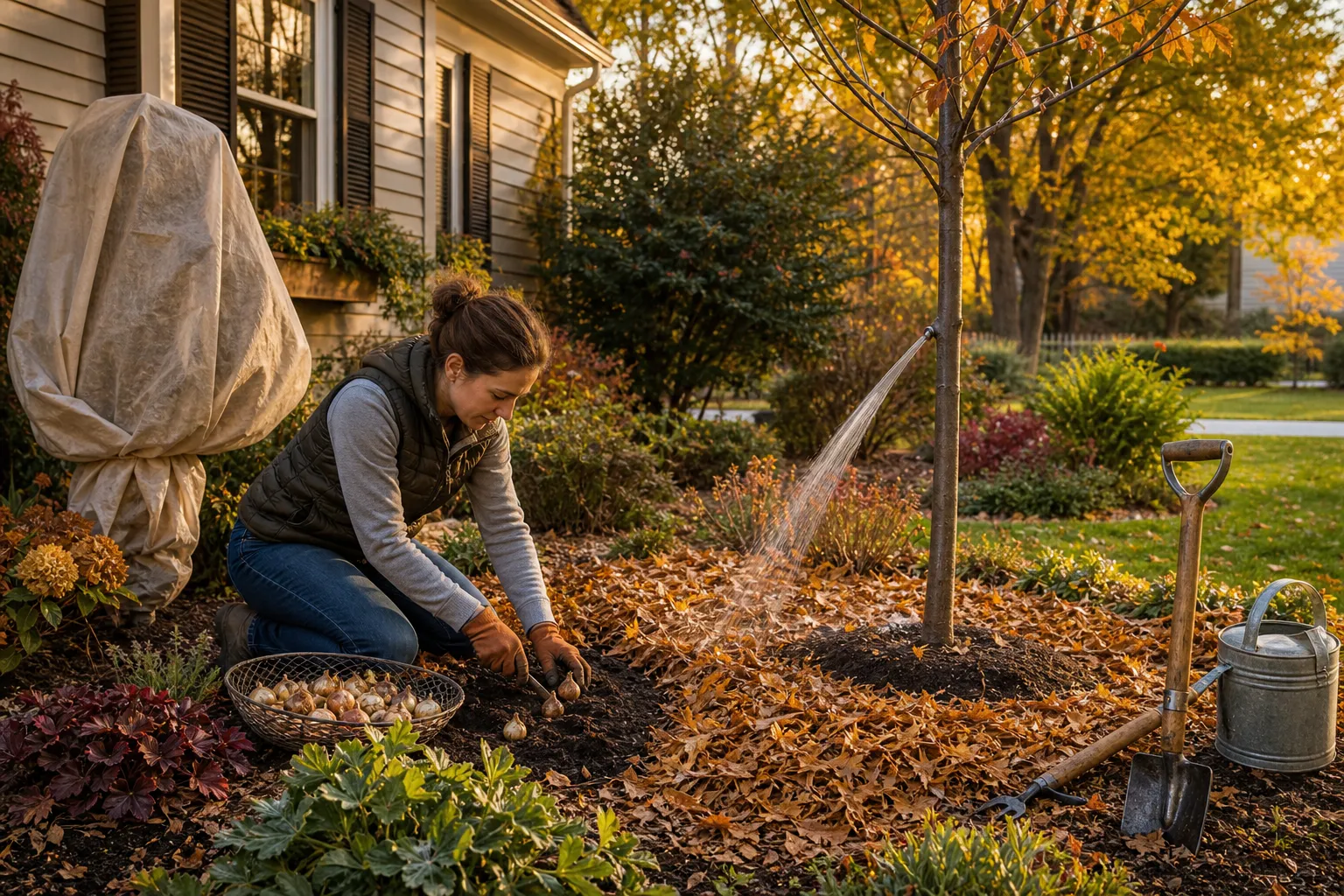
November is not the month to rush through the garden with a leaf blower and put everything away. Before the ground freezes, focus on five practical jobs: harvest and tidy garden beds, give trees and shrubs a final deep drink, plant spring bulbs and hardy woody plants, mulch and protect vulnerable roots, and winterize your lawn, containers, tools, and irrigation system.
The exact timing depends on where you live. In much of the United States, the best guide is not the calendar but the condition of the soil: finish planting while you can still dig easily, water while the ground can absorb it, and apply winter mulch after the soil begins to freeze in colder regions. Plants also respond differently to winter. A well-established native perennial may need little help, while a newly planted shrub, shallow-rooted strawberry, or marginally hardy rose may benefit from extra protection.
Here is the November checklist I would use in a home garden before the first lasting freeze.
1. Finish harvesting and clean up the beds selectively
Start with anything that cannot tolerate a hard freeze. Harvest remaining peppers, tomatoes, winter squash, pumpkins, herbs, and tender greens according to the expected weather in your area. Root crops such as carrots and parsnips can often remain in the ground longer, especially under a layer of loose mulch, but lift them before the soil becomes too hard to work.
Once the vegetable garden is finished, remove spent annuals and plants that are clearly diseased. Do not add leaves or stems with obvious disease to a home compost pile unless your compost system reliably reaches temperatures high enough to destroy the problem. Bagging and disposing of suspicious material is the safer choice.
Do not feel that every stem has to be cut down. Seedheads and hollow stems provide winter food and shelter for birds and beneficial insects, while dried grasses can add structure during the colder months. Leave healthy perennial stems in selected areas and plan to cut them back in late winter or spring, when overwintering insects have had more time to emerge.
Keep leaves where they help – and remove them where they smother
A thick, wet layer of leaves can shade turf and cause it to decline, so rake heavy accumulations from the lawn. Instead of hauling every leaf away, run a mulching mower over light layers and leave the chopped material on the grass, or move leaves into garden beds and compost piles.
- Keep lawns reasonably free of whole leaves.
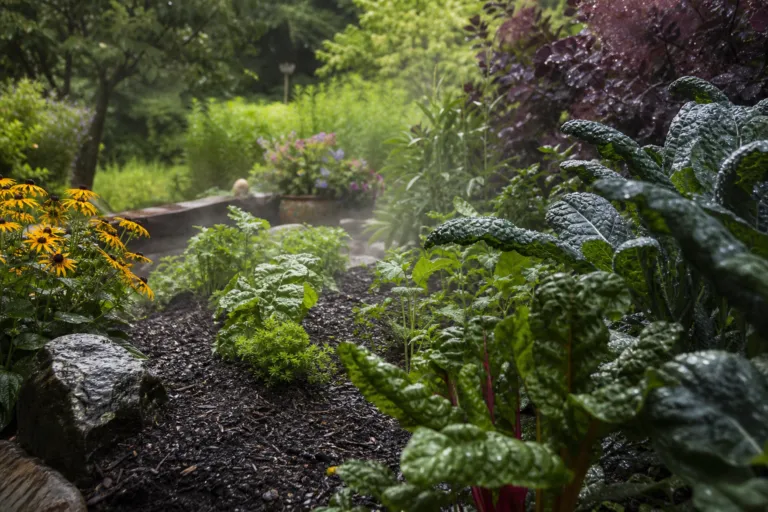
- Use shredded leaves as a soil cover around trees, shrubs, and perennials.
- Leave some dry stems and seedheads for winter habitat.
- Remove diseased plant material and invasive weeds before they set more seed.
This is also a useful moment to make notes. Which plants finished strongly? Which ones struggled in shade, wet soil, or summer heat? A brief November inventory can save you from repeating the same mistake next spring.
2. Deep-water trees and shrubs before the soil freezes
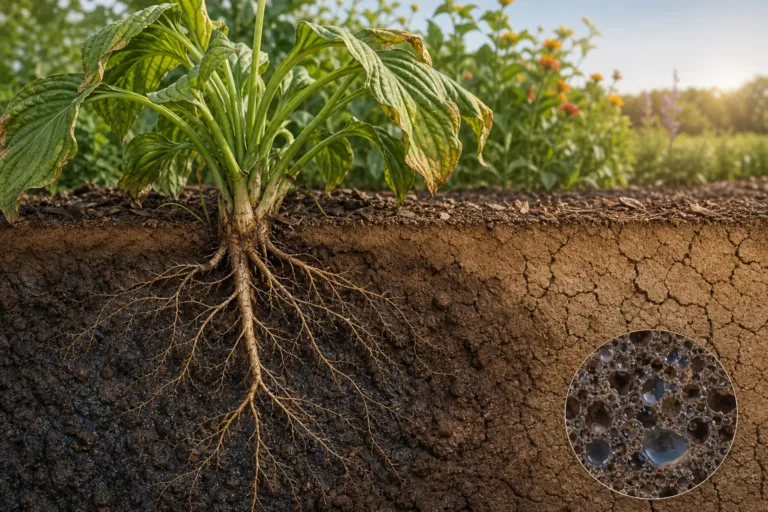
Late fall watering is about preventing winter drought, not keeping plants actively growing. Newly planted trees and shrubs, evergreens, foundation plants sheltered beneath roof eaves, and plants in sandy or fast-draining soil deserve particular attention. They may enter winter with dry roots even when the air feels cool and damp.
Water on a mild day when the soil is not frozen and temperatures will remain above freezing long enough for excess water to drain. Aim the hose at the root zone rather than the trunk or foliage. For trees, water broadly beneath the canopy and toward the drip line – the outer edge of the branches where rain naturally falls.
A simple watering measurement
Instead of guessing, place a straight-sided one-inch-deep tuna can or rain gauge under the sprinkler. Run the system until it collects about 1 inch of water, then check the soil with a hand trowel. Moisture should reach several inches down, but the area should not remain saturated or muddy.
For a newly planted shrub, a slow soak over the root ball and surrounding soil is usually more useful than several quick sprays. As a small backyard comparison, try measuring two watering methods: apply 1 inch from a sprinkler in one area, then give a second plant the same total amount through a slow-dripping hose. The slower application usually produces less runoff on compacted or sloped ground.
Do not water automatically just because it is November. Overwatering can fill air spaces in the soil, depriving roots of oxygen. Heavy clay soil, poorly drained planting sites, and low spots need more caution than raised beds or sandy soil. Always allow water to drain between applications.
Species also differ. Broadleaf evergreens such as rhododendrons and some hollies can lose moisture through their leaves during winter, while dormant deciduous shrubs have a different water demand. Conifers, newly planted fruit trees, and shallow-rooted shrubs may need attention, but an established plant in naturally moist soil may not.
3. Plant spring bulbs, garlic, and hardy trees while the soil is workable
If you can still dig, November may be your final opportunity to plant many spring-flowering bulbs. Daffodils, tulips, crocuses, ornamental alliums, and other hardy bulbs need time to make roots before the ground freezes. Choose firm bulbs without soft spots, and plant them at the depth recommended on the package rather than using one rule for every type.
For the most reliable spring display, compare varieties instead of treating all bulbs alike. Daffodils generally return dependably for years and are often a good choice for a low-maintenance border. Tulips can provide dramatic color, but their performance varies by type and site; some are most spectacular in their first season, while perennializing varieties may return more consistently in well-drained soil. Crocuses bloom early and are useful for naturalizing in lawns or open beds, provided the foliage can mature after flowering.
Good drainage matters more than many gardeners expect. Bulbs dislike sitting in cold, waterlogged soil. If a bed stays wet, plant on a slight mound, improve the planting area with well-aged organic matter, or choose a better-drained location rather than simply watering less.
Fall is also a good planting season for many dormant trees and shrubs, particularly where local conditions allow several weeks for roots to settle before the ground freezes. Select plants suited to your USDA hardiness zone, but remember that hardiness is not the same as site suitability. A plant may tolerate your winter minimum yet fail in heavy shade, reflected heat, salty soil, or standing water.
- Set the root flare at soil level; do not bury the trunk.
- Backfill with the soil you removed unless a local recommendation says otherwise.
- Water thoroughly after planting if the soil is still absorbent.
- Apply mulch over the root zone, keeping it away from the trunk.
- Stake only when wind or a loose root ball makes support necessary.

4. Mulch and protect roots after the soil begins to freeze
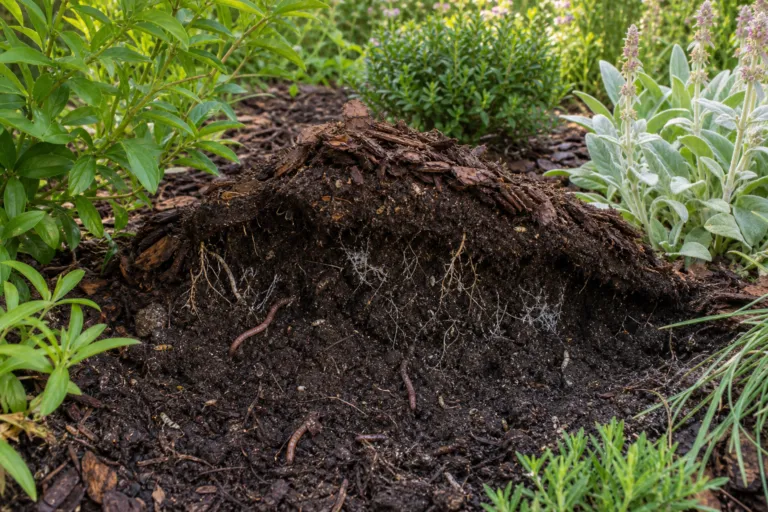
Mulch is not just decoration. It moderates soil temperature, reduces moisture loss, and helps limit the repeated freezing and thawing that can push shallow-rooted plants out of the ground. In colder parts of the country, wait until the soil has begun to freeze before applying a deep winter blanket over perennials and spring bulbs. Mulching too early can keep the soil unusually warm and encourage tender growth when plants should be hardening for winter.
Use clean straw, shredded leaves, partially decomposed compost, or another suitable organic material. In many cold-climate gardens, a 3- to 5-inch layer is useful, while especially exposed perennial beds may need more. The right depth depends on the material, wind exposure, snow cover, and local climate.
Keep mulch several inches away from tree trunks and shrub stems. A thick “mulch volcano” traps moisture against bark and creates a poor environment for the trunk. Spread mulch in a broad, shallow ring over the root zone instead.
Protect the plants that actually need help
Begin with newly planted or borderline-hardy plants rather than covering the entire garden. Strawberries, young trees, roses, tender perennials, and containers often need more winter protection than established plants rated for your area. In windy or snowless regions, evergreen boughs, breathable fabric, or loose straw can reduce temperature swings.
Do not wrap plants tightly in plastic or leave protective covers in place during mild weather. Covers can trap moisture and heat. Use a frame or cage when necessary, secure the material so it cannot rub against stems, and remove or vent it when conditions moderate.
Mulch is also a chance to compare planting styles. In one bed, a thick layer of shredded leaves may settle and compact; in another, airy straw may shed water and provide better insulation. Watch how each material behaves through winter, then adjust next year. Garden protection works best when it matches the plant, soil, exposure, and local weather – not when every bed receives the same treatment.
5. Winterize the lawn, containers, tools, and irrigation
Give the lawn one last inspection before winter. Mow while the grass is still growing, but avoid scalping it. Remove thick leaf piles, fill obvious bare spots if your regional timing allows, and avoid walking repeatedly on frozen turf when there is no snow cover. Frozen grass can be damaged by concentrated foot traffic.
Empty or move containers that could crack when wet potting mix freezes and expands. Hardy pots can be grouped in a sheltered location, while tender plants should move into an appropriate protected space before a hard freeze. Check each plant’s light and temperature needs; a dark, warm room may be worse than a cool, bright porch for some dormant plants.
Before freezing weather arrives, disconnect hoses, drain them, and store them out of direct weather. Shut down irrigation systems according to the manufacturer’s instructions. In regions where underground lines can freeze, arrange professional blowout service or use the system’s recommended winterization procedure. Do not assume that turning off the controller removes all water from the pipes.
Clean soil from shovels, pruners, trowels, and hoes. Dry metal surfaces thoroughly and apply a light protective coating if appropriate. Sharpen pruners and mower blades now, replace worn gloves, and label saved seeds before storing them in a cool, dry place. A small amount of maintenance in November makes the first busy spring weekend much easier.
What not to rush in November
November invites over-cleaning, overwatering, and overprotecting. Resist the urge to fertilize every plant without a soil test or a clear crop-specific reason. Avoid major pruning of spring-flowering shrubs if you would remove next year’s flower buds. And do not cover healthy, hardy plants simply because the forecast looks dramatic for one night.
Use your garden’s clues: soil moisture, drainage, plant hardiness, exposure, and the condition of new growth. A sunny, well-drained bed may need less winter intervention than a shaded, compacted one. Likewise, a drought-tolerant native perennial and a recently planted broadleaf evergreen should not receive identical care.
Your final November garden check
Before the ground freezes, walk the garden with five questions in mind:
- Have I harvested tender crops and removed diseased debris?
- Are newly planted trees, shrubs, and evergreens adequately watered?
- Can I still plant bulbs, garlic, or hardy woody plants?
- Which roots or containers genuinely need winter protection?
- Are the lawn, irrigation lines, hoses, and tools ready for freezing weather?
You do not need a perfectly bare garden to have a successful winter. The goal is a stable, well-drained, well-watered landscape with enough natural cover to protect roots and enough restraint to avoid rot, runoff, and unnecessary work. Finish these five jobs at the right moment for your local conditions, and your garden will be better prepared to rest now and restart strongly when spring returns.