
 Source:
 Black cutworm
Agrotis ipsilon (Hufnagel, 1766)Black cutworm overview
Black cutworm, Agrotis ipsilon, is a nocturnal moth pest whose larvae attack young corn, vegetables, strawberries, turfgrass and many other plants. Small caterpillars chew irregular holes in leaves, while larger larvae hide in soil or debris and sever stems at or just below ground level. Damage is often localized and sporadic, but seedling losses can be severe when timing, weeds and weather favor an infestation.
Typical conditions
Overview
Black cutworm is the larval stage of Agrotis ipsilon, a nocturnal moth in the family Noctuidae. In the United States it is a sporadic but potentially serious pest of emerging field crops, vegetables, strawberries and turfgrass. Corn is especially vulnerable during early growth, although the caterpillars feed on many broadleaf and grass plants.
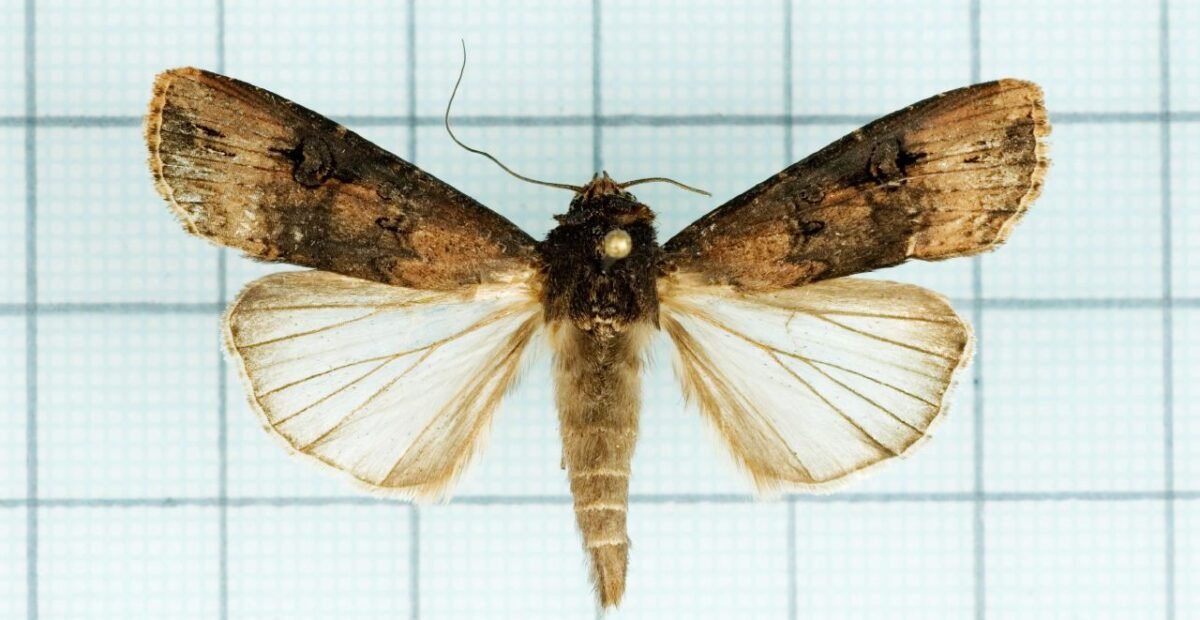
Adults are mottled gray-brown moths with a characteristic dark dagger-like mark on each forewing. Because several cutworm species cause similar injury, confirm the caterpillar when possible rather than identifying the pest from plant damage alone.
Symptoms and identification
- Young seedlings may be cut through at the soil line or slightly below it, causing sudden wilting, lodging or missing plants.
- Small larvae chew irregular holes in leaves; larger larvae may remove leaves, girdle stems or occasionally climb plants to feed.
- Damage commonly occurs in patches, especially where weeds or dense vegetation were present before planting.
- During daylight, larvae are usually hidden in loose soil, under clods, mulch or plant debris near damaged plants. They curl into a C-shape when disturbed.
- Mature larvae are commonly gray to nearly black, with a pale dorsal stripe and a greasy appearance. Under magnification, the body has rounded dark tubercles of unequal size.
Causes and spread
Damage is caused by chewing mouthparts of the larva, not by a plant disease. Adult moths are attracted to low-growing weeds, grasses, dense cover crops and crop residue for egg laying. Larvae then move into nearby emerging crops. In northern parts of the United States, populations are commonly replenished by spring migration from southern overwintering areas; in warmer regions, several generations may occur.
Fields planted late into weedy or heavily vegetated ground are often at greater risk, but outbreaks require several factors to coincide, including moth arrival, suitable egg-laying sites, susceptible crop emergence and favorable larval survival.
Life cycle and persistence
Black cutworm undergoes complete metamorphosis: egg, larva, pupa and adult moth. Females may lay roughly 1,000 eggs, singly or in small groups, on weeds, grasses, crop foliage or plant debris. Eggs generally hatch in about 5–10 days, depending on temperature.
The caterpillar passes through several instars over approximately 28–35 days. Smaller larvae mainly scrape or hole leaves; larvae from about the fourth instar onward are more capable of cutting seedlings. Mature larvae burrow into the soil and pupate in earthen cells for about 12–15 days. Under suitable conditions, the egg-to-adult cycle may take roughly 35–60 days. Winter survival varies geographically; cold northern winters generally prevent permanent establishment, while adults migrate north in spring.
Treatment and control
First confirm that larvae are still present and actively feeding. Examine the soil and debris around recently cut plants in the evening or early morning; a shallow hole near the damaged plant may indicate a soil-dwelling cutworm. In small plantings, hand-pick larvae and remove or destroy severely damaged seedlings.
In field crops, scout emerging plants systematically and record the number of cut plants, larval size and affected areas. Targeted rescue treatment is most useful while larvae are small and before stand loss becomes extensive. Applications aimed at larvae near the soil surface require adequate coverage of the row area and must be timed according to the product label. Avoid treating solely because adults are present in traps or around lights.
In turfgrass, inspect damaged areas at night or use an appropriate labeled sampling method before deciding whether intervention is justified. Many lawns tolerate low populations, and unnecessary treatment can harm beneficial predators.
Low-impact and biological control
- Use weed removal, crop rotation, residue management and timely cover-crop termination as the foundation of control.
- Use physical collars on individual transplants and hand-pick larvae after dark or early in the morning.
- Maintain plant vigor and rapid early growth so seedlings reach a less vulnerable size quickly.
- Conserve ground beetles, spiders, birds and other natural enemies by reducing broad-spectrum insecticide use and avoiding unnecessary sprays.
- Where available and appropriate for the crop, use organically compliant biological or microbial products only when the product is registered and labeled for black cutworm or the specific crop-use situation.
- In organic field production, ecological and cultural tactics are generally more dependable than preventive pesticide applications because serious infestations are irregular.
Prevention
- Control weeds and volunteer vegetation before planting, especially in field margins and areas intended for corn or other susceptible seedlings.
- Terminate cover crops early enough to reduce egg-laying habitat and allow residue to dry or decompose before crop emergence.
- Use clean seedbeds and remove excessive plant debris where practical; avoid creating dense, weedy strips immediately beside young crops.
- Inspect high-risk areas from crop emergence through early vegetative growth at least once or twice weekly. Check beneath soil clods, residue and the soil surface near cut plants.
- Use pheromone-trap information, local extension alerts and degree-day guidance where available to anticipate larval development.
- For home gardens, place cardboard, plastic or aluminum collars around transplants, extending several inches above ground and a few inches into the soil.
- Replanting or treatment decisions should be based on confirmed active larvae, crop stage and stand loss rather than moth presence alone.
Interesting facts
- The species is also called the greasy cutworm because mature larvae often have a shiny, greasy appearance.
- The black dagger-shaped forewing marking is useful for recognizing adults, but worn moths can be difficult to separate from other cutworm species.
- Black cutworm larvae are primarily nocturnal and may disappear into soil within minutes after daylight or disturbance.
- Adult moths feed on nectar, whereas the crop injury is caused by the larval stage.
- In much of the northern United States, annual infestations depend on long-distance spring migration rather than successful overwintering.
- Severe injury is often concentrated in patches instead of being evenly distributed across an entire field.
Use chemical control only after confirming active black cutworm larvae and a management need. In the United States, use only products legally registered and currently labeled by the U.S. EPA and your state for the specific crop, site and pest. Follow the current label exactly, including rate, timing, protective equipment, preharvest interval, reentry interval, pollinator precautions and restrictions on application near water. Product registrations and labels change; do not rely on an old recommendation or use a product on an unlisted crop.