
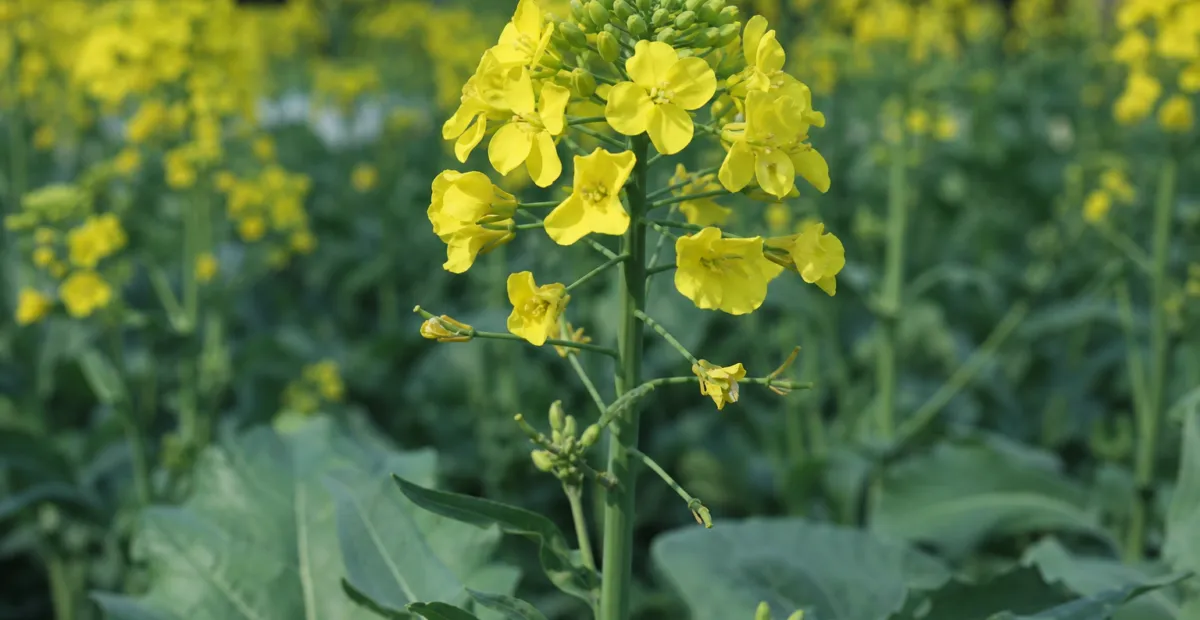
 AI-generated illustration
Rapeseed (Brassica napus) short overview
Rapeseed, Brassica napus, is a cool-season annual or biennial brassica grown in the United States for oilseed, forage, cover cropping, and selected edible forms. It develops blue-green foliage, upright branching stems, and conspicuous four-petaled yellow flowers followed by slender seed pods. The species includes canola-type cultivars as well as forage, swede, and leafy vegetable forms, so mature size and use vary by cultivar.
Taxonomic classification
Rapeseed (Brassica napus) care guide
Light and placement
Grow rapeseed in an open, unshaded site with at least 6 hours of direct sun. Full southern or southeastern exposure supports compact growth, strong stems, and flowering. Excess shade produces lanky plants, fewer flowers, and reduced seed production; severe heat combined with reflected light can hasten bolting and shorten the flowering period. Avoid competition from tall crops or dense hedges.
Watering and humidity
Keep the seedbed evenly moist until emergence, then water deeply when the upper inch of soil begins to dry. Maintain steadier moisture during rosette development, stem elongation, flowering, and pod filling. Reduce irrigation as pods mature if rainfall is adequate, but avoid prolonged drought. Water at the soil line when possible to limit foliar disease; normal outdoor humidity is sufficient.
Soil and growing medium
Use fertile, friable soil that drains promptly but retains enough moisture for rapid cool-season growth. Loam or amended sandy loam is easiest to manage; compacted clay can restrict roots and delay establishment. Incorporate organic matter before sowing, but avoid fresh manure. A slightly acidic to neutral soil is generally suitable, with pH around 5.5–7.0 supported for brassica production.
Feeding
Base fertilizer decisions on a soil test, especially for nitrogen, sulfur, phosphorus, and potassium. Mix mature compost into poor soil before planting, then use a balanced fertilizer at the label rate if fertility is low. Avoid heavy late nitrogen, which can produce excessive leafy growth, lodging, delayed maturity, and more pest-prone foliage. Do not fertilize drought-stressed plants or immediately before severe cold.
Growth and habit
Plants commonly begin as a low rosette and later bolt into an upright, branching flowering crop. Mature behavior varies substantially among oilseed, forage, leafy, and root-producing forms. Good weed control during establishment is important because young plants grow slowly until the rosette is developed. Remove volunteer plants before seed dispersal where unwanted reseeding or crop-to-crop gene flow is a concern.
Planting and repotting
Prepare a firm, weed-free seedbed and sow shallowly, about ¼–½ inch deep. Keep the surface evenly moist until emergence. Thin crowded seedlings early so plants develop sturdy rosettes and adequate airflow. In colder regions, spring sowing is common; in milder regions, late-summer or early-fall sowing can establish an overwintering rosette, but cultivar and local extension guidance should determine timing.
Usually not grown as a permanent container plant. If container culture is necessary, sow directly into a deep container because the young taproot is sensitive to disturbance. Transplant only small seedlings with an intact root ball, and use a fertile, well-drained potting mix.
Propagation and pruning
Propagation
Propagate by seed. Direct-sow into a prepared seedbed because the crop develops a taproot and generally dislikes unnecessary root disturbance. Sow in spring or late summer to early fall according to climate and cultivar. Save seed only from known, isolated stock because Brassica crops can cross-pollinate with compatible relatives.
Pruning
No routine pruning is needed. For garden-scale plants, remove damaged leaves and cut spent flowering stems only if preventing seed formation is desired. Harvest leafy or forage forms according to cultivar guidance. Remove unwanted volunteers before mature pods split and scatter seed.
Overwintering
Fall-sown plants overwinter as rosettes where the cultivar and climate permit. Light freezes are commonly tolerated after establishment, but severe cold, exposed sites, waterlogged soil, and poorly developed seedlings increase winterkill. Use locally adapted winter canola or rapeseed cultivars and avoid excessive late-season nitrogen.
Uses
Rapeseed is grown chiefly for vegetable oil, biodiesel feedstock, livestock forage, cover cropping, and seed production. Low-glucosinolate canola cultivars are selected for food and feed uses, while other forms may be grown as forage, leafy vegetables, or roots such as swede. Do not assume that an unidentified Brassica napus plant or seed is suitable for eating; cultivar identity and processing determine food safety and quality.
Appearance
The species has blue-green to gray-green leaves, often with a waxy bloom. Lower leaves are stalked and may be lobed or pinnatifid, while upper stem leaves are more clasping and less divided. The flowering stems branch above the rosette and carry bright yellow four-petaled flowers. After flowering, elongated narrow siliques project from the branches and contain small dark seeds.
Flowering
Flowers are typical of the mustard family, with four yellow petals and six stamens arranged around the central ovary. Bloom is concentrated in spring for overwintered plants and may occur in late spring or early summer for spring-sown crops. Flowering proceeds up the branching stems, followed by elongated pods that mature progressively from the lower branches upward.
Pollination and visitors
The abundant yellow flowers provide nectar and pollen visited by honey bees, bumblebees, hoverflies, and some beetles. Insect movement can improve pollen transfer and seed set, although cultivar fertility and environmental conditions affect the degree of dependence on visitors. Flowering fields can provide a substantial short-term forage resource for managed and wild pollinators.
Brassica napus photos
Click any photo for a larger view. Source, author and license are shown separately.
Diseases and pests
Diseases
Reduce disease pressure with crop rotation, clean seed, good drainage, adequate spacing, and removal of volunteer brassicas. Watch for blackleg, sclerotinia stem rot, downy mildew, clubroot, and Alternaria symptoms. Avoid overhead irrigation when foliage will remain wet, and follow local extension recommendations for resistant cultivars and legally labeled treatments.
Pests
Common pests include flea beetles, aphids, cabbage worms, diamondback moth larvae, cutworms, and slugs. Protect emerging seedlings with row cover where practical, inspect the undersides of leaves, remove weeds that harbor pests, and encourage natural enemies. Use insecticides only when monitoring shows treatment is justified and follow the product label and pollinator precautions.
Related diseases and pests
Only Plant Doctor profiles whose host data indicate this plant may be affected are shown here.
 PestDiamondback MothPlutella xylostella
 DiseaseClubrootPlasmodiophora brassicae Woronin
 PestCabbage Stem Flea BeetlePsylliodes chrysocephala
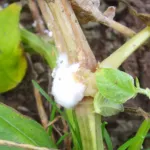 DiseaseWhite mold (Sclerotinia stem rot)Sclerotinia sclerotiorum
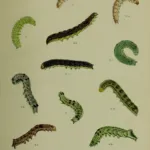 PestCabbage mothMamestra brassicae (Linnaeus, 1758)
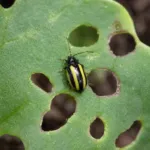 PestTurnip flea beetlePhyllotreta nemorum (Linnaeus, 1758)
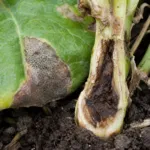 DiseaseBlackleg of Canola and BrassicasLeptosphaeria maculans
 DiseaseAlternaria leaf spot of brassicasAlternaria brassicae (Berk.) Sacc.
Toxicity and pollen
Brassica napus includes food crops, but the species is chemically variable. Rapeseed varieties may contain glucosinolates and erucic acid, while canola cultivars are specifically selected for reduced levels and are processed for food or feed use. Do not eat unidentified seeds, foliage, or volunteer plants in quantity. People and pets should avoid concentrated seed products unless they are clearly labeled for the intended use.
- Typical season
- Usually April–June in the United States, varying with region and planting date
- Pollination / pollen
- Insect-carried pollen with some airborne dispersal
Although rapeseed is primarily insect-pollinated, flowering plants release pollen that can become airborne through disturbance, wind movement, and agricultural handling. Reports of respiratory or occupational sensitization exist, but individual risk varies and broad population-level allergy precision is limited. People with seasonal or occupational sensitivity should avoid dense flowering stands during peak bloom and use appropriate protective measures when handling crop material.
Native habitat
Brassica napus is associated with temperate agricultural landscapes, disturbed ground, field margins, roadsides, and open sites where it has escaped cultivation. It performs best in fertile, moderately moist soils with good drainage and cool-season temperatures. The species is a cultivated hybrid lineage derived from Brassica oleracea and Brassica rapa, and many modern populations persist mainly through agriculture rather than natural ecosystems.
Interesting fact
Brassica napus is a stabilized hybrid species derived from Brassica oleracea and Brassica rapa. The species includes oilseed, forage, leafy, and root-producing forms. Canola is a low-glucosinolate, low-erucic-acid selection within the broader rapeseed crop complex. Its yellow flowering fields can provide a concentrated seasonal food source for bees.
Frequently asked questions (FAQ)
The most relevant questions about this plant, with short and direct answers.
🌱Quick care
What is Brassica napus commonly called in the United States?⌄
Brassica napus is commonly called rapeseed in the United States. Canola refers specifically to low-erucic-acid cultivars used for food and feed, so the names are related but not interchangeable for every cultivar.
Is rapeseed Brassica napus an annual or biennial plant?⌄
Rapeseed may be grown as an annual oilseed crop, but many forms are biologically biennial and flower after experiencing winter cold. Cultivar and climate determine whether it flowers and produces seed in the first or second growing season.
🌤️Environment and placement
How much sun does rapeseed need?⌄
Rapeseed grows best in full sun, with at least 6 hours of direct light daily. More sunlight generally supports stronger growth, flowering, and seed production.
What soil is best for Brassica napus?⌄
Use well-drained, fertile loam with good moisture-holding capacity for Brassica napus. Avoid compacted or waterlogged soil because poor drainage can damage roots and increase disease risk.
Is rapeseed frost hardy?⌄
Rapeseed is generally frost hardy, particularly once established, although tolerance varies by cultivar and growth stage. Young seedlings and plants weakened by drought, flooding, or poor nutrition are more vulnerable to severe freezes.
💧Care and problems
How often should I water rapeseed?⌄
Water rapeseed moderately, keeping the soil evenly moist without leaving it saturated. Provide additional water during prolonged dry spells, especially while seedlings establish and while flowers and pods are developing.
Does rapeseed need fertilizer?⌄
Rapeseed benefits from fertile soil and may need fertilizer if a soil test shows low nutrient levels. Avoid excessive nitrogen, which can produce lush, weak growth and complicate flowering or seed maturation.
What are common problems when growing Brassica napus?⌄
Common problems include flea beetles, aphids, caterpillars, slugs, root diseases, and nutrient deficiencies. Crop rotation, floating row cover, weed control, good drainage, and regular inspection help reduce many of these issues.
Why is my rapeseed plant flowering early?⌄
Early flowering can result from a cultivar’s natural growth habit, exposure to cold followed by warming, heat or drought stress, or an unsuitable planting date. Once a plant has bolted, leaf quality may decline and it will shift energy toward flowers and seed pods.
Why are my rapeseed plants falling over?⌄
Lodging can occur when plants become too tall, receive excessive nitrogen, grow in weak or waterlogged soil, or face wind and heavy rain. Improve drainage, avoid overfertilizing, and use appropriate spacing to improve stand strength.
🪴Planting and repotting
When should I plant rapeseed in the United States?⌄
Planting time depends on whether the cultivar is winter or spring type and on your local climate. Winter types are commonly seeded in late summer or early fall, while spring types are planted as soon as workable soil allows in spring.
Can I grow Brassica napus in a home garden?⌄
Yes, Brassica napus can be grown in a home garden, but it can become a tall, space-demanding crop when allowed to flower and produce seed. Choose a food-grade or clearly identified ornamental cultivar and provide fertile, well-drained soil.
How deep should I plant rapeseed seeds?⌄
Sow rapeseed seeds shallowly, generally about one-half inch deep or less in fine, moist soil. Avoid deep planting because small brassica seeds may struggle to emerge from heavy soil.
How long does Brassica napus take to germinate?⌄
Brassica napus commonly emerges about 4 to 7 days after seeding when soil moisture and temperature are suitable. Cool, crusted, compacted, or excessively wet soil can delay emergence.
How far apart should rapeseed plants be spaced?⌄
Spacing depends on the cultivar and whether you are growing it for greens, flowers, or seed. Thin crowded seedlings enough to allow air circulation and room for mature plants, using the seed supplier’s spacing recommendation when available.
✂️Propagation and pruning
Can I prune or cut back rapeseed?⌄
You can remove damaged leaves or cut flower stems for management, but heavy pruning is usually unnecessary. Cutting the main growing point may reduce flowering and seed production, while mature plants may regrow depending on timing and cultivar.
Can Brassica napus be propagated from cuttings?⌄
Brassica napus is normally propagated from seed rather than cuttings. It does not generally reproduce vegetatively under ordinary field or garden conditions, so sowing viable seed is the reliable method.
How do I save rapeseed seeds?⌄
Allow healthy plants to flower and let the pods mature until they begin turning brown, then harvest before the pods become overly dry and shatter. Dry the pods under cover, separate the seeds, and store them cool, dry, and labeled.
Can rapeseed cross-pollinate with other brassicas?⌄
Yes, Brassica napus can cross-pollinate with compatible plants, especially other B. napus cultivars flowering at the same time. Use isolation, insect-proof covering, or hand pollination if maintaining varietal purity matters.
How many rapeseed plants should I grow for seed saving?⌄
Growing several healthy plants is preferable to saving seed from only one plant because it preserves more genetic diversity. For reliable variety maintenance, use the seed supplier’s guidance and isolate the flowering plants from compatible rapeseed nearby.
⚠️Toxicity and safety
Is rapeseed edible?⌄
Some Brassica napus cultivars provide edible leaves, stems, roots, or seeds, but edibility depends on the cultivar and how it was produced. Eat only clearly identified food-grade forms; do not assume that an ornamental, forage, or oilseed planting is suitable for human consumption.
Can I eat seeds from any Brassica napus plant?⌄
No, seeds from any Brassica napus plant should not automatically be treated as cooking oil or food. Traditional high-erucic-acid rapeseed and other non-food cultivars differ from low-erucic-acid canola types, so use only products and cultivars specifically identified for food use.
Is rapeseed poisonous to people or pets?⌄
Safety is cultivar-dependent rather than uniform across Brassica napus. Keep unidentified seeds, oil, and plant material away from children and pets, and use only verified food-grade cultivars or commercially regulated products for consumption.
Is canola the same plant as rapeseed?⌄
Canola is a group of low-erucic-acid rapeseed cultivars, commonly involving Brassica napus, selected for food and feed uses. Not every plant sold or described as rapeseed meets the canola standard.
🌸Flowering and special interest
Does rapeseed need pollinators to produce seeds?⌄
Rapeseed is capable of self-pollination but commonly benefits from insect activity, especially bees, which can improve pod and seed set. Protect flowering plants from unnecessary insecticide exposure.
What do Brassica napus flowers look like?⌄
Brassica napus produces clusters of small, bright yellow, four-petaled flowers on upright flowering stems. Flowering is followed by narrow seed pods that contain the oil-rich seeds.
How tall does rapeseed grow?⌄
Rapeseed height varies substantially by cultivar, season, and growing conditions, but flowering plants can become much taller than ordinary leafy garden brassicas. Strong fertility and dense stands may increase height and lodging risk.
Is rapeseed useful for bees and other pollinators?⌄
Rapeseed’s abundant yellow flowers provide nectar and pollen for visiting insects during bloom. Its value varies with cultivar, weather, surrounding floral resources, and whether pesticides are used while plants are flowering.
Does Brassica napus need winter cold to flower?⌄
Many biennial or winter forms need a period of cold, called vernalization, before they flower and produce seed. Spring cultivars are selected to flower without the same winter requirement, so check the cultivar type before planting.
How long does rapeseed flowering last?⌄
Under suitable conditions, flowering commonly continues for roughly 2 to 3 weeks, although timing and duration vary by cultivar, weather, and planting date. Flowers develop progressively along the main and side flowering stems.
Similar plants
 Azure Monkshood (Aconitum carmichaelii) care guideAconitum carmichaelii
 Monkshood (Aconitum ‘Stainless Steel’)Aconitum 'Stainless Steel'
 Monkshood (Aconitum ‘Bressingham Spire’)Aconitum 'Bressingham Spire'
 Golden full moon maple (Acer shirasawanum ‘Aureum’)Acer shirasawanum 'Aureum'
 Globosum (Acer platanoides ‘Globosum’)Acer platanoides 'Globosum'
 Striped maple (Acer pensylvanicum) care guideAcer pensylvanicum