
 AI-generated illustration
Monkshood (Aconitum ‘Bressingham Spire’) short overview
Aconitum 'Bressingham Spire' is a compact, upright monkshood cultivar valued for its deep violet-blue, hooded flowers and glossy, deeply divided foliage. It flowers from early to late summer, depending on climate, and forms sturdy stems that usually need little or no staking. Plant it in cool, evenly moist but well-drained soil in full sun or partial shade. Every part is toxic, so wear gloves and keep it away from children and pets.
Taxonomic classification
Monkshood (Aconitum ‘Bressingham Spire’) care guide
Light and placement
Grow in full sun to partial shade. Morning sun, dappled light, or an east- or north-facing border is especially useful in warm climates; afternoon shade helps keep roots cool. Too little light can produce weaker stems and reduced bloom, while hot, dry exposure can scorch foliage and increase wilting.
Watering and humidity
Water deeply when the upper soil surface begins to dry, aiming to keep the root zone evenly moist rather than saturated. Increase frequency during hot or windy weather and reduce it during cool dormant periods. Mulch helps conserve moisture and moderate root temperature; do not allow winter waterlogging.
Soil and growing medium
Use fertile, humus-rich soil that stays evenly moist but never waterlogged. Loam or moisture-retentive clay improved with compost is suitable, provided drainage is reliable. The cultivar tolerates acid, neutral, and alkaline soils, but performs best where roots remain cool and hydrated through summer.
Feeding
Apply a balanced compost mulch or moderate perennial fertilizer in early spring as growth begins. A second light feeding is optional in poor soil, but avoid heavy nitrogen applications that produce soft, lush growth. Do not fertilize drought-stressed or waterlogged plants; correct root conditions first.
Growth and habit
This cultivar forms a compact, bushy clump of sturdy, upright flowering stems. It is slower to re-establish after division than many common perennials, but mature plants are generally self-supporting. Consistent moisture and cool roots help maintain strong stems and dependable flowering.
Planting and repotting
Plant in spring or fall when soil can be worked. Set the crown at the same depth as in the nursery container, spacing plants about 18–24 inches apart. Water thoroughly after planting and maintain even moisture while roots establish, especially during the first growing season.
Container-grown plants can be moved in early spring or fall. Use a deep, sturdy container with drainage holes and a moisture-retentive but open potting mix. Repot only when roots fill the container; minimize root disturbance and wear gloves while handling.
Propagation and pruning
Propagation
Division in fall or late winter is the recommended method for maintaining the cultivar. Lift and divide established clumps carefully, wearing gloves because all plant parts are toxic. Re-establishment can be slow, so keep divisions evenly moist.
Pruning
Cut flower stems back after flowering if seed production is not wanted, or leave them until late winter for seasonal structure. Remove dead stems in late winter or early spring, wearing gloves and avoiding contact with sap.
Overwintering
The plant is hardy outdoors across much of the United States, but newly planted divisions benefit from a light winter mulch. In very wet winters, improve drainage rather than keeping the crown constantly saturated. Do not bring it indoors unless necessary, and continue using gloves during dormant-season handling.
Uses
Use in shaded or partly shaded perennial borders, cottage gardens, woodland edges, and as a cut flower where safe handling is possible. The upright blue-violet spires provide strong late-season structure. Do not use for culinary, medicinal, or home-remedy purposes; all parts are toxic.
Appearance
Leaves are glossy, dark green, and deeply divided into narrow lobes, giving the clump a refined fern-like texture. The straight stems carry narrow, tapering spires of helmet- or hood-shaped flowers in deep violet-blue. The cultivar is noted for a compact habit and strong stems that usually do not require staking.
Flowering
The cultivar produces erect, tapering racemes of hooded, violet-blue flowers. Bloom is generally concentrated from June through August in the United States, with timing shifting later in cooler climates. Stems are notably sturdy and commonly remain upright without staking.
Pollination and visitors
Aconitum flowers are chiefly associated with bumblebee pollination, especially long-tongued Bombus species. Research on Aconitum flowers documents nectar rewards and toxic alkaloids in pollen and nectar; visitors may forage primarily for nectar rather than collect large pollen loads.
Diseases and pests
Diseases
Possible problems include fungal stem rot, powdery mildew, and Verticillium wilt. Prevent disease with well-drained soil, good air circulation, careful watering, and removal of infected debris. Avoid repeatedly planting in soil known to harbor Verticillium.
Pests
Usually relatively trouble-free, but aphids may infest young shoots and flower stems. Inspect new growth, encourage natural predators, and use a strong water spray or an appropriate labeled treatment if colonies become damaging. Avoid unnecessary broad-spectrum insecticides during bloom.
Toxicity and pollen
Aconitum species contain potent diterpenoid alkaloids, including aconitine-type compounds. Ingestion can cause severe neurologic and cardiovascular poisoning, and sap may be hazardous through damaged skin. Wear gloves, avoid touching the face while handling, wash tools and hands, and seek urgent medical or veterinary advice after suspected ingestion.
- Typical season
- June–August
- Pollination / pollen
- Insect-borne pollen
Aconitum is insect-pollinated, so pollen is not typically dispersed in large airborne clouds like wind-pollinated tree or grass pollen. Exposure is still possible through direct contact with flowers, and the genus has chemically defended pollen. People with serious pollen or plant sensitivities should avoid handling flowers without protection.
Native habitat
The cultivar is cultivated rather than naturally distributed as a wild population. Its Aconitum heritage is associated with cool temperate mountain, woodland-edge, and moist meadow environments. In gardens it performs best where soil remains fertile and moisture-retentive without standing water.
Interesting fact
The cultivar has received the RHS Award of Garden Merit. It is often listed under more than one hybrid or species combination in horticultural references. Its sturdy stems are valued because the plant commonly holds itself upright without staking. Aconitum flowers have a specialized hooded form associated with long-tongued bumblebee visitors.
Frequently asked questions (FAQ)
The most relevant questions about this plant, with short and direct answers.
🌱Quick care
What is Aconitum 'Bressingham Spire' commonly called?⌄
Aconitum 'Bressingham Spire' is commonly called monkshood or monk's hood. It is a clump-forming herbaceous perennial grown for its upright spikes of violet-blue, hooded flowers.
How tall does Aconitum 'Bressingham Spire' get?⌄
Aconitum 'Bressingham Spire' typically grows about 29–35 inches tall and may spread roughly 18–23 inches. Its mature size can vary with soil moisture, light, and growing conditions.
Is Aconitum 'Bressingham Spire' perennial?⌄
Yes, Aconitum 'Bressingham Spire' is a hardy herbaceous perennial. Its foliage dies back after the growing season and returns from underground roots.
🌤️Environment and placement
Does Aconitum 'Bressingham Spire' grow in sun or shade?⌄
Aconitum 'Bressingham Spire' grows in full sun to partial shade. Partial shade is especially helpful in hot climates, provided the soil remains evenly moist.
What is the best location for Aconitum 'Bressingham Spire'?⌄
Plant it in a cool, sheltered border with fertile, moisture-retentive but well-drained soil. Avoid locations that dry out quickly, such as beside thirsty tree roots.
Can Aconitum 'Bressingham Spire' tolerate afternoon sun?⌄
It can tolerate afternoon sun when the soil stays consistently moist, but hot afternoon exposure may scorch foliage. In warm regions, give it morning sun or filtered afternoon shade.
What soil does Aconitum 'Bressingham Spire' need?⌄
It prefers fertile, humus-rich soil that holds moisture without becoming waterlogged. Loam, clay, sand, and soils ranging from acidic to alkaline can work if drainage and moisture are balanced.
Is Aconitum 'Bressingham Spire' hardy in the United States?⌄
Yes, it is considered a hardy perennial and can survive cold winters in many U.S. gardens. Exact performance depends on local winter temperatures, drainage, and whether the plant experiences summer drought.
💧Care and problems
How often should I water Aconitum 'Bressingham Spire'?⌄
Water it whenever the soil surface begins to dry, keeping the root zone evenly moist during active growth. Do not allow the plant to dry out, especially before and during flowering.
Why is my Aconitum 'Bressingham Spire' wilting?⌄
Wilting is most often caused by dry soil, heat stress, root disturbance, or a root problem from excessively wet conditions. Check soil moisture first and improve drainage if the soil remains saturated.
Does Aconitum 'Bressingham Spire' need fertilizer?⌄
It usually needs only fertile soil and an annual layer of compost or well-rotted organic matter. Avoid heavy feeding, which can encourage soft growth rather than sturdy flowering stems.
Does Aconitum 'Bressingham Spire' need staking?⌄
Usually not, because this selection is noted for strong stems and a relatively compact habit. Staking may still be useful in windy sites, very rich soil, or unusually wet conditions.
What pests and diseases affect Aconitum 'Bressingham Spire'?⌄
It is generally resistant to serious pest problems, but aphids can occur. Excess shade, poor air circulation, or wet foliage may contribute to powdery mildew, stem rot, or other fungal problems.
🪴Planting and repotting
When should I plant Aconitum 'Bressingham Spire'?⌄
Plant it in spring or fall when the soil is workable and consistently moist. Fall planting is suitable in many U.S. regions, while spring is safer where winters are severe or soil remains frozen.
How do I plant Aconitum 'Bressingham Spire' in the garden?⌄
Set it at the same depth as it was growing in its container, then water thoroughly and keep the soil evenly moist while it establishes. Space plants about 18–24 inches apart to allow mature spread and airflow.
Can Aconitum 'Bressingham Spire' be grown in a container?⌄
Yes, it can be grown in a large container with fertile, moisture-retentive, well-drained potting mix. Containers dry out faster than garden soil, so monitor moisture closely and protect the roots from extreme winter cold.
✂️Propagation and pruning
How do you propagate Aconitum 'Bressingham Spire'?⌄
The most practical method is division in early spring or fall, although divisions may take time to re-establish. Wear protective gloves during all propagation because every part of the plant is toxic.
Can Aconitum 'Bressingham Spire' be grown from seed?⌄
It can be propagated from seed, but seed-grown plants may be slow, variable, or difficult to establish compared with divisions. Division is generally preferred when maintaining the named cultivar.
When should I divide Aconitum 'Bressingham Spire'?⌄
Divide established plants in early spring or fall, with early spring often preferred for reliable recovery. Divide only when necessary because monkshood can be slow to re-establish after root disturbance.
When should Aconitum 'Bressingham Spire' be cut back?⌄
Cut back the dead stems after flowering or once the foliage has died back in fall. Wear gloves and avoid bare-skin contact while handling the stems, leaves, or roots.
⚠️Toxicity and safety
Is Aconitum 'Bressingham Spire' poisonous?⌄
Yes, Aconitum 'Bressingham Spire' is highly toxic if eaten and may also cause harm through skin contact. Keep it away from children, pets, and livestock, and wear gloves when handling it.
Can touching Aconitum 'Bressingham Spire' make you sick?⌄
Skin contact can be harmful, especially when handling sap, roots, or damaged plant tissue. Wear waterproof gloves, avoid touching your face, and wash exposed skin and tools after handling.
Is Aconitum 'Bressingham Spire' safe for dogs, cats, or horses?⌄
No, it should be treated as toxic to pets and livestock if eaten. Do not plant it where animals can browse, and contact a veterinarian or animal poison service immediately if ingestion is suspected.
Should I avoid planting Aconitum 'Bressingham Spire' in a family garden?⌄
Avoid it in areas where young children or animals may touch or chew plants, because monkshood is highly toxic. If grown, place it in a controlled location and clearly identify it for everyone who gardens there.
🌸Flowering and special interest
When does Aconitum 'Bressingham Spire' bloom?⌄
It generally blooms from mid to late summer into early fall, producing upright spikes of deep violet-blue, hooded flowers. Bloom timing varies with climate and growing conditions.
What color are the flowers of Aconitum 'Bressingham Spire'?⌄
The flowers are deep violet-blue to blue-purple and are arranged on erect, tapering spikes. Their hooded shape gives monkshood its common name.
Does Aconitum 'Bressingham Spire' attract bees?⌄
Yes, its flowers can provide nectar for bees and other pollinating insects. Place it where visitors can enjoy the flowers without needing to handle the plant.
Can Aconitum 'Bressingham Spire' be used as a cut flower?⌄
Yes, the strong flowering stems can be used in arrangements. Handle cut stems with gloves, keep them away from food-preparation areas, and never ingest any plant material.
Similar plants
 Bigleaf maple (Acer macrophyllum) care guideAcer macrophyllum
 Atropurpureum (Acer palmatum ‘Atropurpureum’)Acer palmatum 'Atropurpureum'
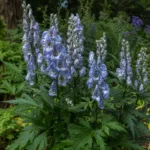 Monkshood (Aconitum ‘Stainless Steel’)Aconitum 'Stainless Steel'
 Vitifolium (Acer japonicum ‘Vitifolium’)Acer japonicum 'Vitifolium'
 Sango Kaku (Acer palmatum ‘Sango Kaku’)Acer palmatum 'Sango Kaku'
 Dissectum (Acer palmatum ‘Dissectum’)Acer palmatum 'Dissectum'