
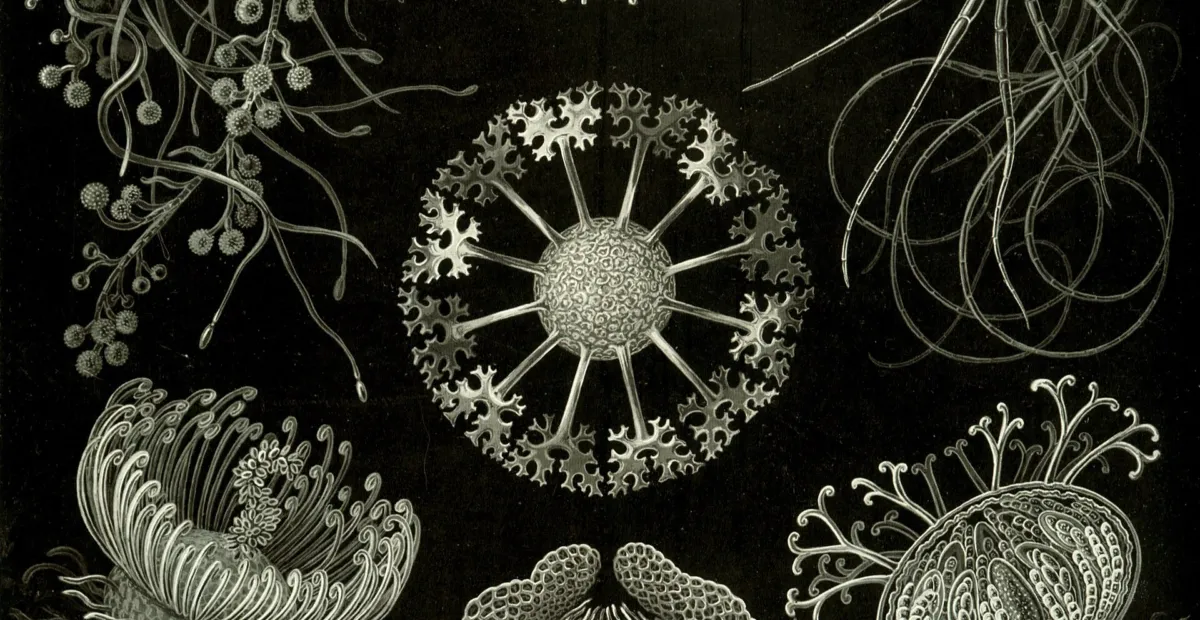
Maple powdery mildew
Sawadaea bicornisMaple powdery mildew overview
Maple powdery mildew caused by Sawadaea bicornis produces conspicuous white to gray, flour-like fungal growth on maple leaves, usually late in the growing season. The disease is often cosmetic on established, otherwise healthy trees, although severe infections can reduce photosynthesis, discolor foliage and contribute to premature leaf drop. Accurate identification may require microscopy or DNA testing because several Sawadaea species look similar.
Typical conditions
Overview
Maple powdery mildew appears as irregular white, gray-white or silvery patches on the upper and sometimes lower surfaces of leaves. The fungus is usually most noticeable from mid to late summer, when warm days, cool nights, shade and dense foliage favor infection.
On mature, vigorous maples the disease is commonly more unsightly than dangerous. Repeated or severe infection can reduce photosynthetic area, cause leaf distortion or premature leaf drop, and place additional stress on recently transplanted, drought-stressed or otherwise declining trees. Identification to S. bicornis should be considered provisional when based only on field appearance because Sawadaea tulasnei and other maple powdery mildews can be very similar.
Symptoms and identification
- Thin to dense, flour-like white fungal growth on leaf surfaces.
- Irregular colonies that may expand and merge into silvery patches.
- Yellowing, bronzing, curling or distortion of affected leaves in heavier infections.
- Occasional premature leaf drop, especially on stressed nursery trees or saplings.
- Dark, round sexual fruiting bodies may develop late in the season and are usually visible only with close inspection or magnification.
Symptoms alone do not reliably separate S. bicornis from other powdery mildew species on Acer.
Causes and spread
The disease is caused by the fungus Sawadaea bicornis, which remains on the leaf surface while sending haustoria into epidermal cells. Spores are dispersed primarily by air movement and can establish new colonies on susceptible, actively growing maple leaves.
Spread is favored by nearby infected maples, dense plantings, shaded inner-canopy foliage and prolonged periods of humid nighttime conditions. Unlike many leaf-spot pathogens, powdery mildew does not require free water on the leaf surface for infection; frequent overhead irrigation may instead increase humidity and prolong favorable conditions.
Life cycle and persistence
Sawadaea bicornis produces chains of airborne conidia on superficial fungal growth during the active growing season. These spores are carried to susceptible maple leaves, germinate on the surface and form new colonies.
Late in the season, the fungus may form chasmothecia, its dark sexual fruiting structures, on infected foliage. Chasmothecia can persist on fallen leaves or other plant debris and release ascospores under suitable conditions. The relative importance of this sexual stage varies with climate and local disease history, and some powdery mildews may also persist in dormant buds or protected plant tissues.
Treatment and control
For established landscape maples, treatment is often unnecessary when symptoms are late-season and the tree remains vigorous. Begin management early if a young tree, nursery crop or high-value specimen develops repeated severe infection.
- Remove badly affected leaves or shoots only when this can be done without disfiguring or weakening the tree.
- Correct excessive shade, crowding and poor airflow where feasible.
- Maintain consistent soil moisture during drought without keeping foliage wet overnight.
- For recurring or severe disease, consider a professionally selected fungicide program beginning before or at the first signs of infection; late applications are less effective after colonies are extensive.
Because several powdery mildew species occur on maples, submit representative material to a plant diagnostic laboratory when the exact pathogen matters for research, nursery certification or unusual outbreaks.
Low-impact and biological control
Use an integrated, low-input approach: improve sunlight and airflow, avoid excessive nitrogen that promotes soft succulent growth, irrigate at the soil line, and remove heavily infected foliage and fallen leaves when practical. On small ornamental plants, physically washing colonies from leaves with a strong but non-damaging stream of water may reduce visible growth if repeated regularly.
Products based on potassium bicarbonate, horticultural oils or other reduced-risk materials may suppress powdery mildew on some ornamental plants, but crop tolerance and label status vary. Test any product on a small area first, avoid spraying stressed or heat-loaded foliage, and do not assume a home remedy is safe or effective.
Prevention
- Select maple cultivars and species with good local resistance when available.
- Plant maples where they receive adequate sunlight and have room for mature canopy development.
- Thin crowded branches when appropriate to improve airflow, using accepted pruning practices and avoiding excessive canopy removal.
- Water the root zone during drought, preferably early in the day; avoid routine overhead irrigation.
- Remove and dispose of heavily infected fallen leaves where practical, particularly around nursery stock and small ornamental trees.
- Inspect replacement trees before planting and avoid moving visibly infected foliage or cuttings between sites.
Interesting facts
- Sawadaea bicornis belongs to the powdery mildew family Erysiphaceae and is an obligate biotroph, meaning it depends on living host tissue.
- The species is associated mainly with maples, and recent taxonomic work recognizes host-associated lineages or formae within the broader historical concept of S. bicornis.
- Large outbreaks on bigleaf maple were documented in western Washington, where infected crowns could appear silvery from a distance.
- The curled appendage tips on its chasmothecia are useful to specialists, but reliable identification generally requires microscopic and sometimes molecular examination.
- Powdery mildew is often most visible late in the season, when control may provide little practical benefit for a healthy established tree.
Use only fungicide products legally authorized for powdery mildew on the specific maple or ornamental crop in the United States, and follow the current product label exactly, including application rate, timing, protective equipment, reentry interval and restrictions. Do not apply a product merely because it is labeled for powdery mildew on another crop. Avoid sulfur or oil applications during heat stress or when label restrictions indicate a risk of foliage injury.
Affected plants
The plants below are linked to this problem by structured host-plant data. The list updates automatically as new plant profiles are added.
 Field maple (Acer campestre) care guideAcer campestre
 Paperbark Maple (Acer griseum) care guideAcer griseum
 Downy Japanese Maple (Acer japonicum) care guideAcer japonicum
 Boxelder (Acer negundo) care guideAcer negundo
 Acer palmatum care guideAcer palmatum
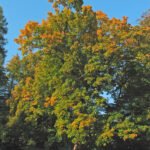 He Norway maple (Acer platanoides) care guideAcer platanoides
 Sycamore maple (Acer pseudoplatanus) care guideAcer pseudoplatanus
 Red maple (Acer rubrum) care guideAcer rubrum
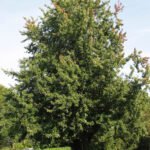 Silver maple (Acer saccharinum) care guideAcer saccharinum
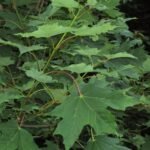 Sugar maple (Acer saccharum) care guideAcer saccharum
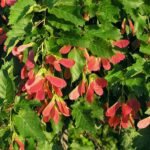 Tatar Maple (Acer tataricum) care guideAcer tataricum
 Amur Maple (Acer tataricum ginnala) care guideAcer tataricum ginnala