
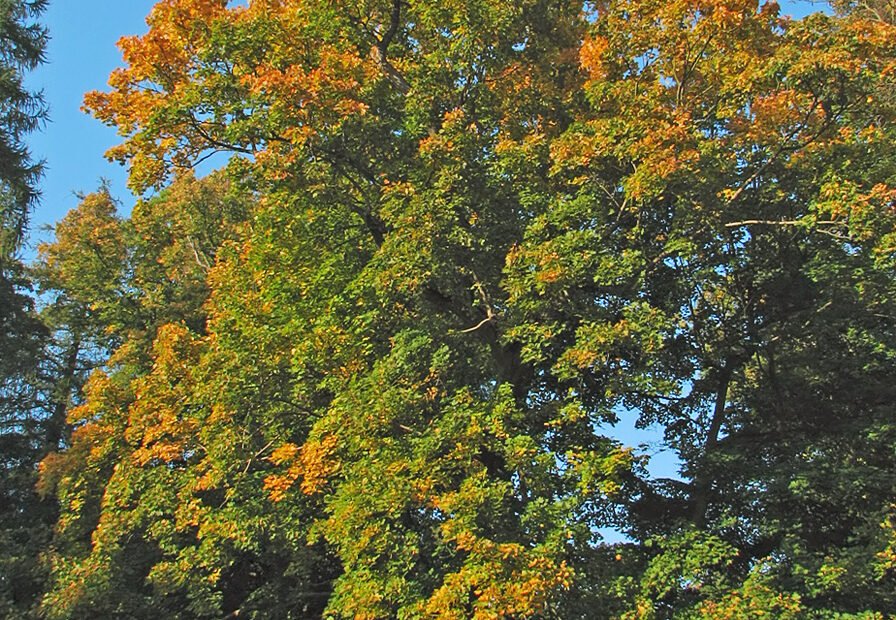
 Source:
 He Norway maple (Acer platanoides) short overview
he Norway maple is a large, deciduous European and western Asian tree valued for its dense, rounded canopy, broad five-lobed leaves, yellow-green spring flowers, and paired winged seeds. It tolerates urban conditions, compacted soils, shade, and cold, but its prolific seed production and dense shade have made it invasive in parts of the United States. Plant only where local regulations and ecological impacts have been considered.
Taxonomic classification
He Norway maple (Acer platanoides) care guide
Light and placement
Grow in full sun for the densest crown and strongest growth, or in partial shade where summer heat and drought are limiting. It can persist beneath woodland shade, although seedlings and mature trees may become less vigorous. Pale foliage, scorch, or premature leaf drop can indicate excessive exposure combined with drought; sparse growth and a thin crown suggest inadequate light or root competition.
Watering and humidity
Water deeply and slowly when the upper several inches of soil begin to dry during establishment, generally once or twice weekly in hot, dry weather. Mature trees are moderately drought tolerant but perform best with consistent moisture. Reduce irrigation during cool, wet periods and avoid prolonged saturation around the trunk. A 2–3 inch organic mulch layer helps stabilize soil moisture, but keep mulch away from the bark.
Soil and growing medium
Use fertile soil that drains reliably while retaining moderate moisture. The species tolerates clay and compacted urban soils better than many maples, but drainage should still be improved where water stands. Slightly acidic through slightly alkaline soils are generally suitable. Avoid burying the root flare, and do not amend only the planting hole with rich soil that creates a drainage boundary.
Feeding
A healthy established tree usually needs no routine fertilizer. Apply compost or a thin organic mulch layer over the root zone in spring if soil is poor. If a soil test shows nutrient deficiency, use a slow-release, balanced tree fertilizer at the labeled rate. Do not fertilize drought-stressed, newly transplanted, or late-season trees, and avoid excess nitrogen that can promote weak shoots and dense unwanted seedlings.
Growth and habit
This species develops a broad, rounded or pyramidal crown and commonly forms a dominant upper-canopy tree. It leafs out early, casts dense shade, and produces abundant samaras that can establish beneath and beyond the parent canopy. Shallow, competitive roots and heavy shade complicate understory planting. Its vigorous regeneration is an important management concern in invaded woodlands.
Planting and repotting
Choose an open site with adequate overhead and lateral room for a large canopy. Plant in spring or fall, set the root flare at grade, and water thoroughly after planting. Maintain a mulch ring 2–3 inches deep without touching the trunk. Stake only when necessary, and provide regular deep watering through the first two growing seasons. Because the species is invasive in parts of the United States, check state and local recommendations before planting.
Not a practical long-term container tree because of its eventual size and vigorous root system. Young nursery plants should be transplanted before becoming root-bound. If temporarily container-grown, use a large, well-drained container, protect roots from temperature extremes, and transplant into the landscape promptly.
Propagation and pruning
Propagation
The species is commonly propagated from seed, with fresh samaras sown promptly or stratified before spring sowing. Seedlings may vary in form and foliage. Named cultivars are generally propagated by grafting rather than by seed. Cuttings are not a dependable routine method for the species.
Pruning
Prune during dormancy or in late summer to remove dead, damaged, crossing, or weakly attached branches. Preserve the natural central leader and avoid topping. Make cuts just outside the branch collar. Remove young seedlings promptly where spread is unwanted, and disinfect tools when cutting trees with suspected vascular disease.
Overwintering
Established trees require no routine winter protection within their hardiness range. Water newly planted trees before the ground freezes if autumn is dry, and maintain mulch over the root zone without touching the trunk. Protect young trunks from rodent damage where necessary. Avoid late-season nitrogen and heavy pruning before winter.
Uses
Historically used as a street, park, lawn, and shade tree because of its dense canopy, pollution tolerance, and cold hardiness. It can provide early-season nectar and pollen for insects and cover for urban wildlife. In the United States, widespread planting is discouraged in regions where it invades forests or natural areas; native replacement trees are generally preferable. It is not a culinary or medicinal plant.
Appearance
Leaves are opposite, dark green, glossy, and usually five-lobed with broad, sharply pointed lobes; the petiole exudes milky sap when broken. Young bark is gray-brown and becomes darker and more furrowed with age. Yellow-green flower clusters appear before or with the leaves, followed by paired winged samaras whose wings spread nearly horizontally. Cultivars may have purple, columnar, rounded, or variegated foliage and form.
Flowering
Small yellow-green flowers are borne in clusters in early spring, often before the canopy is fully expanded. Flowers may be functionally male or female, and sexual expression can vary with conditions. Nectar and pollen are produced, especially in functionally female flowers. Paired samaras mature later in the season and are dispersed by wind.
Pollination and visitors
The early flowers provide nectar and pollen to honey bees, bumblebees, solitary bees, hoverflies, flies, and some beetles. Research identifies Acer platanoides as an important early-season floral resource, particularly when bumblebee queens and other insects are beginning nest activity. The documented visitor groups concern flower ecology and are separate from human pollen-allergy risk.
Acer platanoides photos
Click any photo for a larger view. Source, author and license are shown separately.
Diseases and pests
Diseases
Potential problems include Verticillium wilt, anthracnose, tar spot, leaf scorch, and occasional bark splitting. Reduce stress with correct planting depth, adequate watering, good air circulation, and removal of badly affected fallen leaves where practical. Do not move soil or pruning debris from trees suspected of Verticillium wilt, and consult an arborist before removing major limbs.
Pests
Aphids, gall mites, caterpillars, scale insects, and other occasional pests may cause distortion, honeydew, or premature leaf loss. Inspect new growth and leaf undersides, conserve beneficial insects, and use water sprays or targeted treatments only when damage is significant. Avoid broad-spectrum insecticides during flowering because they can harm visiting pollinators.
Related diseases and pests
Only Plant Doctor profiles whose host data indicate this plant may be affected are shown here.
 DiseaseMaple powdery mildewSawadaea bicornis
 DiseaseMaple Tar Spot (Giant Tar Spot)Rhytisma acerinum
 PestJapanese beetlePopillia japonica
 DiseasePhytophthora plurivora Root and Collar RotPhytophthora plurivora
 DiseasePhytophthora cambivora root and crown rotPhytophthora cambivora (often written Phytophthora × cambivora in modern taxonomic treatments)
 Environmental stressSalt stress
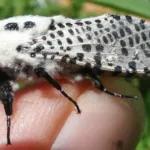 PestLeopard mothZeuzera pyrina
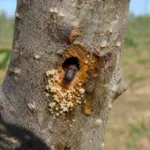 PestEuropean shot-hole borerXyleborus dispar (Fabricius)
Toxicity and pollen
Reliable plant-toxicity references do not establish Acer platanoides as a major poisonous plant for ordinary landscape contact, but species-specific human and pet toxicity evidence is limited. Do not encourage eating leaves, bark, sap, or samaras. Prevent children and animals from chewing plant material, and contact Poison Control or a veterinarian after a significant ingestion or concerning symptoms.
- Typical season
- Typically March to May, depending on region and spring temperatures
- Pollination / pollen
- Fine tree pollen released during spring flowering; insect and some wind transfer may occur
Acer pollen is recorded in North American airborne pollen surveys, and Norway maple can contribute pollen during its early spring flowering period. The allergy importance of Acer platanoides specifically is not as well characterized as that of some other urban trees, so risk varies by person and location. Sensitive individuals may limit exposure during flowering and follow local pollen forecasts.
Native habitat
In its native range, it occurs in temperate deciduous and mixed forests, woodland edges, river valleys, and disturbed sites on fertile, fresh to moist soils. It tolerates a broad range of soil textures, urban pollution, and partial shade. In the United States it is naturalized or invasive in portions of the Northeast, Midwest, Pacific Northwest, and elsewhere, where dense shade and prolific regeneration can reduce native understory diversity.
Interesting fact
The leaf stalk releases milky sap when cut, a useful identification feature. Its samara wings spread at a much wider angle than those of sugar maple. The species leafs out early and can retain foliage late into autumn. Dense shade beneath established trees can inhibit native tree seedlings. More than a hundred horticultural cultivars have been developed.
Frequently asked questions (FAQ)
The most relevant questions about this plant, with short and direct answers.
🌱Quick care
What is he Norway maple?⌄
He Norway maple is the deciduous tree Acer platanoides in the maple genus and Sapindaceae family. It is a large, shade-producing tree native to Europe and commonly planted in the United States.
How big does he Norway maple get?⌄
He Norway maple typically grows 40–50 feet tall and 30–50 feet wide. Some trees can become larger under favorable conditions, so allow substantial room for the mature canopy and roots.
🌤️Environment and placement
What USDA hardiness zones are suitable for he Norway maple?⌄
He Norway maple is generally hardy in USDA Zones 3–7. Local performance can vary with winter exposure, summer heat, soil moisture, and the specific cultivar.
Does he Norway maple grow in full shade?⌄
He Norway maple tolerates full sun, partial shade, and considerable shade, especially when young. Full sun usually produces the densest crown, while heavy shade can reduce growth and canopy development.
What type of soil does he Norway maple need?⌄
He Norway maple grows best in moist, well-drained loam or clay but tolerates a broad range of soils. Avoid sites that remain waterlogged, because poor drainage can weaken the roots and increase disease risk.
Can he Norway maple be used as a street tree?⌄
He Norway maple was widely used as a street and shade tree, but it is no longer recommended in many areas because of invasive spread, shallow roots, and structural or pavement conflicts. Local regulations and site conditions should be checked before planting.
What are the best alternatives to he Norway maple?⌄
Suitable alternatives depend on the region, but native choices such as sugar maple, red maple, or other locally appropriate shade trees may provide similar benefits with less invasive risk. Select species based on mature size, soil, moisture, and local disease pressures.
💧Care and problems
How much water does he Norway maple need?⌄
He Norway maple needs moderate water, with regular irrigation during establishment and extended dry periods. Water slowly and deeply over the root zone rather than keeping the trunk base constantly wet.
Is he Norway maple drought tolerant?⌄
He Norway maple has some drought tolerance once established, but it performs better with consistent soil moisture. Drought stress can cause leaf scorch, especially in hot sites, compacted soil, or exposed locations.
Why are the leaves of he Norway maple turning brown?⌄
Brown or scorched leaves on he Norway maple commonly result from drought, heat, root damage, compacted soil, or other stress. Foliar diseases can also contribute, so persistent or worsening symptoms may require an arborist’s diagnosis.
What diseases affect he Norway maple?⌄
He Norway maple can be affected by Verticillium wilt, anthracnose, tar spot, leaf scorch, and trunk or branch decay. Verticillium wilt is particularly serious and can be fatal; avoid replanting another susceptible maple where it has been confirmed.
Does he Norway maple have shallow roots?⌄
Yes, he Norway maple commonly develops shallow, spreading roots. These roots can interfere with turf, lift or crack nearby pavement, and make it difficult to grow other plants beneath the dense canopy.
Can grass grow under he Norway maple?⌄
Grass often struggles under he Norway maple because the tree creates dense shade and competes strongly for surface moisture. A mulch layer or shade-tolerant ground cover is usually more practical than trying to maintain a lawn beneath the canopy.
🪴Planting and repotting
How far should he Norway maple be planted from a house?⌄
Plant he Norway maple well away from buildings, sidewalks, driveways, septic systems, and utility lines because the mature tree is large and has shallow, spreading roots. The exact distance depends on the site, but a minimum of 20–30 feet from structures is a cautious starting point.
When is the best time to plant he Norway maple in the United States?⌄
The best planting time is usually fall after leaf drop or early spring before new growth begins. Planting during mild, cool weather reduces transplant stress and gives the roots time to establish before summer heat.
How should he Norway maple be planted?⌄
Plant he Norway maple with the root flare level with or slightly above the surrounding soil, then water thoroughly and apply a broad layer of organic mulch. Keep mulch several inches away from the trunk and avoid amending only the planting hole.
Can he Norway maple be grown in a container?⌄
He Norway maple is generally unsuitable for long-term container growing because it becomes a large tree with an extensive root system. A container may hold a young specimen temporarily, but it will eventually require planting in the ground or professional removal.
✂️Propagation and pruning
How do you propagate he Norway maple?⌄
He Norway maple is most commonly propagated from seed, although selected cultivars are often propagated by grafting. Seeds require a period of cold, moist stratification, and seedlings may not reproduce the traits of a named cultivar.
How do you prune he Norway maple?⌄
Prune he Norway maple during dormancy or according to local arboricultural guidance, removing dead, damaged, crossing, or poorly attached branches. Avoid topping, large unnecessary cuts, and excessive pruning, which can weaken the tree and promote structural problems.
⚠️Toxicity and safety
Does he Norway maple spread by seed?⌄
Yes, he Norway maple produces paired winged seeds called samaras and can reseed freely. In parts of the United States, seedlings escape into forests and natural areas, where the species is considered invasive or otherwise regulated.
Is he Norway maple invasive in the United States?⌄
He Norway maple is invasive in natural areas in parts of the United States and is listed or regulated in some states and regions. Check state and local rules before planting, and do not allow mature trees to spread seed into nearby woodlands.
Should he Norway maple be planted in a naturalized area?⌄
He Norway maple should generally not be planted near forests, parks, conservation land, or other naturalized areas because its shade tolerance and abundant seeds can aid its spread. A regionally native maple or another noninvasive tree is usually a better choice.
Is he Norway maple toxic to people or pets?⌄
There is no well-established major toxicity classification for he Norway maple, but plant material should not be intentionally eaten and pets or children should be prevented from chewing it. Contact a medical or veterinary professional if a significant amount is ingested or symptoms occur.
🌸Flowering and special interest
When does he Norway maple flower?⌄
He Norway maple usually flowers in early spring, commonly from March through April in much of the United States. Small yellow flowers appear before or around leaf emergence and are generally more useful for identification than for ornamental display.
Does he Norway maple produce seeds?⌄
Yes, he Norway maple produces paired samaras after flowering, usually with wings that spread nearly horizontally. The seeds mature in spring or early summer and can be carried away from the parent tree by wind.
How can you tell he Norway maple from sugar maple?⌄
He Norway maple usually has milky sap in the leaf stalk, darker leaves with sharper lobes, and widely spreading samara wings. Sugar maple lacks the milky sap and typically has more rounded leaf lobes and samaras with a narrower angle.
Does he Norway maple have good fall color?⌄
He Norway maple often develops yellow fall color, but the display is usually less vivid and consistent than that of many native maples. Fall color varies with cultivar, weather, light exposure, and tree health.
Similar plants
 Azure Monkshood (Aconitum carmichaelii) care guideAconitum carmichaelii
 Monkshood (Aconitum ‘Stainless Steel’)Aconitum 'Stainless Steel'
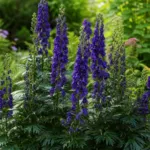 Monkshood (Aconitum ‘Bressingham Spire’)Aconitum 'Bressingham Spire'
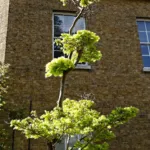 Golden full moon maple (Acer shirasawanum ‘Aureum’)Acer shirasawanum 'Aureum'
 Globosum (Acer platanoides ‘Globosum’)Acer platanoides 'Globosum'
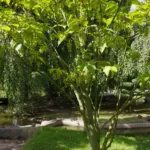 Striped maple (Acer pensylvanicum) care guideAcer pensylvanicum