
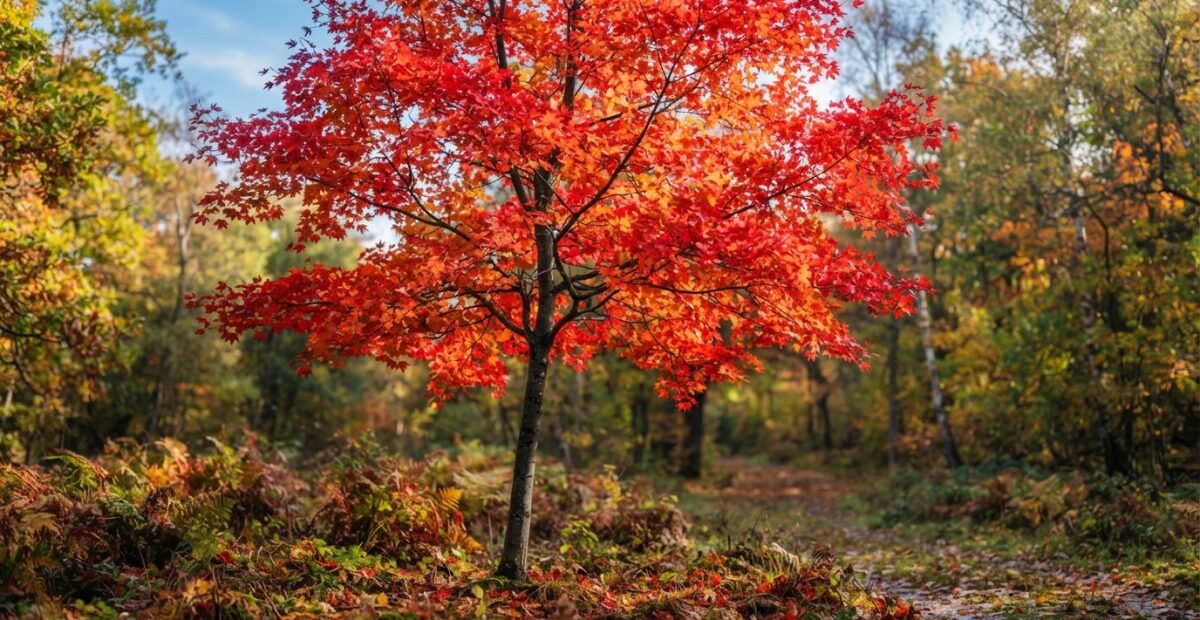
Amur Maple (Acer tataricum ginnala) short overview
Amur Maple is a deciduous small tree or large shrub with a flexible, often multi-stemmed habit. Its glossy, three-lobed leaves turn vivid red, orange, or yellow in fall, while fragrant spring flower clusters are followed by paired winged seeds. It tolerates cold, wind, drought, and varied soils, but performs best in full sun or light shade with reliable drainage. Because it can spread by seed, check local regulations before planting near natural areas.
Taxonomic classification
Amur Maple (Acer tataricum ginnala) care guide
Light and placement
Plant in full sun for the strongest branching, flowering, and fall color; light afternoon shade is useful in hot, dry climates. A site with morning sun and some late-day protection can reduce leaf scorch. Sparse, elongated growth and weaker autumn color suggest insufficient light, while scorched margins and premature leaf drop usually indicate excessive heat, drought, or reflected sun rather than simple light excess.
Watering and humidity
Water deeply and slowly when the upper few inches of soil begin to dry, rather than applying frequent shallow irrigation. Keep newly planted trees evenly moist through the first two growing seasons, especially during summer heat. Once established, Amur Maple tolerates moderate drought, but prolonged dryness can cause scorch and early leaf drop. Mulch the root zone without covering the trunk.
Soil and growing medium
Use an open, well-drained soil that still holds moderate moisture. The plant tolerates loam and clay and is not highly demanding about texture, but compacted or saturated ground increases stress. It accepts a broad pH range; on heavy alkaline soils, watch for iron-chlorosis symptoms such as yellow leaves with green veins. Improve drainage and organic matter before planting rather than relying on repeated fertilizer.
Feeding
Amur Maple usually needs little fertilizer in average garden soil. If annual growth is weak, apply a slow-release balanced fertilizer in early spring, following the product label, or top-dress with a thin layer of compost. Do not feed during drought, immediately after transplanting, or late in the growing season. Avoid excess nitrogen, which can produce soft growth and reduce structural balance.
Growth and habit
Growth is medium and the plant commonly develops several stems from near the base, although early training can produce a single-trunked small tree. Its rounded to open crown can be shaped for a specimen, screen, or hedge. Because it resprouts readily after severe cutting, structural pruning is preferable to repeated drastic shearing. Seed production can be heavy, so remove unwanted seedlings promptly.
Planting and repotting
Choose a well-drained site with full sun to light shade. Dig a broad, shallow planting hole no deeper than the root ball and loosen surrounding soil. Set the root flare at or slightly above finished grade, backfill with native soil, water thoroughly, and apply 2–3 inches of mulch away from the trunk. Water consistently during establishment. Keep plants well away from natural areas where local guidance recommends it.
Young container plants can be shifted into a slightly larger container in early spring before active growth. Use a stable, well-drained potting mix and avoid burying the root flare. Root-prune only conservatively. Because this is a hardy outdoor woody plant, containers should not be treated as permanent housing; transplant to the landscape when practical.
Propagation and pruning
Propagation
Seed is the usual propagation method; collect mature samaras in late summer or fall and provide appropriate cold, moist stratification before sowing. Seedlings can vary in habit and fall color. Hardwood or softwood cuttings may be possible but are less dependable and require controlled moisture and rooting conditions. Cultivar traits are not reliably preserved from seed.
Pruning
Prune in late winter or during the dormant season to remove dead, damaged, crossing, or weakly attached branches. Select a permanent trunk structure early if a tree form is wanted. For a multi-stemmed shrub, thin older stems gradually rather than shearing repeatedly. Avoid topping. Severe cutting can stimulate vigorous resprouting, and pruning should not be used as a substitute for controlling invasive seedlings.
Overwintering
Established plants generally need no winter protection in suitable USDA zones. Newly planted trees benefit from a thick but airy mulch layer over the root zone, kept away from the trunk. Protect young bark from rodents where necessary. Container-grown plants have colder roots than in-ground plants and should be overwintered outdoors only with adequate insulation for the local climate, or planted out before severe winter.
Uses
Useful as a small specimen tree, multi-stemmed accent, informal screen, hedge, wind-tolerant landscape plant, or container-grown young tree. Its fall color and winged fruits add seasonal interest. It may provide spring resources for insects, but seed dispersal can create management concerns. In Minnesota and some other regions, planting or sale is regulated; check state and local invasive-plant guidance before purchase.
Appearance
Leaves are opposite, glossy green, and usually three-lobed, with a noticeably elongated central lobe and doubly toothed margins. Young twigs are smooth and light colored; older bark becomes gray-brown with shallow fissuring or thin vertical striping. The plant has a variable multi-stemmed or single-trunked habit. Autumn foliage may combine yellow, orange, and brilliant red on the same plant.
Flowering
Small flowers open in loose, branched panicles as the young leaves emerge. They are usually white to pale yellow and can be fragrant. Flowering is most noticeable in late spring, although the individual flowers are not showy from a distance. Successful flowering is followed by paired samaras that mature through summer and early fall.
Pollination and visitors
The fragrant spring panicles are visited by bees and other small flower-visiting insects, including flies such as hoverflies. The available evidence supports insect visitation but does not justify assigning a particular bee or fly species as the primary pollinator. This visitor information concerns flower ecology, not human allergy risk.
Diseases and pests
Diseases
Reduce disease pressure with good drainage, adequate spacing, and watering at the soil line rather than over the foliage. Monitor for leaf spots, anthracnose, cankers, and verticillium wilt symptoms such as persistent dieback or one-sided decline. Remove affected debris, prune infected branches during dry weather, and disinfect tools between cuts. Confirm a diagnosis before using fungicides; drought and root stress can mimic disease.
Pests
Inspect new growth and leaf undersides for aphids, scale, mites, and caterpillars. Minor infestations can often be managed with a strong water spray or hand removal. Support beneficial insects and avoid routine broad-spectrum insecticides during bloom. Improve watering and reduce plant stress before treating. Seek local Extension identification for severe dieback, boring damage, or persistent decline.
Related diseases and pests
Only Plant Doctor profiles whose host data indicate this plant may be affected are shown here.
 DiseasePhytophthora cactorum crown, collar, root and fruit rotPhytophthora cactorum
 Environmental stressIron Deficiency Chlorosis
 Environmental stressManganese deficiency
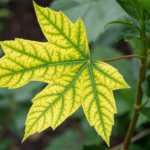 Environmental stressLime-Induced Chlorosis
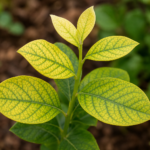 Environmental stressHigh-pH-induced iron deficiency
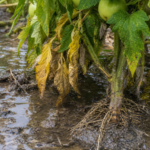 Environmental stressFlooding injury
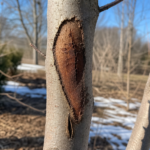 Environmental stressNapégés (sunscald)
 Environmental stressSalt stress
Toxicity and pollen
ASPCA lists Amur Maple under Acer ginnala as non-toxic to dogs and cats, but also notes that toxicity information for some maple species is incomplete. Do not assume all maples have the same risk: wilted maple foliage is associated with serious poisoning in horses for certain species. Prevent livestock access to large quantities of wilted leaves, and contact a veterinarian or poison-control service after substantial ingestion or concerning symptoms.
- Typical season
- Spring flowering period, typically May–June in much of the United States
- Pollination / pollen
- Insect-borne pollen from spring flowers; not normally released as a conspicuous airborne cloud.
Amur Maple is insect-pollinated, so its pollen is generally less widely dispersed than pollen from wind-pollinated trees. However, insect pollination does not prove zero allergy risk, and species-specific airborne-allergy data are limited. People with known pollen sensitivity should avoid direct contact with flowering branches and rely on personal medical guidance for symptoms.
Native habitat
In its native range, this maple occurs in temperate East Asia, including the Russian Far East, China, Korea, and nearby regions. It is associated with forest edges, open woodland, river margins, disturbed ground, and other sites where soils are not persistently saturated. Its tolerance of shade, drought, varied soils, and disturbance helps explain its ability to establish outside cultivation.
Interesting fact
The subspecies is often sold and discussed under the older name Acer ginnala. Its common name refers to the Amur River region of northeastern Asia. Leaves may show several autumn colors on one plant. Paired samaras mature in large numbers and can travel beyond the parent plant. It can be trained either as a single-trunked tree or as a naturally multi-stemmed shrub.
Frequently asked questions (FAQ)
The most relevant questions about this plant, with short and direct answers.
🌱Quick care
How do you care for an Amur Maple (Acer tataricum ginnala)?⌄
Give Amur Maple full sun to light shade, moderate water, and well-drained soil. Once established, it tolerates drought, wind, clay, alkaline soil, and a wide range of garden conditions.
How large does Amur Maple get?⌄
Amur Maple commonly reaches about 15–20 feet tall and wide, although its mature size varies with cultivar, pruning, and growing conditions. It may grow as a multistemmed shrub or a small single-trunk tree.
Is Amur Maple a tree or a shrub?⌄
Amur Maple can be grown as either a large shrub or a small tree. It naturally tends to be multistemmed, but careful training can develop a single trunk.
🌤️Environment and placement
How much sunlight does Amur Maple need?⌄
Amur Maple grows in full sun to light shade, but full sun usually produces denser growth and better red, orange, or yellow fall color. Provide at least 6 hours of direct sun when possible.
What USDA hardiness zones are suitable for Amur Maple?⌄
Amur Maple is generally hardy in USDA Zones 3–8 and performs especially well where summers are relatively cool. In hot regions, protect young trees from drought and intense afternoon heat.
Where should you plant an Amur Maple?⌄
Plant Amur Maple where it has good drainage, adequate sunlight, and roughly 15–20 feet of eventual growing room. It works well as a small specimen, screen, patio tree, or multistemmed landscape plant.
Can Amur Maple be used as a hedge or screen?⌄
Yes, Amur Maple can be trained or sheared as a hedge or screen, although its natural form is usually more attractive with selective pruning. Provide enough spacing for mature width and monitor for volunteer seedlings.
💧Care and problems
How often should you water an Amur Maple?⌄
Water Amur Maple moderately, keeping the root zone evenly moist while it establishes. After establishment, water deeply during prolonged heat or drought, but avoid consistently soggy soil.
Is Amur Maple drought tolerant?⌄
Yes, established Amur Maple is reasonably drought tolerant. Young trees and specimens growing in hot, sandy, or exposed sites still need regular deep watering during dry periods.
Why is my Amur Maple turning yellow?⌄
Yellow leaves can result from normal seasonal change, drought stress, poor drainage, root damage, or iron chlorosis in strongly alkaline soil. Check watering, drainage, soil compaction, and the pattern of yellowing before applying fertilizer.
What pests and diseases affect Amur Maple?⌄
Amur Maple is relatively resistant to serious pest and disease problems, but aphids and common maple disorders can occur. Stress from drought, poor drainage, wounds, or compacted soil often makes problems more likely.
Why is my Amur Maple losing branches or developing weak forks?⌄
Weak forks can develop because Amur Maple often grows with multiple stems and narrow branch unions. Remove competing leaders and poorly attached branches early, using gradual structural pruning rather than large corrective cuts.
🪴Planting and repotting
What type of soil is best for Amur Maple?⌄
Amur Maple prefers well-drained loam but also adapts to clay, sandy soil, poor fertility, and acidic to alkaline conditions. Drainage is more important than creating a highly amended planting mix.
Can Amur Maple grow in clay soil?⌄
Yes, Amur Maple can tolerate clay soil if excess water drains away. Improve severe compaction and avoid planting where water remains around the roots after rain.
Can Amur Maple grow in a container?⌄
Yes, Amur Maple can be grown in a large container, especially compact cultivars. Use a container with drainage holes, provide consistent moisture, and expect to protect the roots from extreme winter temperatures.
When is the best time to plant Amur Maple?⌄
Plant Amur Maple in spring or fall when temperatures are moderate and soil moisture is reliable. Water thoroughly after planting and mulch the root zone without touching the trunk.
How do you plant an Amur Maple tree?⌄
Dig a hole no deeper than the root ball and two to three times wider, then set the tree with the root flare at or slightly above soil level. Backfill with the original soil, water deeply, and apply a 2–3-inch mulch layer away from the trunk.
✂️Propagation and pruning
When should you prune Amur Maple?⌄
Prune Amur Maple in late winter or early spring, before strong new growth begins. Remove dead, damaged, crossing, or poorly attached branches and avoid unnecessary heavy cuts.
How do you prune Amur Maple into a single-trunk tree?⌄
Select one strong central stem and gradually remove competing basal stems and low branches over several seasons. Do not remove too much live growth at once, because Amur Maple naturally favors a multistemmed habit.
Can Amur Maple be cut back heavily?⌄
Amur Maple tolerates substantial pruning, but repeated severe cutting can encourage vigorous, weakly attached shoots. Structural pruning while the tree is young is preferable to correcting an overgrown plant later.
How do you propagate Amur Maple from seed?⌄
Propagate Amur Maple from fresh or stored samaras by providing a cold, moist stratification period before sowing. Germination may be delayed, and seedlings can vary in growth habit and fall color.
Can you grow Amur Maple from cuttings?⌄
Yes, Amur Maple can be propagated from young stem cuttings taken in early to midsummer. Rooting success depends on cutting maturity, humidity, rooting hormone, and consistent moisture, so seed propagation is often more dependable for home growers.
⚠️Toxicity and safety
Does Amur Maple have invasive potential in the United States?⌄
Yes, Amur Maple has invasive potential and is listed or regulated as invasive in some U.S. states. Its wind-dispersed samaras can germinate readily, so check your state and local recommendations before planting and remove unwanted seedlings.
Does Amur Maple spread by seed?⌄
Yes, Amur Maple produces paired winged samaras that can travel by wind and produce volunteer seedlings. Monitor nearby beds, woodland edges, and fence lines for unwanted plants.
Is Amur Maple toxic to dogs or cats?⌄
Amur Maple is generally regarded as non-toxic to dogs and cats, but broader evidence is limited. Prevent pets from eating large quantities of leaves, seeds, or other plant material and contact a veterinarian if illness occurs.
🌸Flowering and special interest
When does Amur Maple bloom?⌄
Amur Maple typically blooms in spring as new foliage emerges, producing small, pale yellowish-white flowers in clusters. The flowers may be lightly fragrant but are not usually the tree’s main ornamental feature.
Does Amur Maple have red fall color?⌄
Yes, red, orange, or yellow fall color is one of Amur Maple’s primary ornamental features. Color is usually strongest in full sun and in regions with cool autumn temperatures.
Does Amur Maple produce red seeds?⌄
Yes, Amur Maple produces paired samaras that often become red to reddish-brown during summer and fall. These winged fruits are ornamental but can also contribute to unwanted naturalization.
Similar plants
 Downy Japanese Maple (Acer japonicum) care guideAcer japonicum
 Red maple (Acer rubrum) care guideAcer rubrum
 Silver maple (Acer saccharinum) care guideAcer saccharinum
 Field maple (Acer campestre) care guideAcer campestre
 Tatar Maple (Acer tataricum) care guideAcer tataricum
 Boxelder (Acer negundo) care guideAcer negundo