
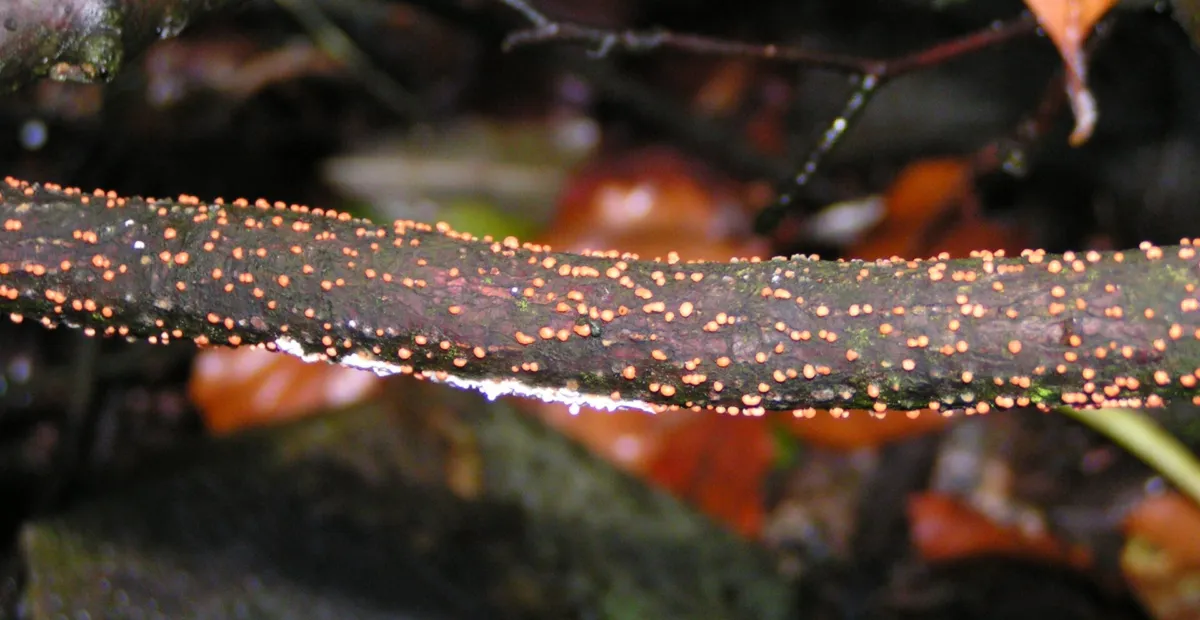
Coral Spot Canker
Nectria cinnabarinaCoral Spot Canker overview
Coral spot canker is an opportunistic fungal disease of many deciduous trees and woody shrubs, especially tissue weakened by drought, transplant stress, winter injury, pruning wounds, or broken branches. The most recognizable sign is a series of raised cream, coral, orange-red, tan, or dark fungal cushions emerging through cracked bark. Pruning, sanitation, and improved plant vigor are usually more useful than routine fungicide sprays.
Typical conditions
Overview
Coral spot canker affects many deciduous trees and woody shrubs in landscapes, orchards, and forests. The fungus is often a saprophyte on dead wood and becomes an opportunistic pathogen when bark, cambium, or young shoots are injured or weakened.
Diagnosis is based on the combination of a sunken or cracked canker, branch dieback, and raised fungal structures that may be cream, coral, orange-red, tan, brown, or nearly black as they age. Several other canker fungi can look similar, so laboratory confirmation may be needed for valuable trees, unusual hosts, or serious decline.
Symptoms and identification
- Dead twigs or branches, sometimes first noticed in early spring when buds fail to open or shoots wilt.
- Sunken, dark-brown to gray-brown cankers, often associated with branch bases, cracks, pruning wounds, broken limbs, frost injury, or other bark damage.
- Raised cushion-like sporodochia emerge through bark openings. Young structures may be cream, salmon, coral, or orange-red; older structures become tan, brown, or black.
- Cankers may girdle small branches, producing distal wilting, dieback, reduced foliage, early fall color, or premature leaf drop.
- On apple, the disease may appear as localized twig blight or dieback and can resemble fire blight, but it typically lacks the characteristic shepherd’s-crook symptom.
Causes and spread
The pathogen is usually established when airborne or rain-splashed spores contact broken branches, pruning wounds, frost-injured bark, sunscald cracks, dead spurs, or other weakened tissues. Drought, transplant shock, root damage, compacted soil, and severe weather increase susceptibility. Infected deadwood left in the canopy or orchard supplies spores that can spread to nearby wounds.
Life cycle and persistence
Nectria cinnabarina survives in infected woody tissue, dead branches, cankers, and fruiting structures. Sexual perithecia may develop during late winter or spring and release ascospores in moist conditions. During the growing season, asexual sporodochia produce conidia. Rain splash, surface water, wind, pruning activity, and contact with injured tissue move spores to new infection sites.
Infection is most likely when spores reach fresh wounds or physiologically compromised bark. The fungus may invade the wood, disrupt vascular function, and kill tissue beyond the canker. Sporodochia can remain on infected wood through winter and provide inoculum for later disease cycles.
Treatment and control
There is no practical way to cure an established canker inside a branch. Remove affected branches during dry weather, cutting back to healthy wood or to the branch collar when appropriate. If a canker occurs on a major scaffold limb, trunk, or central leader, do not carve extensively into the stem; obtain an arborist or plant-disease diagnosis instead.
Discontinue irrigation practices that keep trunks or root collars wet, but provide supplemental water during drought. Monitor after pruning for renewed dieback. Remove or replace trees when extensive trunk or leader girdling has compromised stability or canopy recovery. Confirm the diagnosis before considering any pesticide, because coral spot canker can be confused with other fungal cankers that require different management.
Low-impact and biological control
Use an integrated, nonchemical approach:
- Prune out infected twigs and branches well below visible cankers and into sound wood, preferably during cool, dry weather.
- Remove prunings from the property promptly; do not leave them beneath the canopy or in orchard rows because they may continue producing spores.
- Disinfect pruning tools between cuts when working through visibly diseased tissue, and avoid creating unnecessary wounds.
- Protect bark from mower, string-trimmer, staking, tie, construction, and animal damage.
- Maintain even soil moisture during drought, apply mulch without piling it against the trunk, and correct major root-zone or planting-site stress.
- For valuable or structurally important trees, have a certified arborist assess whether pruning, monitoring, or removal is appropriate.
Prevention
- Choose well-adapted trees and shrubs and plant them in sites with suitable drainage, light, and rooting space.
- Water newly planted and drought-stressed trees deeply and consistently; avoid repeated severe drying followed by saturation.
- Prune correctly, preserve branch collars, avoid flush cuts and large unnecessary cuts, and do not prune in wet weather when practical.
- Remove broken, dead, and heavily cankered branches before they become persistent inoculum sources.
- Reduce winter injury, sunscald, mechanical damage, and transplant stress.
- Monitor susceptible hardwoods and apple trees in spring and after storms, especially where previous cankers or deadwood are present.
Interesting facts
- The common name coral spot refers to the bright coral-colored asexual fruiting cushions, not to a true coral organism.
- The asexual stage has commonly been called Tubercularia vulgaris.
- The fungus is widespread and often behaves primarily as a decomposer of dead wood rather than as an aggressive primary pathogen.
- More than one Nectria-like fungus can produce reddish fruiting bodies on woody plants, so color alone is not diagnostic.
- Large, stressed branches and small trees are at greater risk of serious injury when cankers girdle conductive tissue.
Routine foliar fungicides are generally not a dependable or cost-effective solution because the fungus is protected within infected woody tissue. Use only a pesticide product legally authorized for the specific crop, site, and problem in the United States, and follow the current label exactly. Product registration, permitted crops, application timing, and restrictions can change; consult your state pesticide regulator, Extension service, or a licensed arborist before treatment.
Affected plants
The plants below are linked to this problem by structured host-plant data. The list updates automatically as new plant profiles are added.
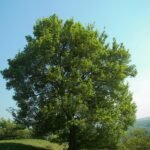 Field maple (Acer campestre) care guideAcer campestre
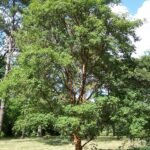 Paperbark Maple (Acer griseum) care guideAcer griseum
 Downy Japanese Maple (Acer japonicum) care guideAcer japonicum
 Boxelder (Acer negundo) care guideAcer negundo
 Acer palmatum care guideAcer palmatum
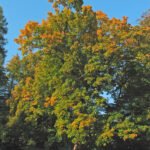 He Norway maple (Acer platanoides) care guideAcer platanoides
 Sycamore maple (Acer pseudoplatanus) care guideAcer pseudoplatanus
 Red maple (Acer rubrum) care guideAcer rubrum
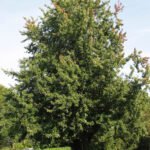 Silver maple (Acer saccharinum) care guideAcer saccharinum
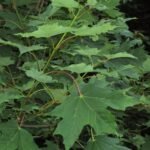 Sugar maple (Acer saccharum) care guideAcer saccharum
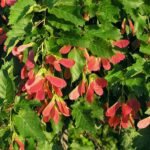 Tatar Maple (Acer tataricum) care guideAcer tataricum
 Amur Maple (Acer tataricum ginnala) care guideAcer tataricum ginnala